Practice subtraction Addition Worksheets for Ages 8-9
5 filtered results
-
From - To
Discover our engaging practice subtraction and addition worksheets designed specifically for children ages 8-9! Perfect for enhancing math skills, these worksheets provide a fun way to strengthen understanding of subtraction and addition concepts. Our collection features a variety of activities, including problems that challenge critical thinking and foster independent learning. Designed with colorful illustrations and relatable scenarios, these worksheets make practicing math enjoyable. Whether at home or in the classroom, they serve as an excellent resource for educators and parents alike. Facilitate your child's mathematical development and boost their confidence in mastering essential skills with our comprehensive worksheets today!
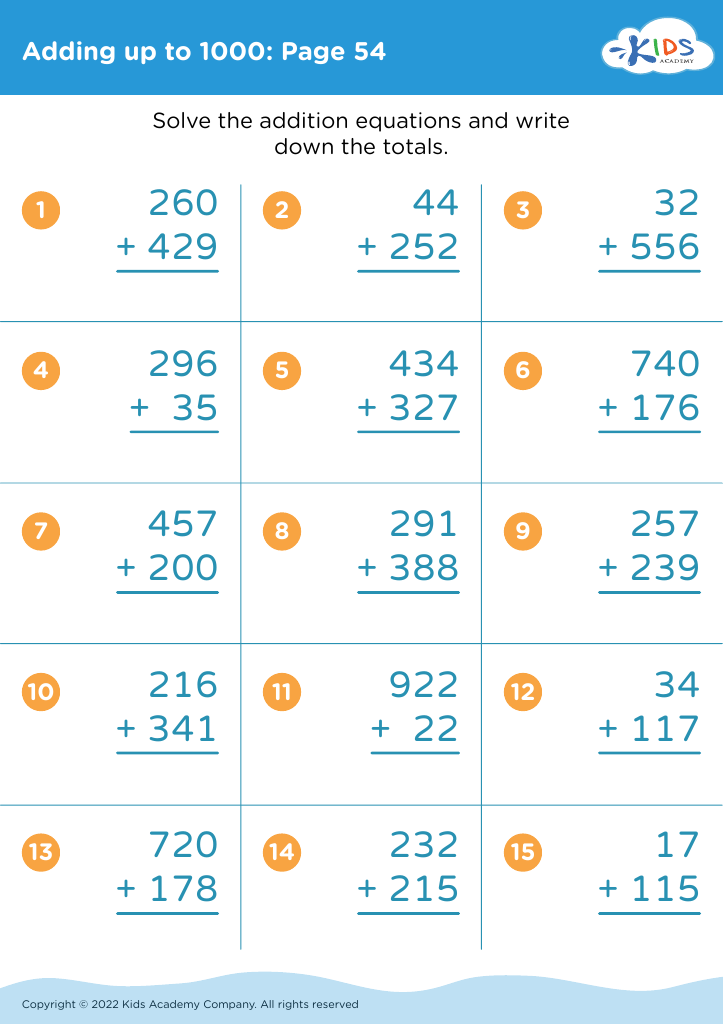
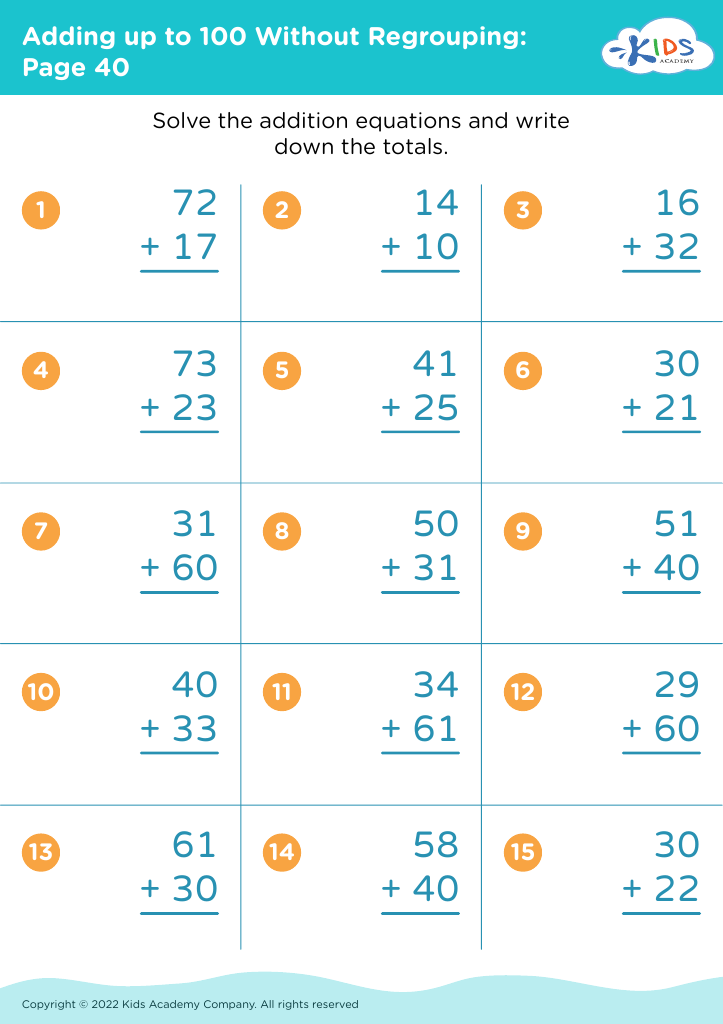
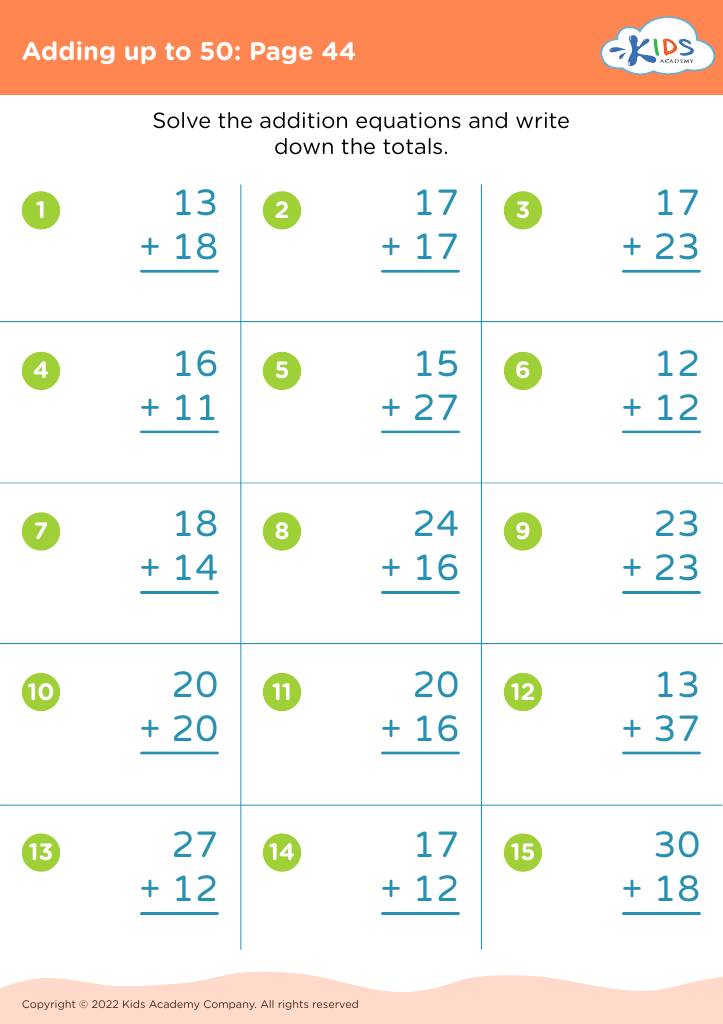
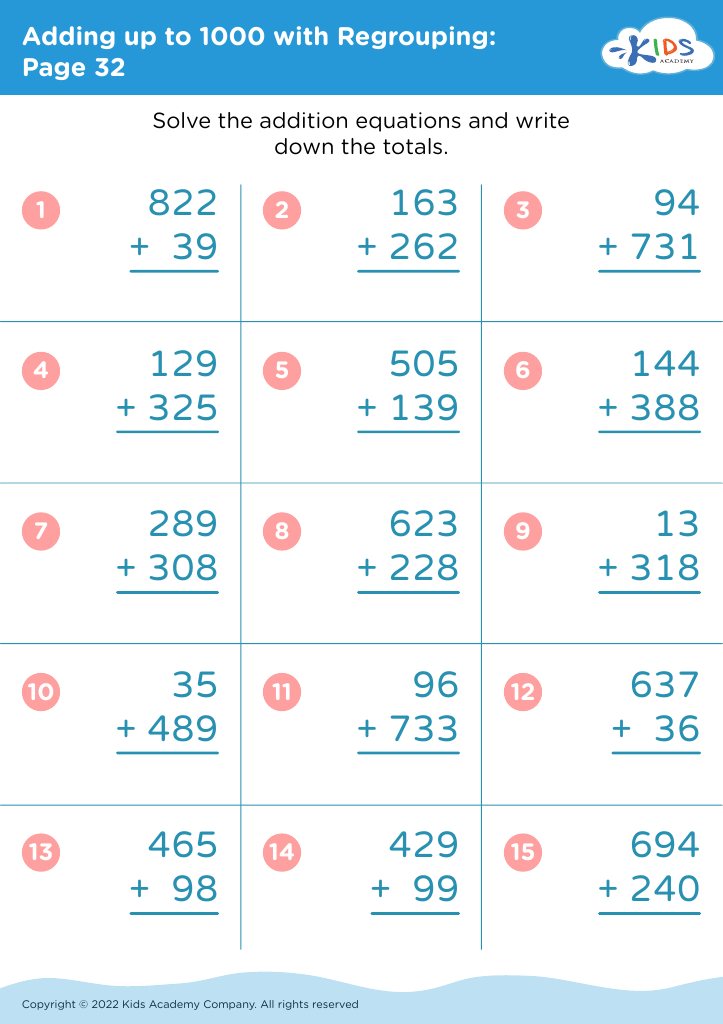
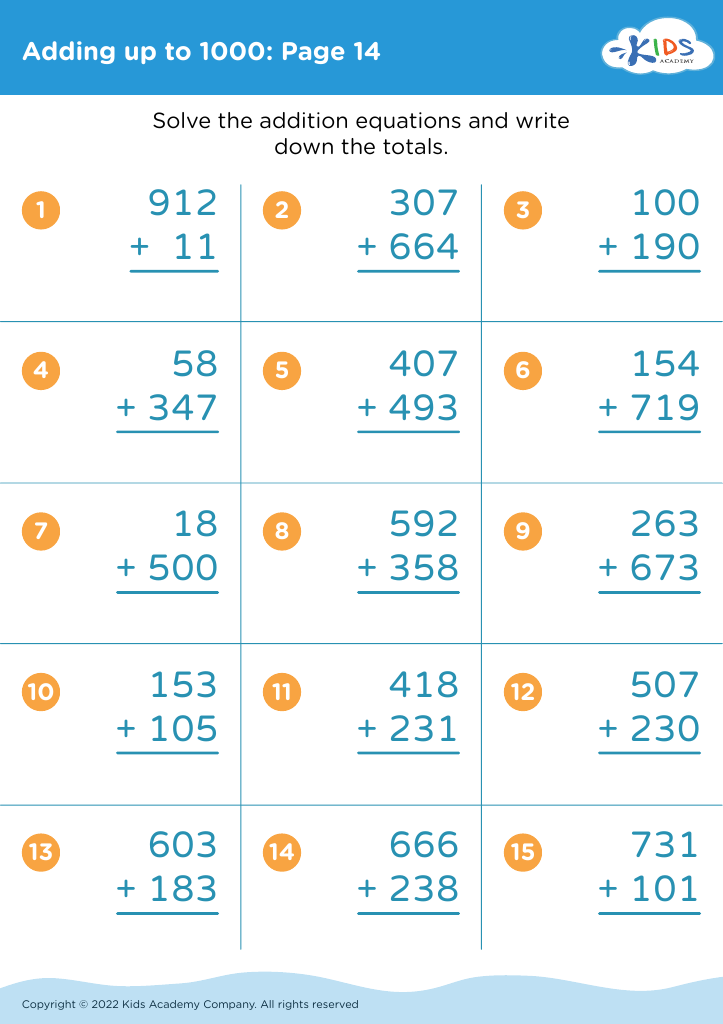








Parents and teachers should prioritize practicing addition and subtraction for children aged 8-9 because these skills form the foundation for all future mathematical learning. At this age, children typically transition from simple calculations to more complex problems, often involving multi-digit equations and word problems that require critical thinking. Mastering addition and subtraction ensures that they develop a strong number sense, enabling them to tackle higher-level math concepts such as multiplication, division, and fractions with confidence.
Moreover, practice in these fundamental operations builds mental math skills, enhances problem-solving abilities, and fosters logical reasoning. When students feel proficient in basic math, they become more engaged and willing to explore more challenging content. Additionally, improved arithmetic skills contribute to better performance not only in math but also in subjects like science, where math is often used for data analysis and measurements.
Creating a positive attitude towards math during these formative years is essential. Consistent practice can minimize math anxiety and help children view math as an enjoyable challenge rather than a daunting task. Therefore, fostering proficiency in addition and subtraction is crucial for their overall academic success and helps lay the groundwork for lifelong learning in mathematics.








