Filters

96 filtered results

Clear all filters
Favorites
With answer key
Interactive

96 filtered results

Difficulty Level

Grade


Check out this FREE Trial Lesson on Addition for age 8-9!

H

Favorites
With answer key
Interactive
  • 8-9
  • Problem-Solving Skills
  • Addition
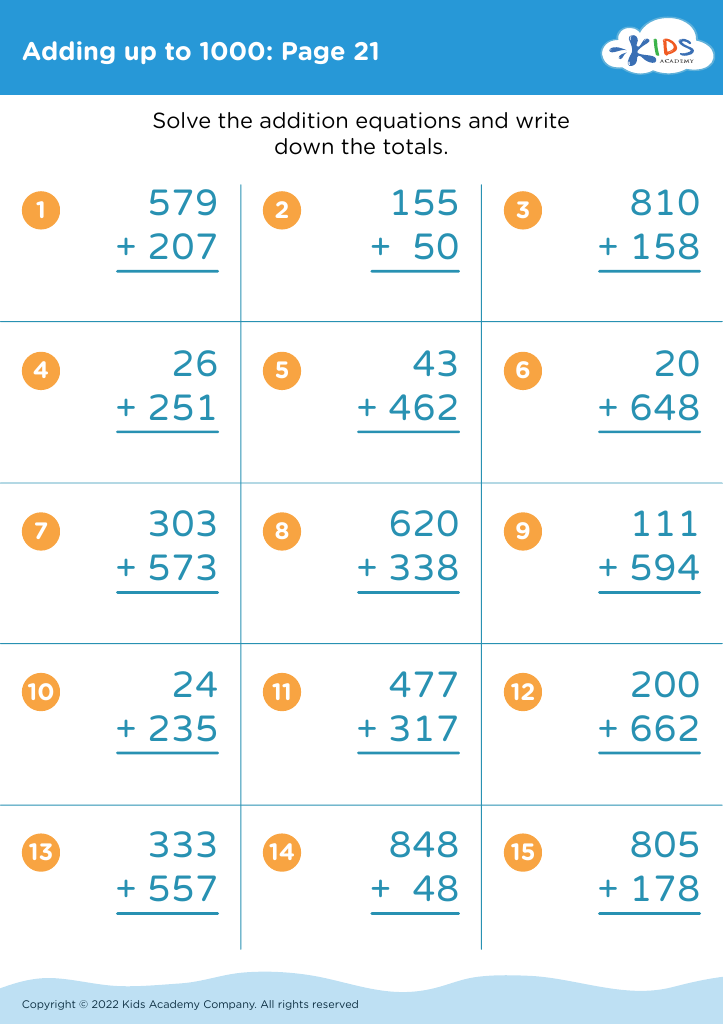
Adding up to 1000: Page 21

Adding up to 1000: Page 21

Adding up to 1000: Page 21
Worksheet
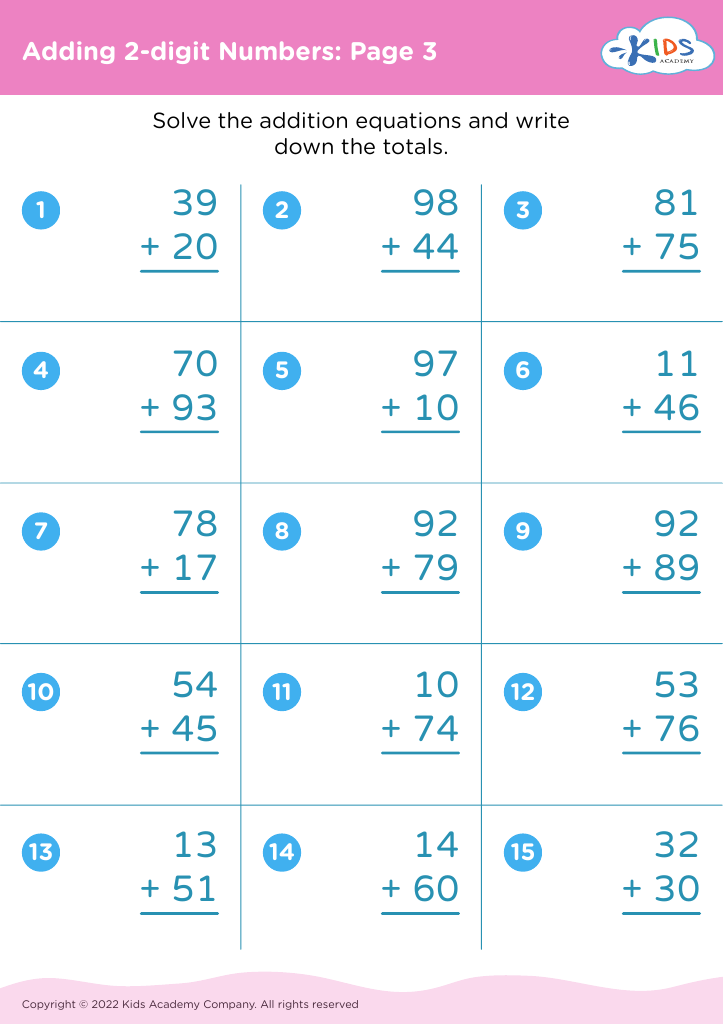
Adding 2-digit Numbers: Page 3

Adding 2-digit Numbers: Page 3

Adding 2-digit Numbers: Page 3
Worksheet
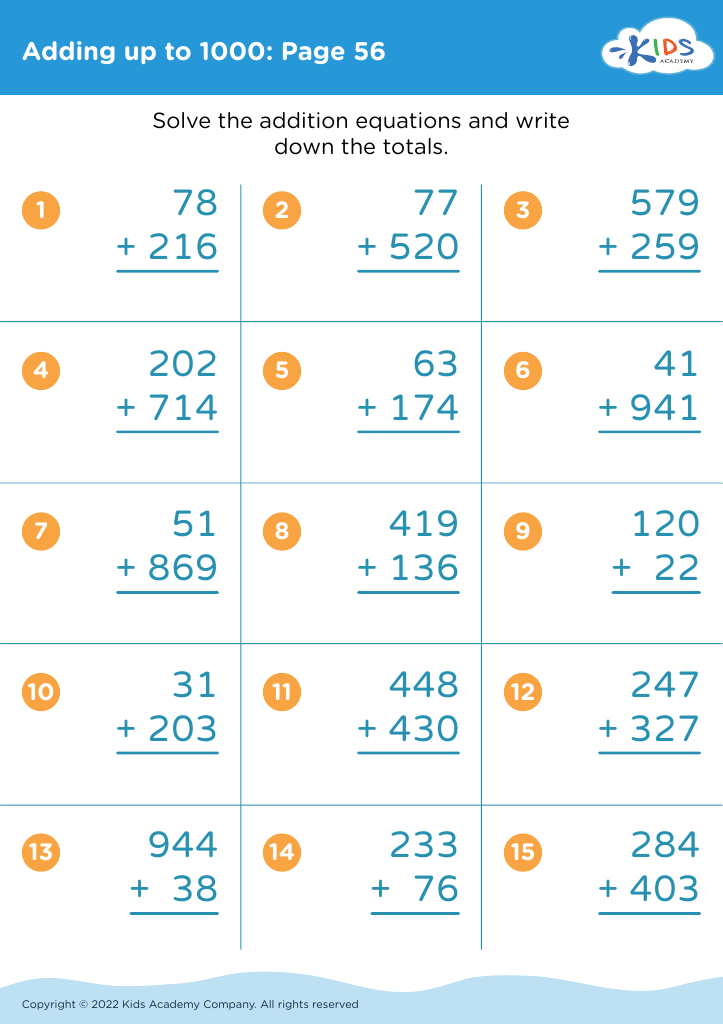
Adding up to 1000: Page 56

Adding up to 1000: Page 56

Adding up to 1000: Page 56
Worksheet
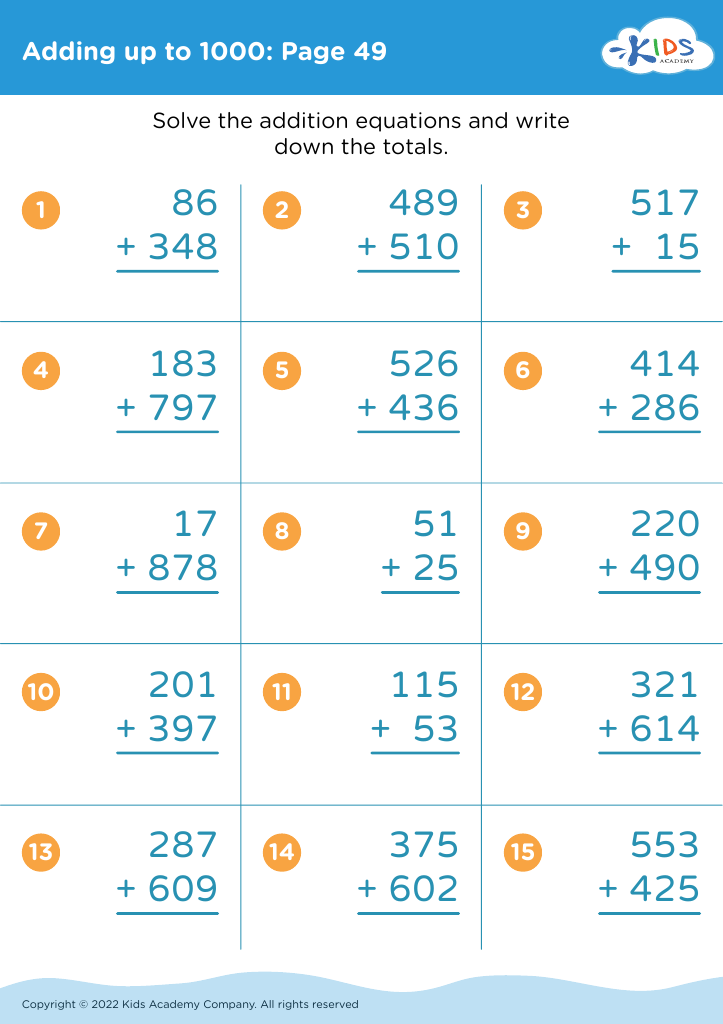
Adding up to 1000: Page 49

Adding up to 1000: Page 49

Adding up to 1000: Page 49
Worksheet
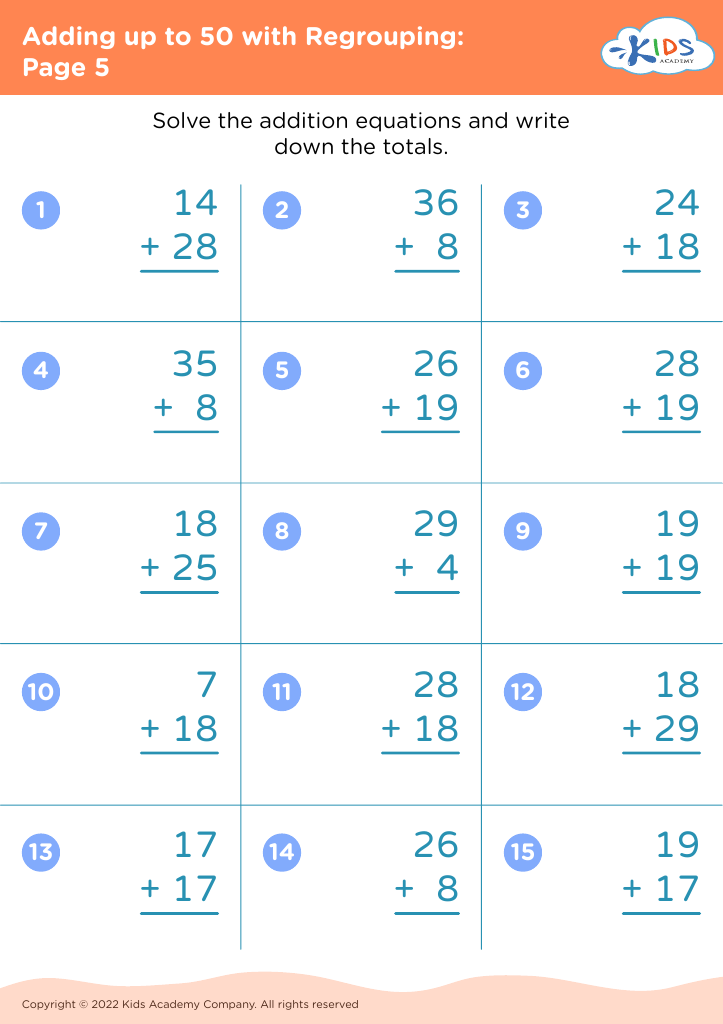
Adding up to 50 with Regrouping: Page 5
Worksheet
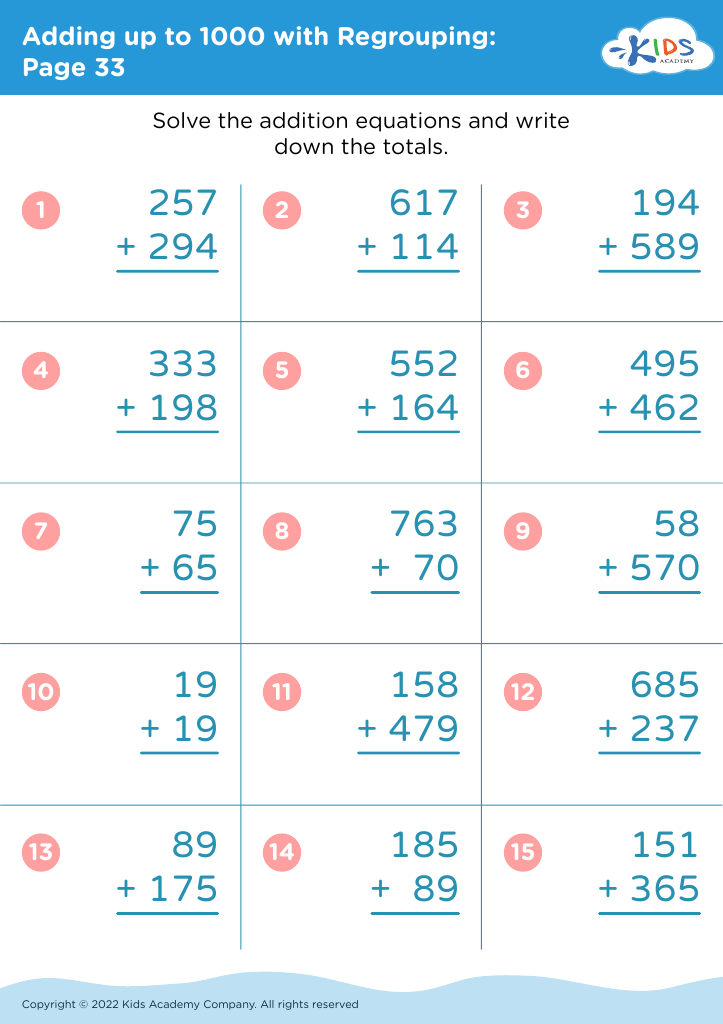
Adding up to 1000 with Regrouping: Page 33
Worksheet
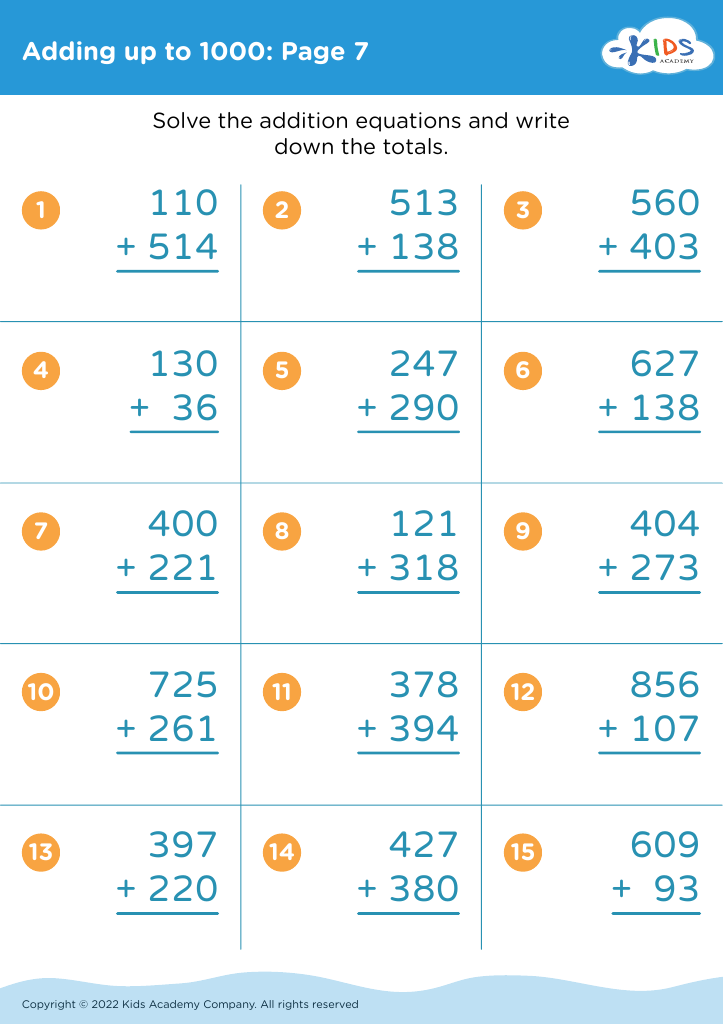
Adding up to 1000: Page 7

Adding up to 1000: Page 7

Adding up to 1000: Page 7
Worksheet
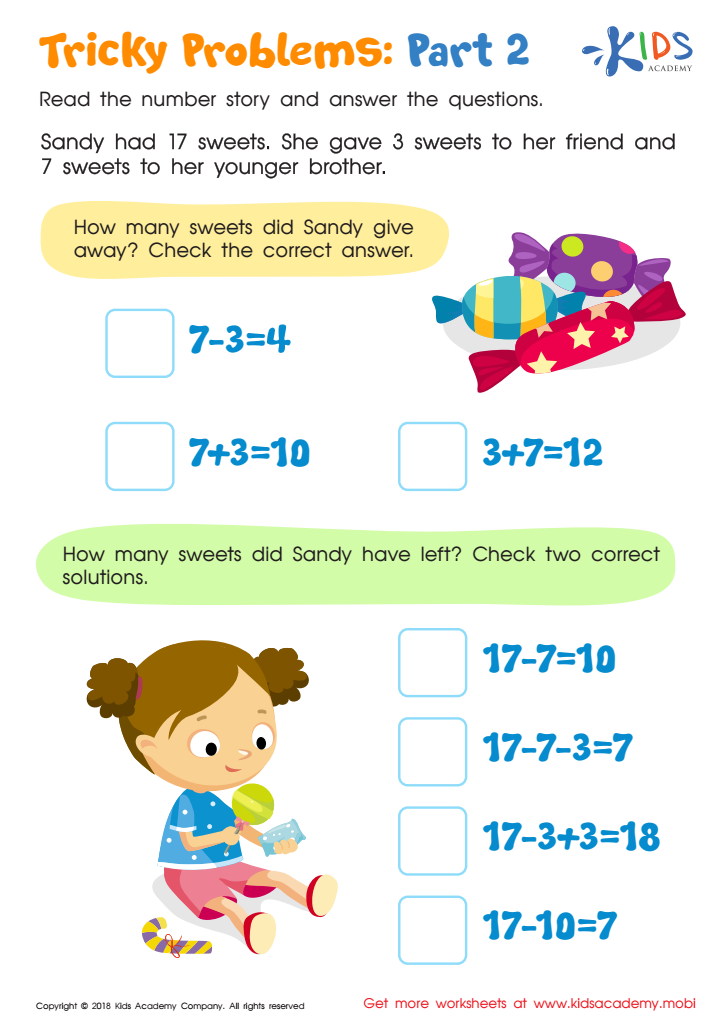
Tricky Problems Worksheet: Part 2

Tricky Problems Worksheet: Part 2

Help your little math learner visualize number stories with this engaging worksheet. They'll connect pictures to the story and use math facts to find the sums. After that, they'll be able to identify the correct number sentences to match. Let them practice and get better at problem solving!
Tricky Problems Worksheet: Part 2
Worksheet
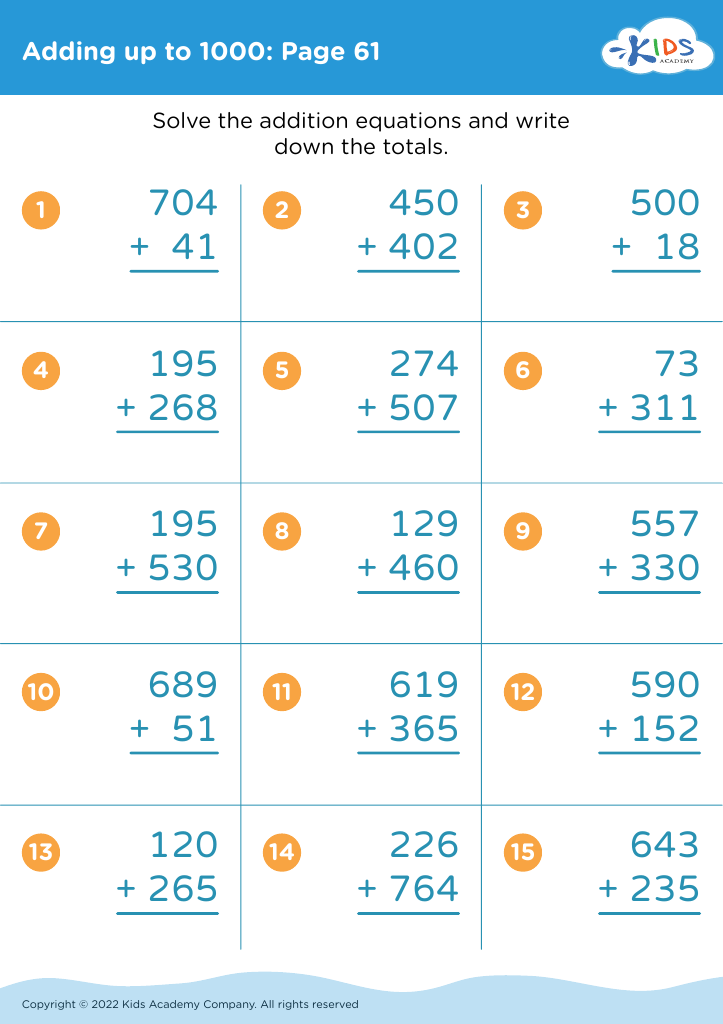
Adding up to 1000: Page 61

Adding up to 1000: Page 61

Adding up to 1000: Page 61
Worksheet
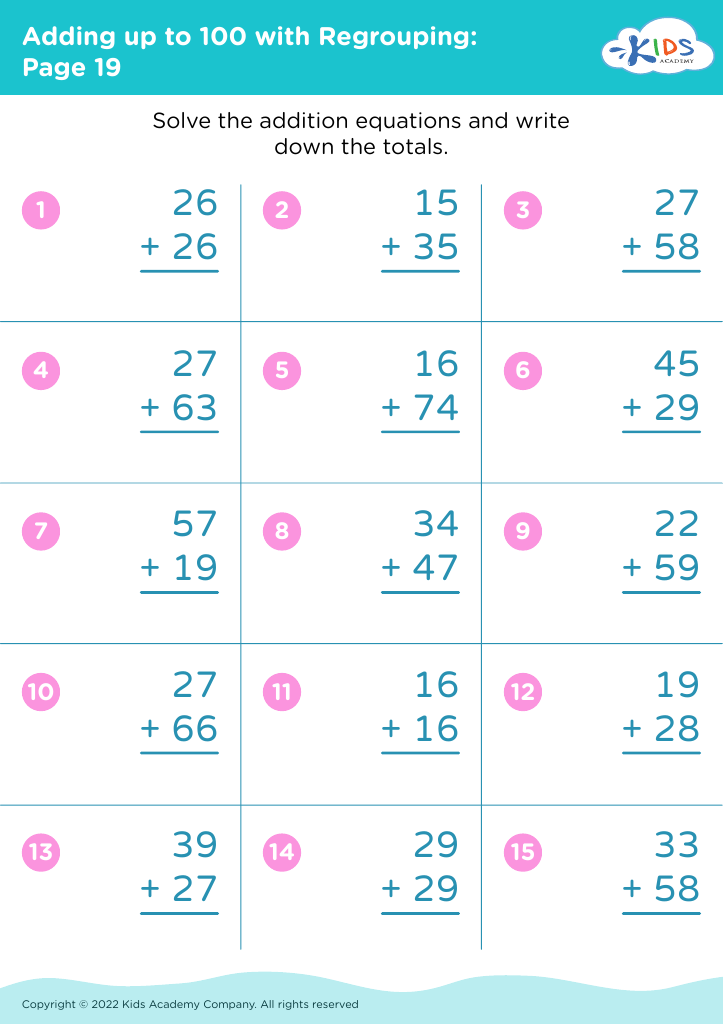
Adding up to 100 with Regrouping: Page 19
Worksheet
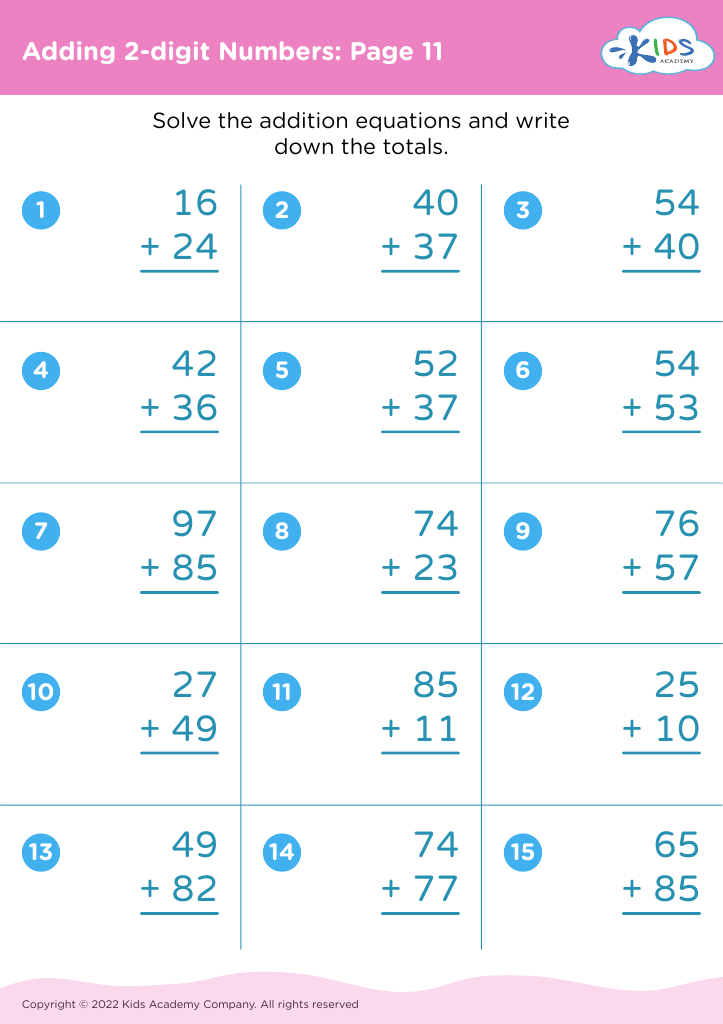
Adding 2-digit Numbers: Page 11

Adding 2-digit Numbers: Page 11

Adding 2-digit Numbers: Page 11
Worksheet
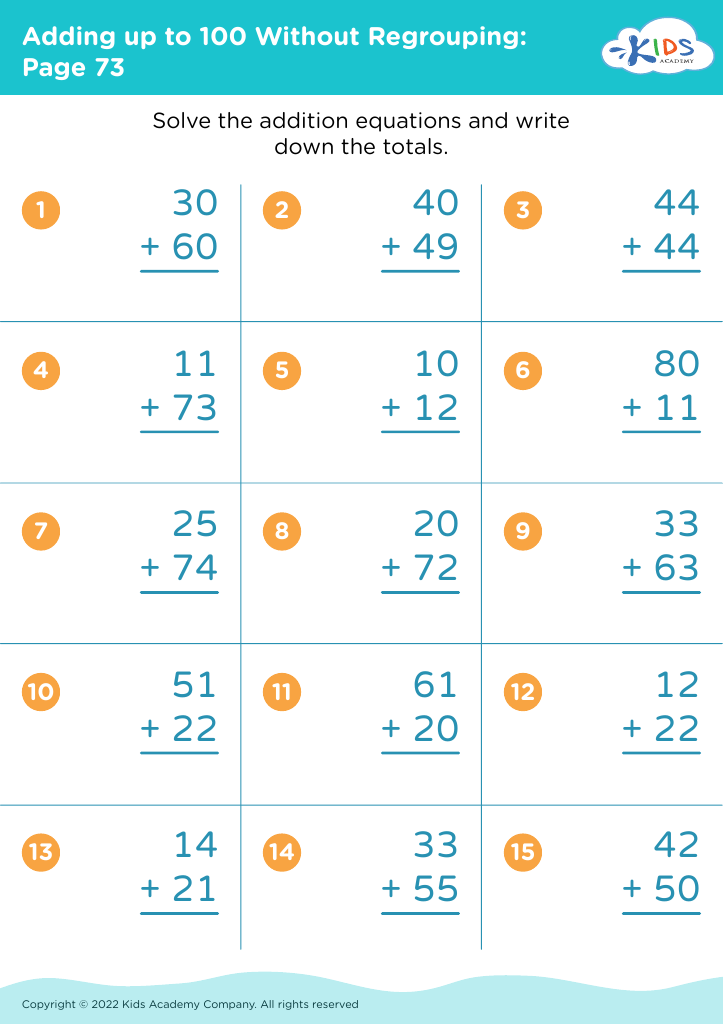
Adding up to 100 Without Regrouping: Page 73
Worksheet
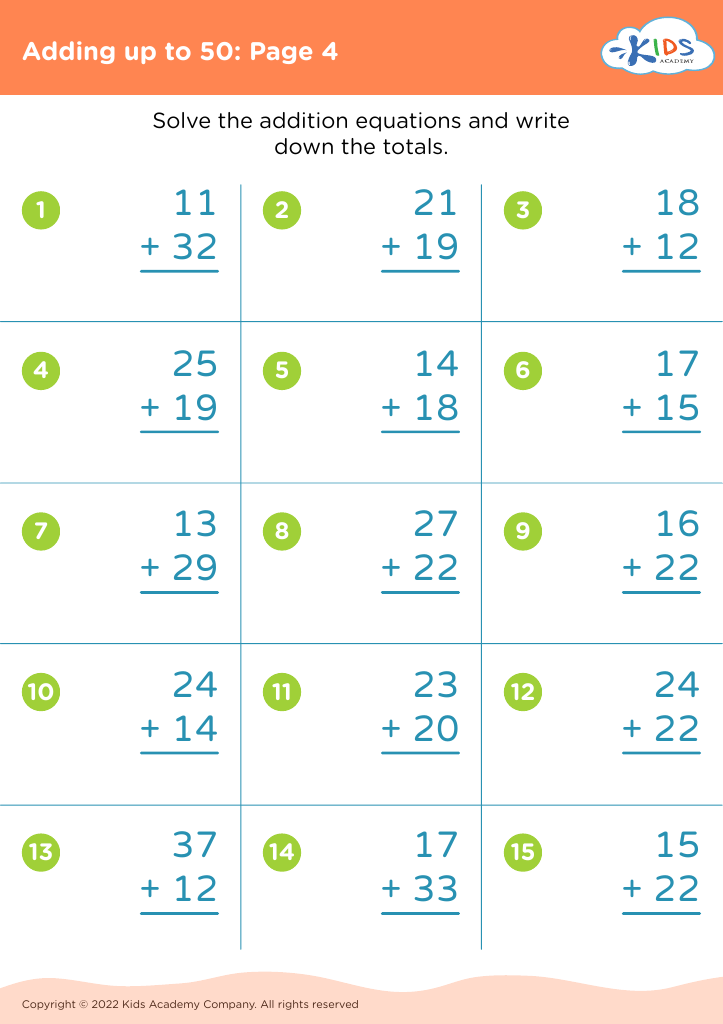
Adding up to 50: Page 4

Adding up to 50: Page 4

Adding up to 50: Page 4
Worksheet
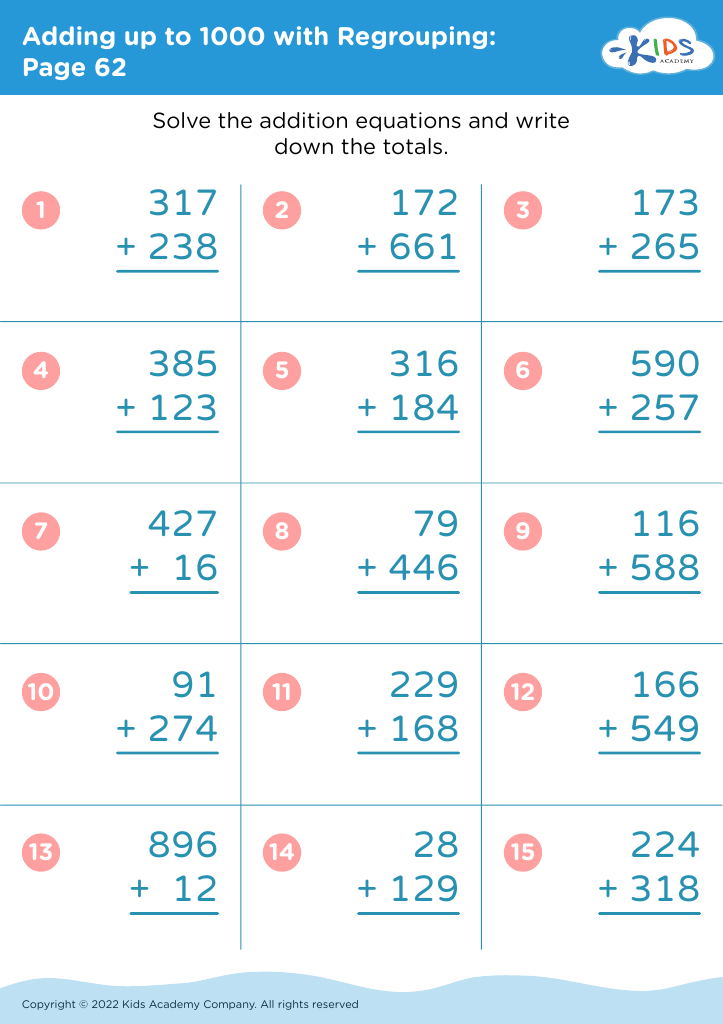
Adding up to 1000 with Regrouping: Page 62
Worksheet
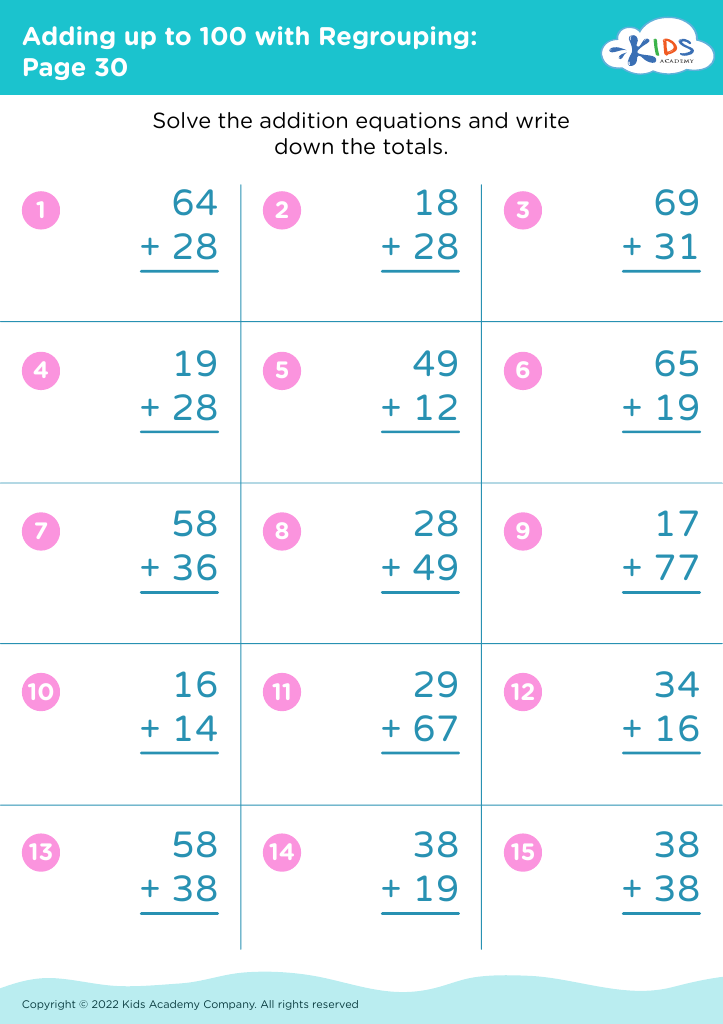
Adding up to 100 with Regrouping: Page 30
Worksheet
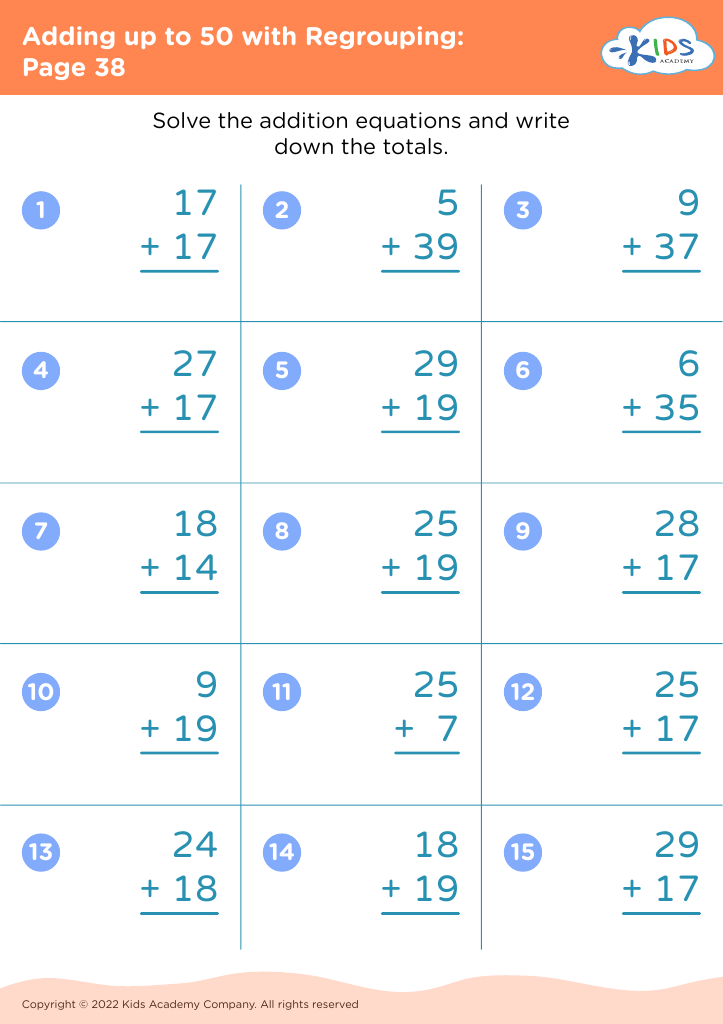
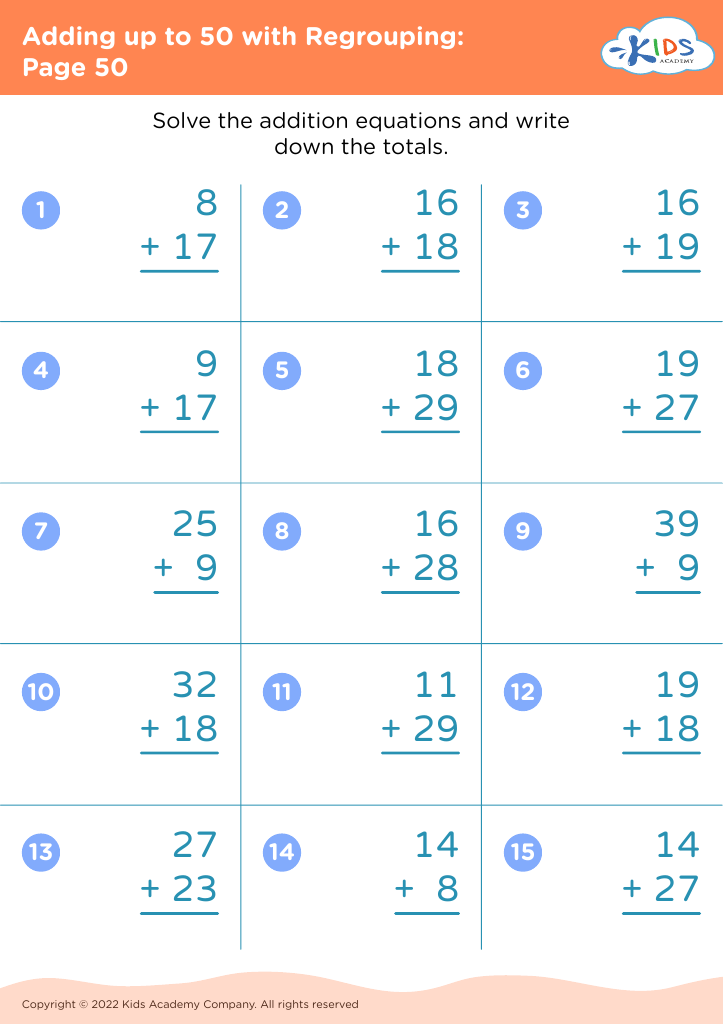
Adding up to 50 with Regrouping: Page 38
Worksheet
Adding up to 50 with Regrouping: Page 50
Worksheet
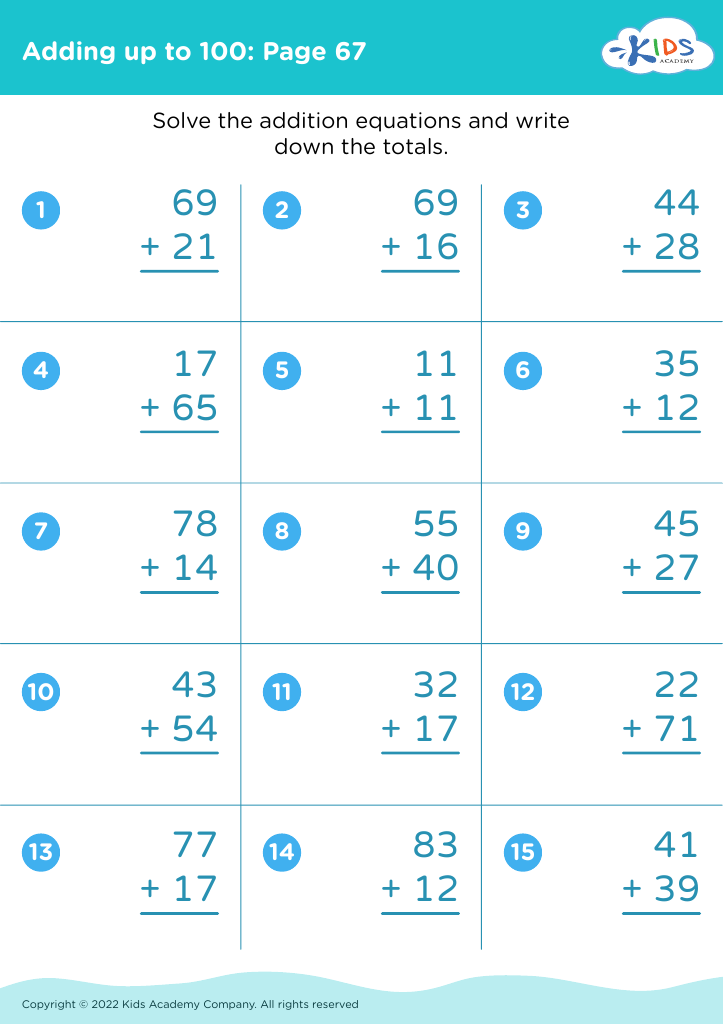
Adding up to 100: Page 67

Adding up to 100: Page 67

Adding up to 100: Page 67
Worksheet
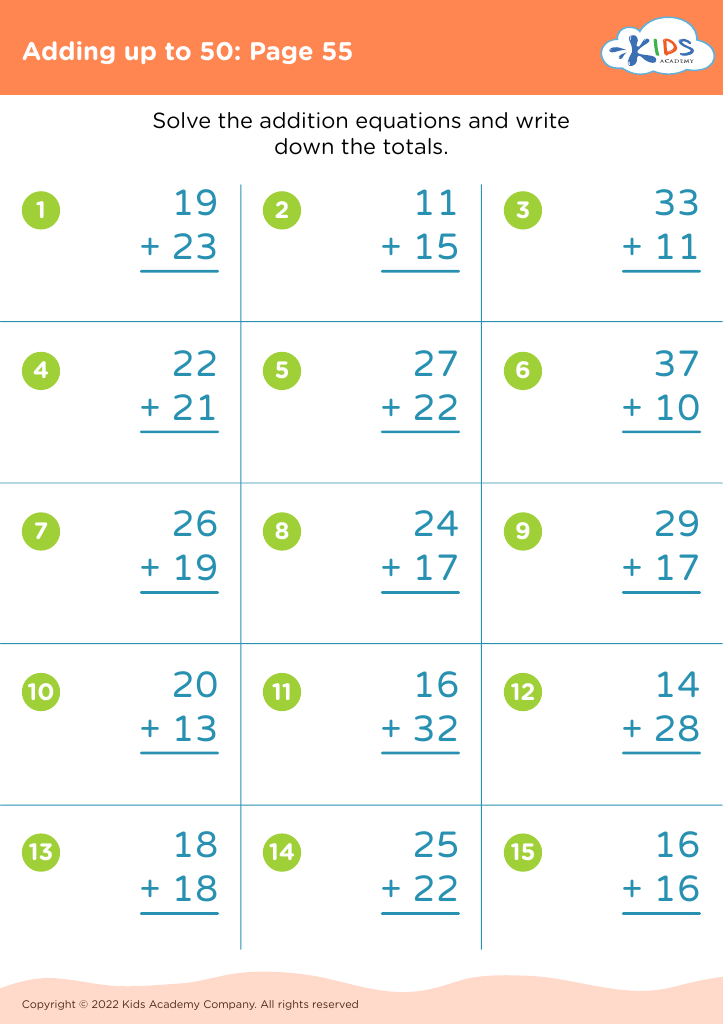
Adding up to 50: Page 55

Adding up to 50: Page 55

Adding up to 50: Page 55
Worksheet
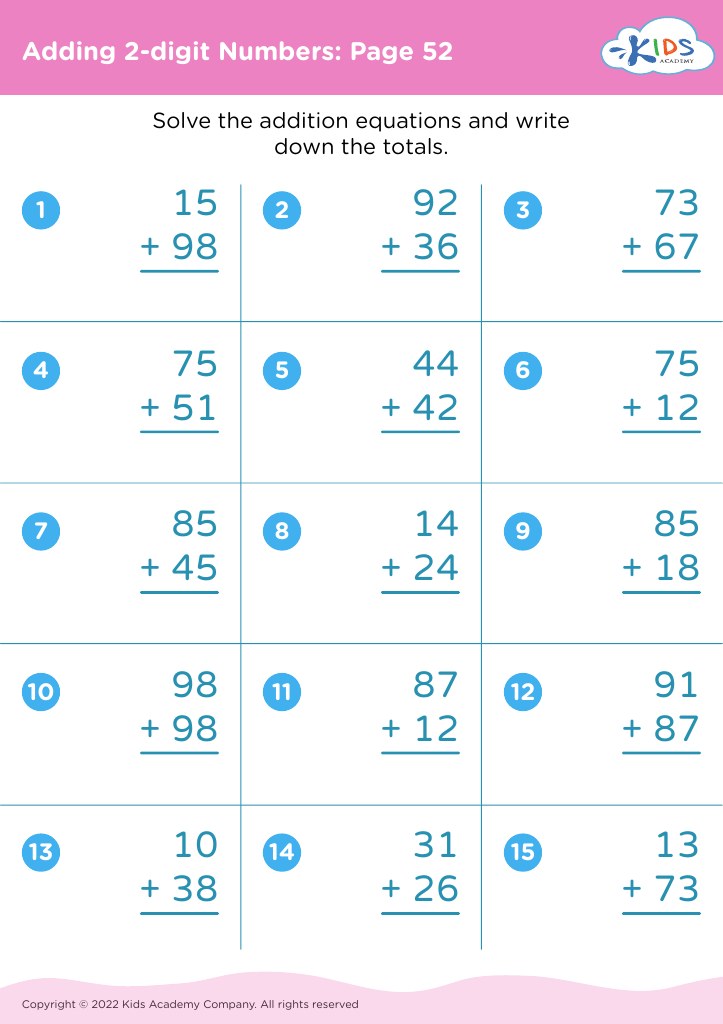
Adding 2-digit Numbers: Page 52

Adding 2-digit Numbers: Page 52

Adding 2-digit Numbers: Page 52
Worksheet
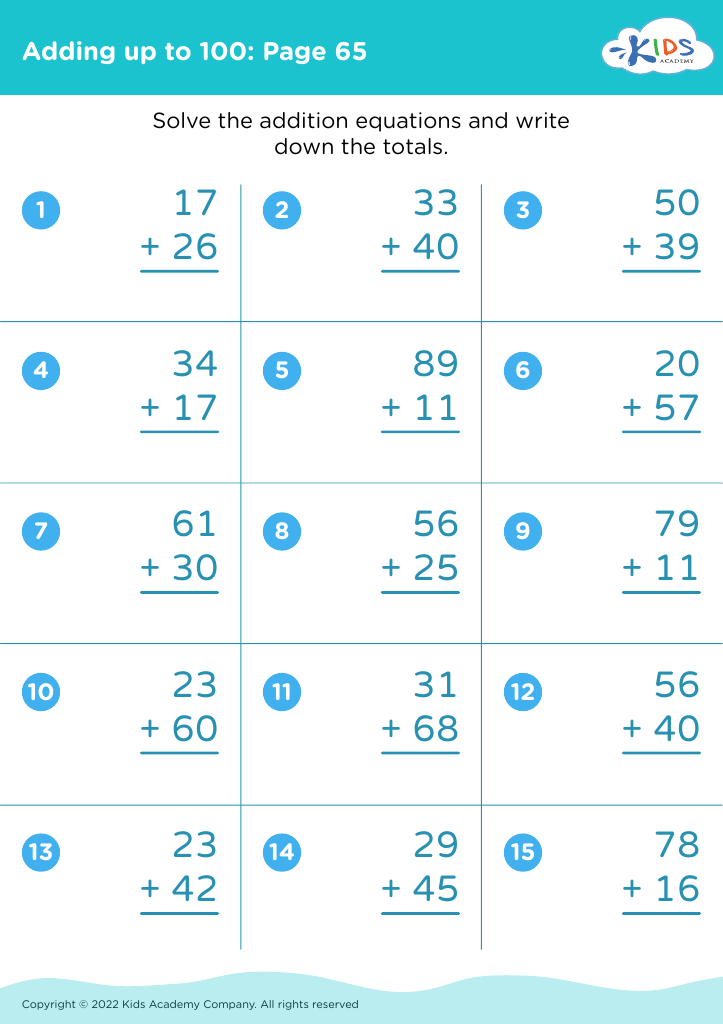
Adding up to 100: Page 65

Adding up to 100: Page 65

Adding up to 100: Page 65
Worksheet
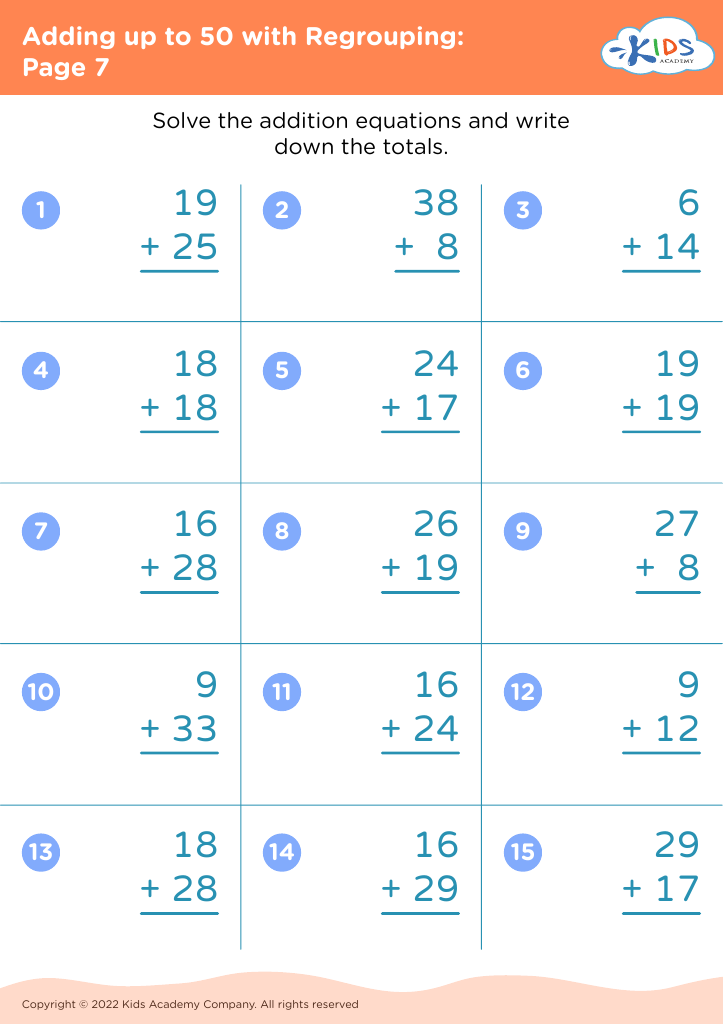
Adding up to 50 with Regrouping: Page 7
Worksheet
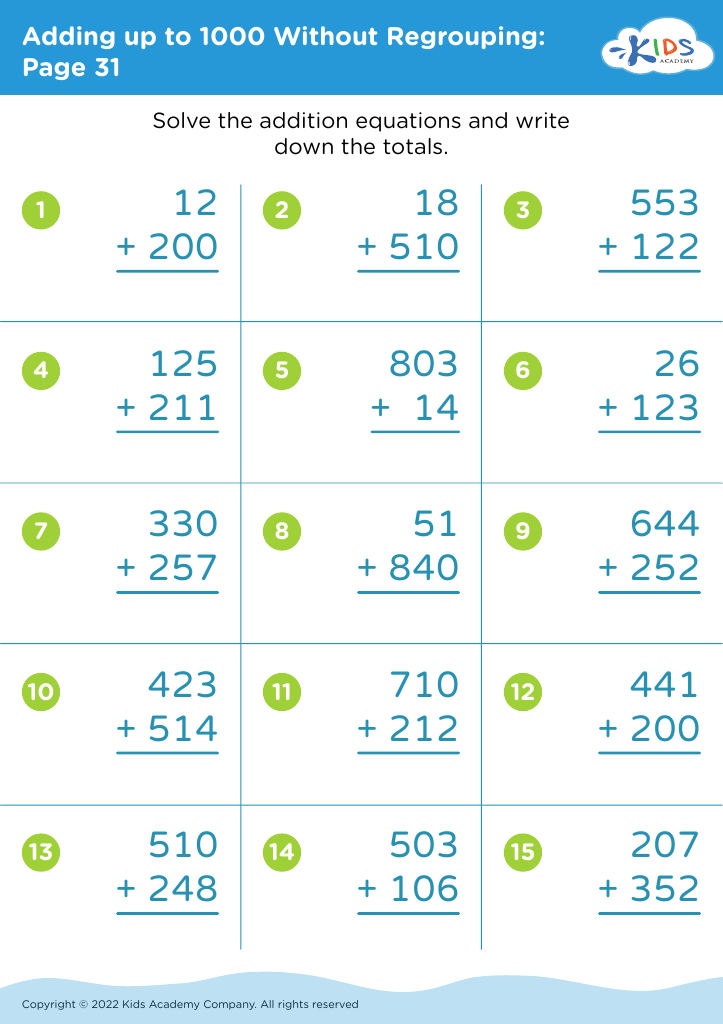
Adding up to 1000 Without Regrouping: Page 31
Worksheet
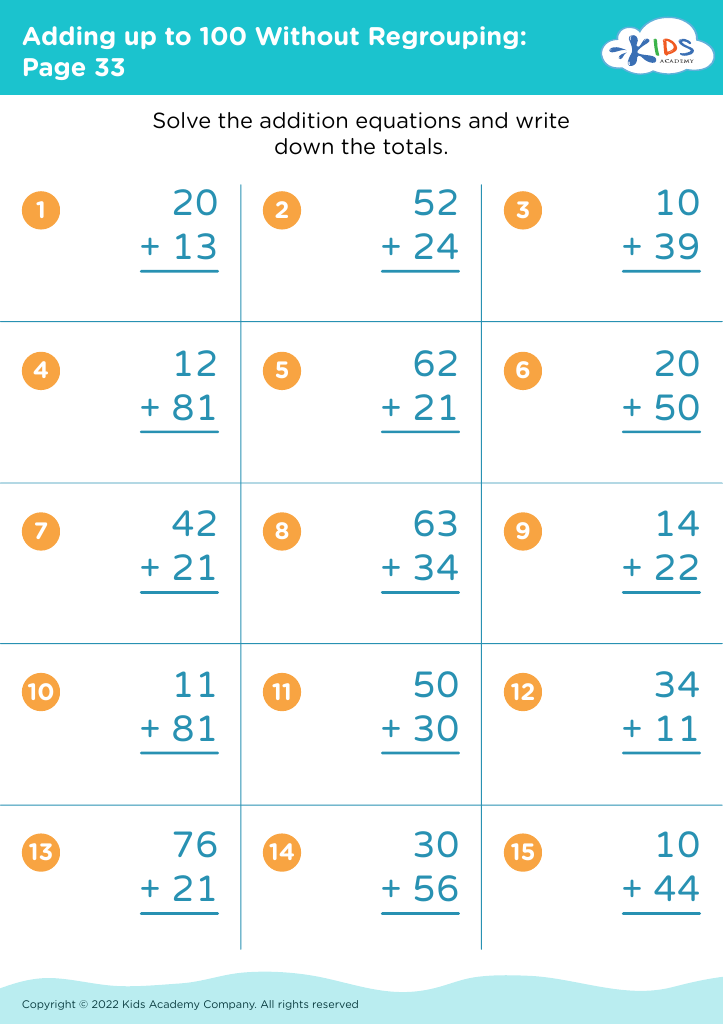
Adding up to 100 Without Regrouping: Page 33
Worksheet


Problem-solving skills are essential for children ages 8-9, and both parents and teachers should actively nurture these abilities. At this developmental stage, children begin to explore the world more independently and face increasingly complex challenges. Acquisition of problem-solving skills enables them to navigate these challenges effectively, fostering resilience and adaptability.

For one, enhancing problem-solving skills translates to better academic performance. Subjects like math and science inherently involve problem resolution, and having a robust skill set drives competence and confidence in these areas. Additionally, when children are adept problem solvers, they are more likely to engage deeply with the material, achieving a greater understanding rather than just rote memorization.

Beyond academics, strong problem-solving skills contribute to social and emotional development. Children with these skills can better manage conflicts, make informed decisions, and approach social interactions with empathy and creativity. They learn to consider multiple perspectives and negotiate or resolve disputes harmoniously.

Furthermore, instilling problem-solving skills at an early age sets a foundation for lifelong learning and adaptability, qualities essential in the dynamic, ever-evolving modern world. Whether it is developing critical thinking or fostering independence, prioritizing problem-solving skills equips children with the tools they need for future success, making it essential for parents and teachers to dedicate attention to this vital area.