Understand sequences Addition Worksheets for Ages 8-9
5 filtered results
-
From - To
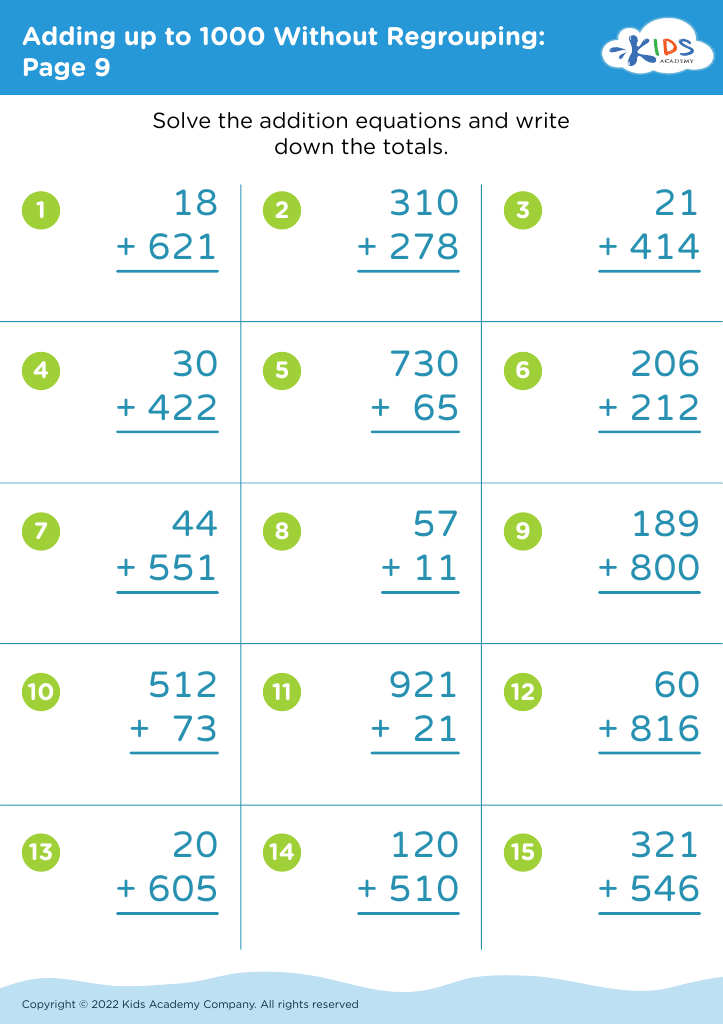
Discover our engaging "Understand Sequences Addition Worksheets" designed specifically for children ages 8-9. These worksheets focus on helping young learners grasp the concept of numerical sequences through addition, enhancing their math skills in an enjoyable way. By practicing with various exercises, students will improve their ability to recognize patterns and solve problems more efficiently. Each worksheet features vibrant designs and age-appropriate challenges, encouraging kids to sustain their interest while reinforcing essential addition techniques. Perfect for classroom use or at-home practice, our resources support your child's journey towards becoming a confident mathematician. Download today and make learning sequences fun!
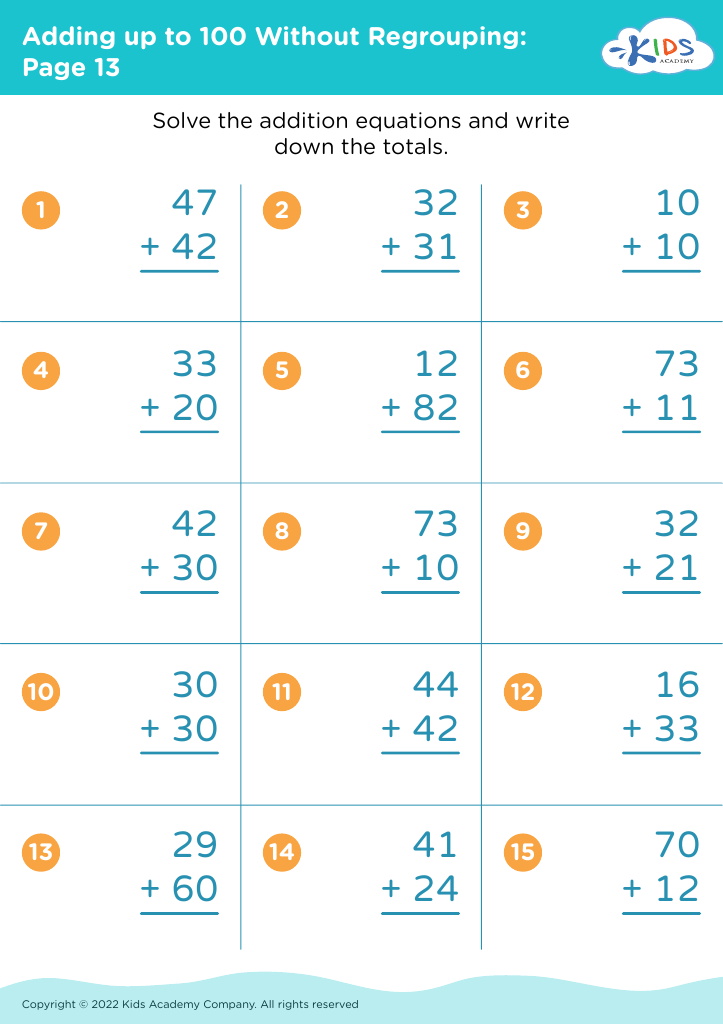
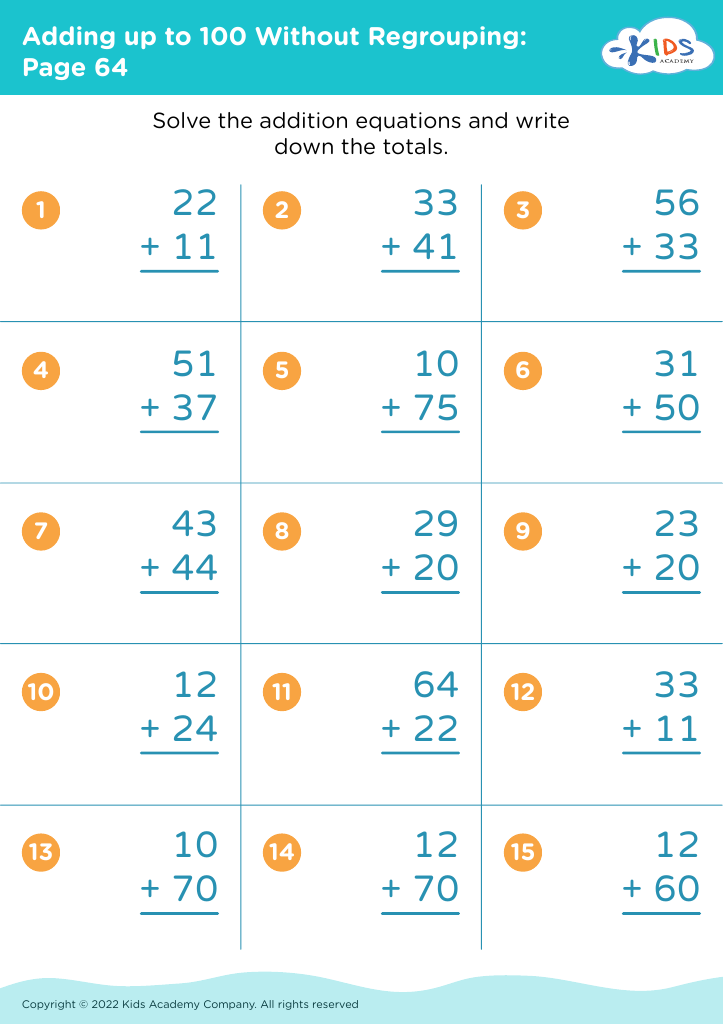
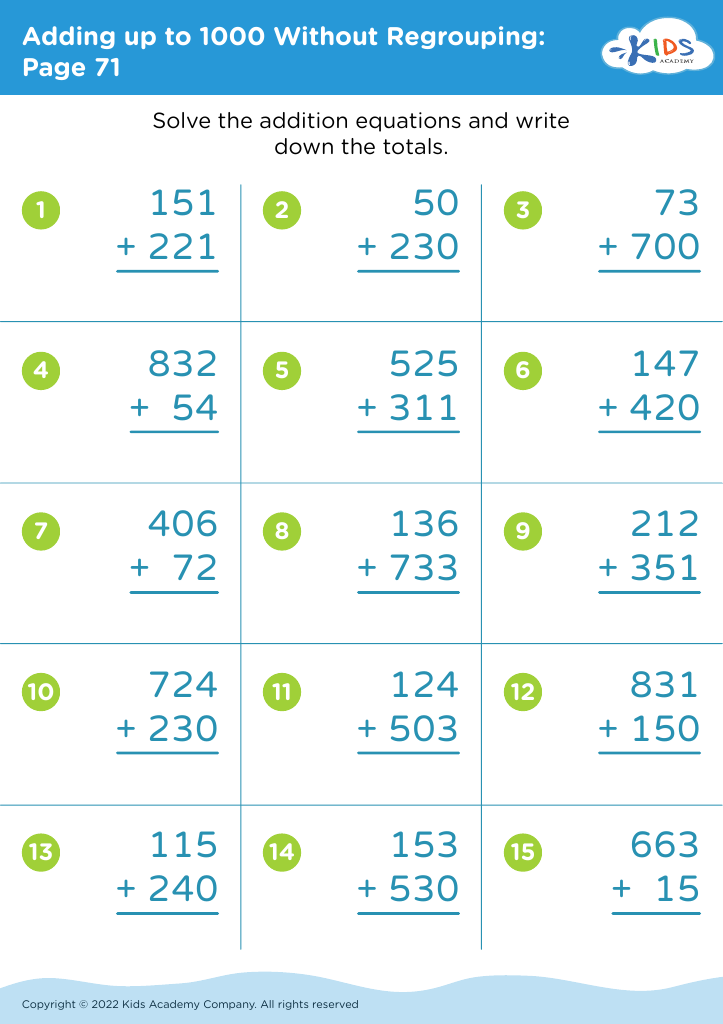
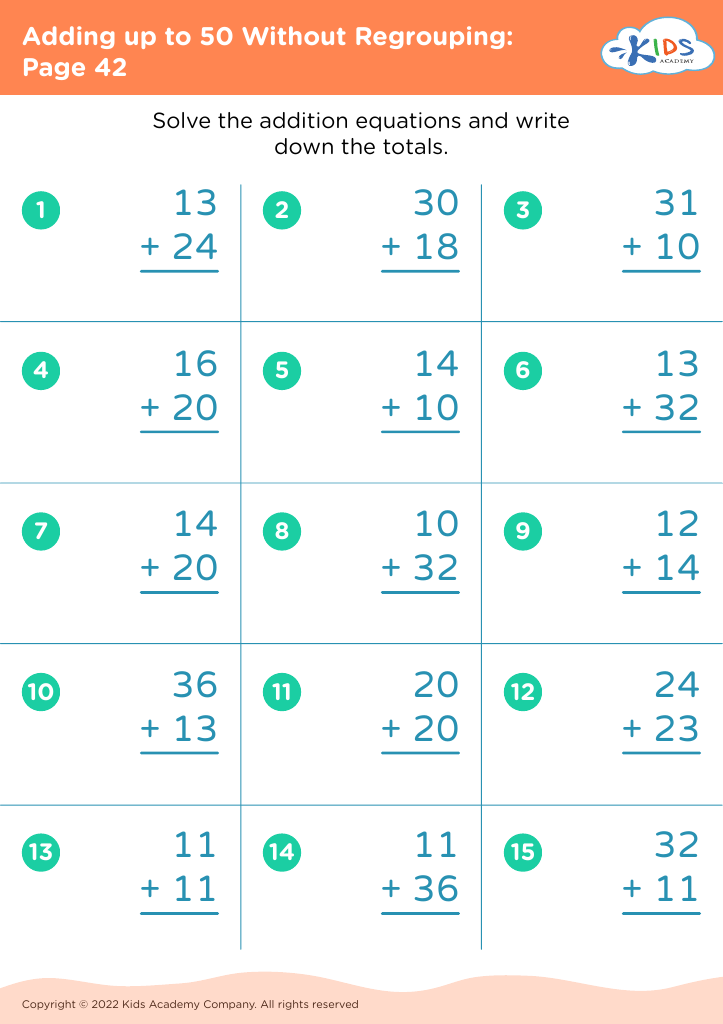







Understanding sequences in addition is critical for children aged 8-9 as it lays the foundation for more complex mathematical concepts they will encounter in the future. At this age, students are transitioning from basic arithmetic to applying their knowledge in real-world situations, and a grasp of sequences in addition boosts their problem-solving skills.
Recognizing patterns in addition, such as skip counting or understanding number lines, enhances children’s ability to predict and make sense of numbers. It fosters a sense of rhythm and structure in mathematics, making addition more intuitive. When children can visualize and comprehend sequences, they leverage these skills in learning multiplication and division, forming a crucial link to algebraic thinking.
Furthermore, sequences in addition enhance cognitive development by improving logical reasoning and critical thinking. Parents and teachers who prioritize this understanding can help children develop a strong number sense, boosting their confidence in tackling math-related challenges. In the long run, fostering these skills can lead to better performance in academics and related subjects as well as nurturing a lifelong appreciation for mathematics. Ultimately, a solid command of sequences in addition is essential in shaping young learners to become proficient and anxious-less learners.








