Understanding addition Addition Worksheets for Ages 8-9
5 filtered results
-
From - To
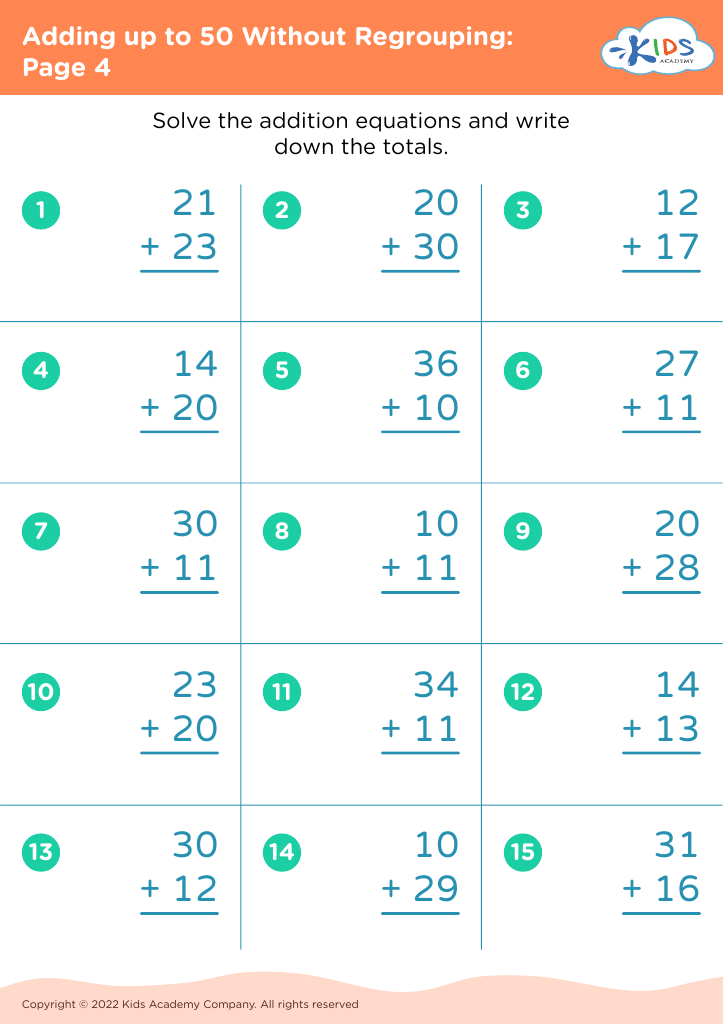
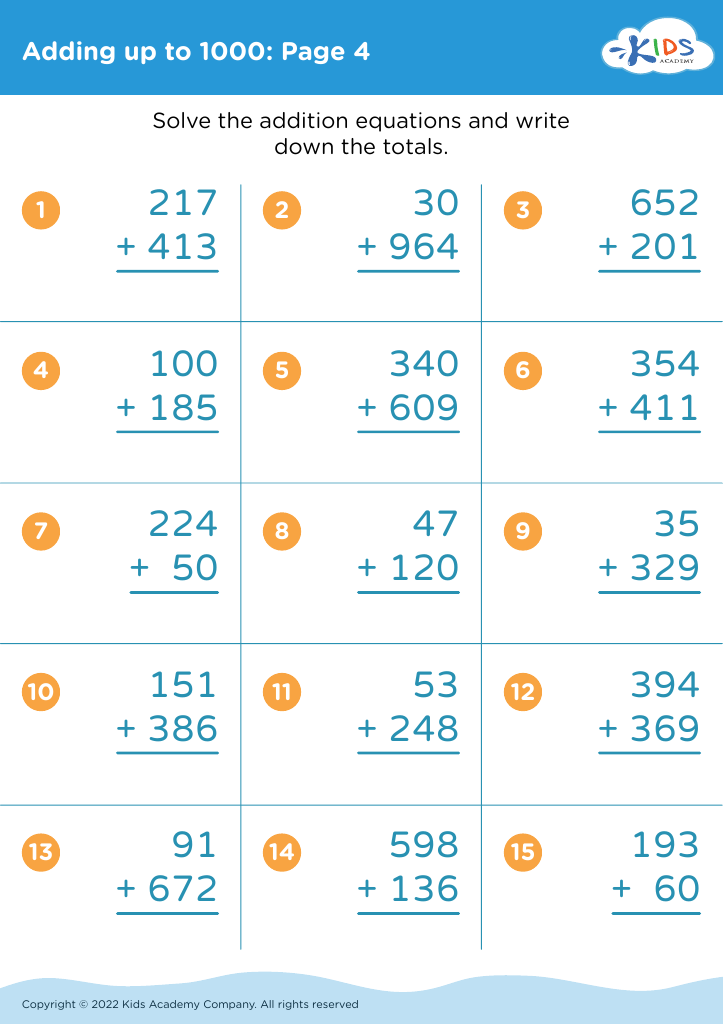
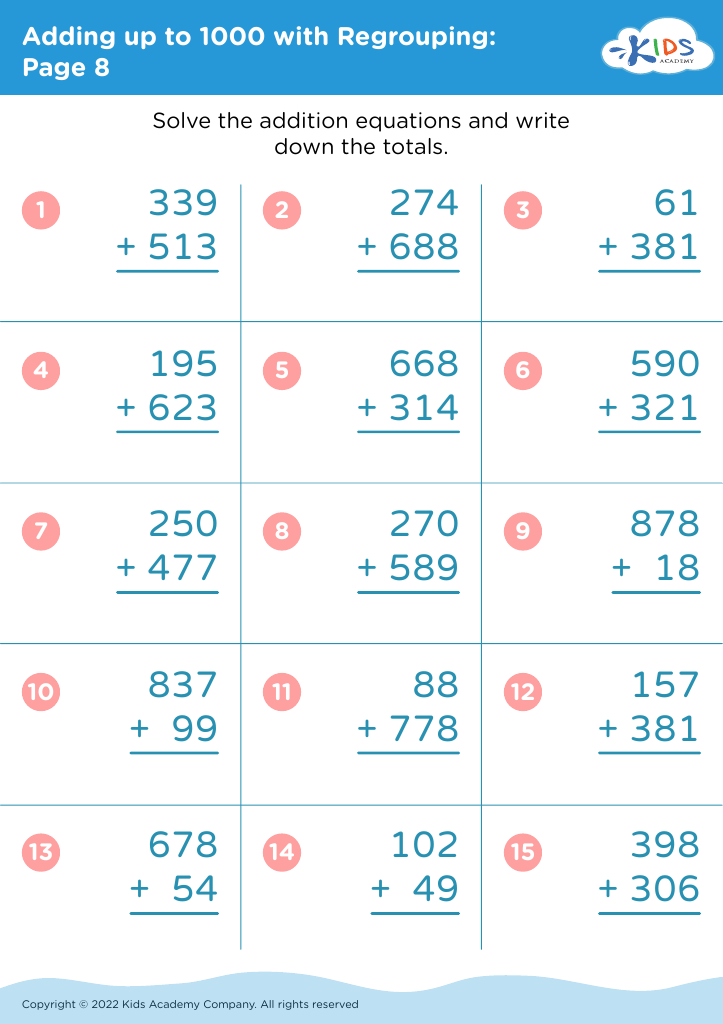
Explore our "Understanding Addition" worksheets designed specifically for children aged 8-9. These engaging resources offer a variety of activities that help students grasp the concept of addition through visual aids and practical exercises. From simple equations to more complex problems, our worksheets encourage critical thinking and problem-solving skills. They are perfect for reinforcing classroom learning at home, providing kids with the support they need to enhance their math abilities. Download printable worksheets that make mastering addition fun and interactive, paving the way for confidence in future math endeavors. Empower your child’s learning journey with our comprehensive addition resources today!
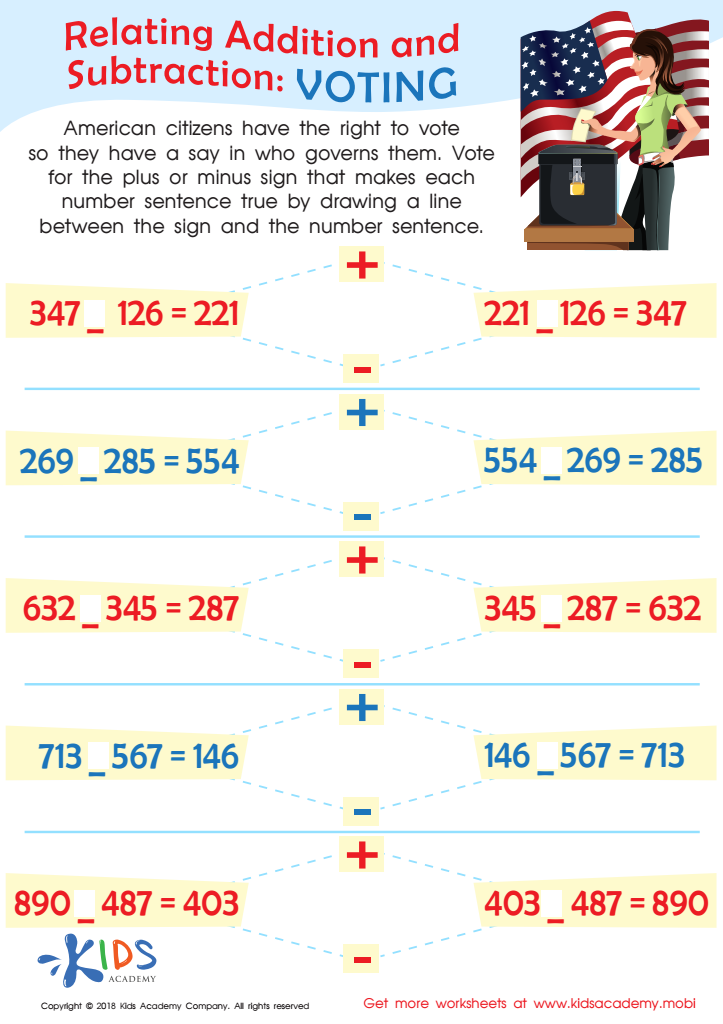
Voting Worksheet
 Assign to My Students
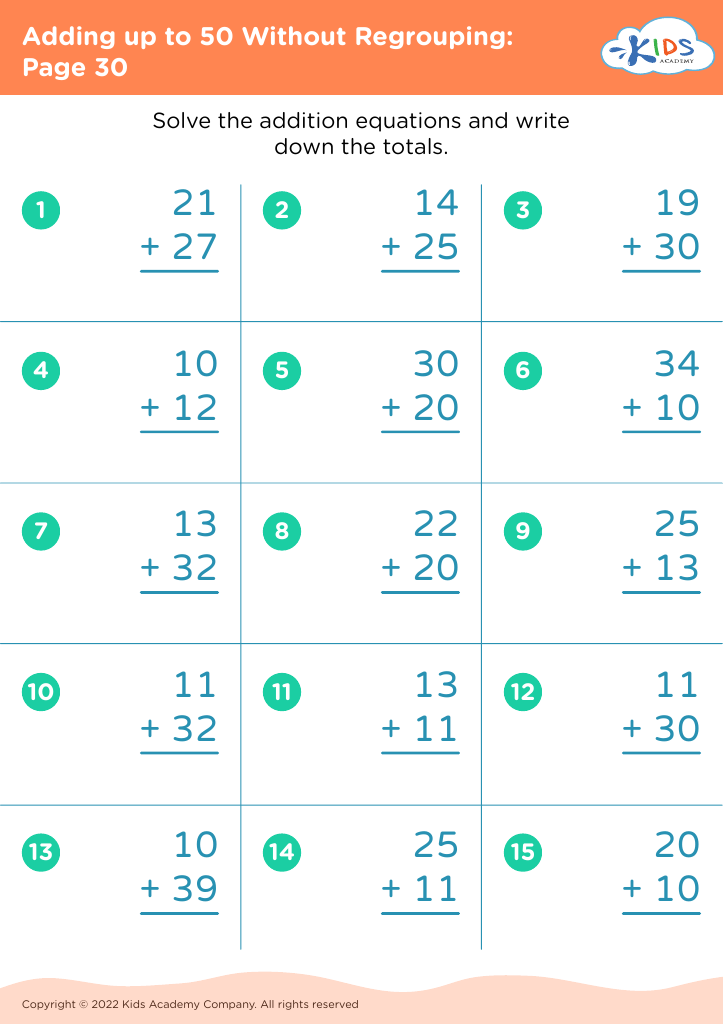








Understanding addition is crucial for children aged 8-9 as it serves as the foundation for many mathematical concepts they will encounter later in their education. At this age, children are transitioning from basic arithmetic to more complex operations, where addition plays a pivotal role, especially in developing problem-solving skills and critical thinking.
First, firm grasp of addition enhances a child's ability to handle larger numbers and lays the groundwork for multiplication and division. It helps them understand relationships between numbers, improving their numerical fluency. Furthermore, addition is not just an abstract concept; it is applied in everyday scenarios such as shopping, cooking, and time management, making it relevant and essential for functional math skills.
Moreover, educators and parents have a vital role in fostering a positive attitude towards math. Engaging children in addition through games, puzzles, and real-life applications can make learning enjoyable and meaningful, building their confidence and interest in mathematics. By emphasizing understanding rather than rote memorization, caregivers and teachers can help students envision math as a creative problem-solving tool, setting the stage for academic success and lifelong reasoning ability. Thus, prioritizing a solid comprehension of addition at this developmental stage is both beneficial and necessary.








