Understanding adjectives Addition Worksheets for Ages 8-9
5 filtered results
-
From - To
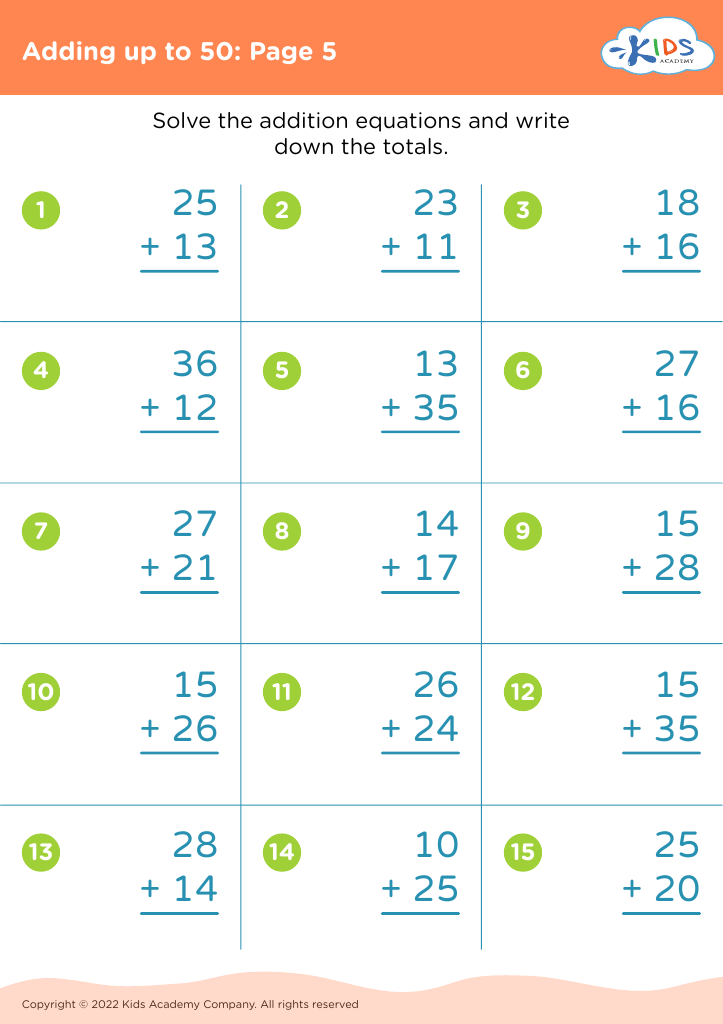
Discover the perfect resource to enhance your child's math and language skills with our "Understanding Adjectives Addition Worksheets for Ages 8-9." Designed to combine crucial math reinforcement with English language arts practice, these worksheets guide students through addition problems while identifying and using adjectives correctly in sentences. Each page offers engaging and educational exercises that cater to young learners' needs, making learning both fun and effective. Give your child the confidence they need to excel in math and language arts with these carefully crafted worksheets, ideal for home and classroom activities. Download and start learning today!








Understanding adjectives is crucial for children ages 8-9 as it significantly enhances their language development. Adjectives add color, depth, and detail to sentences, allowing children to express their thoughts more vividly and precisely. When kids learn to use adjectives, they can describe objects, feelings, and experiences in richer detail, which is essential for both verbal and written communication.
For parents and teachers, investing time in teaching adjectives helps improve a child's reading comprehension and writing skills. Children who understand adjectives are better equipped to decode new text, as they can grasp nuances and context more effectively. This foundation in language arts also fosters critical thinking and creativity, enabling kids to paint more elaborate mental pictures and engage more deeply with the material they read or narratives they compose.
Moreover, a good grasp of adjectives can enhance social skills. Kids can convey their emotions and desires more effectively, leading to improved interactions with peers and adults. This development is not only an academic necessity but also a life skill that supports overall emotional intelligence. By prioritizing the understanding of adjectives, parents and teachers set the stage for children to become articulate, thoughtful, and confident communicators.








