Understanding number sequences Addition Worksheets for Ages 8-9
3 filtered results
-
From - To
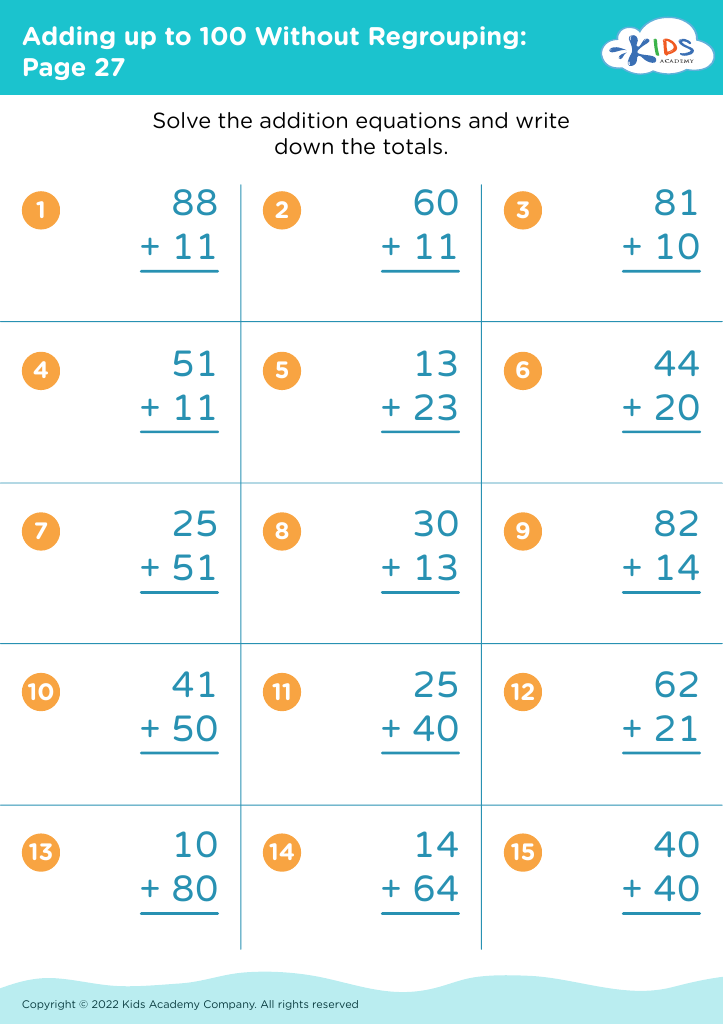
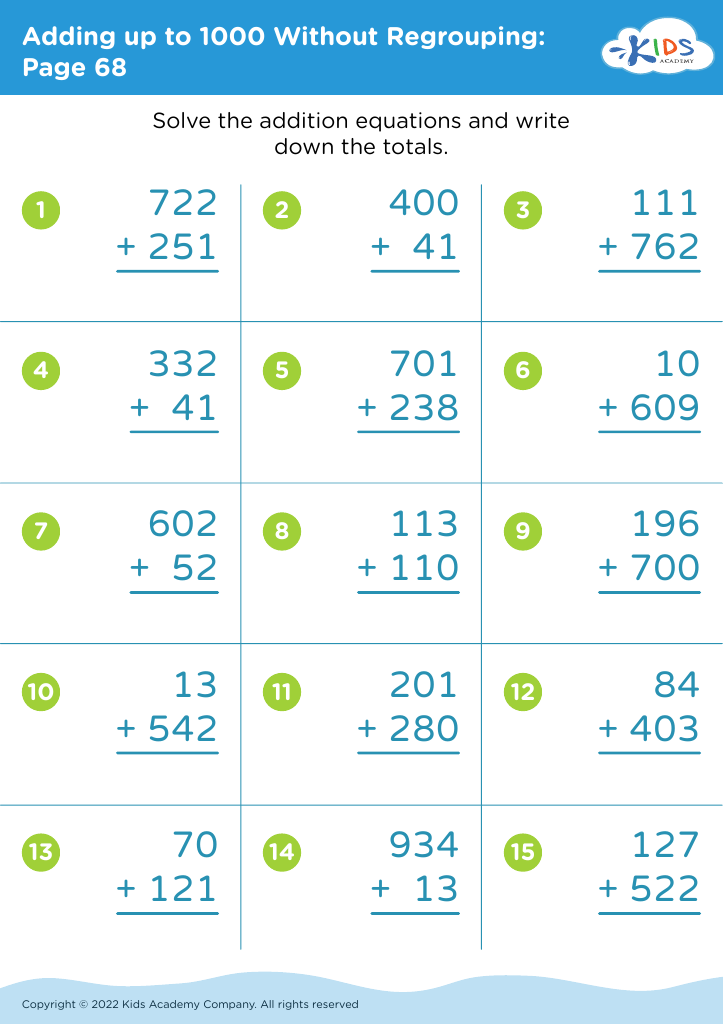
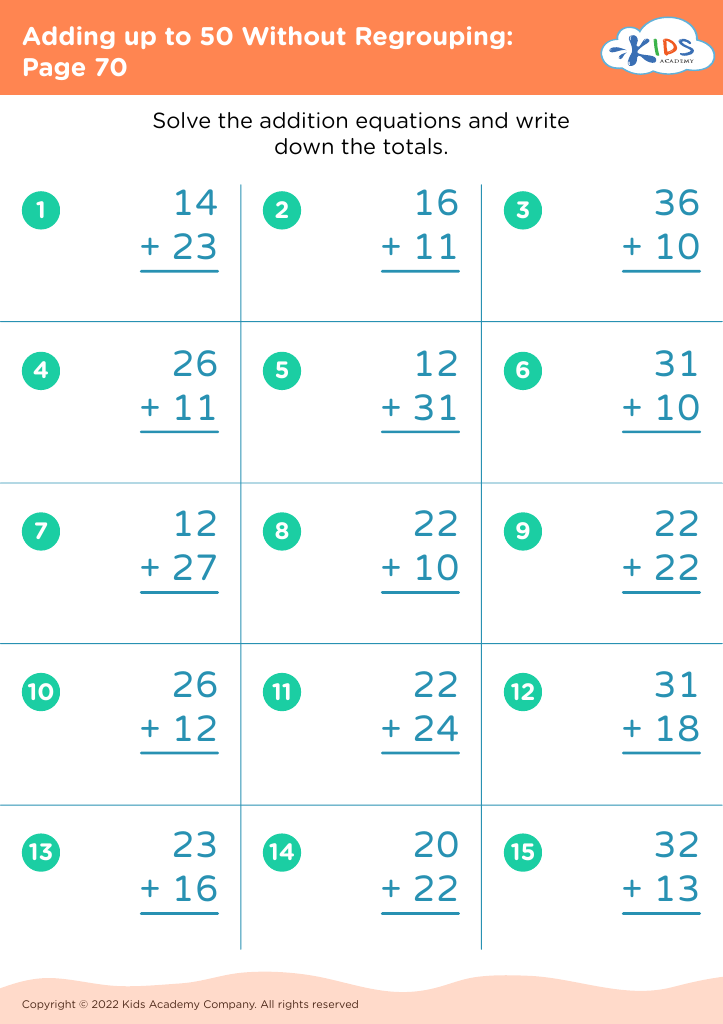
Looking to strengthen your child's math skills? Our "Understanding Number Sequences Addition Worksheets for Ages 8-9" are designed to help young learners grasp the concept of adding within number sequences. These engaging, carefully crafted worksheets focus on enhancing addition skills while building a solid understanding sequences and patterns. Ideal. for both classroom and home use, each worksheet offers fun, age-appropriate exercises that encourage logical thinking and boost confidence in math. Help your child master number sequences and stride confidently towards more advanced math concepts with our comprehensive, easy-to-follow addition worksheets.








Understanding number sequences and addition at ages 8-9 is crucial for several reasons. At this developmental stage, children are expanding their cognitive abilities, and establishing a solid foundation in math can significantly benefit their academic journey. Number sequences foster numerical literacy, helping children recognize patterns, predict subsequent numbers, and comprehend the concepts of order and progression.
This understanding is instrumental in more complex arithmetic and problem-solving skills. Addition is a fundamental mathematical operation that underpins many aspects of higher-level math, including multiplication, division, fractions, and algebra. By mastering addition early on, children build confidence and develop a positive attitude towards mathematics, reducing math anxiety in later years.
Moreover, these skills extend beyond academics into practical life. Simple daily tasks, such as counting money, telling time, or following recipes, require basic arithmetic. A strong grasp of number sequences and addition enhances logical thinking, strategic planning, and critical reasoning. Parents and teachers should therefore prioritize and nurture these skills through various engaging and interactive methods, ensuring that children have the necessary tools to succeed in mathematics and in life.








