Addition skills Money Worksheets for Ages 8-9
3 filtered results
-
From - To
Boost your child's math proficiency with our "Addition Skills Money Worksheets for Ages 8-9" from Kids Academy. These engaging, printable activities combine foundational math skills with real-world money concepts, helping children enhance their addition abilities while understanding currency values. Tailored for 8 to 9-year-olds, each worksheet offers fun and educational challenges that make learning enjoyable. Perfect for reinforcing classroom lessons or home practice, our worksheets support cognitive development and numerical confidence, ensuring your child becomes adept at adding different amounts of money. Download today for a valuable tool that makes math marvelous!
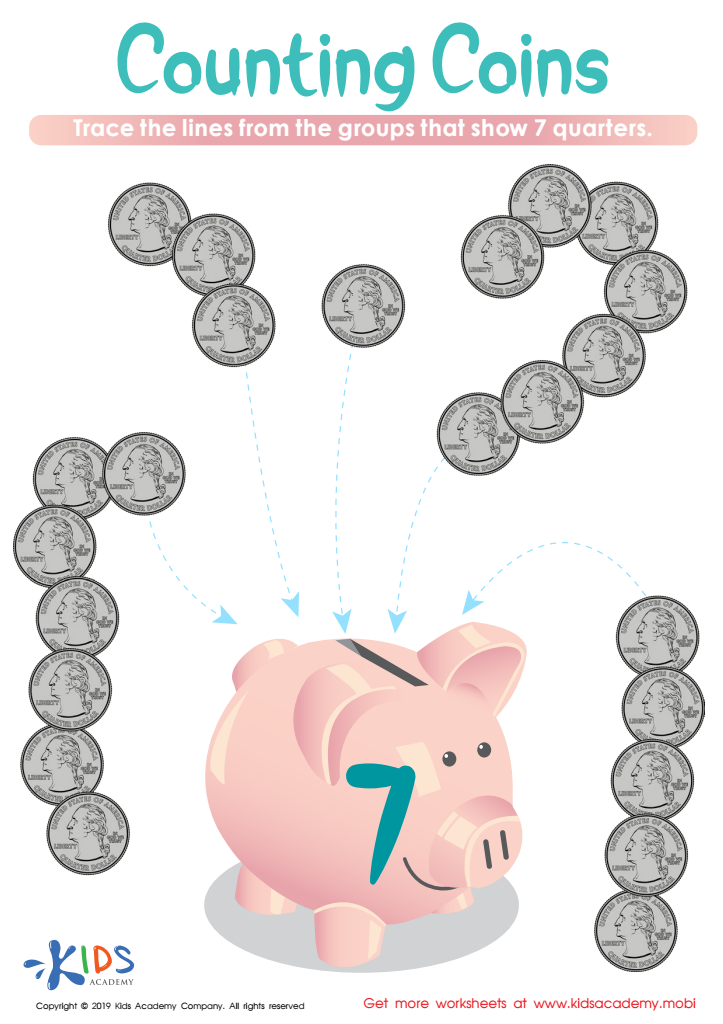
Counting Coins Worksheet
 Assign to My Students
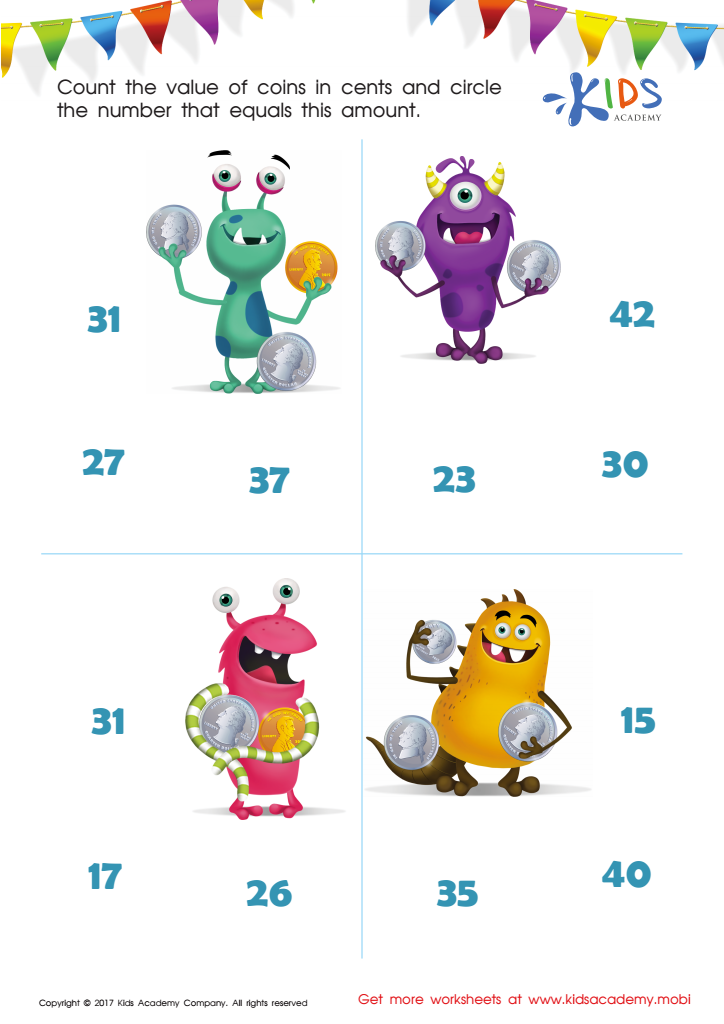
How Many Coins Money Worksheet
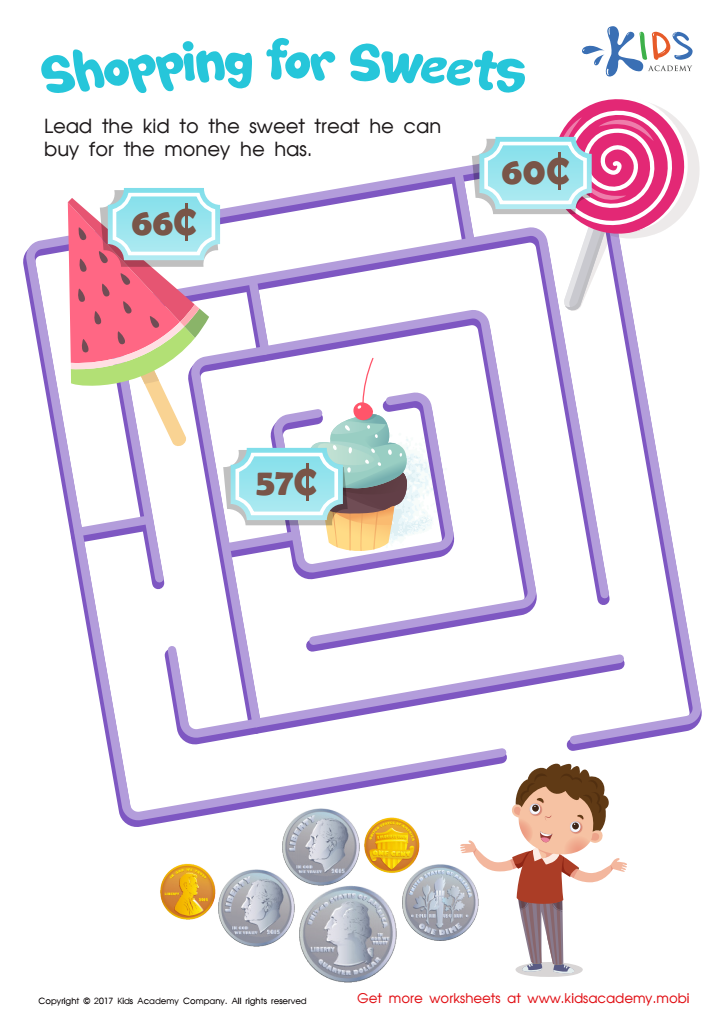
Shopping for Sweets Worksheet








Parents and teachers should prioritize developing addition skills related to money for children ages 8-9 because these fundamental financial abilities have far-reaching implications for academic success and everyday life. At this pivotal age, students are ready to understand more complex mathematical concepts, and using money as a learning tool makes lessons practical and relatable.
First, math skills developed through addition strengthen cognitive abilities like problem-solving and critical thinking. These skills are foundational not just for math, but for other subjects as well.
Second, working with money introduces children to basic financial literacy. Understanding currency values, making change, and simple budgeting cultivate lifelong habits of financial responsibility and confidence in managing resources. This early exposure can positively impact future financial decisions.
Moreover, hands-on activities, such as counting coins and bills, enhance motor skills and promote experiential learning, making abstract concepts more concrete.
Finally, engaging with financial scenarios empowers children with real-world skills. Whether they’re making a small purchase with their allowance or setting aside savings for a goal, they learn the value of each transaction.
In essence, building strong addition skills involving money is not just an academic exercise but a multifaceted learning experience that lays a vital foundation for both personal and educational growth.








