Conversion skills Math Worksheets for Ages 8-9
3 filtered results
-
From - To
Enhance your child's understanding of measurement conversions with our engaging Conversion Skills Math Worksheets designed for ages 8-9. These worksheets provide a fun and interactive way for young learners to practice essential conversion skills, including transforming between units of length, weight, and volume. Our thoughtfully crafted exercises make learning enjoyable while reinforcing key mathematical concepts in a clear and simple manner. With a variety of activities designed to cater to different learning styles, your child will build confidence and proficiency in conversion skills. Explore our collection today and equip your child with the tools they need for mathematical success!
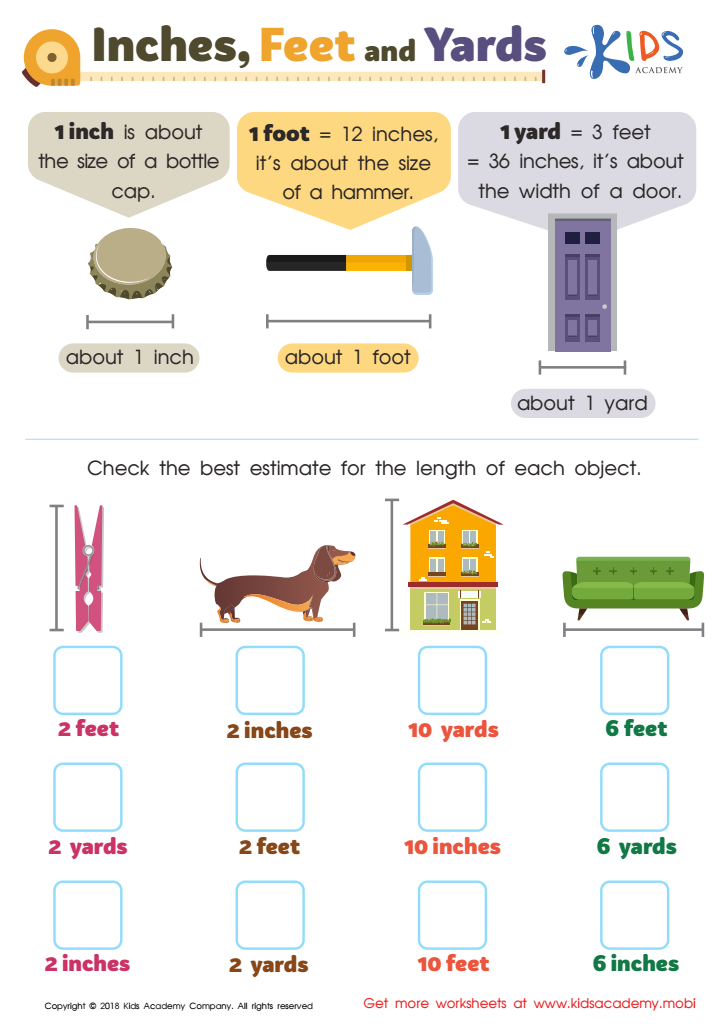
Inches, Feet and Yards Worksheet
 Assign to My Students
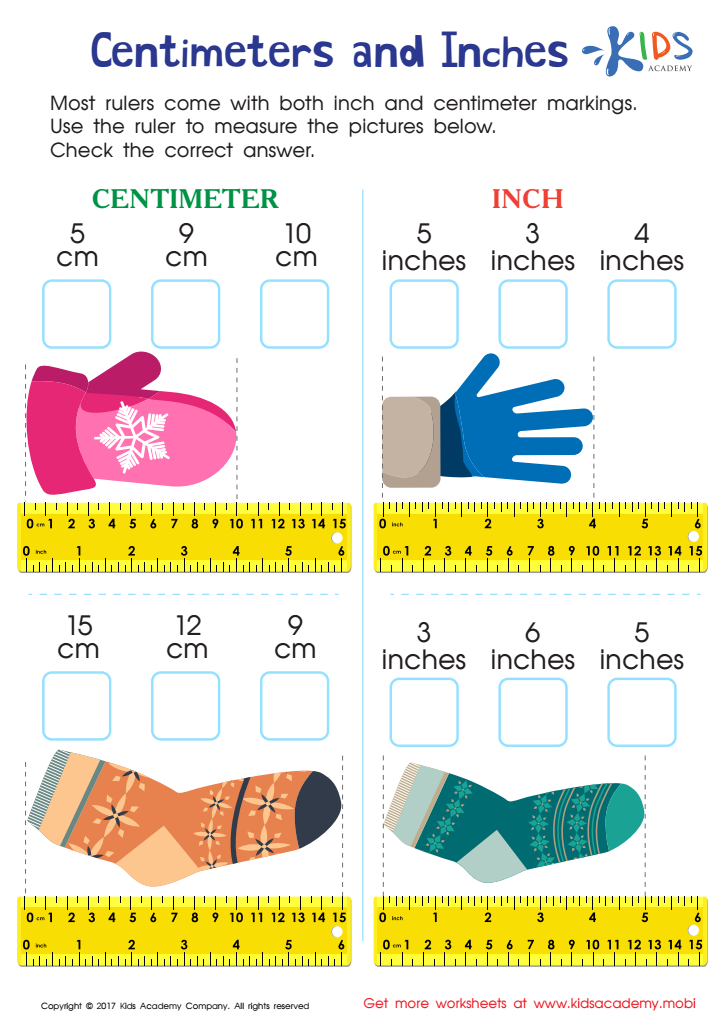
Centimeters and Inches Worksheet
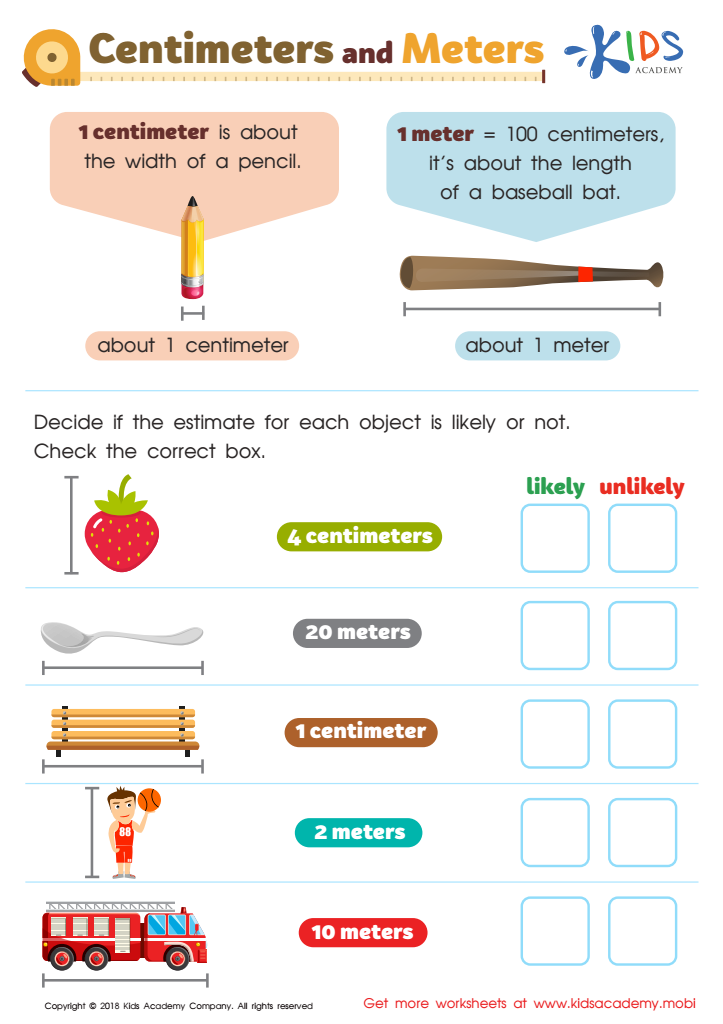
Centimeters and Meters Worksheet








Conversion skills in mathematics, particularly for ages 8-9, are essential for fostering a deep, practical understanding of numerical concepts. At this stage, children are developing critical thinking and problem-solving abilities. Mastering conversion skills—such as changing units of measurement (inches to feet, liters to milliliters), converting fractions to decimals, and understanding percentages—equips them with tools to navigate everyday situations effectively.
Parents and teachers should prioritize these skills because they build foundational concepts that permeate various aspects of life, from cooking and shopping to science experiments and coding. Additionally, strong conversion skills support overall mathematical proficiency, enhancing children’s ability to tackle more complex problems in later grades.
Furthermore, these skills encourage students’ confidence in their mathematical abilities, reducing math anxiety and promoting a positive attitude towards learning. As they practice conversions, they improve their flexibility with numbers and enhance their ability to estimate and make sense of quantitative information. Ultimately, nurturing conversion skills helps students develop into thoughtful, capable individuals who understand and manipulate numbers in meaningful ways, preparing them for future academic success and real-life applications. Engaging parents in this process fosters a supportive learning environment that reinforces these essential skills.








