
Enhance problem-solving Math Worksheets for Ages 8-9
3 filtered results
Difficulty Level
Grade
Age
-
From - To
Subject
Activity
Standards
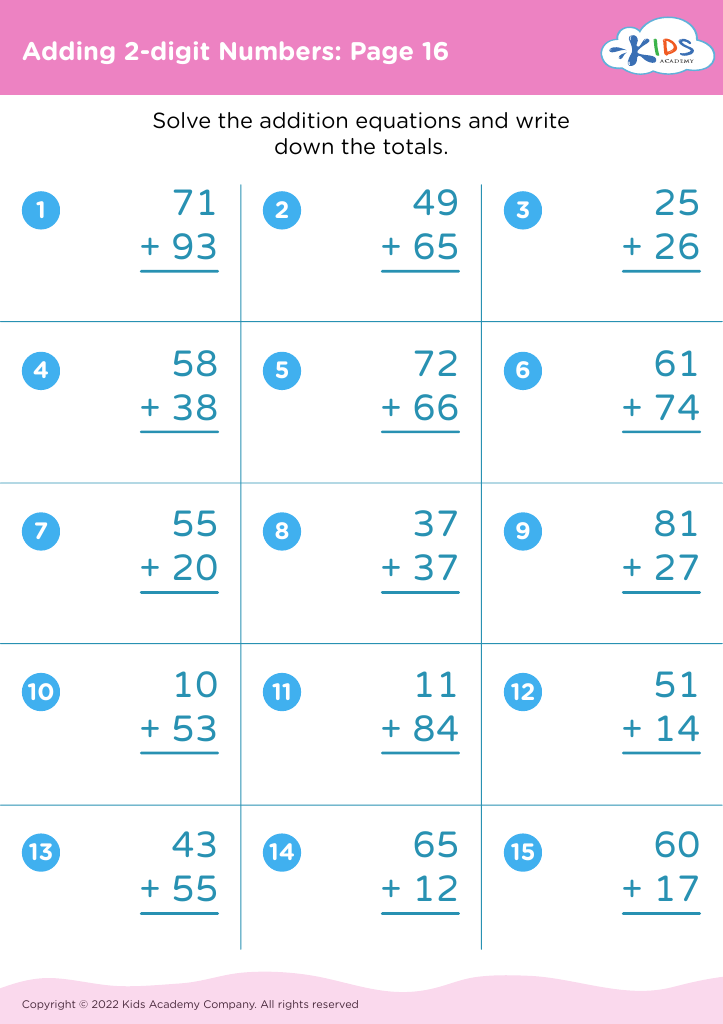
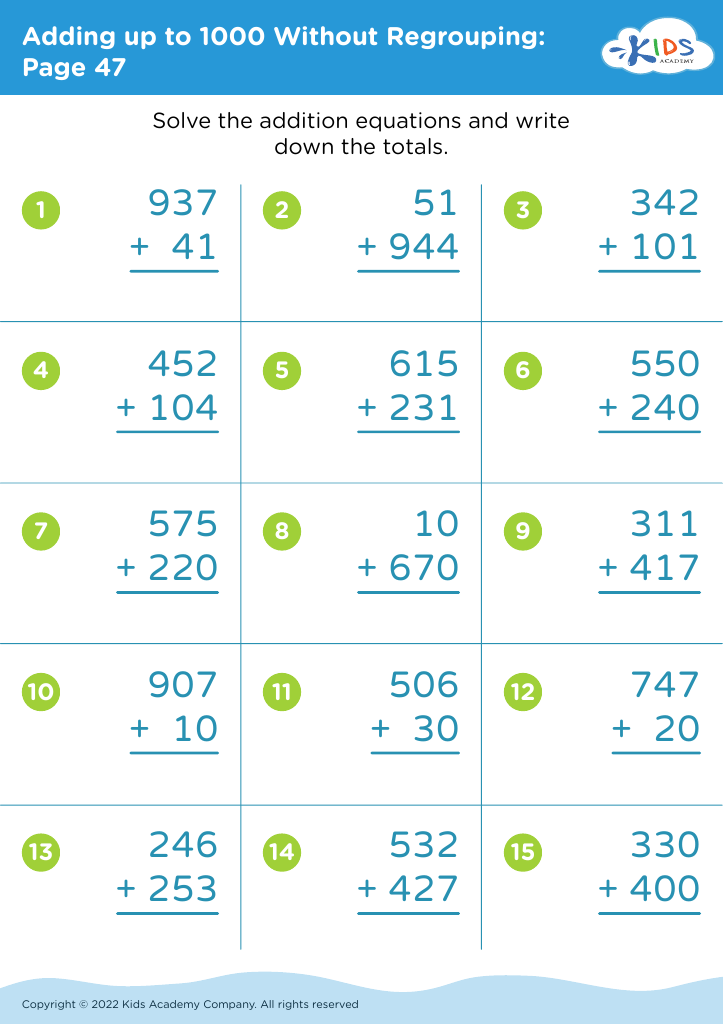
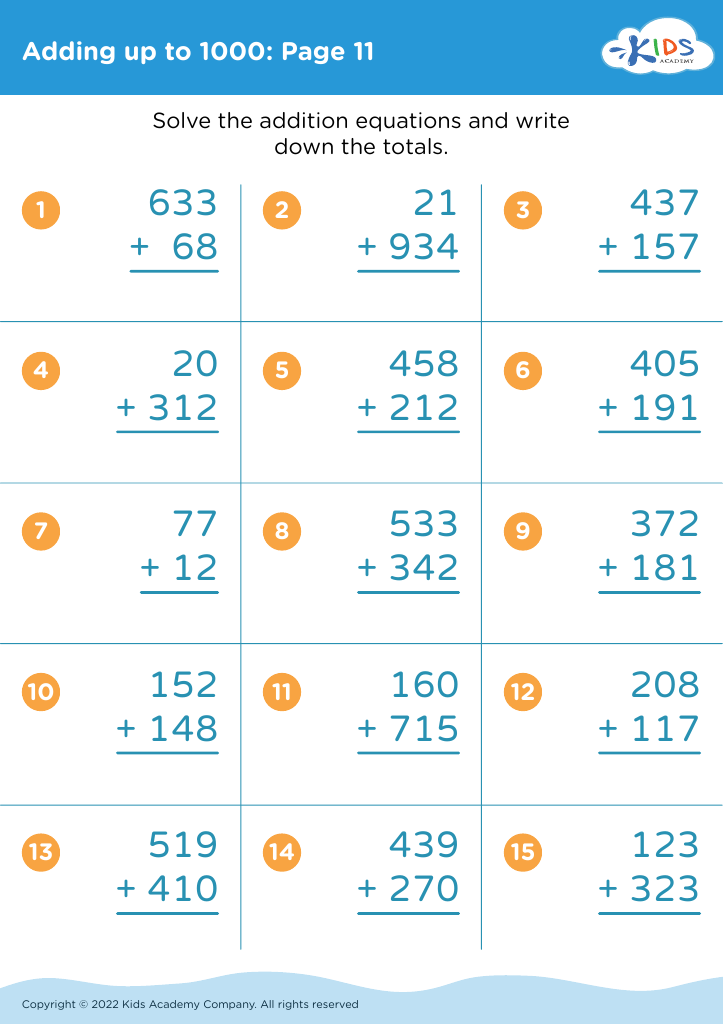
Our "Enhance Problem-Solving Math Worksheets for Ages 8-9" are expertly designed to challenge young minds and foster critical thinking skills. Perfect for both classroom use and at-home practice, these worksheets cover a range of topics including addition, subtraction, multiplication, division, and word problems, ensuring a thorough grasp of essential math concepts. With engaging, age-appropriate activities, children will develop confidence and master various problem-solving strategies while having fun. Equip your child for success in math with these comprehensive, printable resources that align with educational standards and promote a deep love for learning. Get started today!
Favorites
With answer key
Interactive
Join Kids Academy for Free
Who is primarily going to use this learning content?








Enhancing problem-solving skills in math for children aged 8-9 is crucial for several reasons. At this stage, kids are typically transitioning from concrete arithmetic to more abstract thinking. Strengthening their problem-solving abilities not only improves their math skills but also fosters their critical thinking. For parents and teachers, facilitating this development means setting a foundation for future academic success.
Problem-solving serves as a vital life skill. It encourages children to approach challenges methodically and improves their reasoning abilities. By dealing with math problems, kids learn to analyze situations, recognize patterns, and develop strategies for overcoming obstacles, skills that are transferable beyond the classroom.
Moreover, early encouragement in math can boost a child’s confidence. When children see that they can solve complex problems, their self-esteem grows. This confidence aerial affects their overall attitude toward learning, making them more resilient and open to new challenges.
For teachers, incorporating problem-solving exercises shapes a more interactive and engaging curriculum, moving beyond rote memorization to application-based learning. For parents, engaging with their children's math education increases family bonding and supports children's academic pursuits.
Investing in enhanced problem-solving techniques in math thus cultivates a well-rounded, confident, and intellectually capable young learner poised for future success.








