
Improving number sense Math Worksheets for Ages 8-9
5 filtered results
Difficulty Level
Grade
Age
-
From - To
Subject
Activity
Standards
Our "Improving Number Sense Math Worksheets for Ages 8-9" offer engaging and interactive activities designed to enhance your child's mathematical foundation. Tailored for young learners, these worksheets help solidify core skills such as addition, subtraction, multiplication, and division. Through a variety of fun exercises, children can develop strong number sense, critical for success in advanced math topics. Suitable for classroom or at-home learning, our worksheets encourage independent thinking and problem-solving, fostering a lifelong love for math. Equip your child with the tools to excel in math and build their confidence with our expertly crafted resources.
Favorites
With answer key
Interactive
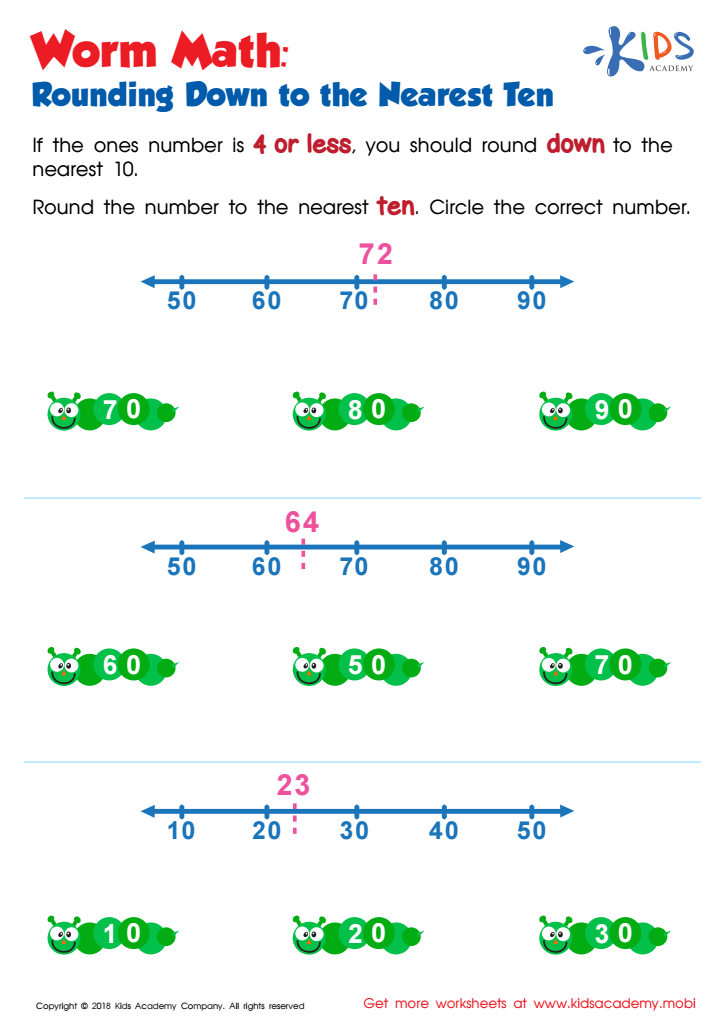
Worm Math Rounding Down to the Nearest Ten Worksheet
Look at the full of smiles worms carrying two-digit numbers. Is the number in the ones spot 4 or less? Round down to the nearest ten! Help kids learn the tricky concept of rounding with this math worksheet. Perfect for clearing up confusion and practicing rounding down to the nearest ten!
 Assign to My Students
Worm Math Rounding Down to the Nearest Ten Worksheet
Worksheet
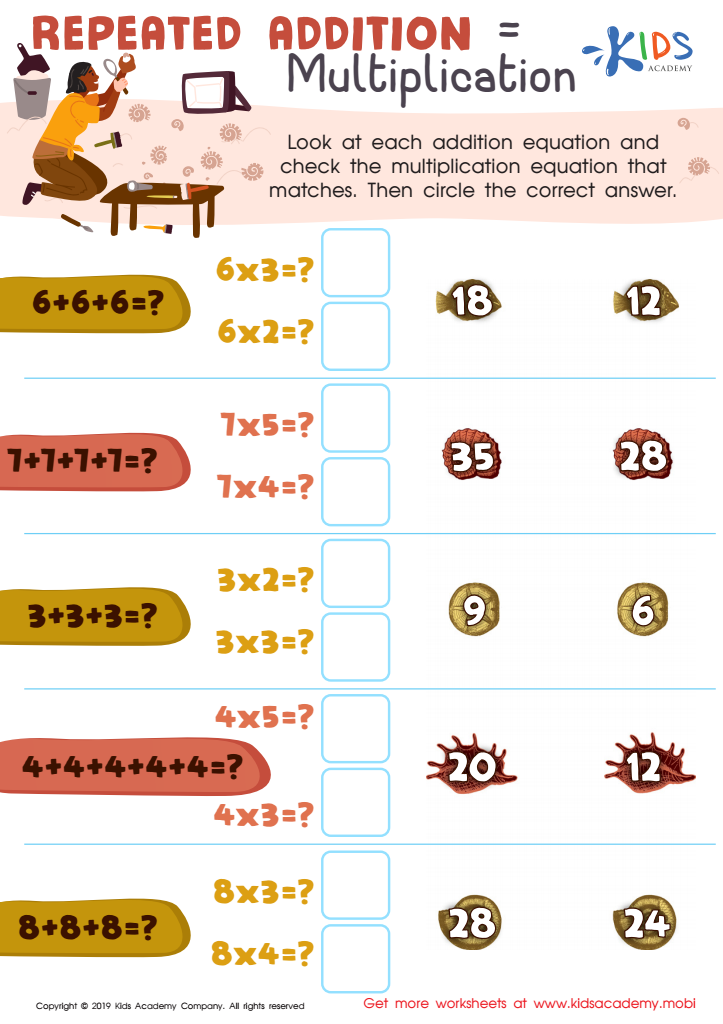
Repeated Addition = Multiplication Worksheet
If your child is having trouble with math, worksheets like this can help them get more practice. Addition, subtraction, and multiplication go together. Look over each addition equation and pick the matching multiplication equation, then circle the correct answer. This can give your child the necessary practice to understand mathematics better.
Repeated Addition = Multiplication Worksheet
Worksheet
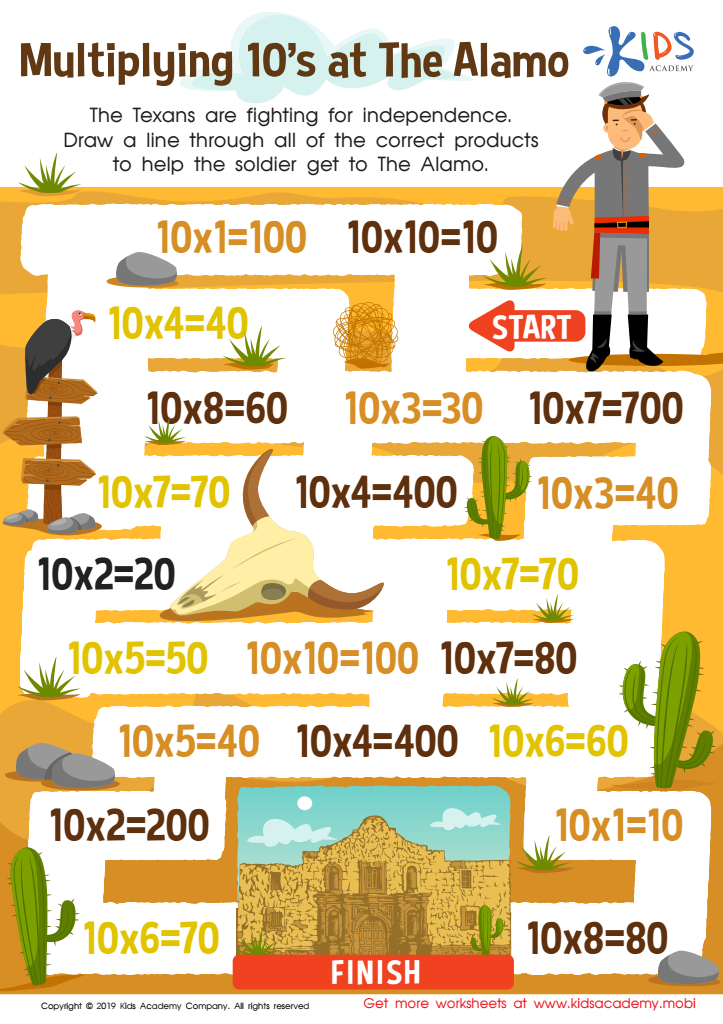
Multiplying 10’s at The Alamo Worksheet
Teach your kids easy tricks to simplify any multiplication problem. For example, when multiplying any number by 10, the result will always end in a zero. To help the Texans in this worksheet, draw a line through all of the correct products to get them to The Alamo.
Multiplying 10’s at The Alamo Worksheet
Worksheet
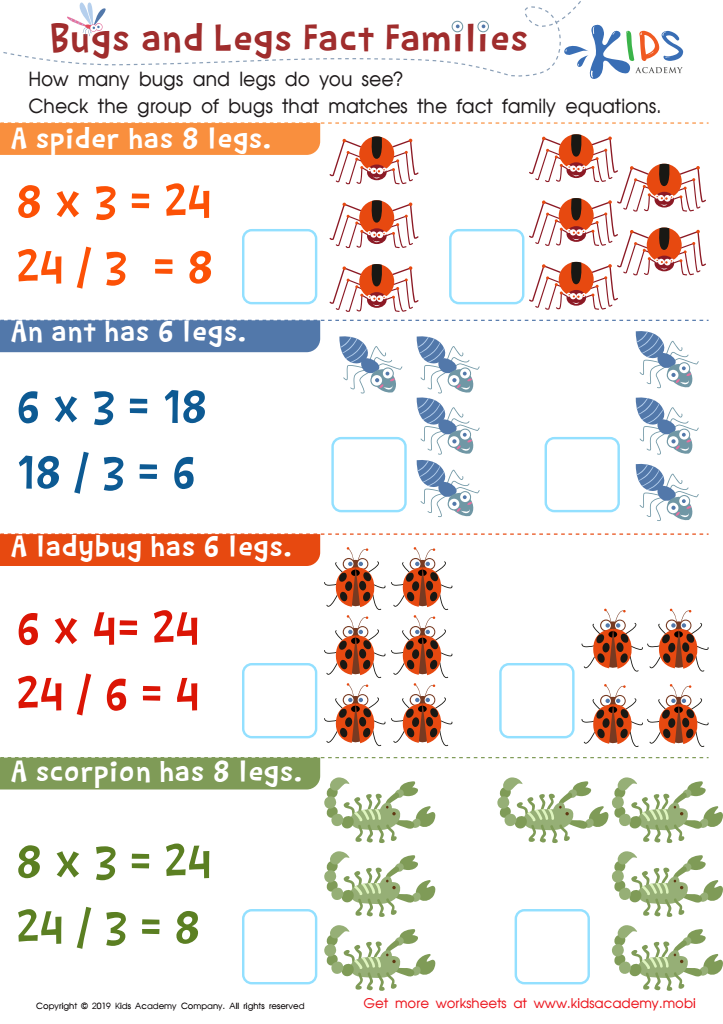
Bugs and Legs Fact Families Worksheet
This free worksheet uses bugs and insects to help young math students learn about fact families and recognize patterns in multiplication and division. It's a fun and colorful way to gain automaticity and efficiency in computation skills, without even realizing it's math!
Bugs and Legs Fact Families Worksheet
Worksheet
Learning Skills
Improving number sense
Rounding numbers practice
Understanding rounding concepts
Promoting problem-solving abilities
Enhancing math skills
Enhancing arithmetic skills
Developing problem-solving abilities
Understanding multiplication
Repeated addition skills
Multiplication as repeated addition concept
Join Kids Academy for Free
Who is primarily going to use this learning content?








Number sense is a foundational element in mathematics that significantly impacts a child's ability to comprehend a broad range of mathematical concepts. For children ages 8-9, improving number sense is crucial for several reasons:
Firstly, it fosters a deep understanding of numbers and their relationships, going beyond rote memorization of facts. This translates into greater mathematical fluency, allowing children to solve problems more efficiently and accurately. When students develop solid number sense, they can recognize patterns, make reasonable estimates, and understand the significance of numbers in different contexts, enhancing their overall mathematical confidence.
Secondly, number sense forms the basis for more advanced math topics such as fractions, algebra, and geometry. A strong grasp of basic numerical concepts at this age sets the stage for future success in math, reducing the likelihood of struggles or math anxiety in later years.
Furthermore, improved number sense skills contribute to everyday decision-making and problem-solving abilities. It helps children in making judicious choices while shopping, understanding timetables, and managing allowances, grooming them for real-life financial literacy.
For parents and teachers, investing time and effort into improving a child's number sense at this crucial age lays a robust foundation for lifelong learning and critical thinking. This practical focus on enhancing number sense can ensure students are well-prepared for academic challenges and real-world applications alike.








