
Learning addition Math Worksheets for Ages 8-9
3 filtered results
Difficulty Level
Grade
Age
-
From - To
Subject
Activity
Standards
Unlock the power of numbers with our Learning Addition Math Worksheets tailor-made for kids ages 8-9! Designed to captivate young minds, these worksheets feature engaging activities that simplify the fundamentals of addition. By presenting a mix of creative problem-solving tasks, vividly illustrated exercises, and real-world scenarios, we ensure your child grasps core concepts effortlessly. Perfect for classroom projects or home practice, each worksheet aligns with grade-specific learning milestones, fostering confidence and a love for mathematics. Equip your young learner with the essential skills to excel in math—explore our collection today!
Favorites
With answer key
Interactive
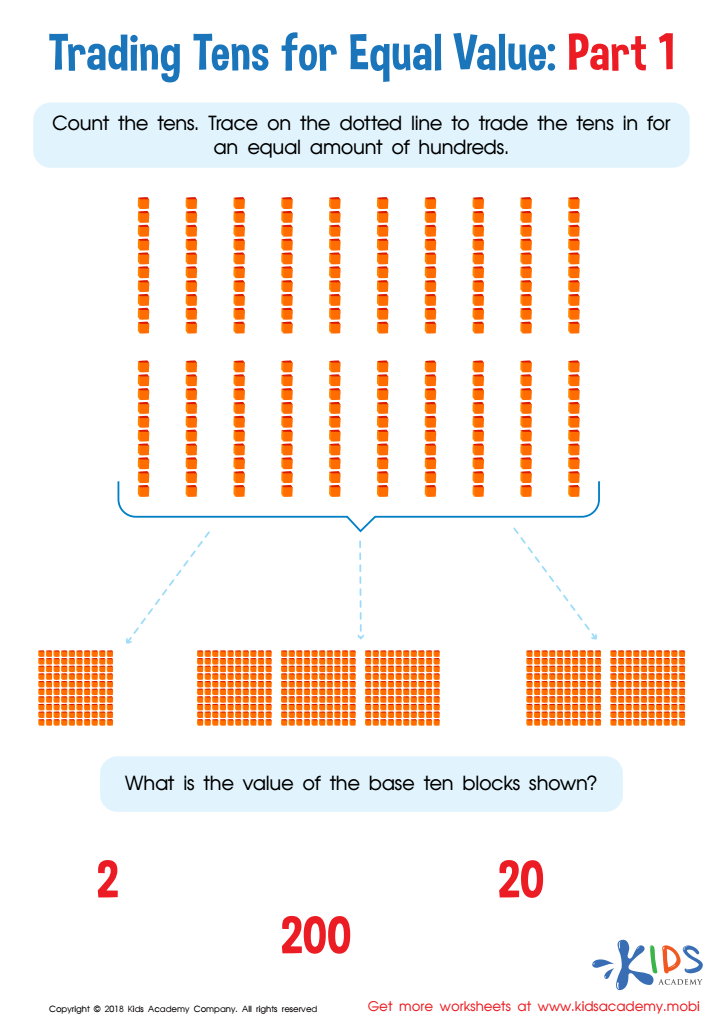
Trading Tens for Equal Value Worksheet: Part 1
This worksheet helps 3rd graders count large numbers and recognize base numbers. It lists 10 cubes and asks students to identify the hundreds, then circle the base blocks. This colorful pdf provides a fun, visual way to help students strengthen their math basics.
 Assign to My Students
Trading Tens for Equal Value Worksheet: Part 1
Worksheet
Join Kids Academy for Free
Who is primarily going to use this learning content?








At ages 8-9, children are at a pivotal stage in their cognitive and academic development, particularly in mathematics. Learning addition during these years is crucial for several reasons. First, addition is a fundamental building block for all higher-level math concepts. Mastery of addition enables children to handle subtraction, multiplication, division, and more complex problem-solving in the future.
Second, learning addition enhances critical thinking and logic. As children practice adding numbers, they are developing problem-solving skills and improving their ability to think sequentially and logically. This rigor aids their overall academic performance and can boost self-esteem.
Third, proficiency in addition helps in everyday life. Simple tasks like calculating money, understanding time, and measuring ingredients all involve addition. Early mastery sends a message that math is practical and relevant, impacting children’s perception and attitude toward math positively.
Finally, struggling with basic math concepts early on can lead to math anxiety, making future learning more challenging. Early competence in addition fosters a positive, confident attitude in handling math's increasing complexity, setting a strong foundation for lifelong learning. Therefore, parents and teachers should prioritize learning addition to support children's holistic development and future success.








