Money identification Math Worksheets for Ages 8-9
4 filtered results
-
From - To
Enhance your child's understanding of money with our engaging Money Identification Math Worksheets designed specifically for ages 8-9. These worksheets provide a fun and interactive way for children to learn about coins and bills, recognize their values, and develop essential math skills. With colorful illustrations and relatable scenarios, these worksheets encourage practical application and critical thinking. Whether your child is mastering coin recognition or practicing making change, our resources aim to boost confidence and competence in financial literacy. Download our worksheets today and watch your child thrive as they explore the exciting world of money management!
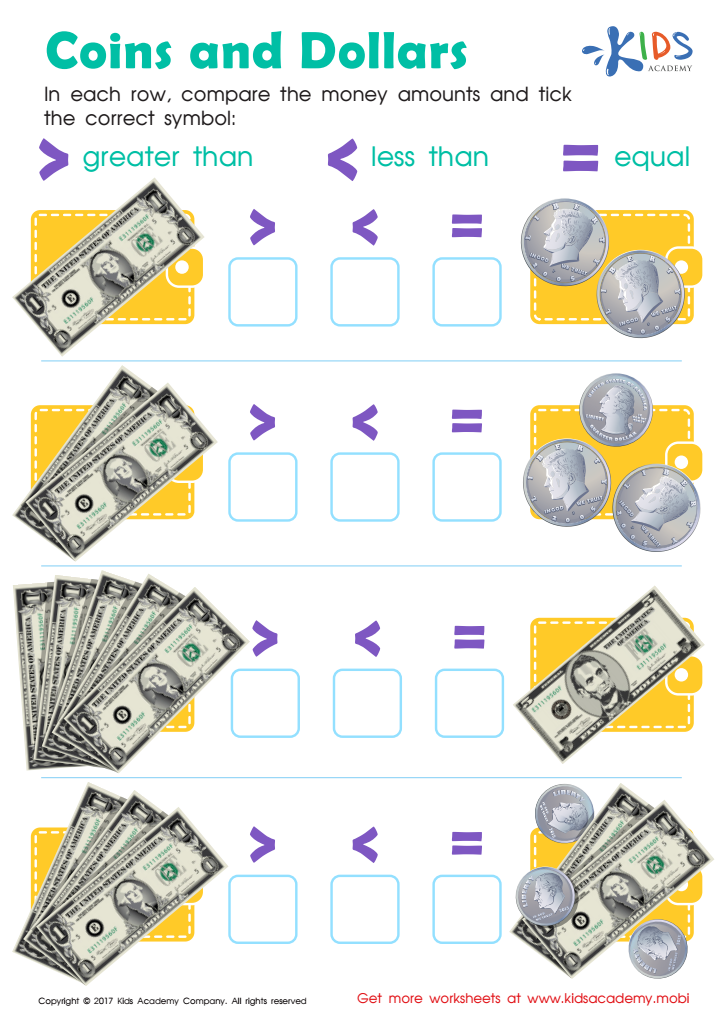
Money: Coins Dollars Printable
 Assign to My Students
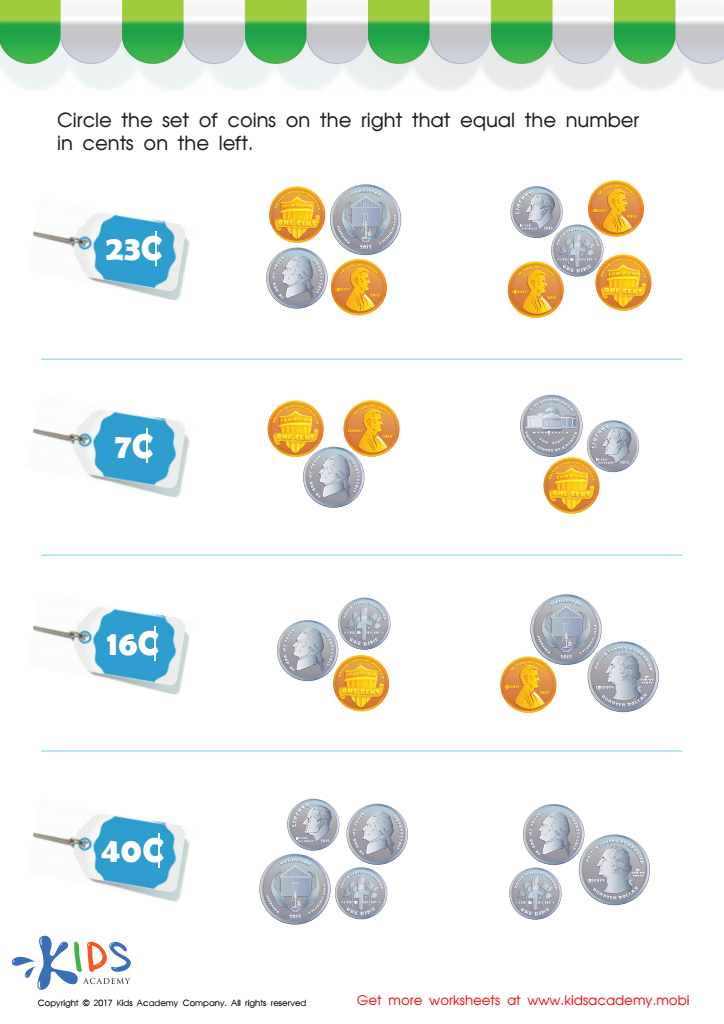
Picking the Coins You Need Money Worksheet








Money identification is a crucial math skill for children aged 8-9, as it lays the foundation for effective financial literacy. At this age, children are beginning to engage with real-life scenarios involving money, such as making purchases or understanding savings. By learning to identify various denominations of currency, they become more adept at managing smaller transactions, enhancing their confidence and independence.
Understanding money also fosters essential arithmetic skills. Children learn to add, subtract, and make change, which reinforces their overall math abilities. Practicing money identification can engage students in hands-on activities, making math more interactive and enjoyable. Parents and teachers should recognize that these skills contribute to a child’s critical thinking and problem-solving abilities, not only within math but in everyday contexts.
Moreover, these lessons on money management encourage responsibility. As children grasp the concepts of value and budgeting, they begin to appreciate the importance of saving and wiser spending habits, which are vital for their future. Supporting money identification education is, therefore, investing in a child’s maturity and preparedness for the real world. Ultimately, fostering this skill set enhances not only academic success but also emotional and social growth.








