Times table familiarity Multiplication Worksheets for Ages 8-9
3 filtered results
-
From - To
Enhance your child's multiplication skills with our Times Table Familiarity Multiplication Worksheets, designed specifically for ages 8-9. These engaging worksheets help students gain confidence and mastery in multiplication through interactive and varied activities. Your child will explore different times tables, tackle practical multiplication problems, and solve fun puzzles to reinforce their understanding. These worksheets cater to different learning styles, making math enjoyable and accessible. They're perfect for home learning or classroom use. Give your child the foundation they need for future math success. Visit our page to download and start your multiplication journey today!
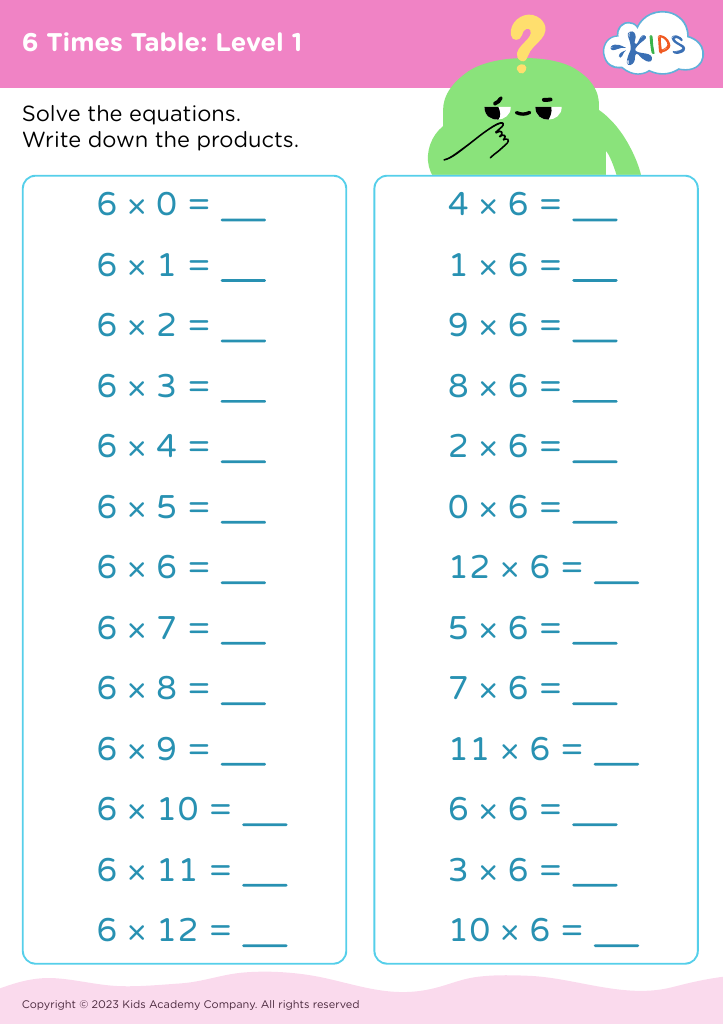
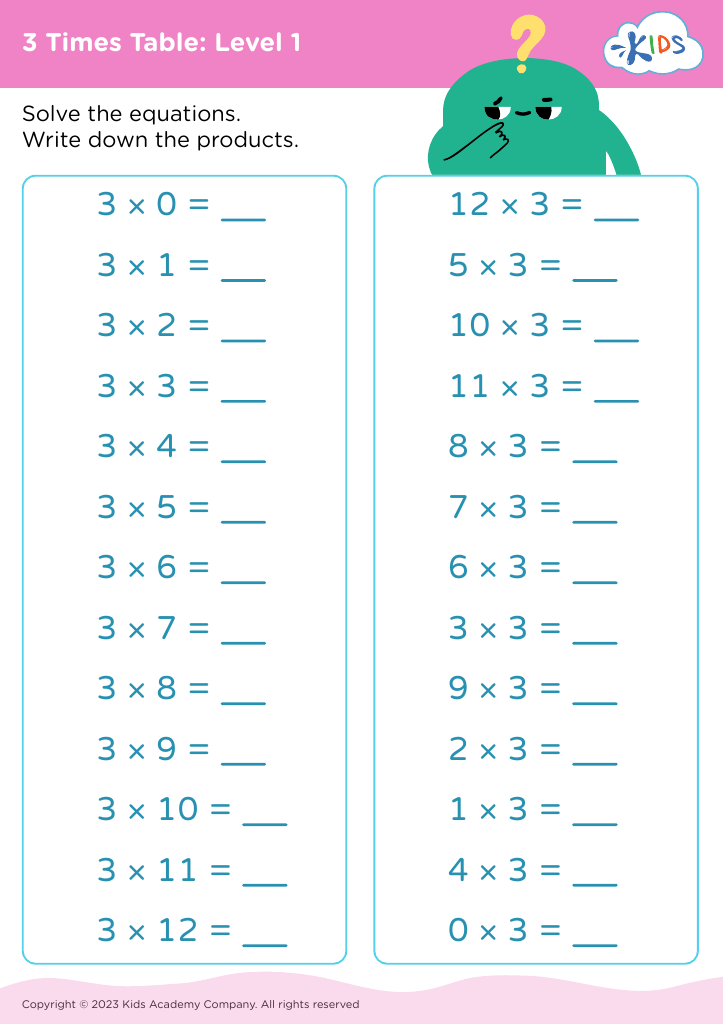
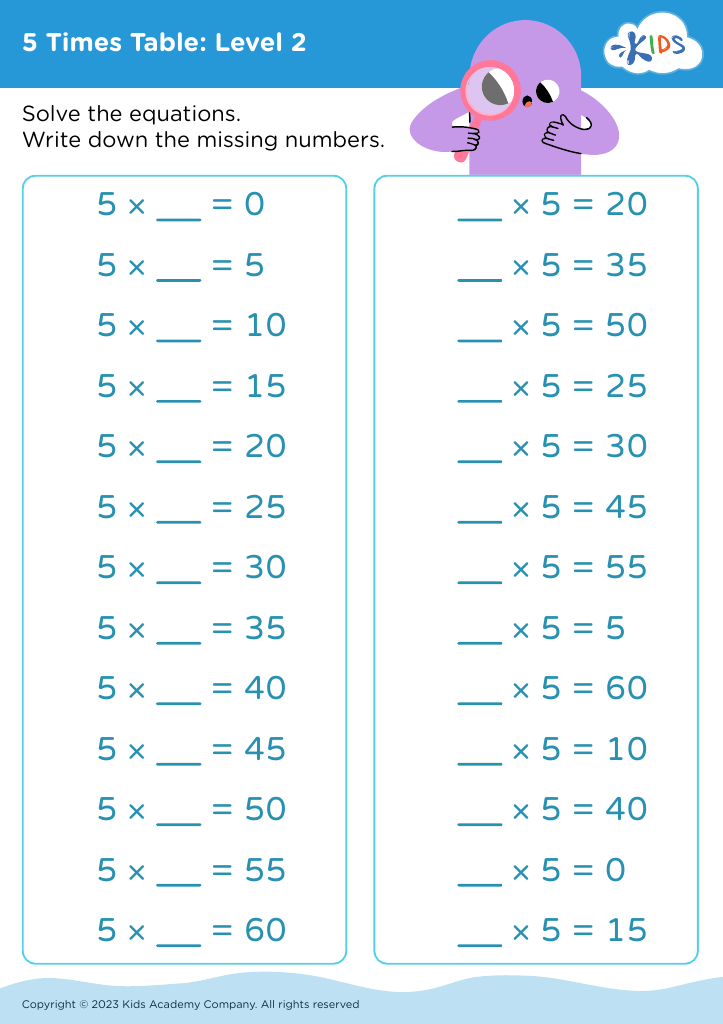







Familiarity with times tables is critical for children aged 8-9 as it lays the foundation for their future mathematical understanding. This age group aligns with third and fourth grade, where multiplication becomes a key concept in mathematics. Mastering times tables enhances children's ability to solve problems efficiently, boosts confidence, and promotes a solid understanding of related concepts like division and fractions.
By emphasizing times tables, parents and teachers help students develop critical thinking skills and numerical fluency. Children who easily recall multiplication facts can focus on more complex math problems, paving the way for higher-level math such as algebra and geometry. This skill also supports real-world applications, from calculating costs and budgeting to measuring ingredients in cooking.
Additionally, familiarity with multiplication can prevent math anxiety and build positive attitudes toward math itself. When students feel competent in basic operations, they are more willing to tackle challenging problems. Ultimately, fostering a strong foundation in times tables sets the stage for academic success, fostering not just skills but also a lasting interest in mathematics. Therefore, investing time in multiplication practice is essential for nurturing competent, confident, and engaged learners.








