
Understanding times tables Times Tables Worksheets for Ages 8-9
6 filtered results
Difficulty Level
Grade
Age
-
From - To
Subject
Activity
Standards
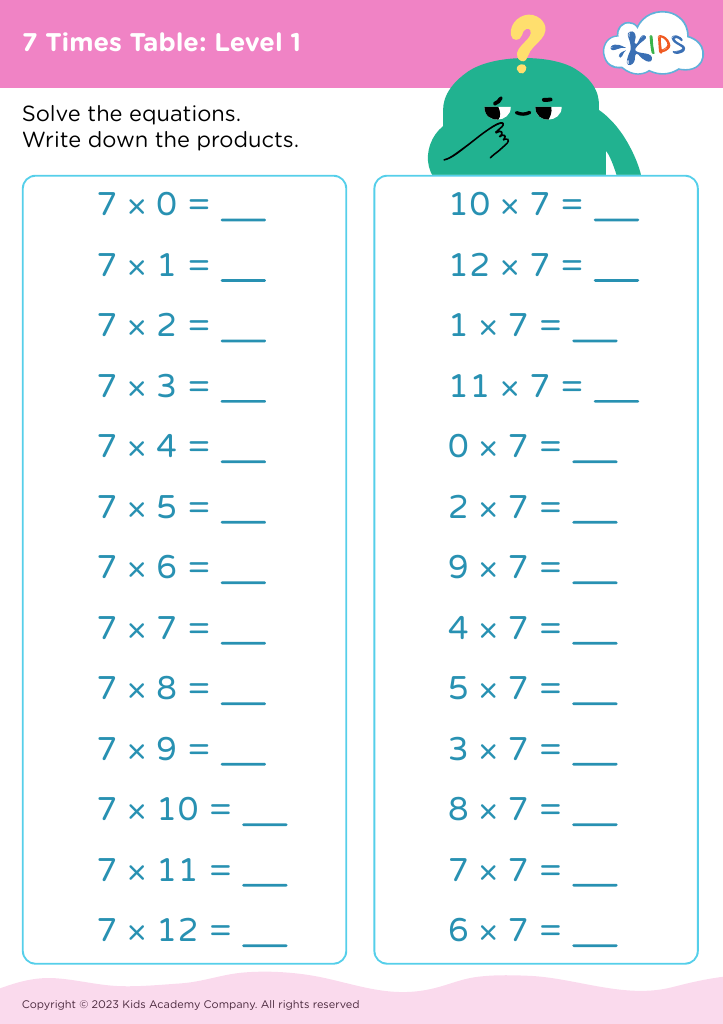
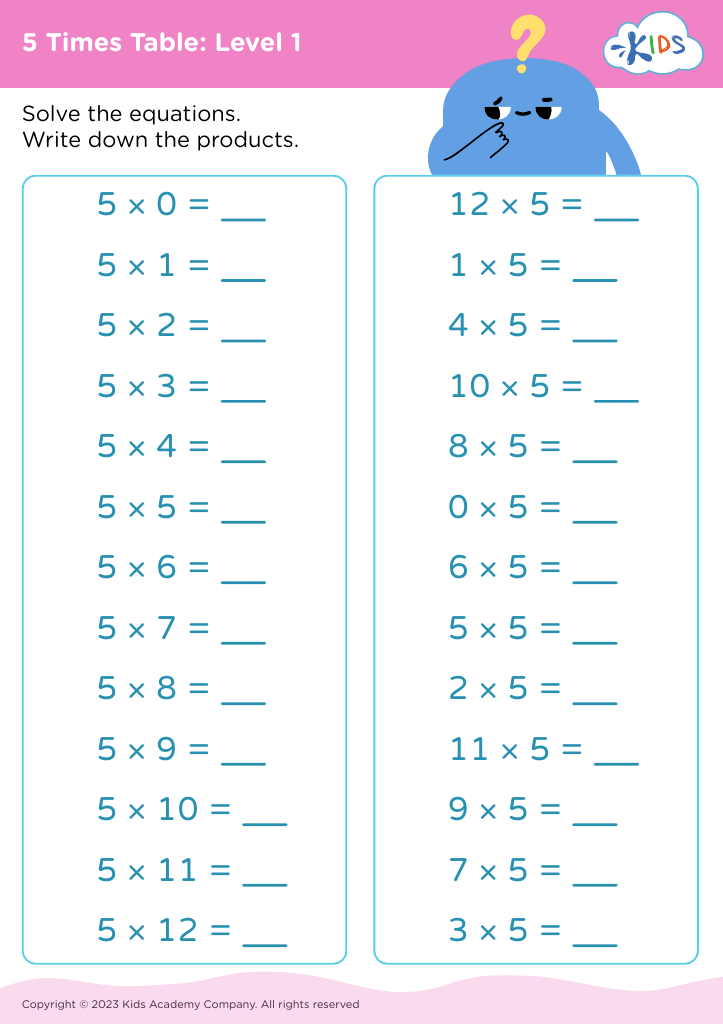
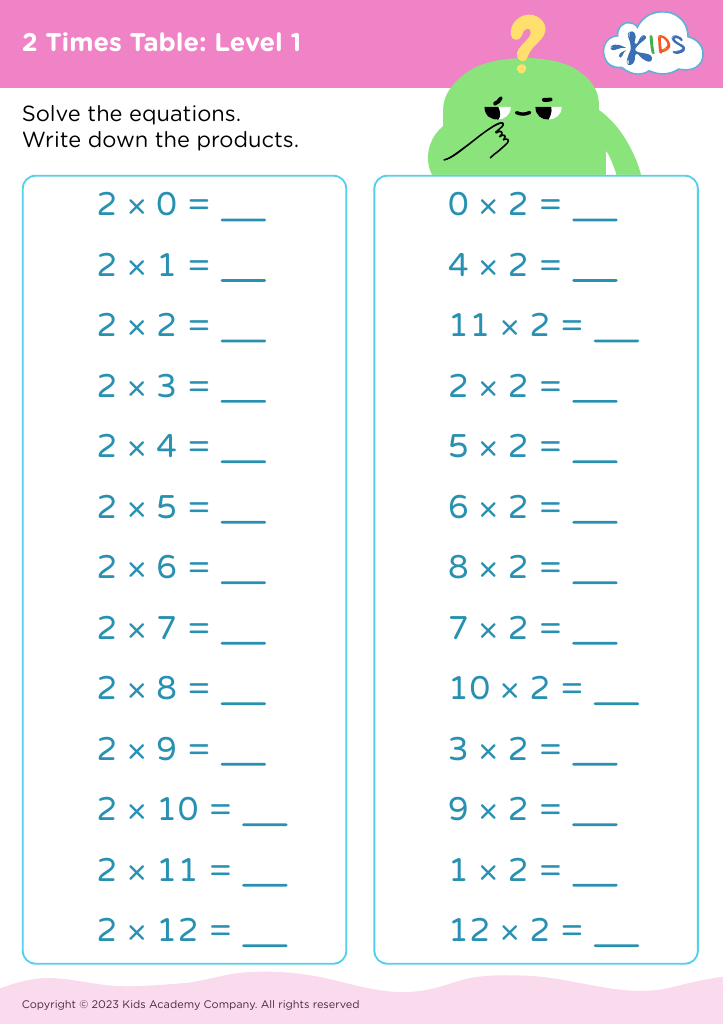
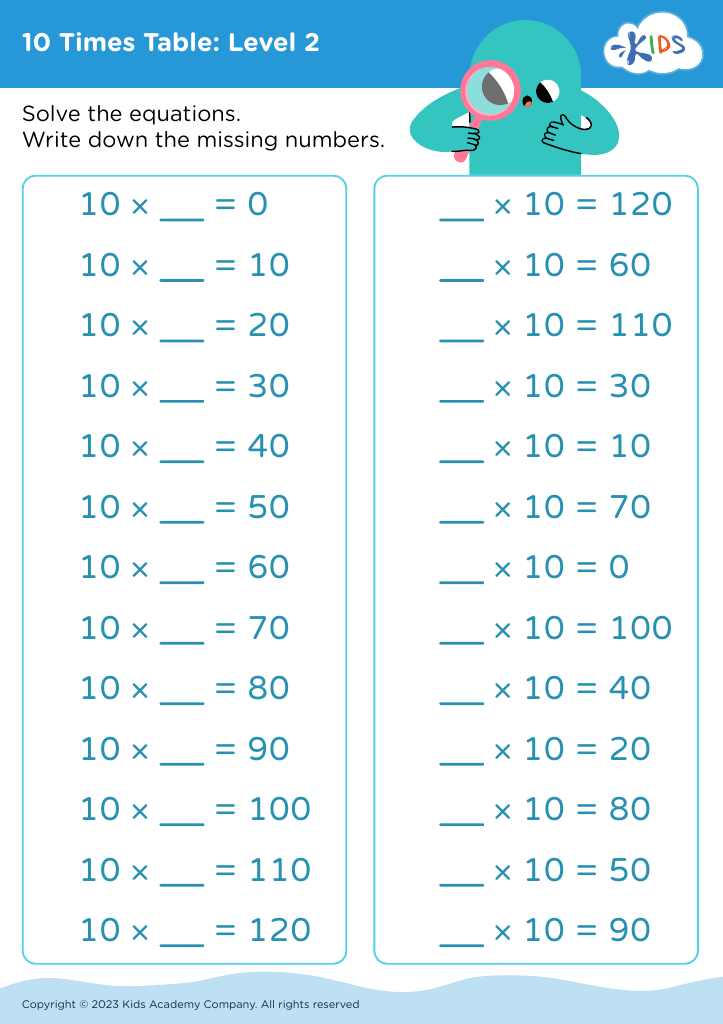
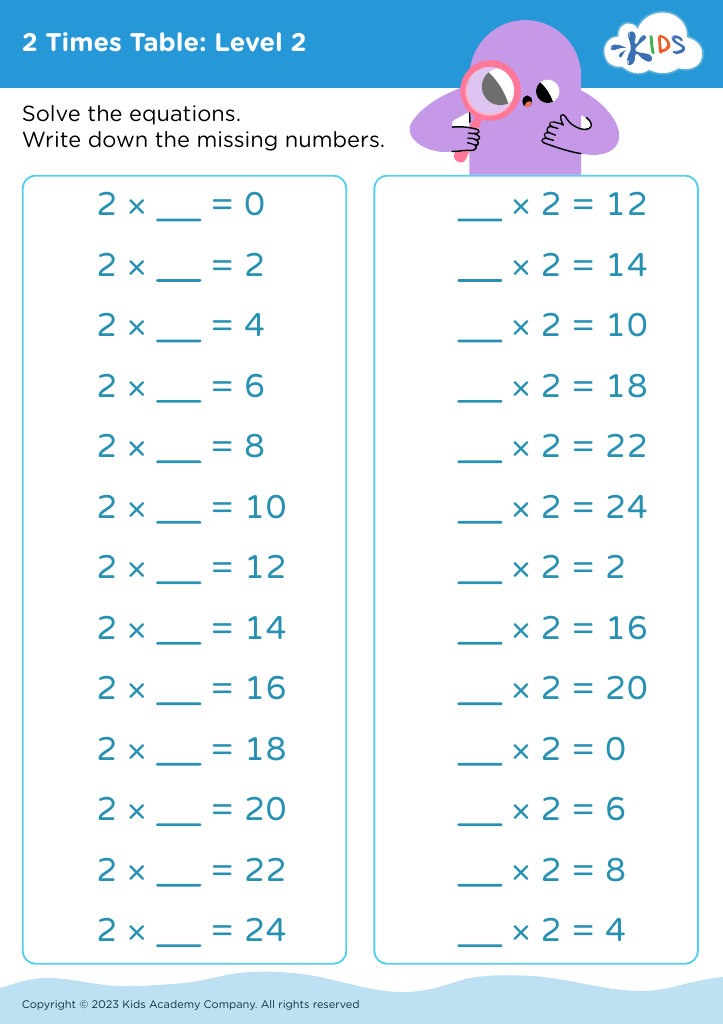
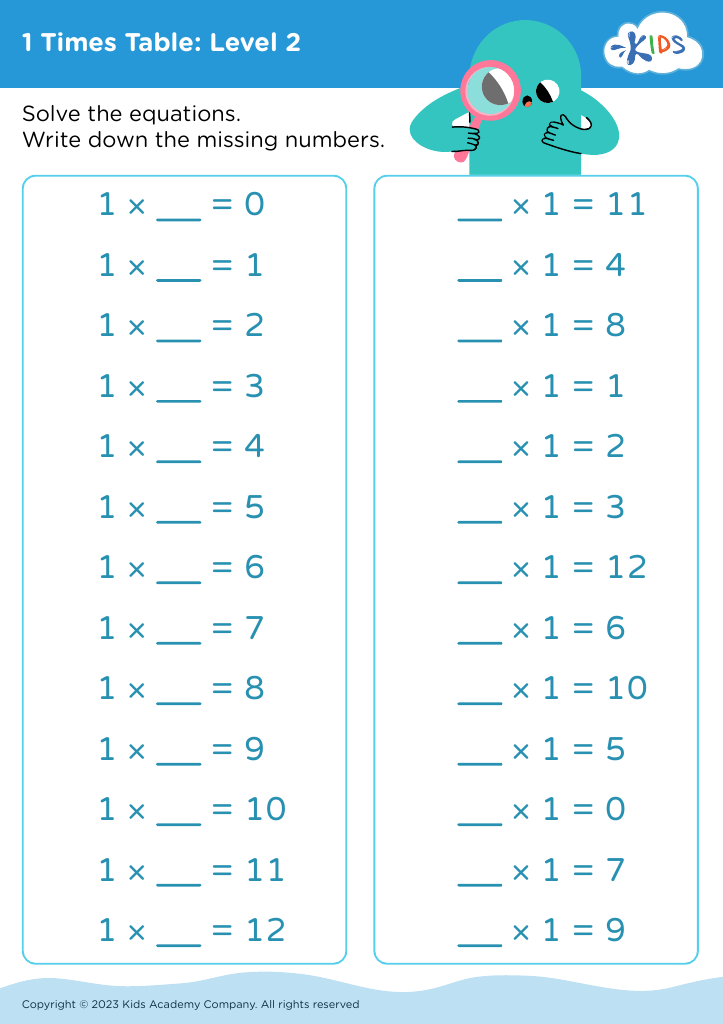
Welcome to our "Understanding Times Tables" page, designed specifically for children ages 8-9! Mastering multiplication is essential for mathematical success, and our engaging worksheets make learning exciting. This resource encompasses clear explanations, visual aids, and interactive exercises that help students grasp the concept of times tables effectively. Using real-life examples and fun activities, children will build their confidence and proficiency in multiplication. Our worksheets cater to various learning styles, ensuring every child can excel. Explore our collection to find the perfect worksheets that will inspire your young learners to become multiplication masters! Unlock the joy of math today!
Favorites
With answer key
Interactive
Join Kids Academy for Free
Who is primarily going to use this learning content?





Understanding times tables is essential for children ages 8-9 as it builds the foundation for critical mathematical skills. At this age, children begin to transition from basic arithmetic to more complex concepts, such as multiplication, division, and higher-level problem-solving. Mastering times tables fosters fluency in these fundamental operations, enabling students to tackle math with confidence and accuracy.
Moreover, multiplication is a foundational skill used across various subjects, including science and economics, and is crucial for everyday activities like budgeting, shopping, and cooking. When children understand times tables, they also enhance their cognitive skills, such as memory and pattern recognition.
For teachers and parents, supporting children in mastering these tables means investing in their long-term academic success. By grasping these basic mathematical principles, children are better prepared for standardized tests and future learning challenges. Furthermore, it encourages perseverance and resilience, traits that are essential in any subject area.
Ultimately, prioritizing times table comprehension can foster a more positive attitude towards math, reducing anxiety and building a solid groundwork for continued learning. Engaging with children in fun, interactive ways to learn their times tables can make this process enjoyable, ensuring they appreciate the subject overall.








