Comprehension skills Reading Non-Fiction Worksheets for Ages 8-9
3 filtered results
-
From - To
Enhance your child's comprehension skills with our engaging Reading Non-Fiction Worksheets designed specifically for ages 8-9. These resources feature dynamic content that encourages young learners to explore various non-fiction topics while developing critical thinking abilities. Each worksheet includes comprehension questions aimed at testing understanding, promoting analytical skills, and encouraging curiosity about the world. Ideal for at-home learning or classroom activities, these worksheets help foster a love for reading while enhancing vocabulary and retention. Perfect for enriching your child's educational journey, our comprehensive materials make non-fiction both fun and rewarding. Download these printable worksheets today and watch your child thrive!
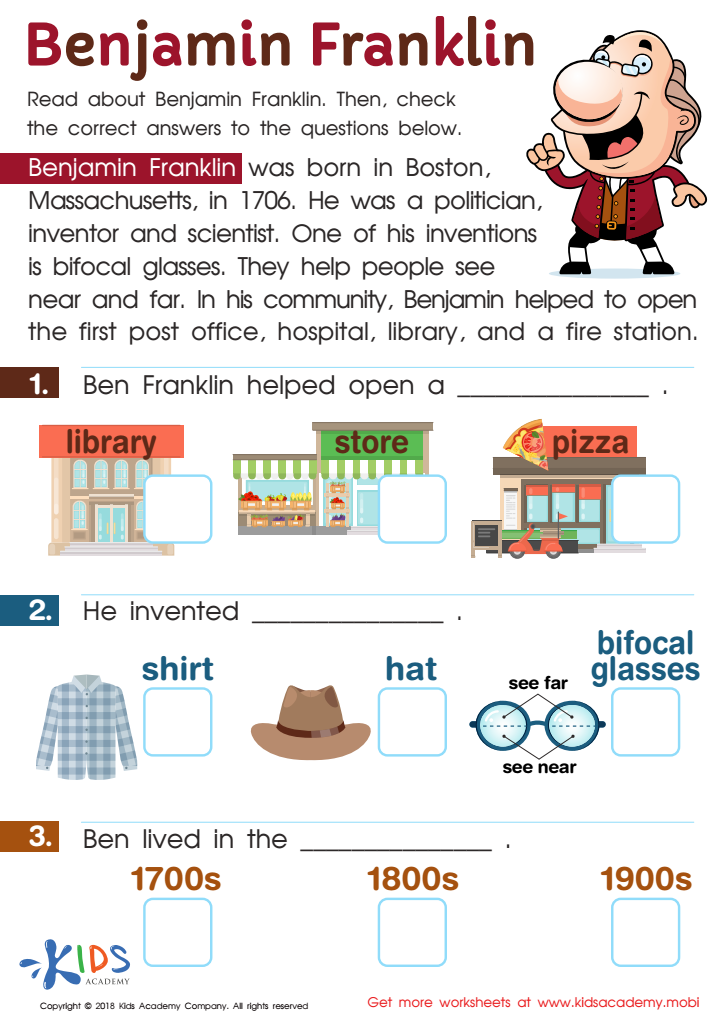
Benjamin Franklin Worksheet
 Assign to My Students
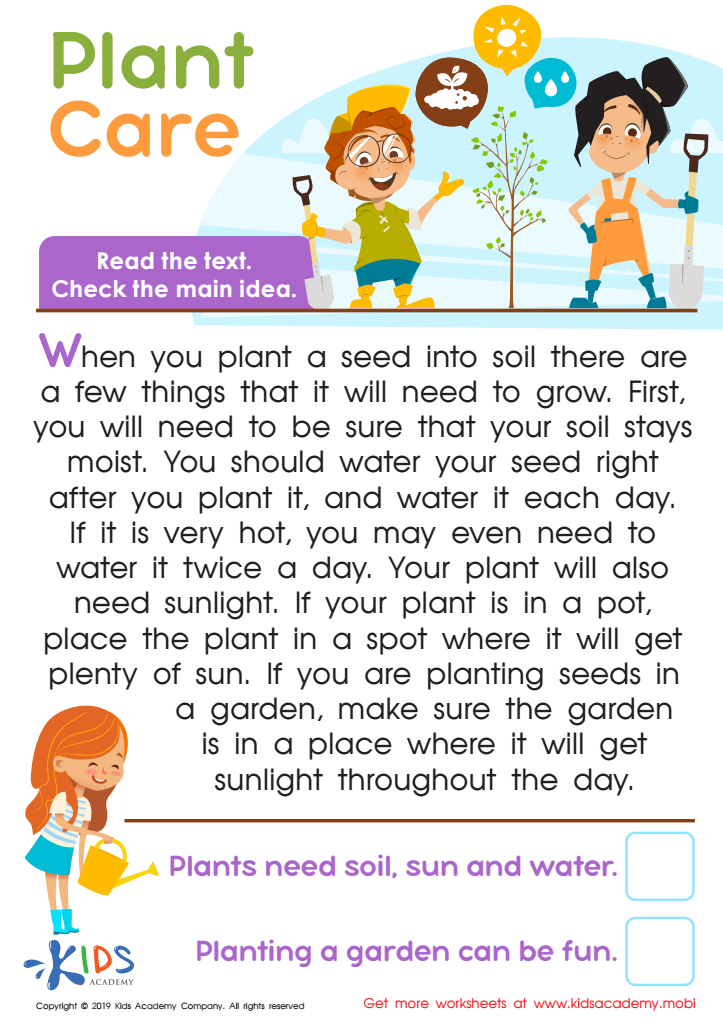
Plant Care Worksheet
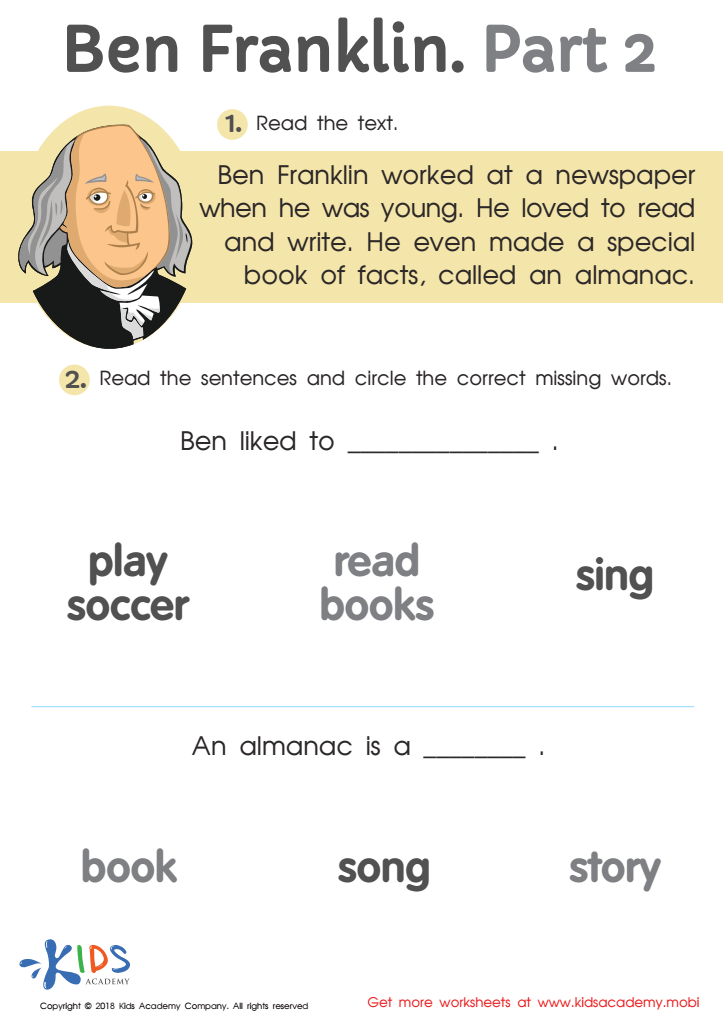
Ben Franklin Part 2 Worksheet








Comprehension skills in reading non-fiction are crucial for children aged 8-9, as they lay the foundation for critical thinking and lifelong learning. At this stage, children are developing the ability to understand more complex texts, which often feature factual information about the world, science, history, and cultures. Being adept at non-fiction comprehension helps young learners discern important details, identify main ideas, and make connections across various subjects—a skill that will benefit them throughout their education.
For parents and teachers, fostering these skills is essential because non-fiction texts enhance knowledge retention and application. Children become better equipped to analyze information, question sources, and draw conclusions, attributes that are vital in today's information-rich society. Moreover, strong comprehension skills enhance a child’s confidence in academic settings, making them more eager to explore various subjects.
Additionally, as non-fiction reading often corresponds to real-world applications—like understanding scientific processes or historical events—supporting these literacy skills can spark curiosity and an understanding of civic responsibility. Thus, prioritizing non-fiction comprehension not only nourishes children's intellectual growth but also prepares them to become informed, engaged citizens, ready to tackle the challenges of the future.








