Enhancing observation skills Reading Non-Fiction Worksheets for Ages 8-9
3 filtered results
-
From - To
Discover our "Enhancing Observation Skills with Reading Non-Fiction Worksheets" designed for ages 8-9. These engaging activities encourage young readers to explore non-fiction texts critically. Our worksheets are crafted to develop keen observation skills, fostering the ability to notice and interpret significant details. Through intriguing exercises featuring captivating topics, students will learn to extract key information, enrich their vocabulary, and enhance comprehension. Prepare your child to thrive academically by bolstering their reading strategies today! Visit Kids Academy for a wealth of printable resources that support your child’s educational journey while making learning both fun and effective.
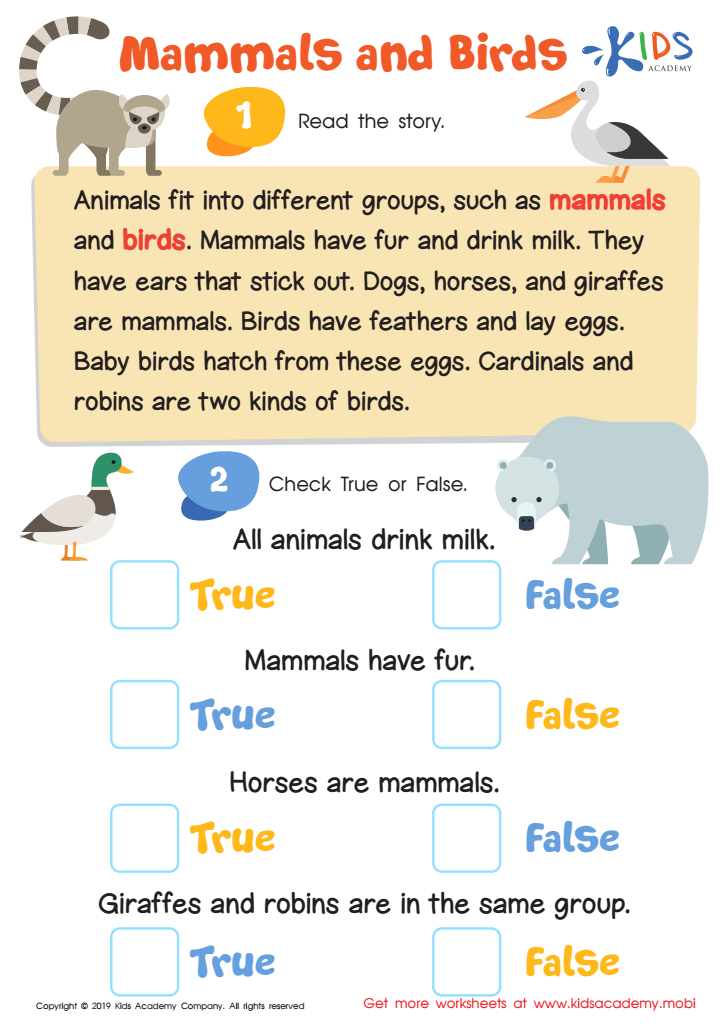
Mammals and Birds Worksheet
 Assign to My Students
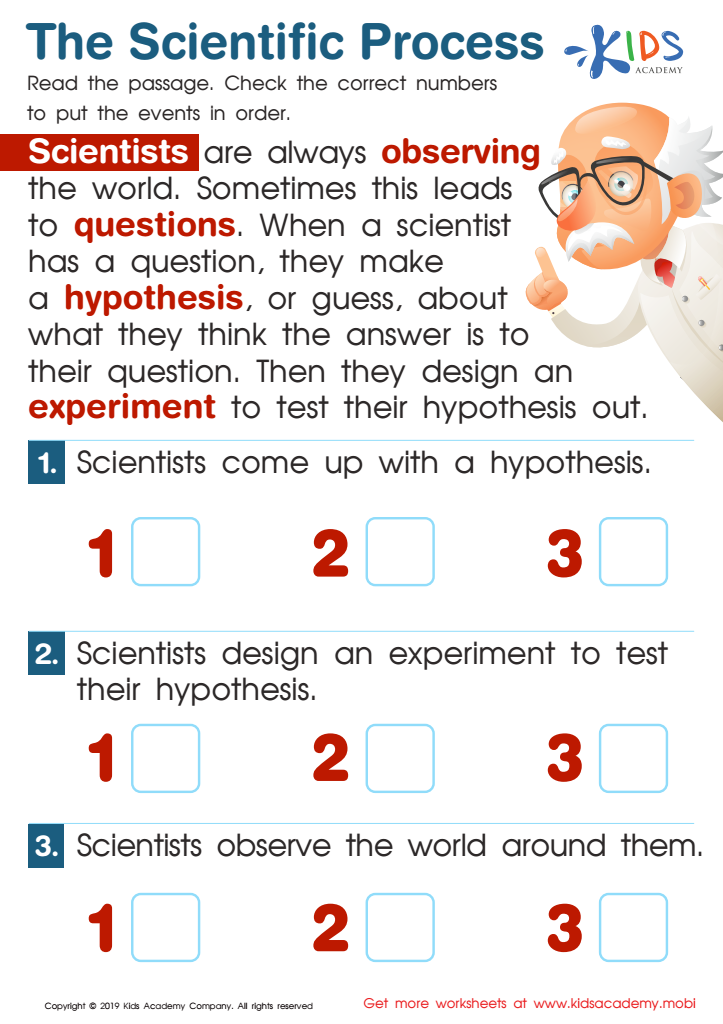
The Scientific Process Worksheet
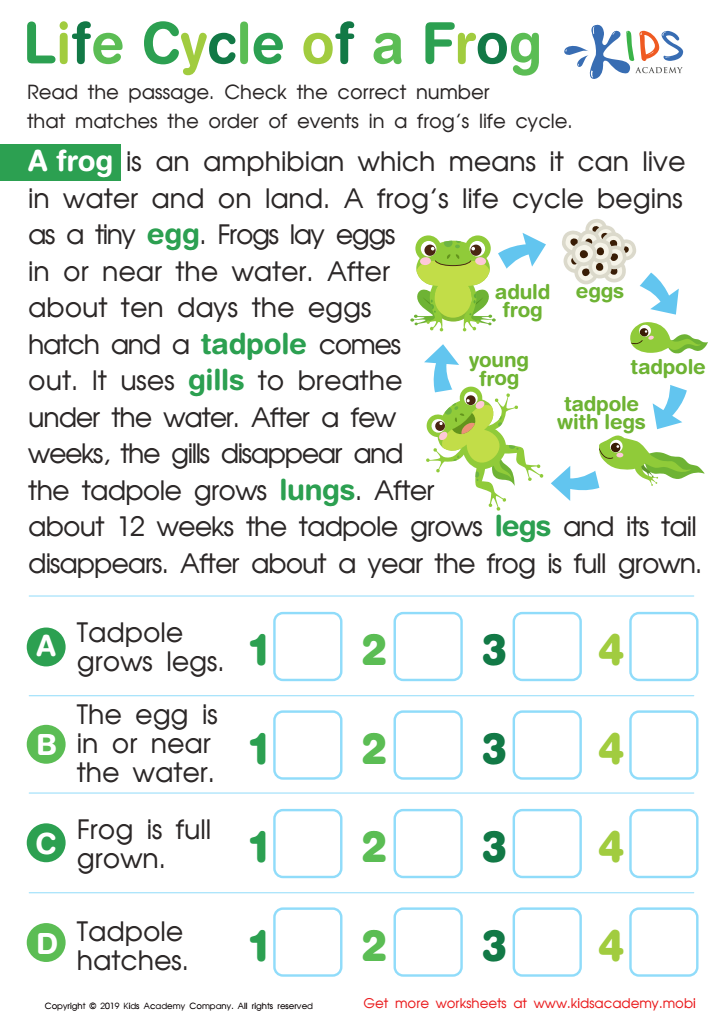
Life Cycle of a Frog Worksheet








Observation skills are crucial for children's cognitive and academic development, and reading non-fiction plays a significant role in enhancing these skills for ages 8-9. At this critical stage, children are not just learning to read, but reading to learn. Non-fiction texts offer rich opportunities for young readers to encounter real-world facts, diverse phenomena, and complex information structured in a logical and organized manner. As they engage with non-fiction, children learn to notice details, think critically, and make connections to the world around them.
Improving observation skills through non-fiction reading enables students to develop a keen sense of curiosity and a habit of lifelong learning. It encourages them to ask questions, seek evidence, and recognize patterns, all of which are foundational for scientific thinking and problem-solving. Teachers and parents play a vital role by providing varied and interesting non-fiction materials, guiding discussions, and highlighting important facts or lesser-known topics that can captivate a child's interest.
Additionally, strong observation skills are beneficial beyond academics; they support emotional and social development by helping children understand nuances in people’s behavior and broader societal contexts. Therefore, cultivating these skills through non-fiction reading equips children with the tools to become thoughtful, informed, and empathetic individuals.








