Improve reading comprehension Reading Non-Fiction Worksheets for Ages 8-9
3 filtered results
-
From - To
Enhance your child's reading comprehension with our engaging Non-Fiction Worksheets specifically designed for ages 8-9! These worksheets provide a diverse range of informative texts that captivate young readers while sharpening their analytical skills. Each activity encourages critical thinking and enhances understanding through interactive exercises, making learning fun and effective. Kids will explore various topics, answer questions, and discuss key ideas that foster a deeper appreciation for non-fiction literature. Tailored to suit developing minds, these resources ensure that children not only improve their reading skills but also build a strong foundation for future academic success. Start your adventure in learning today!
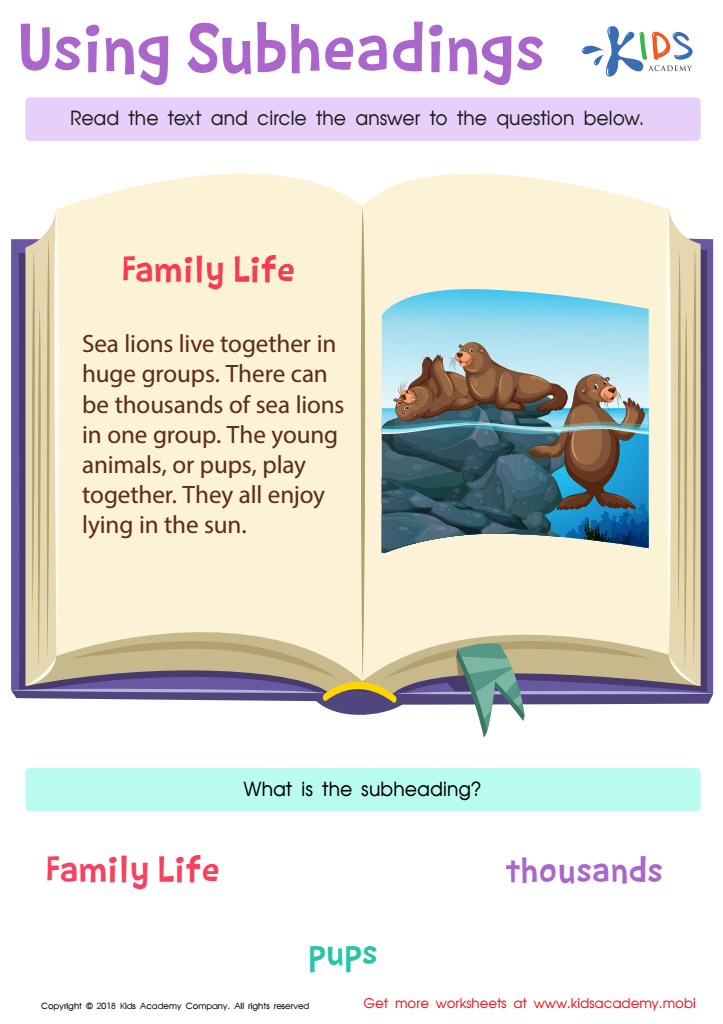
Using Subheadings Worksheet
 Assign to My Students
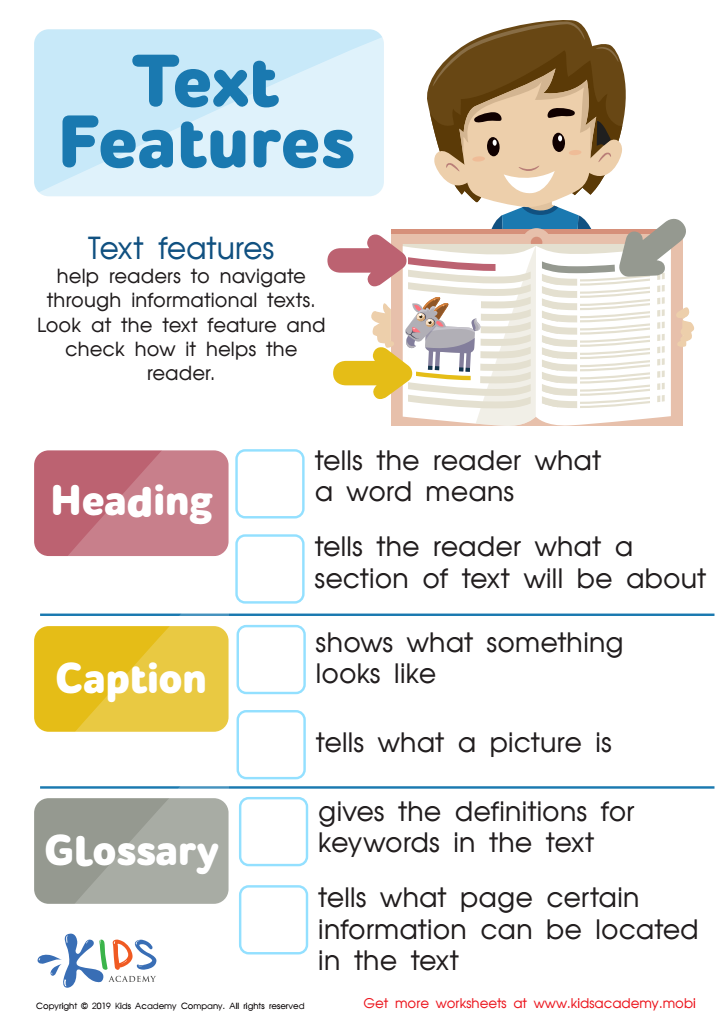
Text Features Worksheet
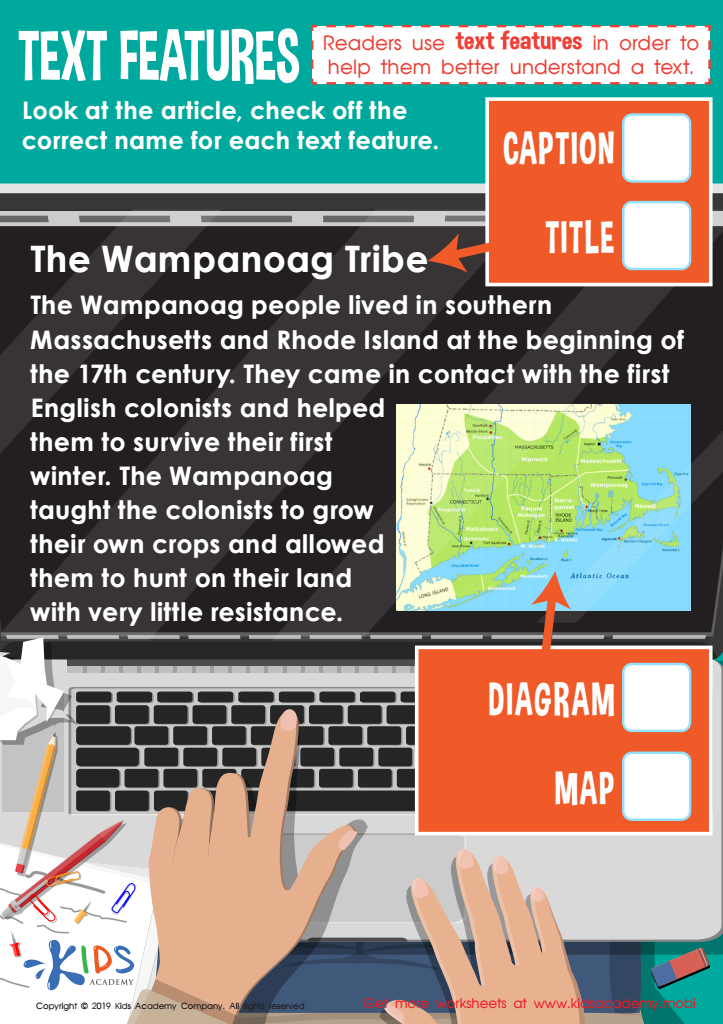
Text Features Worksheet








Improving reading comprehension in non-fiction for children aged 8-9 is crucial for their cognitive and academic development. At this age, children shift from learning to read to reading to learn. Non-fiction texts expose them to real-world information, fostering critical thinking skills as they interpret facts, differentiate opinions from evidence, and understand complex concepts relevant to their experiences.
Moreover, strong reading comprehension abilities enhance vocabulary and general knowledge, which are essential for successful communication and problem-solving in everyday life. Engaging with non-fiction encourages curiosity, prompting children to ask questions about the world around them, leading to further exploration and learning.
Additionally, schools often emphasize literacy benchmarks that include non-fiction reading, making it essential for students to succeed academically and meet curricular expectations. Parents and teachers supporting this aspect of learning can encourage a lifelong love for knowledge and inquiry.
Ultimately, prioritizing reading comprehension in non-fiction enables children to become informed citizens, better equipped to navigate societal issues and contribute meaningfully to their communities. Ensuring that children develop these skills positively impacts their future educational pursuits and personal development, making it a key focus for both parents and educators.








