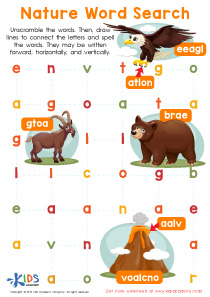
Simplifying Fractions Sight Words Worksheets for Ages 8-9
3 filtered results
-
From - To
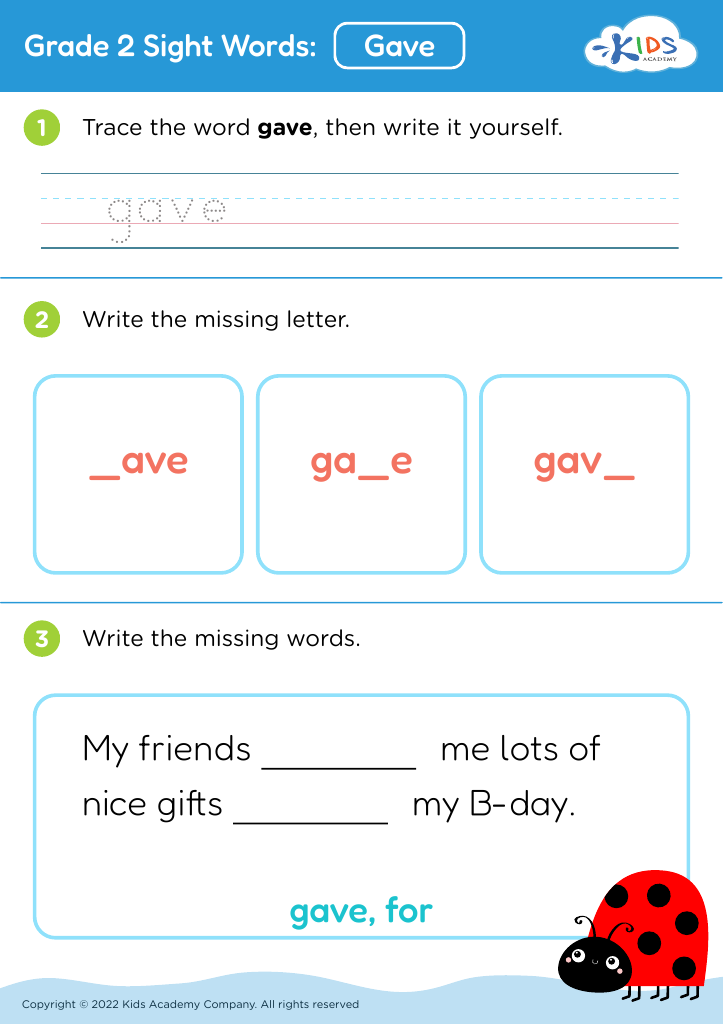
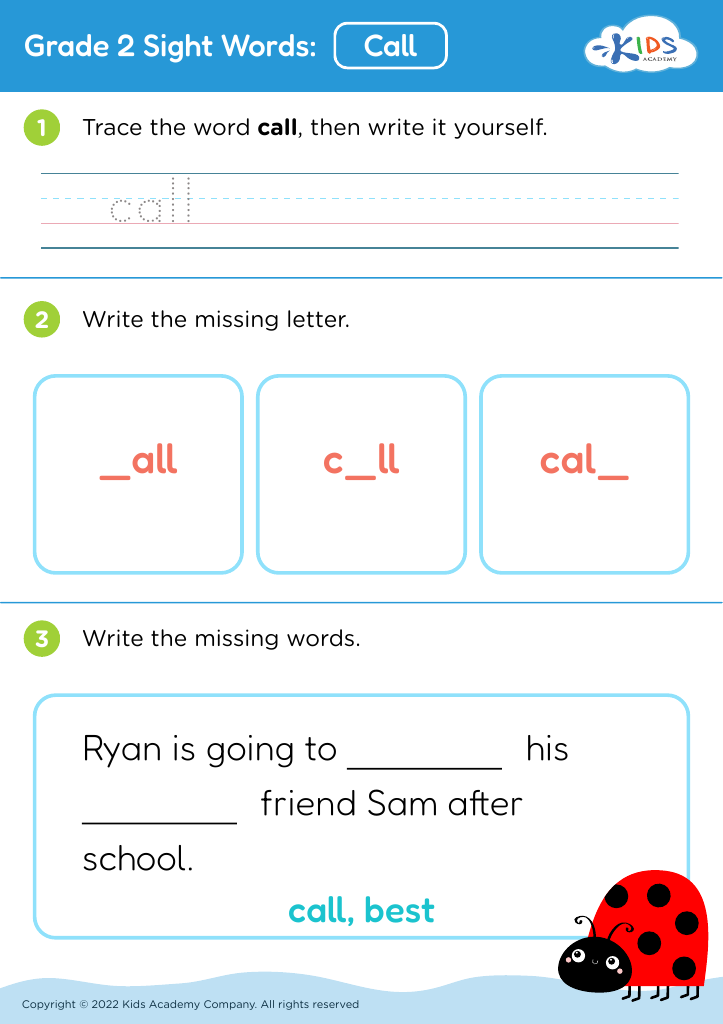
Introduce your child to the world of fractions and sight words with our "Simplifying Fractions Sight Words Worksheets" designed for ages 8-9. These engaging worksheets blend two essential skills, helping young learners master fraction reduction while enhancing their vocabulary. Tailored to captivate third graders, each worksheet makes learning intuitive and enjoyable. With a mix of fraction problems and sight words, our resources ensure that children build a strong mathematical foundation and boost reading fluency simultaneously. Get ready to see your child's confidence soar as they simplify fractions and recognize sight words with ease! Join us to make learning fun and effective.
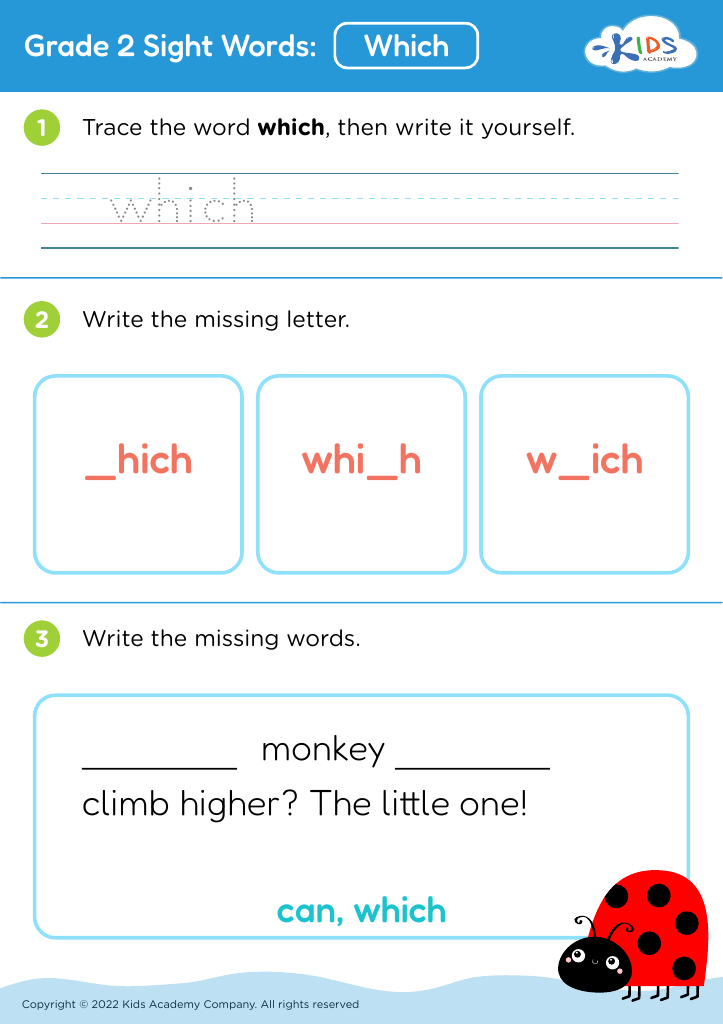














Simplifying fractions and mastering sight words are both foundational skills, each playing a vital role in child development around the ages of 8-9. Parents and teachers should prioritize these skills because they provide essential building blocks for academic success and daily life.
Understanding fractions is crucial in math. Simplifying fractions enables children to work with numbers more easily, leading to deeper comprehension of mathematical concepts, problem-solving, and number sense. This proficiency lays the groundwork for more advanced topics such as algebra, ratio, and proportion, which are fundamental in numerous real-world applications like cooking, budgeting, and measuring.
Simultaneously, sight words constitute a significant portion of the English language, often comprising fragments of most children's texts. Recognizing these words by sight – without having to phonetically decode them – speeds up reading fluency and understanding. This efficiency in reading is pivotal for academic performance, as it enhances comprehension in all-subject areas, instills confidence, and encourages a love for reading.
By supporting children with these key skills, parents and teachers can help build a strong foundation for future learning, ensuring that children are well-prepared to tackle further educational challenges and everyday tasks efficiently and with confidence. Fostering competency in these areas not only boosts immediate academic results but also fosters lifelong capabilities.