
Color Identification Alphabet Worksheets for 9-Year-Olds
3 filtered results
Difficulty Level
Grade
Age
-
From - To
Subject
Activity
Standards
Unlock your child's creativity and color recognition skills with our engaging Color Identification Alphabet Worksheets designed specifically for 9-year-olds. These printable resources provide a fun and interactive way for children to learn their letters while exploring a vibrant world of colors. Each worksheet combines the essentials of alphabet learning with dynamic color activities, helping kids enhance their visual perception and critical thinking. Perfect for home or classroom use, these worksheets promote not only literacy but also an appreciation for art and creativity. Download now and watch your child flourish as they confidently color and connect letters with their favorite hues!
Favorites
With answer key
Interactive
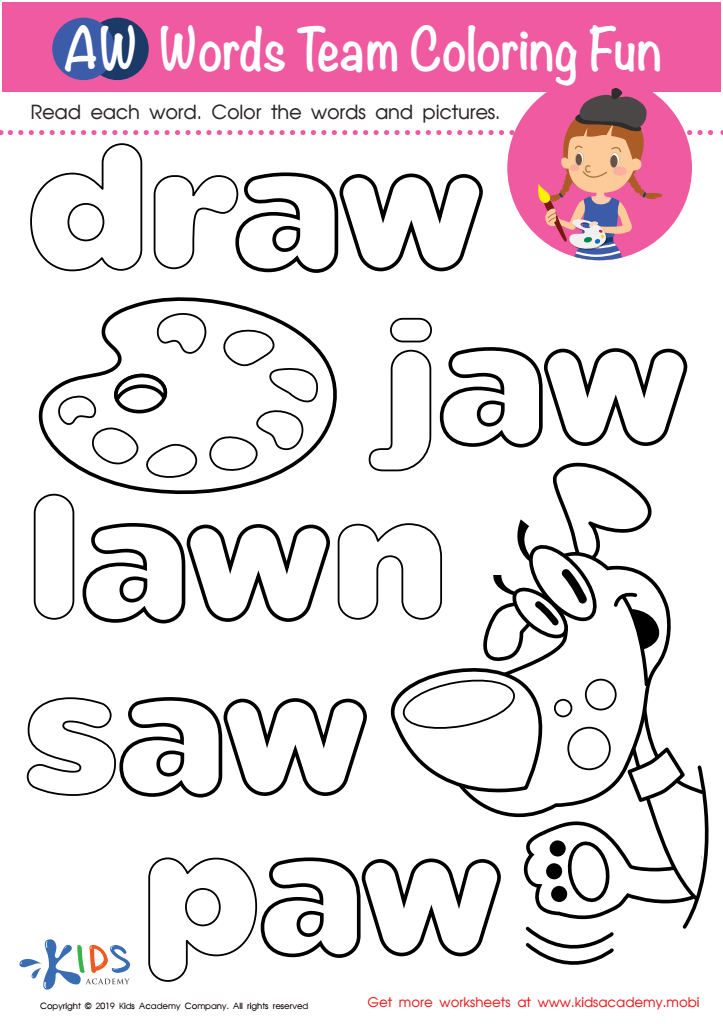
AW Words Team Coloring Fun Worksheet
Coloring words they can read is a blast for little learners! This worksheet offers emerging readers the chance to practice and gain confidence in reading words from the -aw family, while also improving fine-motor and creativity skills. Without knowing it, they'll learn about phonetic teams along the way!
Download (PDF)
 Assign to My Students
Assign to My Students
AW Words Team Coloring Fun Worksheet
Worksheet
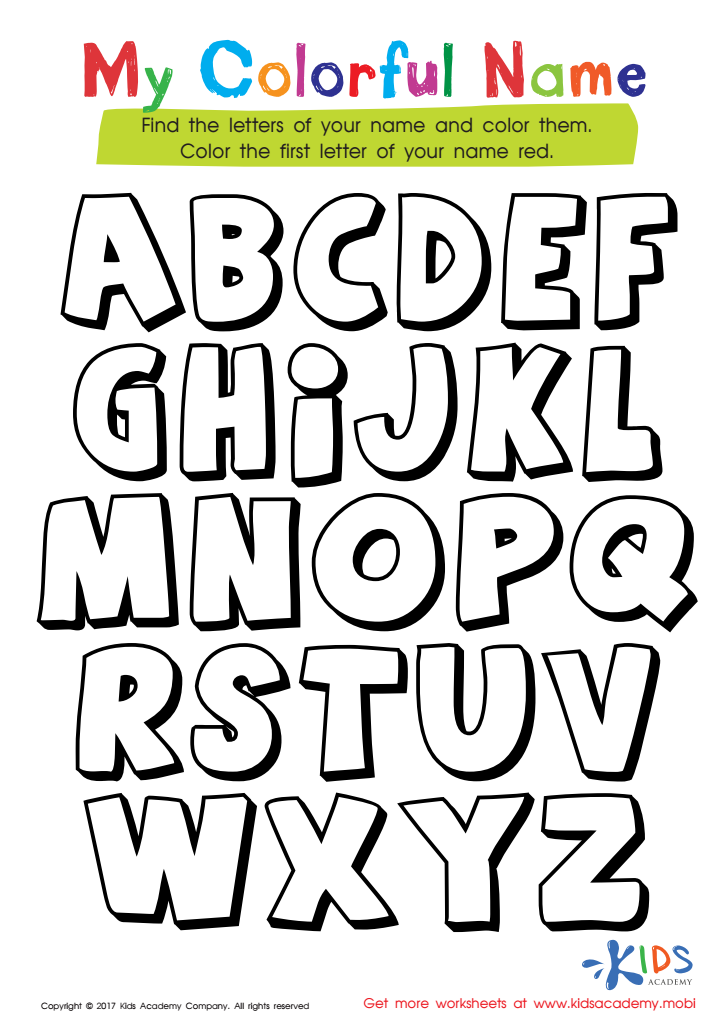
My Colorful Name Worksheet
Writing their names is a milestone for children. With this worksheet, they recall the letters in their name and color the letters one at a time. Spelling and alphabet order are reinforced as they find each letter. Use this fun printable to help kids learn to write their names!
Download (PDF)
Assign to My Students
Assign to My Students
My Colorful Name Worksheet
Worksheet
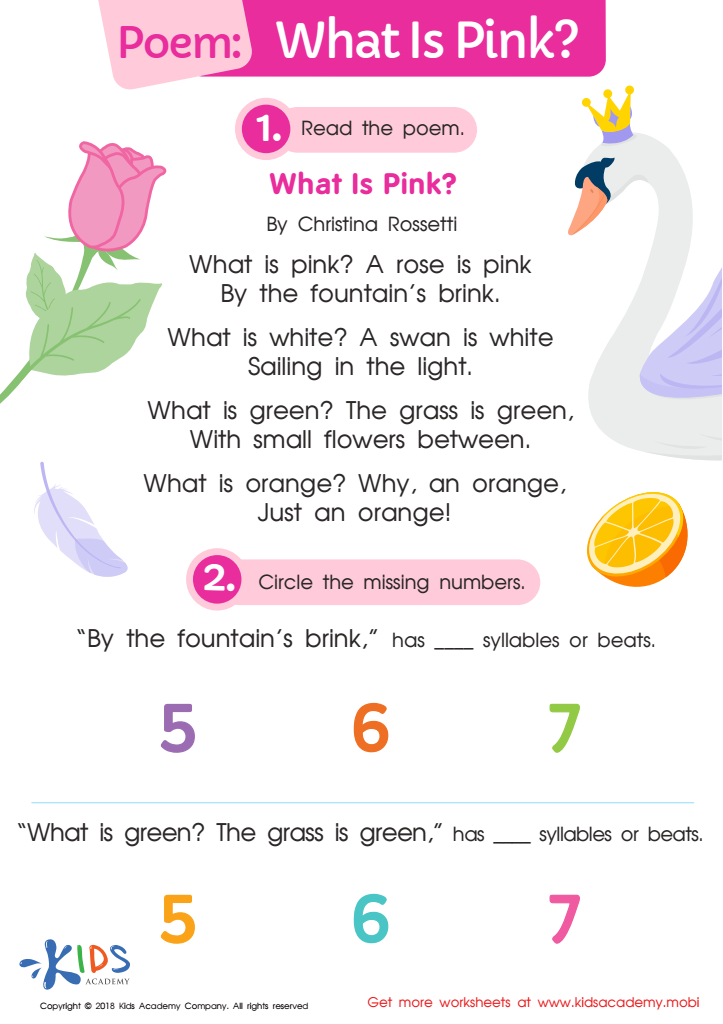
Poem: What Is Pink? Worksheet
Help your kids learn with short, fun, interesting poems! Read it aloud to them and point out the rhyme patterns. Have them circle the missing numbers to answer two questions. Show examples of objects with the colors in the poem. This will help them learn to read, and also understand colors better.
Poem: What Is Pink? Worksheet
Worksheet
Join Kids Academy for Free
Who is primarily going to use this learning content?






Color identification is a crucial part of early childhood development that extends beyond mere visual recognition. For 9-year-olds, understanding colors can enhance their cognitive skills, creativity, and emotional expression. Parents and teachers should care about color identification because it is intrinsically linked to various learning outcomes.
Cognitive Development: Learning colors helps children categorize and make sense of the world around them. It creates a foundation for more complex concepts like mixing colors in art or analyzing patterns in math.
Emotional Expression: Colors often evoke emotions and can aid children in expressing their feelings. For instance, someone feeling blue may find it easier to communicate their mood using colors as a reference.
Creativity: Knowledge of colors is essential for artistic endeavors. As children learn about different hues, they can experiment with mixing and blending, enhancing their creative skills.
Social Skills: Collaborative art projects and discussions about color can foster better communication and teamwork among peers.
In essence, teaching color identification isn't just about recognizing colors; it’s about engaging children in a multidimensional way that promotes their holistic development. Parents and teachers can create enriching experiences that foster these skills, ultimately benefiting the child's overall growth.







