
Vocabulary Building Alphabet Worksheets for 9-Year-Olds
5 filtered results
Difficulty Level
Grade
Age
-
From - To
Subject
Activity
Standards
Enhance your 9-year-old's vocabulary with our engaging Vocabulary Building Alphabet Worksheets! Designed to make learning fun, these worksheets encourage kids to explore new words corresponding to each letter of the alphabet. Each activity promotes creativity and critical thinking while reinforcing spelling and comprehension skills. With colorful illustrations and age-appropriate themes, your child will stay motivated and interested in expanding their vocabulary. Perfect for both home and classroom use, these worksheets help reinforce foundational literacy skills while fostering a love for language. Download now to support your child's learning journey and watch their confidence and communication skills grow!
Favorites
With answer key
Interactive
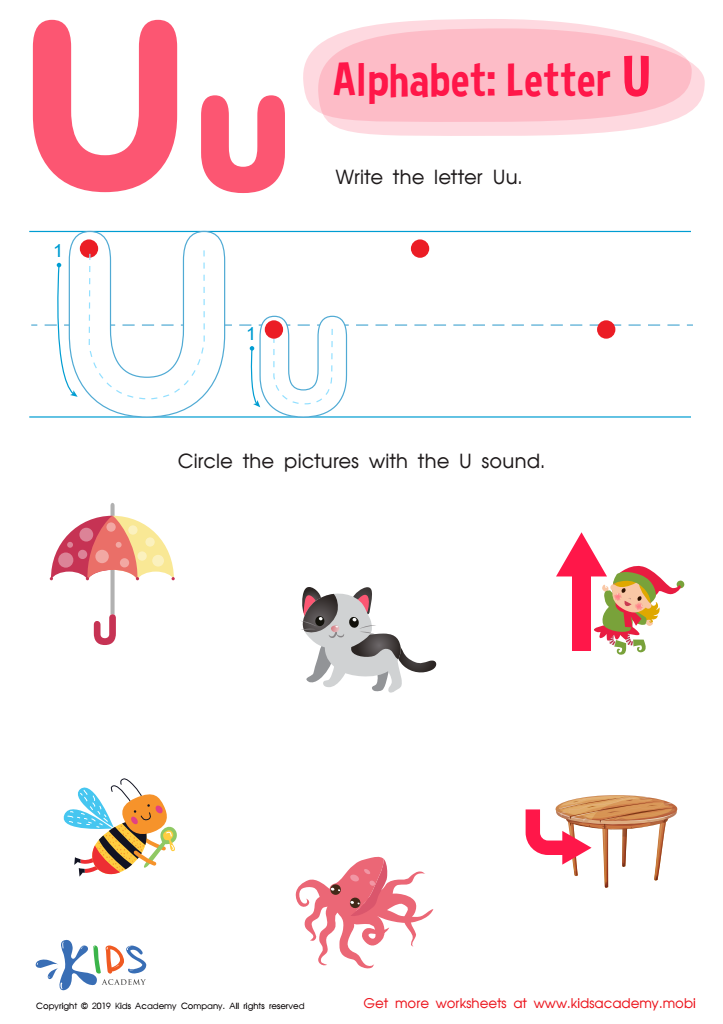
Letter U Tracing Worksheet
Your students can have fun and learn about the alphabet with this letter «U» worksheet. Pre-schoolers will trace the letter «U», circle words with the letter sound, and learn phonics while boosting their confidence. Doing these tasks will help them understand the letter more.
Letter U Tracing Worksheet
Worksheet
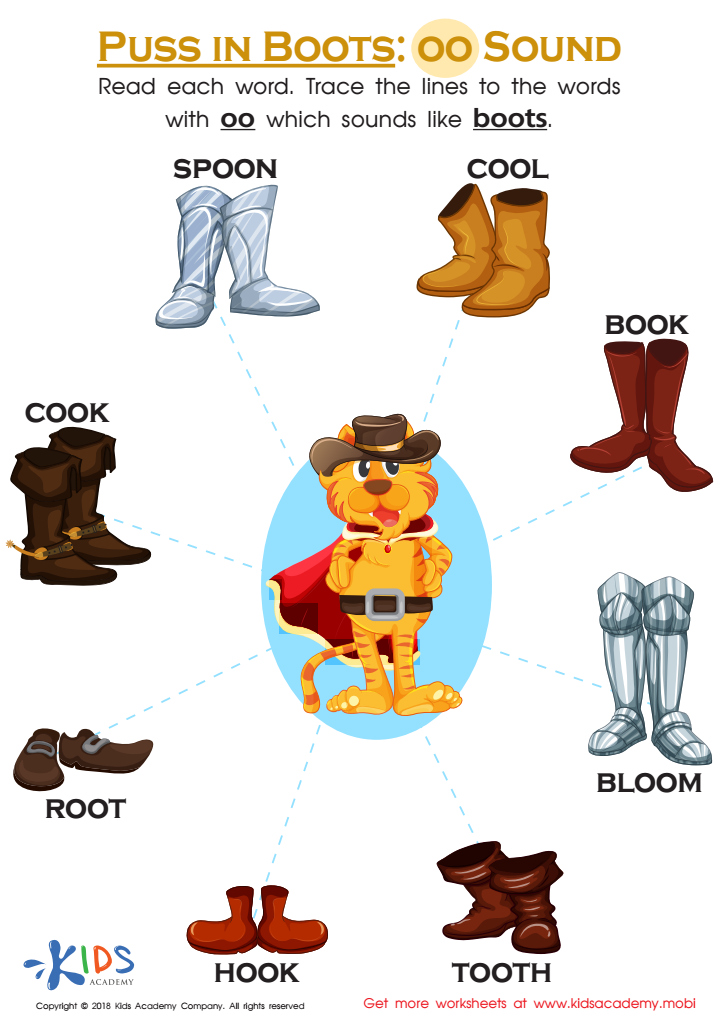
Puss in Boots: OO Sound Worksheet
Read out the words in this printout with the correct pronunciation. Have your child repeat each word after you. Then have them read the words and identify the ones with the "oo" sound. Guide their hands as they trace the lines to the right words.
Puss in Boots: OO Sound Worksheet
Worksheet
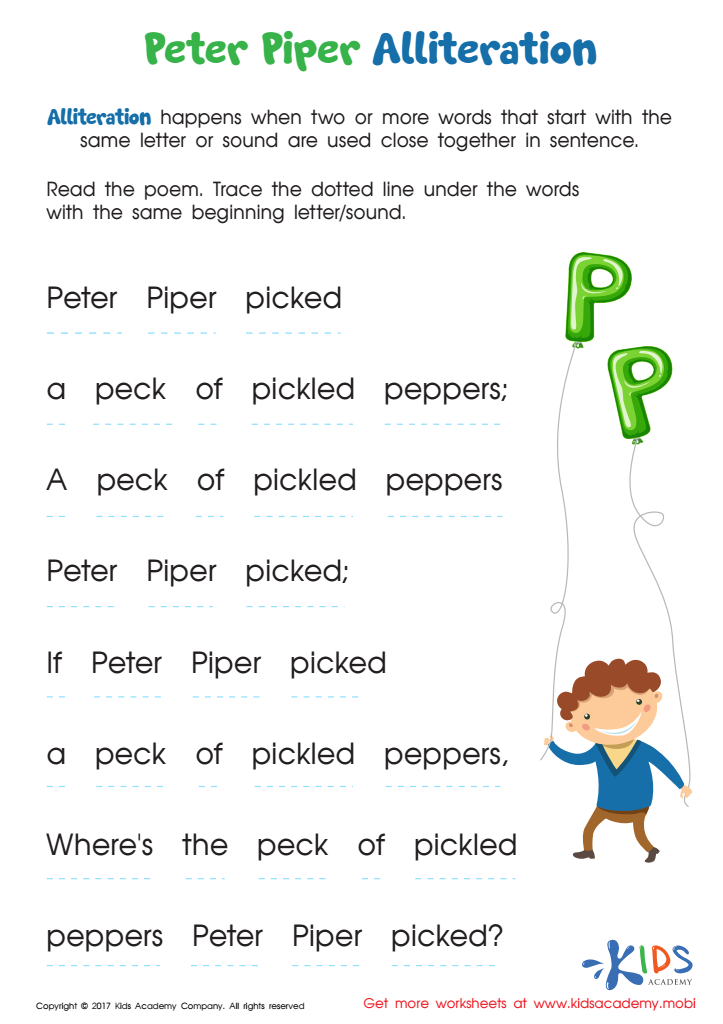
Peter Piper Alliteration Worksheet
Kids love tongue twisters! This worksheet familiarizes them with alliteration through Peter Piper, a beloved nursery rhyme. They underline words that start with the same letter sound, learning to recognize alliteration.
Peter Piper Alliteration Worksheet
Worksheet
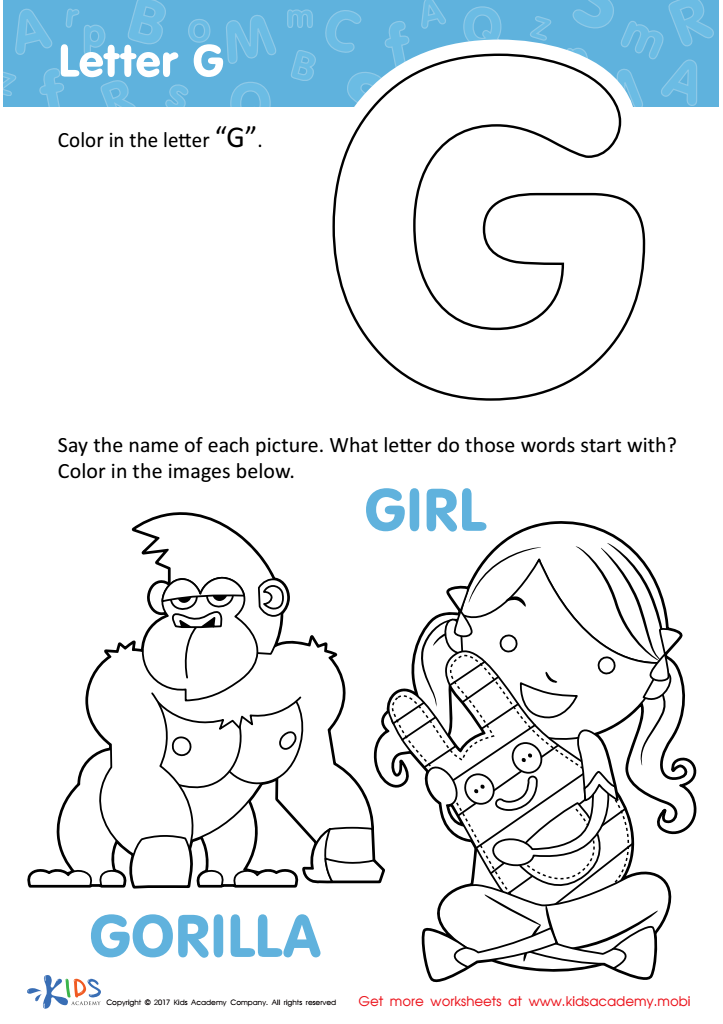
Letter G Coloring Sheet
This "G" coloring page encourages creativity and teaches kids the letter "G" sound. With its fun visuals and familiar words, it's sure to excite your child. Plus, you can talk about the letter’s sound with the pictures given.
Download (PDF)
 Assign to My Students
Assign to My Students
Letter G Coloring Sheet
Worksheet
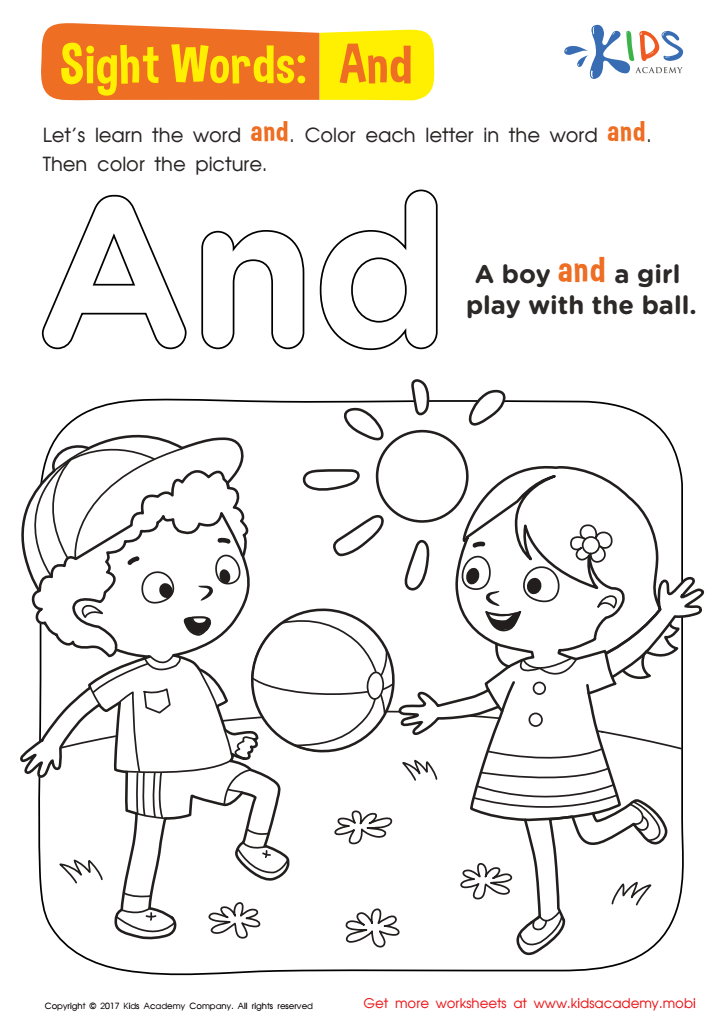
And Worksheet Sight Words Worksheet
Help your child get a jumpstart on reading with sight words! Print out this fun worksheet and get your child to read the sentence. Point out the word "and", then color the word and enjoy the rest of the scene! It's a great way to introduce sight words and get their early reading skills going!
Download (PDF)
Assign to My Students
Assign to My Students
And Worksheet Sight Words Worksheet
Worksheet
Join Kids Academy for Free
Who is primarily going to use this learning content?








Vocabulary building is crucial for 9-year-olds as it directly impacts their academic success and communication skills. At this age, children are developing their reading, writing, and verbal abilities, making it essential for them to have a strong vocabulary foundation. The Vocabulary Building Alphabet offers a structured approach to enhance their word knowledge by introducing them to new terms in a playful and engaging manner.
When parents and teachers focus on vocabulary building, they help children improve their comprehension skills, enabling them to understand complex texts and engage more effectively in discussions. A rich vocabulary also promotes self-expression, allowing kids to articulate their thoughts and feelings more clearly, boosting their confidence in both academic settings and social situations.
Additionally, a well-developed vocabulary enhances language skills that are vital for standardized tests and everyday communication. Investing time in vocabulary building not only fosters a love for language and learning but also supports cognitive development and empathy, as children learn to appreciate diverse perspectives through words. By prioritizing vocabulary building, parents and teachers empower children with the skills necessary for lifelong learning and effective communication.







