Fine Motor Skills Letter M Worksheets for 9-Year-Olds
3 filtered results
-
From - To
Enhance your child's fine motor skills with our engaging Letter M worksheets, designed specifically for 9-year-olds! These fun and interactive activities focus on developing coordination and dexterity through tracing, coloring, and essential writing exercises involving the letter M. Kids will enjoy learning about words that begin with M, all while improving their hand-eye coordination and control. Perfect for both classroom settings and home practice, these worksheets offer a creative way to reinforce letter recognition and shape formation. Explore our collection today and support your child's growth in fine motor skills through exciting and educational challenges!
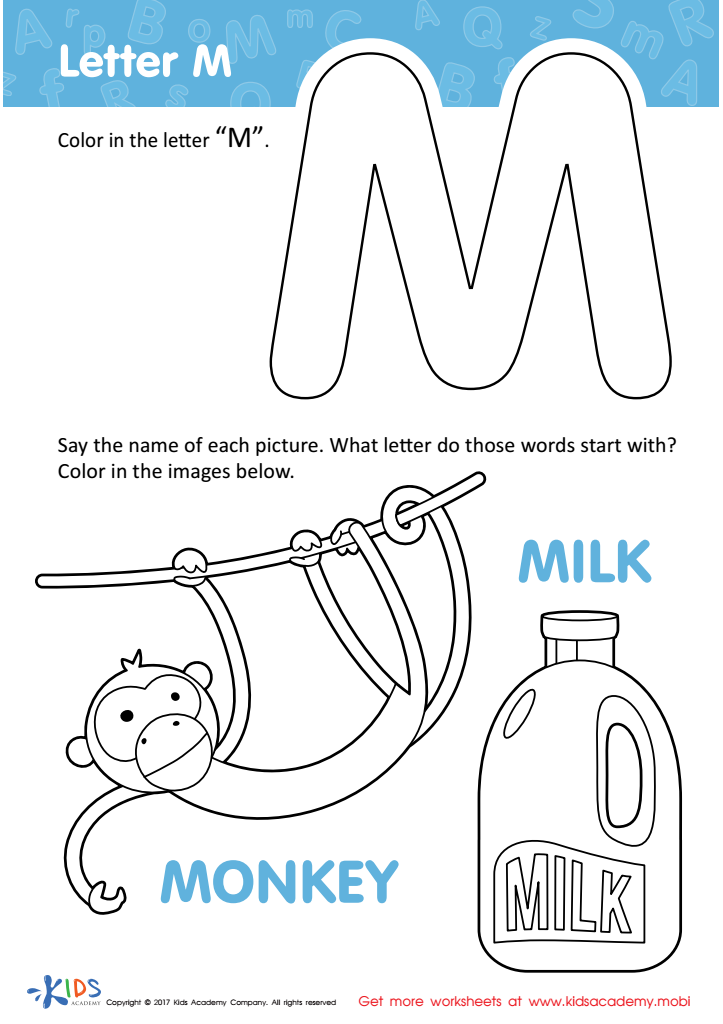
Letter M Coloring Sheet
 Assign to My Students
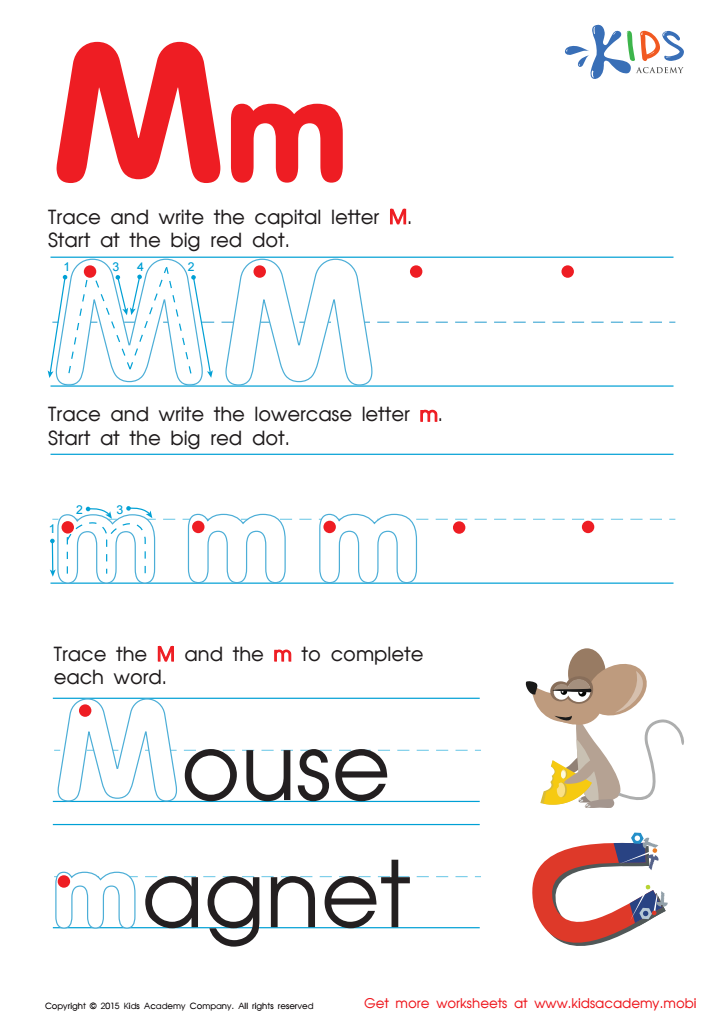
Letter M Tracing Page
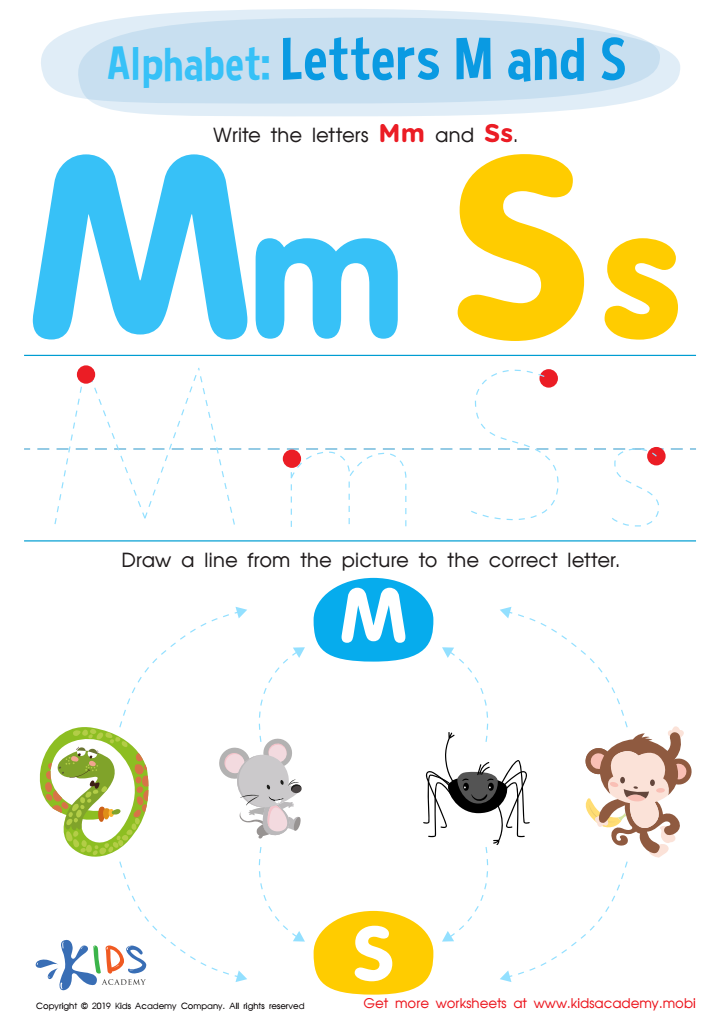
Letters M and S Tracing Worksheet






Fine motor skills are essential for a child's development, particularly at the age of 9. These skills involve the coordinated movements of small muscles in the hands and fingers, which are crucial for various everyday tasks and learning activities. Understanding the importance of fine motor skills, like those exemplified through the letter "M," is vital for both parents and teachers.
At this age, children are not only writing more complex sentences but also engaging in various activities that require precise hand movements, such as drawing, cutting, and crafting. Mastering fine motor skills promotes dexterity and control, allowing them to execute these tasks with confidence.
Furthermore, refining fine motor skills can enhance children's academic performance. Stronger motor skills contribute to improved handwriting and reduce frustration during tasks that demand precision. In addition, these skills are foundational for later tasks, such as using technology effectively and engaging in activities like playing musical instruments or sports.
By investing time in activities that improve fine motor skills, parents and teachers can support children's overall development, enhance their learning experience, and foster a sense of independence that is crucial for their self-esteem and future success.