
Letter tracing skills Letter Recognition Worksheets for 9-Year-Olds
3 filtered results
Difficulty Level
Grade
Age
-
From - To
Subject
Activity
Standards
Enhance your 9-year-old’s literacy with our engaging letter tracing and recognition worksheets! Designed to support key learning skills, these worksheets help children master the alphabet through hands-on activities that cater to their developmental needs. By practicing letter tracing, kids will improve their fine motor skills while reinforcing their ability to recognize and write letters correctly. Our thoughtfully crafted activities make learning fun and effective, ensuring your child builds confidence in their reading and writing abilities. Perfect for home or classroom use, these letter recognition worksheets are an essential resource for nurturing young learners. Explore our colorful, interactive designs today!
Favorites
With answer key
Interactive
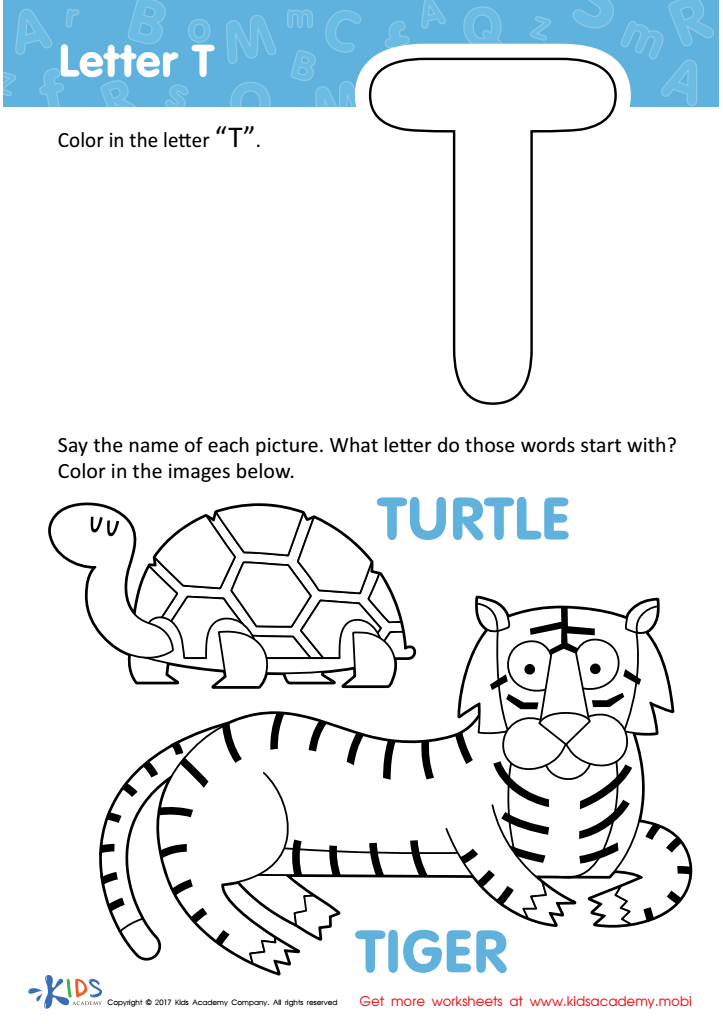
Letter T Coloring Sheet
Introduce your child to the letter "T" and its animals – turtles and tigers! With this coloring page, you can stimulate your child's imagination and creativity, while helping them recognize the letter "T". Have fun with your child and get coloring!
Download (PDF)
 Assign to My Students
Assign to My Students
Letter T Coloring Sheet
Worksheet
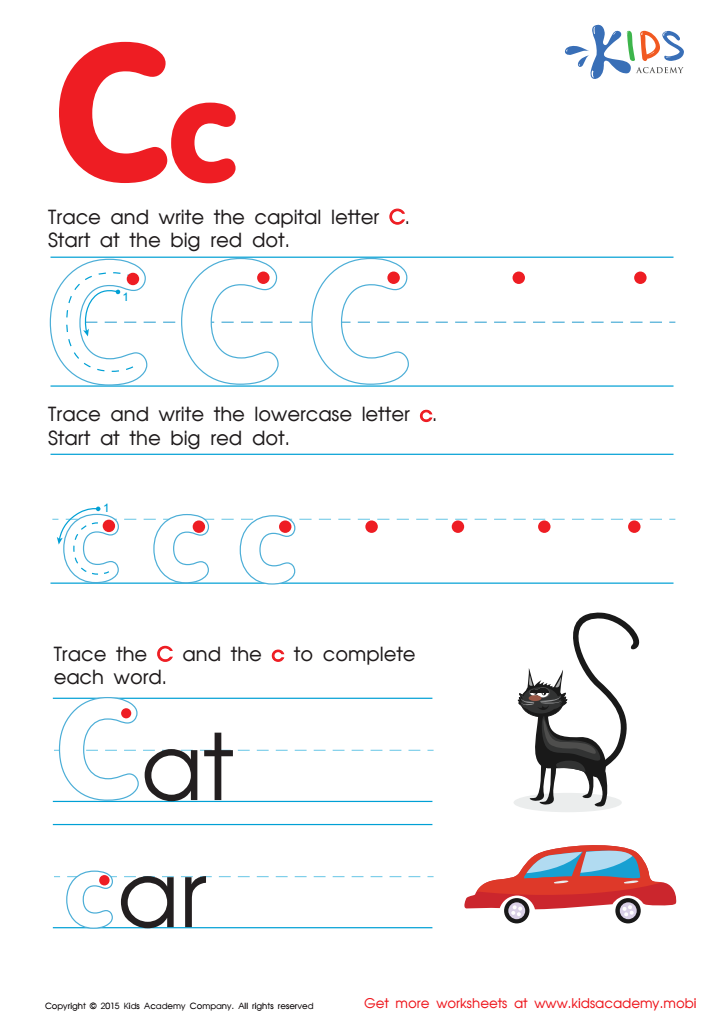
Letter C Tracing Page
Trace and write the letter 'C'! Put the pencil at the red dot then follow the lines – the capital letter first then the lowercase one. Cats love it and so will you! Get more free printables to practice tracing and writing.
Letter C Tracing Page
Worksheet
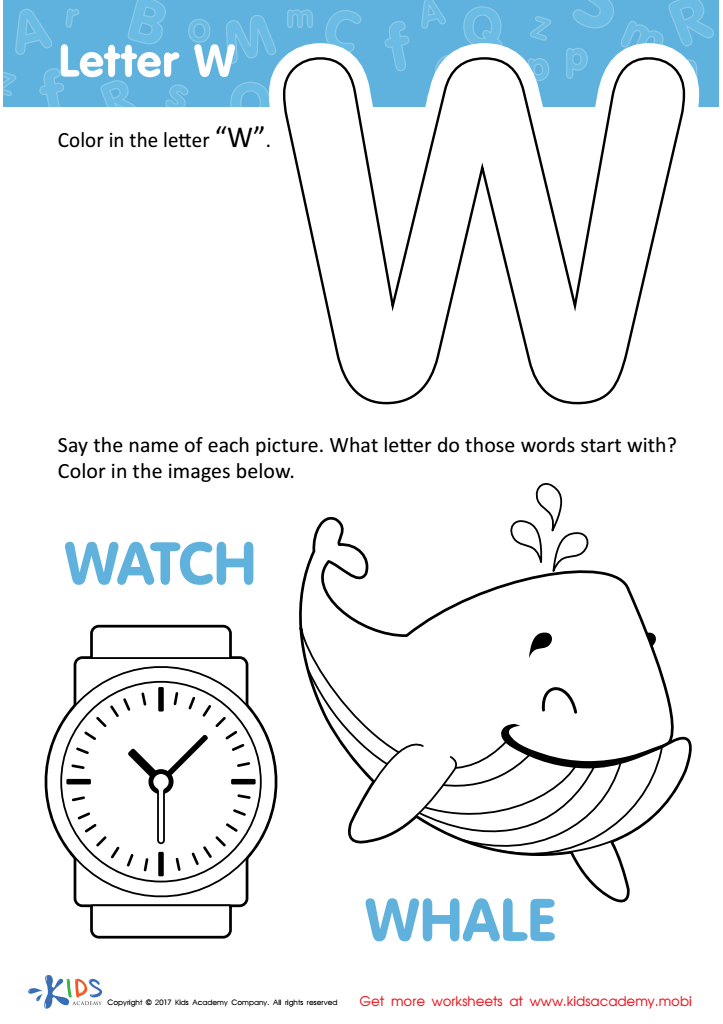
Letter W Coloring Sheet
Let your child have fun with this letter "W" coloring page! They can use their imagination to color the whale and discover the letter and its sound. Give them a helping hand to make it a whale of a time!
Download (PDF)
Assign to My Students
Assign to My Students
Letter W Coloring Sheet
Worksheet
Join Kids Academy for Free
Who is primarily going to use this learning content?








Letter tracing and recognition are essential foundational skills for 9-year-olds, playing a crucial role in their overall literacy development. At this age, children are transitioning from learning to read and write to reading and writing to learn. Mastery of letter recognition helps them decode words, which is vital for understanding texts in school.
Letter tracing aids in the development of fine motor skills and hand-eye coordination. As children trace letters, they learn the correct formations and connections between different letters, fostering confidence in their writing abilities. These skills are also linked to academic success, as proficient readers generally perform better across all subjects.
Additionally, letter recognition increases vocabulary and comprehension. When children can easily identify letters and their sounds, they are more likely to engage with comparative reading, broadening their linguistic knowledge. Parents and teachers should prioritize these skills to support the child's educational journey, ensuring they can communicate their thoughts effectively and enjoy reading as a lifelong habit. By focusing on letter tracing and recognition, adults empower children to succeed academically and develop a strong foundation for future learning.







