Letter recognition Tracing Letters Worksheets for 9-Year-Olds - Page 2
26 filtered results
-
From - To
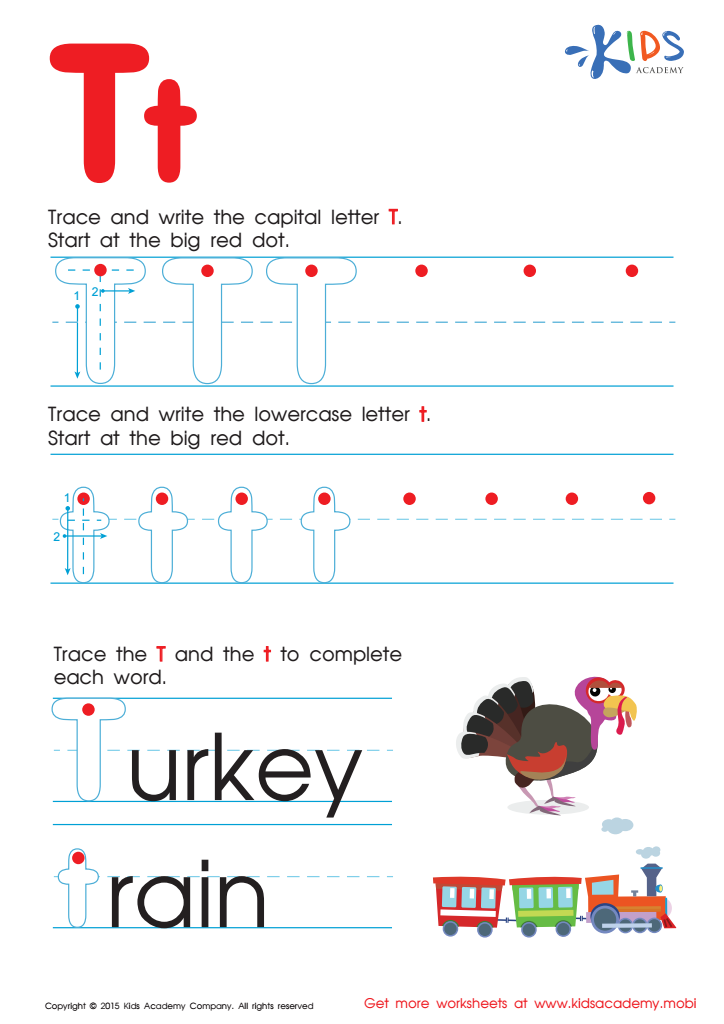
Letter T Tracing Page
 Assign to My Students

Letter D Tracing Page








Letter recognition and tracing are crucial skills for 9-year-olds, as they form the foundation for literacy and communication. At this age, children are developing their reading and writing abilities, and mastering letter recognition can significantly enhance their literacy skills. Parents and teachers should prioritize these activities because they support phonemic awareness, which is essential for reading. When children can identify and trace letters, they become more adept at understanding the relationship between sounds and symbols.
Tracing letters helps refine fine motor skills, promoting better handwriting as children learn to control their writing instruments. This is important not only for academic performance but also for the confidence kids gain from being able to express themselves in written form.
Furthermore, letter tracing provides an interactive way for adults to engage with children in learning. It fosters a sense of accomplishment, boosts motivation, and encourages positive attitudes towards reading. By investing time in letter recognition and tracing, parents and teachers lay the groundwork for successful literacy development, equipping children with the necessary skills for future learning endeavors. Encouraging this practice nurtures a love for language that benefits children throughout their educational journey and beyond.








