
Alphabetical understanding Worksheets for 9-Year-Olds
3 filtered results
Difficulty Level
Grade
Age
-
From - To
Subject
Activity
Standards
Explore our engaging Alphabetical Understanding Worksheets for 9-year-olds, designed to enhance your child's reading and writing skills! Our resources offer a fun way to recognize alphabet order, identify letters, and develop essential phonetic skills. Each worksheet features interactive activities that encourage critical thinking and boost literacy comprehension, ensuring your child remains captivated while learning. Tailored to fit the developmental needs of nine-year-olds, these worksheets make learning enjoyable and effective. Whether at home or in the classroom, our comprehensive collection fosters a positive learning environment. Help your child build a strong foundation in literacy with our printable alphabetical worksheets today!
Favorites
With answer key
Interactive
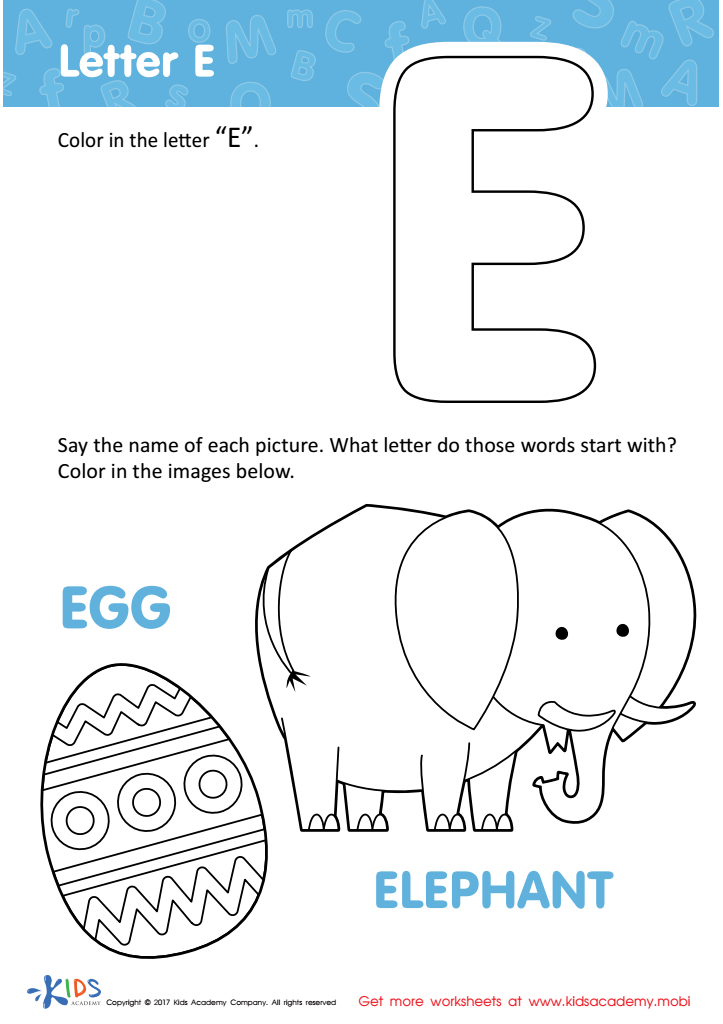
Letter E Coloring Sheet
Coloring pages are great for teaching kids the alphabet and words! This "E" page features a cute elephant and Easter egg. Kids will love it and learn the letter "E" at the same time. 80 words
Download (PDF)
 Assign to My Students
Assign to My Students
Letter E Coloring Sheet
Worksheet
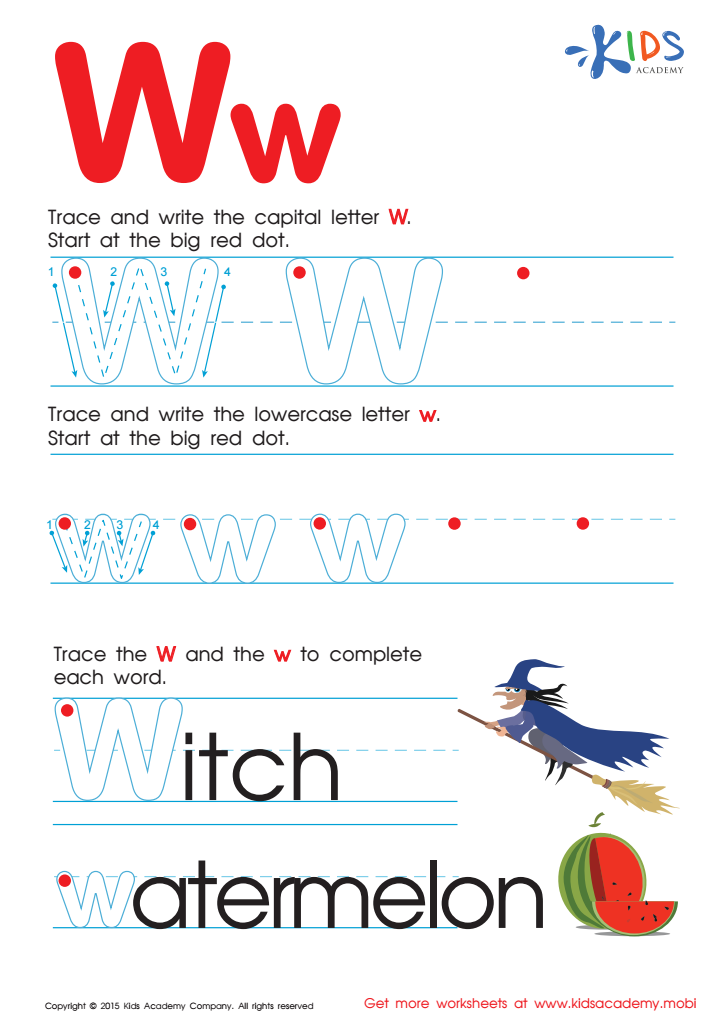
Letter W Tracing Page
Trace and write the capital and lowercase letter W with this free letter tracing worksheet by Kids Academy. Complete the words "Witch" (capital) and "watermelon" (lowercase). Check out our other kindergarten alphabet worksheets!
Letter W Tracing Page
Worksheet
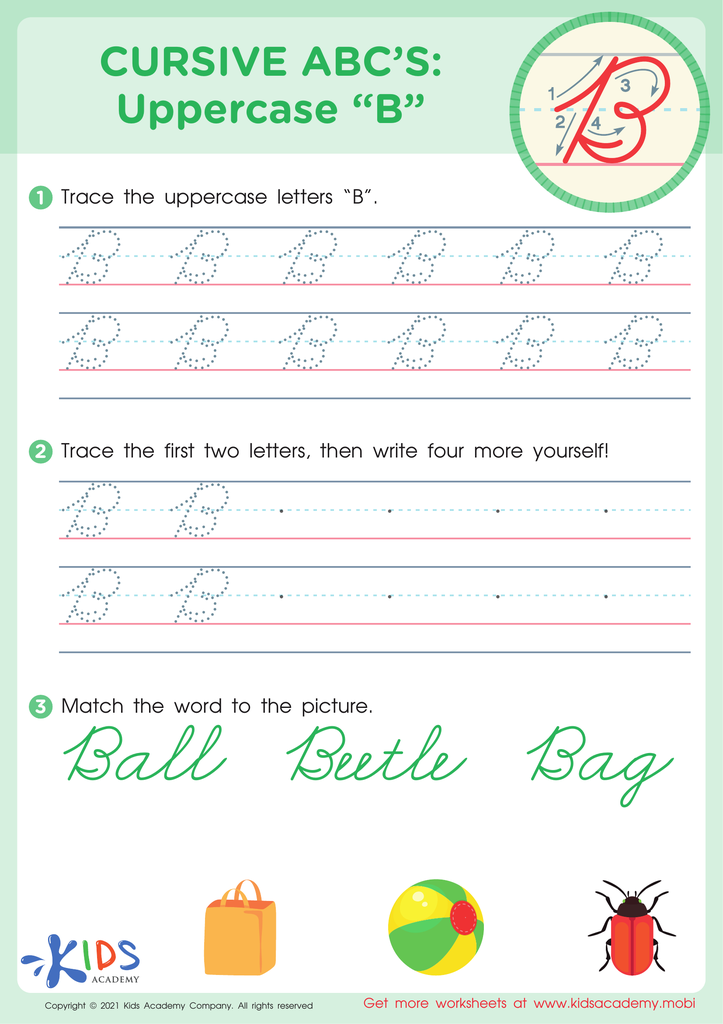
Cursive ABCs: Uppercase B
Help your kids learn the alphabet: have them identify, give examples and sound out letters, then use tracing worksheets to perfect cursive uppercase writing. Show them how to trace the letter ‘B’, then watch them write it on their own. This will give them the skills needed for further writing!
Cursive ABCs: Uppercase B
Worksheet
Join Kids Academy for Free
Who is primarily going to use this learning content?




.jpg)


.jpg)
Alphabetical understanding is vital for 9-year-olds as it lays the foundation for reading, writing, and communication skills, essential for overall academic success. At this age, children are developing greater autonomy in their studies and experimenting with more complex text. Mastering the alphabet and its uses enhances their ability to decode words, which promotes comprehension and fluency in reading. Familiarity with the alphabet facilitates spelling and vocabulary development, enabling children to express their ideas more clearly and effectively.
Additionally, understanding alphabetical order plays a crucial role in organizational skills. It helps children navigate resources such as dictionaries, encyclopedias, and digital search tools, fostering independence in research and study practices. Engaging with the alphabet encourages critical thinking and problem-solving as children explore word structures and meanings.
Moreover, a strong grasp of alphabetical concepts can influence a child’s self-esteem. As they discover that they can read and write competently, this confidence motivates further learning and engagement with literature. For parents and teachers, nurturing alphabetical understanding in 9-year-olds is essential not just for immediate academic performance but also for cultivating lifelong learning skills and a love for reading, both of which are crucial in today's information-rich world.








