
Developing critical thinking Worksheets for 9-Year-Olds
3 filtered results
Difficulty Level
Grade
Age
-
From - To
Subject
Activity
Standards
Welcome to our collection of Developing Critical Thinking Worksheets for 9-Year-Olds! These carefully crafted worksheets are designed to encourage young learners to analyze, evaluate, and apply their reasoning skills. Tailored for nine-year-olds, each activity challenges students to think creatively and logically while solving problems. Through engaging exercises, children will enhance their decision-making abilities and improve their understanding of complex concepts. Ideal for classrooms or at-home learning, our worksheets promote independence and curiosity. Empower your child to become a thoughtful problem solver with these fun, interactive resources that make critical thinking an exciting part of their educational journey!
Favorites
With answer key
Interactive
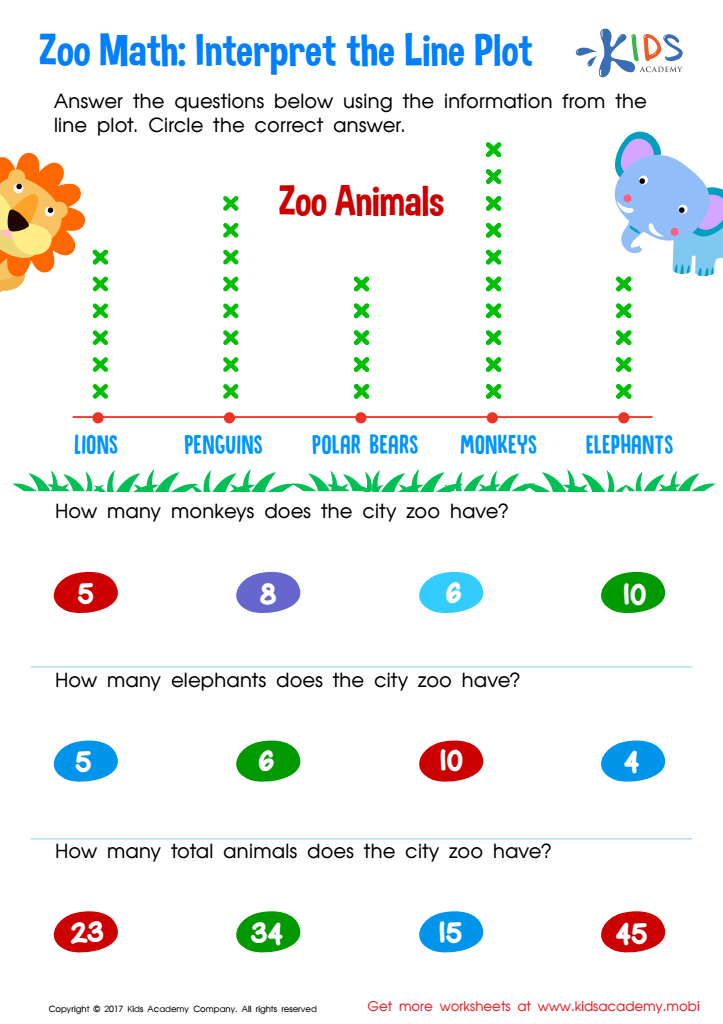
Interpret Line Plot Worksheet
Kids can learn to read graphs and analyze data easily with line plots. A fun zoo animal worksheet motivates kids to answer questions by reading the line plot and finding out how many animals a local zoo has.
 Assign to My Students
Interpret Line Plot Worksheet
Worksheet
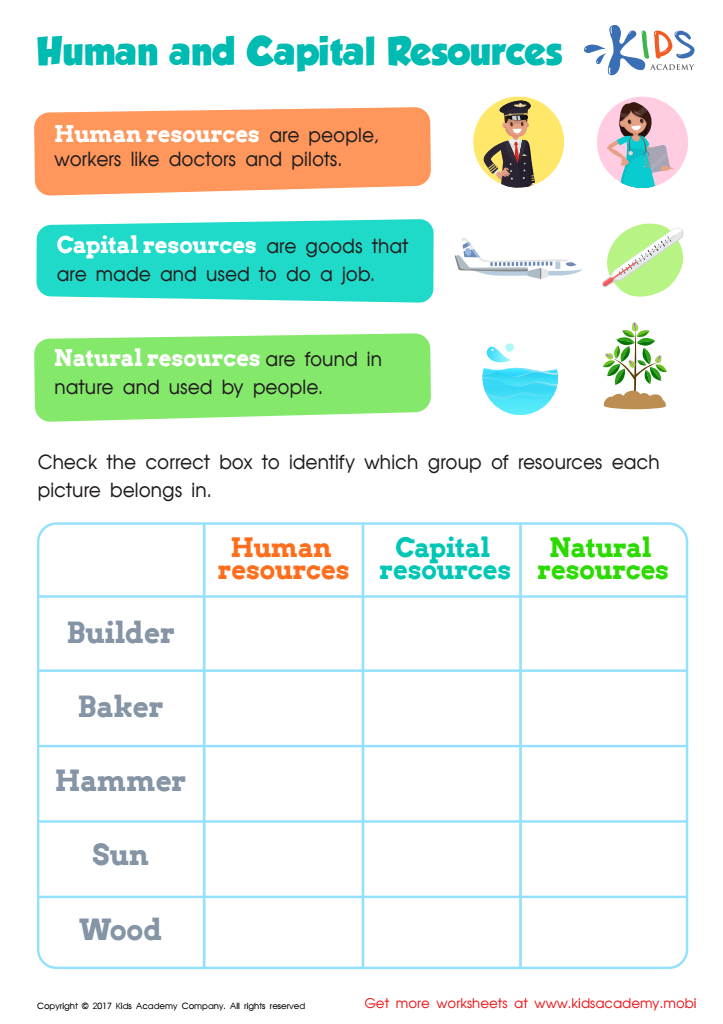
Human and Capital Resources Worksheet
It helps identify and differentiate human, natural and capital resources, so your kid can understand how each affects their world.
Human and Capital Resources Worksheet
Worksheet
Join Kids Academy for Free
Who is primarily going to use this learning content?







Developing critical thinking skills in 9-year-olds is crucial for their overall cognitive development and future success. At this age, children are capable of more complex reasoning and are beginning to understand abstract concepts, making it an ideal time to foster their analytical abilities.
Parents and teachers play a vital role in guiding children to think critically, enabling them to engage with problems creatively and evaluate situations thoughtfully. Critical thinking encourages children to ask questions, assess evidence, and make informed decisions, which are essential skills not only in academic pursuits but in everyday life.
Furthermore, strong critical thinking abilities can improve a child’s social skills, as they learn to view situations from multiple perspectives and understand the implications of their choices. This foundation aids in developing resilience and adaptability, helping children navigate challenges effectively.
Additionally, fostering critical thinking prepares children for the complexities of the modern world, where information is abundant yet nuanced. By nurturing these skills early on, parents and teachers empower children to become independent learners and problem solvers, equipped to face future educational and personal challenges with confidence and insight. Ultimately, investing in critical thinking today molds informed, thoughtful, and engaged citizens of tomorrow.








