
Fine motor development Worksheets for 9-Year-Olds
4 filtered results
Difficulty Level
Grade
Age
-
From - To
Subject
Activity
Standards
Enhance your 9-year-old's fine motor skills with our engaging worksheets designed specifically for their age group. These printable activities focus on developing essential hand-eye coordination, dexterity, and precision through fun exercises that keep kids motivated and interested in learning. Your child will work on tasks like cutting, tracing, and coloring, which are crucial for mastering everyday skills. Each worksheet is created to cultivate creativity while promoting concentration. Ideal for both home and classroom use, these resources will help build a strong foundation in fine motor development. Explore our collection today and watch your child's skills blossom!
Favorites
With answer key
Interactive
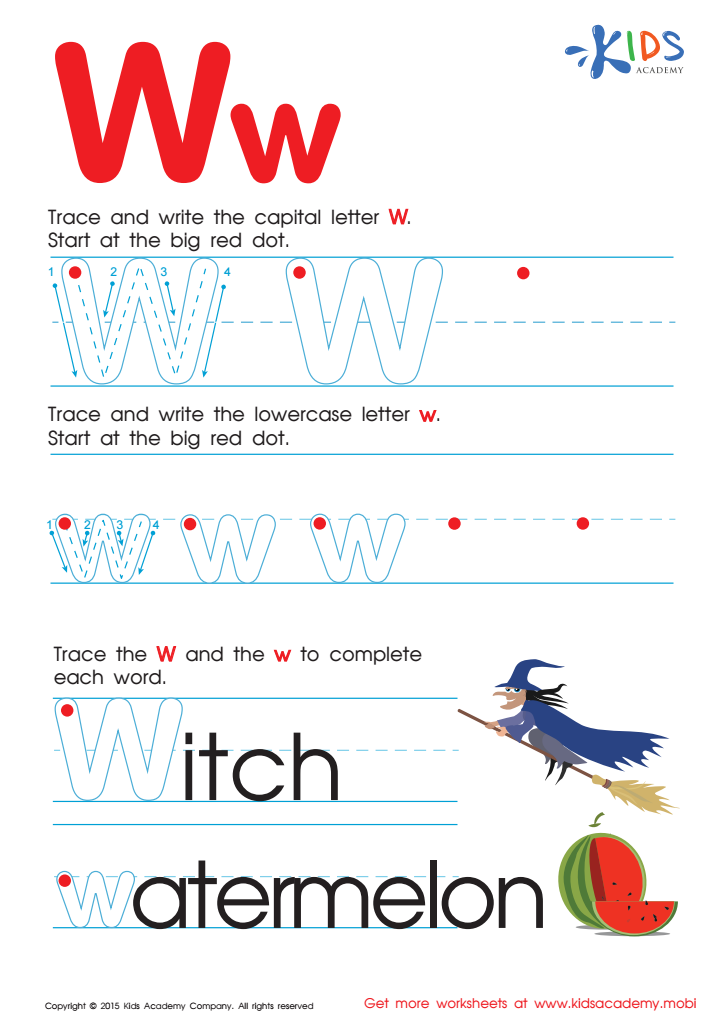
Letter W Tracing Page
Trace and write the capital and lowercase letter W with this free letter tracing worksheet by Kids Academy. Complete the words "Witch" (capital) and "watermelon" (lowercase). Check out our other kindergarten alphabet worksheets!
 Assign to My Students
Letter W Tracing Page
Worksheet
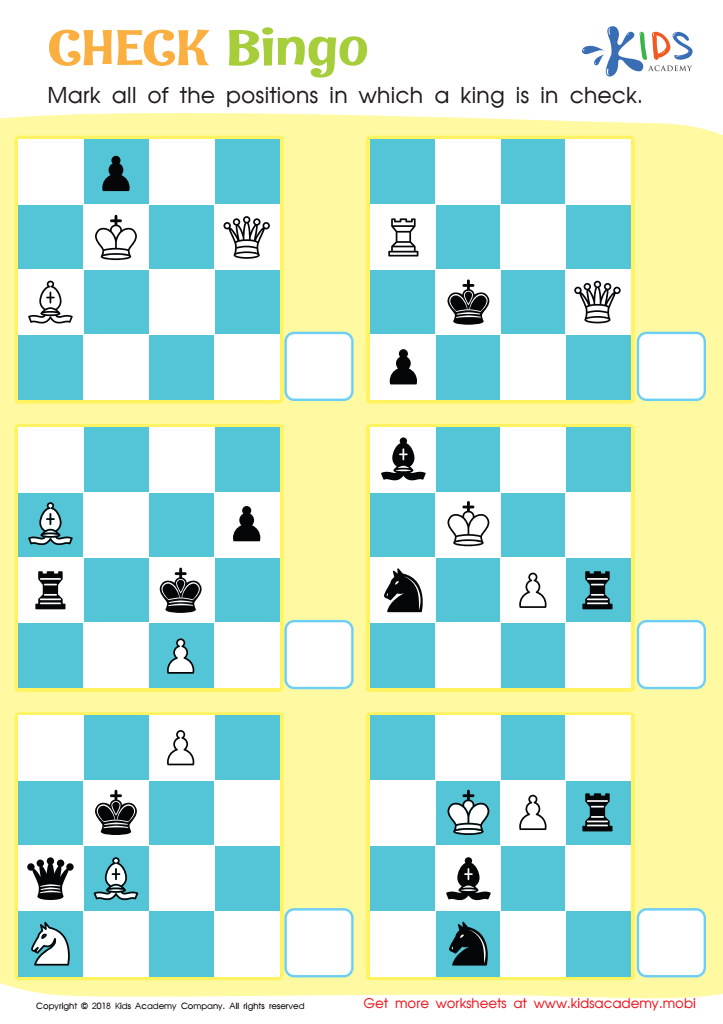
Check Bingo Worksheet
Chess helps young minds build critical thinking, problem-solving and logical reasoning skills. This free PDF worksheet is a fun way to teach these skills. It explains the concept of check and includes gameboards with kings in various positions. Students mark off the boards where a king isn't in check, and they're ready to move onto checkmate!
Check Bingo Worksheet
Worksheet
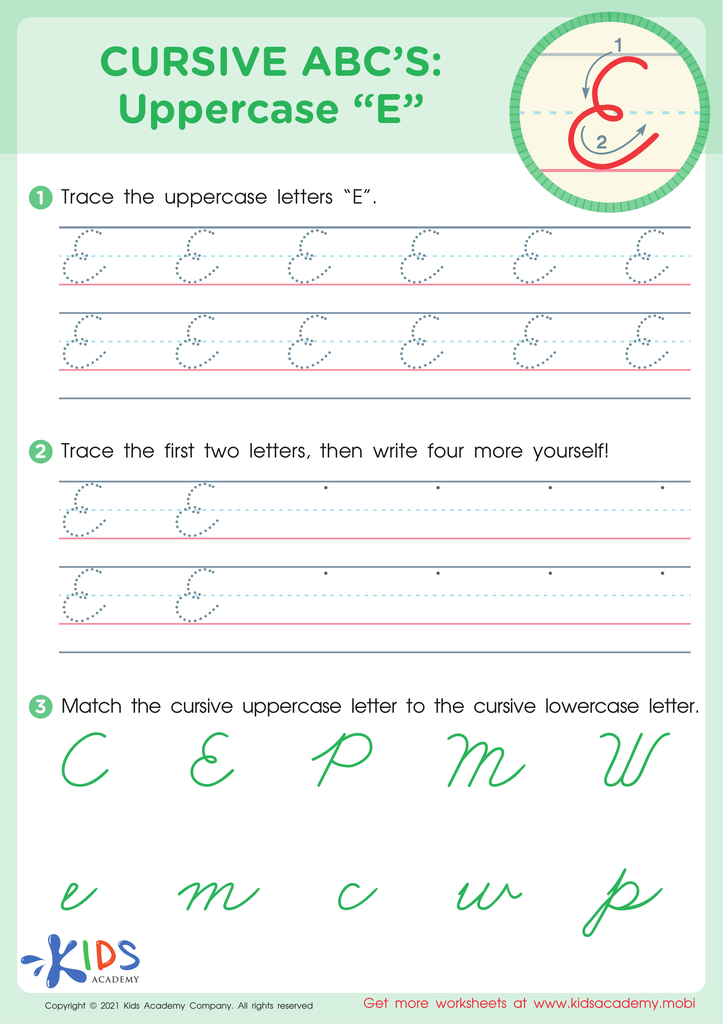
Cursive ABCs: Uppercase E
Ask your child if they can identify the letter 'E' and give examples. Each letter is unique, so provide coaching. Have them trace cursive 'E' to become familiar and boost confidence. Then, ask them to write it on their own.
Cursive ABCs: Uppercase E
Worksheet
Join Kids Academy for Free
Who is primarily going to use this learning content?








Fine motor development is crucial for 9-year-olds as it significantly impacts their academic success, self-esteem, and daily functioning. At this age, children are typically engaging in more complex tasks that require refined hand-eye coordination and dexterity, such as writing essays, using tools in art projects, or playing musical instruments. These skills enable them to express their thoughts clearly and engage fully in classroom activities.
Moreover, strong fine motor skills contribute to greater independence in daily tasks, such as tying shoelaces, buttoning shirts, and using utensils. This independence fosters self-confidence and encourages a sense of achievement in children, reinforcing their willingness to tackle new challenges.
Teachers and parents should prioritize fine motor development through activities that elevate these skills, like arts and crafts, puzzles, and interactive games. By doing so, they can nurture not only the physical competence of the child but also their cognitive and social development. A child with well-developed fine motor skills is better prepared for the demands of school and beyond, laying the foundation for lifelong learning and adaptation in an increasingly complex world. In essence, fostering fine motor skills is an investment in a child's overall growth and well-being.








