Money recognition Worksheets for 9-Year-Olds
6 filtered results
-
From - To
Help your 9-year-old master money skills with our Money Recognition Worksheets! Specifically tailored for young learners, these engaging worksheets make recognizing and counting both coins and bills a fun and educational experience. Through interactive exercises and vibrant visuals, children will boost their numerical skills while learning real-world math applications. Whether they're identifying different denominations or making change, these resources build essential life skills. Perfect for parents and educators looking to enhance financial literacy in a classroom or at home! Explore our collection now to turn every day into a learning adventure. Happy counting!
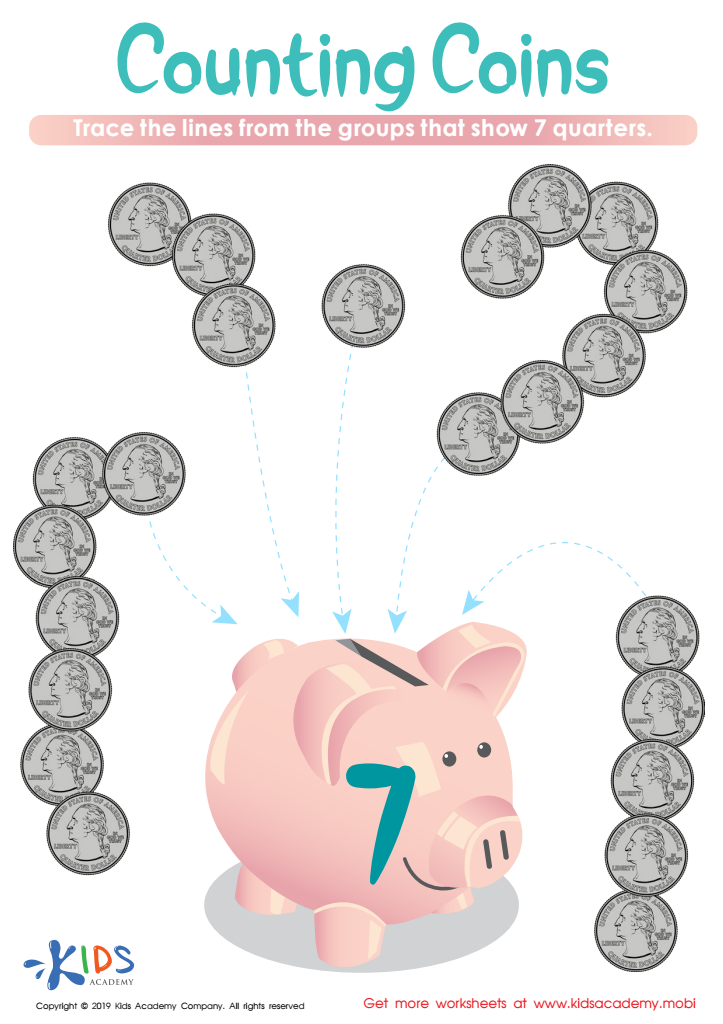
Counting Coins Worksheet
 Assign to My Students
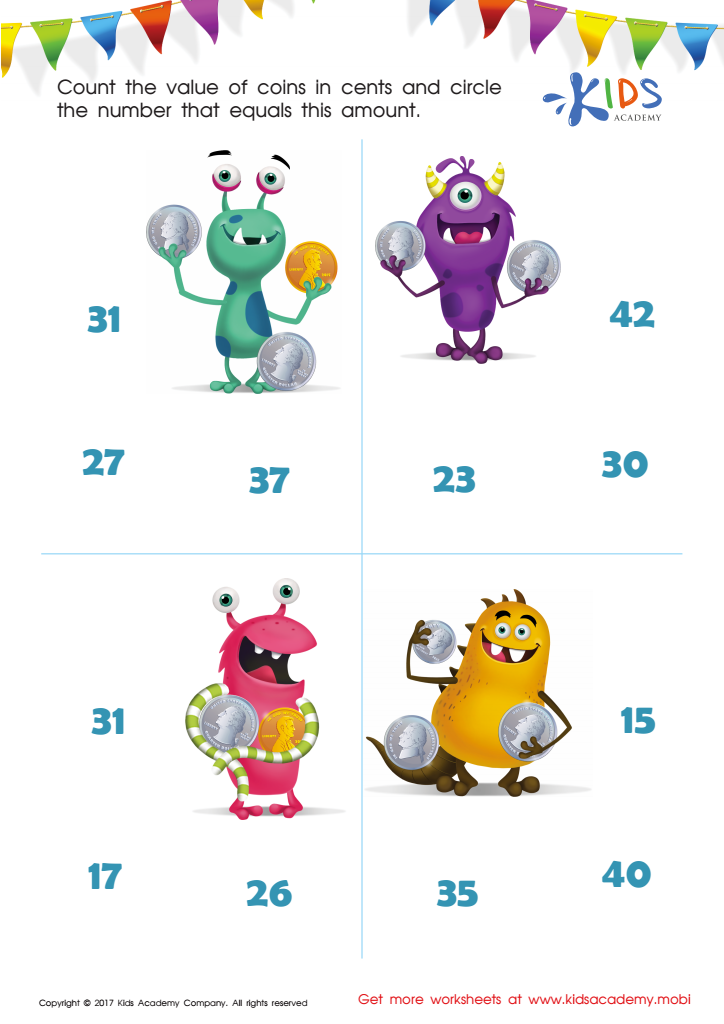
How Many Coins Money Worksheet
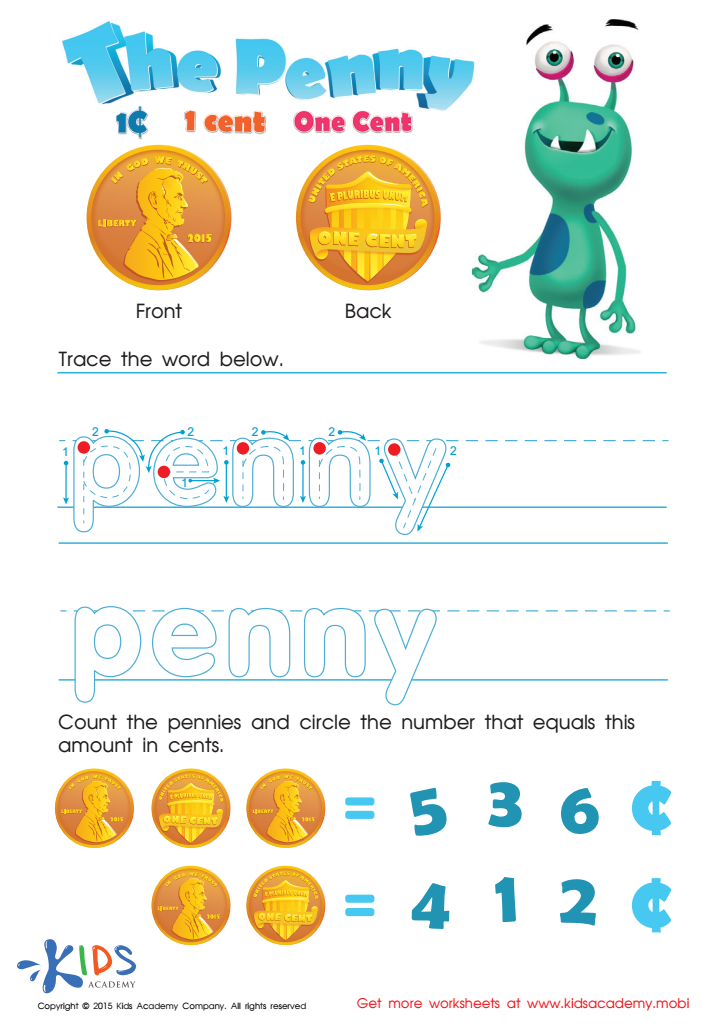
One Cent or the Penny Money Worksheet
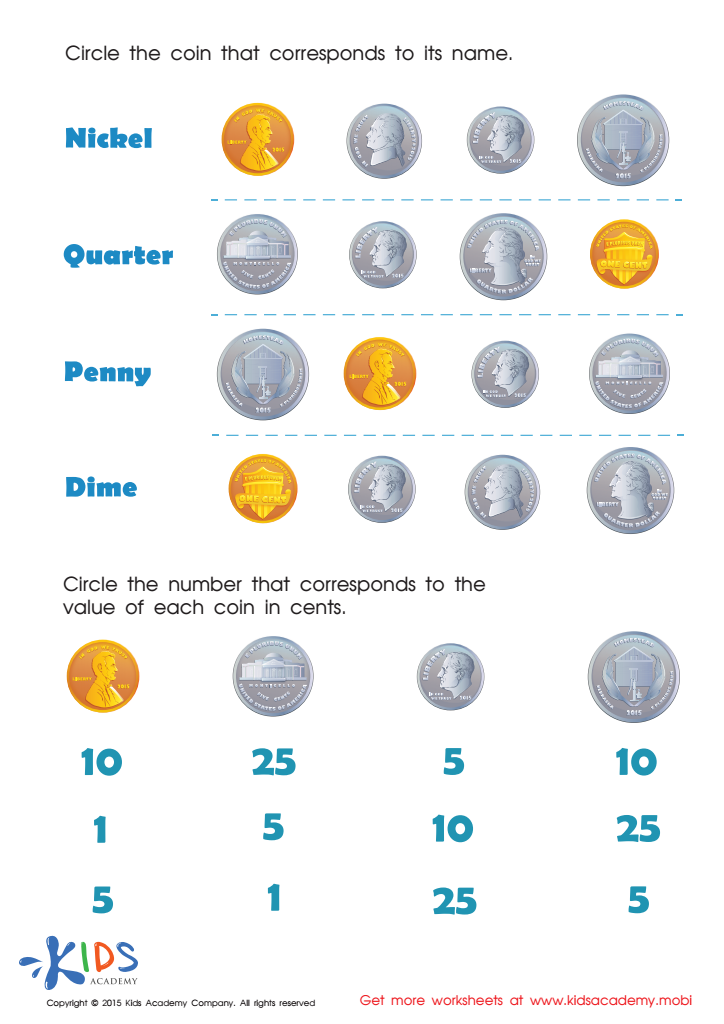
Coin Names and Values Money Worksheet
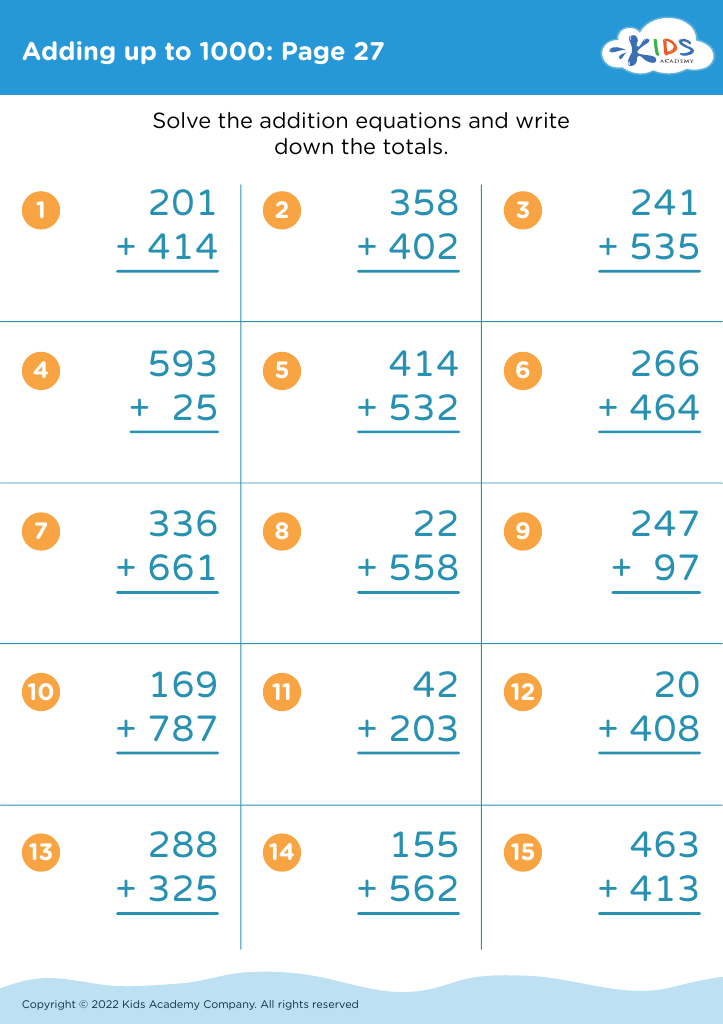
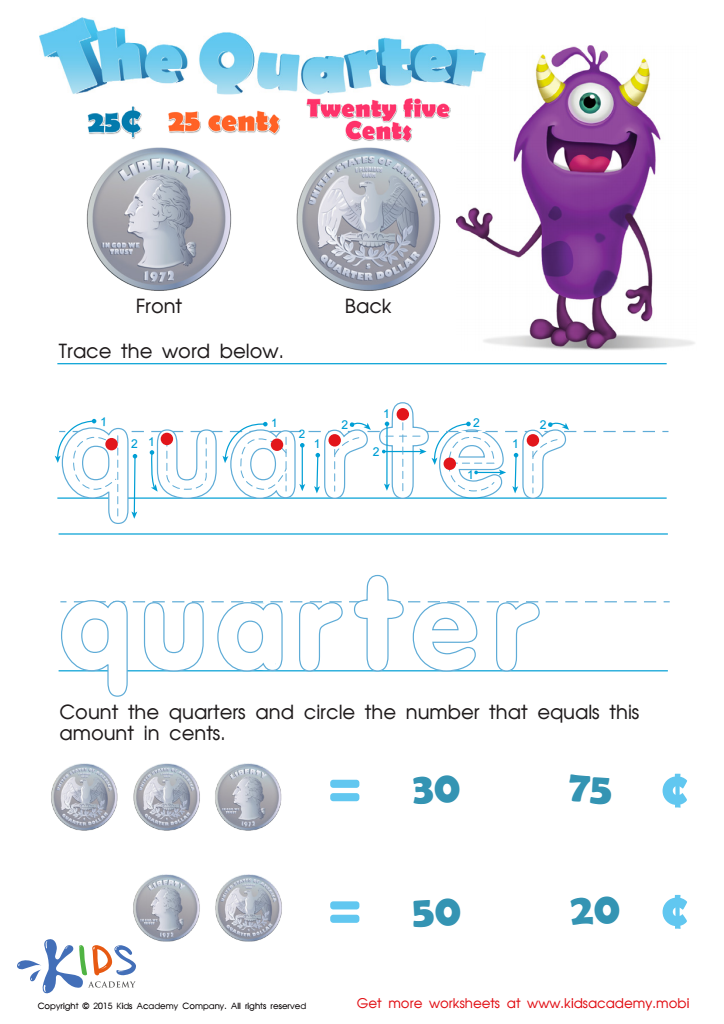
Twenty Five Cents or the Quarter Money Worksheet








Understanding money and its value is a critical life skill that can have long-term benefits for children. At the age of nine, children are at an ideal developmental stage to grasp basic financial concepts, making it an optimal time for parents and teachers to introduce money recognition.
First and foremost, recognizing money and its denominations helps children with basic mathematical skills. Counting coins and bills fosters an understanding of addition, subtraction, and multiplication, laying the building blocks for more complex arithmetic.
Moreover, learning about money teaches financial responsibility. When children understand the value of different denominations, they begin to grasp budgeting, saving, and the concept of earning. This early financial literacy prepares them for future financial decisions and helps establish good habits that can prevent debt and promote financial wellness.
Furthermore, money recognition builds critical thinking skills. Children learn to make informed choices about spending and conserve resources, enhancing their problem-solving abilities. For instance, they might decide whether to spend money on a small toy now or save for a larger goal later, teaching them about delayed gratification.
Engaging children in money recognition activities also boosts their confidence and independence. As they successfully manage small amounts of money, they gain a sense of accomplishment and self-reliance. Thus, teaching nine-year-olds about money not only supports their academic development but also equips them with essential life skills, promoting financial literacy and responsible citizenship.








