
Number Sequencing Worksheets for 9-Year-Olds
8 filtered results
Difficulty Level
Grade
Age
-
From - To
Subject
Activity
Standards
Enhance your 9-year-old's math skills with our Number Sequencing Worksheets, designed to foster numerical understanding and problem-solving abilities. At Kids Academy, we provide engaging and educational worksheets that challenge children to arrange numbers in ascending or descending order, recognize patterns, and develop critical thinking. Perfect for reinforcing classroom learning, these worksheets help kids master sequencing concepts with fun and interactive activities. Our expertly designed resources ensure your child gains confidence and proficiency in mathematics, setting a solid foundation for future learning. Start your child's math journey with Kids Academy today!
Favorites
With answer key
Interactive
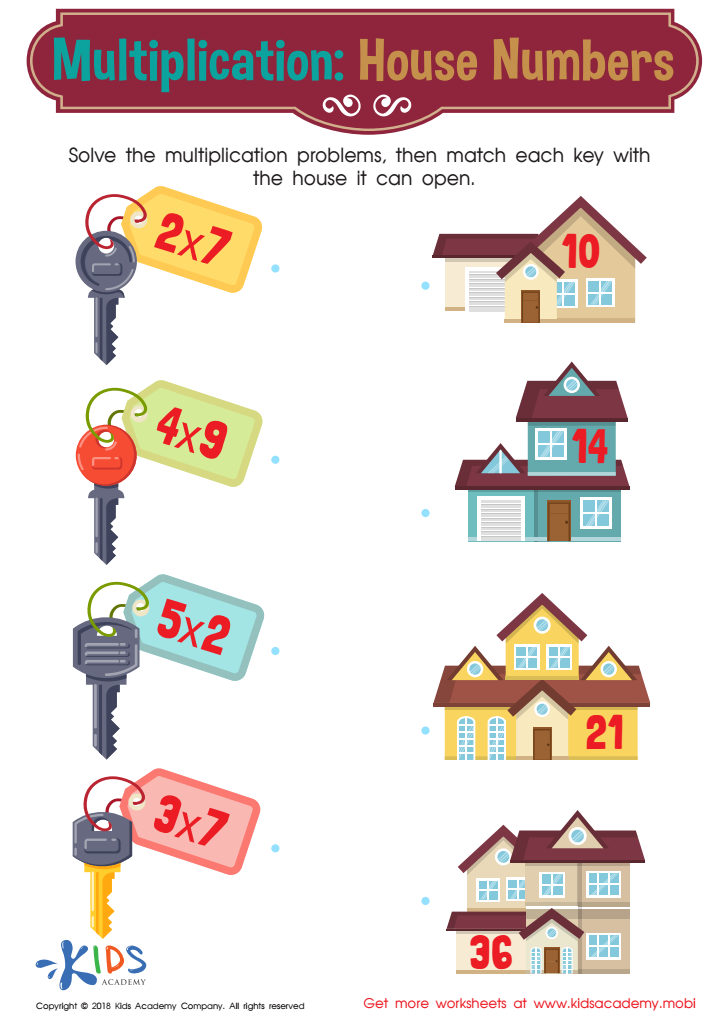
House Numbers Worksheet
This multiplication worksheet is perfect for grade 3 students to sharpen their math skills! Each problem unlocks the door to a house on the page - can they figure out which key fits which door? By solving each problem, they'll boost their multiplication skills and have fun along the way.
 Assign to My Students
House Numbers Worksheet
Worksheet

Dot to Dot Worksheet for 3rd Grade
Let your 3rd grader develop better number skills with this dot-to-dot worksheet! They can have fun outlining a spaceship as they skip count by 500 up to 10,000. It's a great way to boost their number sense and make learning more exciting.
Dot to Dot Worksheet for 3rd Grade
Worksheet
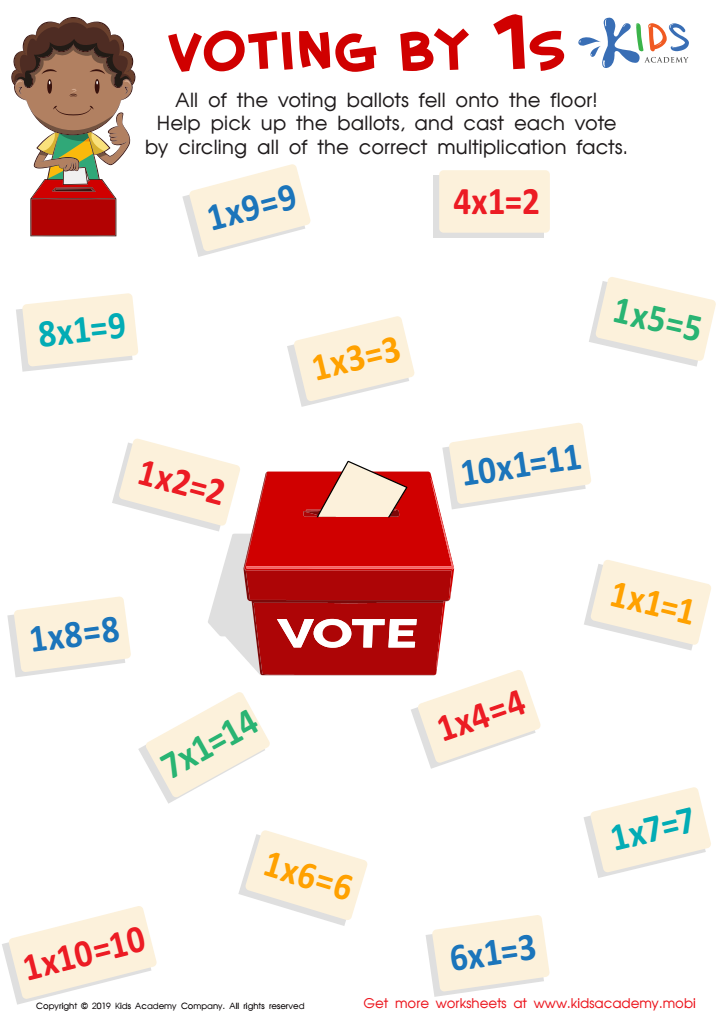
Voting by 1s Worksheet
Ask your child if they can list duties of a good citizen. These include voting, to elect right leaders. With this worksheet, the voting ballots have fallen to the floor! Help your kids pick them up and cast each vote by circling the correct multiplication facts.
Voting by 1s Worksheet
Worksheet
Join Kids Academy for Free
Who is primarily going to use this learning content?







Number sequencing is a fundamental skill that greatly benefits 9-year-olds in various aspects of their academic and everyday lives. When children understand and can work with sequences of numbers, they build a solid foundation for more complex mathematical concepts. For instance, recognizing patterns helps with learning multiplication, division, fractions, and eventually algebra.
One primary reason parents and teachers should prioritize number sequencing is its role in enhancing problem-solving skills. Through practices like arranging numbers in ascending or descending order and identifying missing numbers in a sequence, children develop logical thinking and reasoning abilities. These activities sharpen their analytical skills and make them better equipped to tackle various tasks or problems they may face both inside and outside the classroom.
Moreover, number sequencing nurtures better cognitive development. Engaging with sequences enhances memory, attention to detail, and mental flexibility, which are crucial for overall learning and intellectual growth. It also helps children understand the concept of time, navigate everyday routines, and make sense of the world around them.
In sum, fostering proficiency in number sequencing isn't just about boosting math skills; it prepares children for a range of educational challenges and everyday situations, thereby promoting a robust and adaptable intellect. Both parents and teachers play key roles in facilitating this critical area of cognitive development.








