Pattern recognition Worksheets for 9-Year-Olds
6 filtered results
-
From - To
Enhance your 9-year-old's cognitive skills with our engaging Pattern Recognition Worksheets. These educational activities are designed to sharpen critical thinking, improve problem-solving abilities, and strengthen mathematical foundations. By identifying and predicting patterns, kids will boost their analytical skills, gain confidence in tackling more complex subjects, and prepare for future academic success. Tailored to meet educational standards, our worksheets make learning fun and interactive. Perfect for both classroom use and home practice, they cover a variety of pattern types, fostering creativity and logical thinking. Give your child a head start with our expertly crafted resources. Try them today!
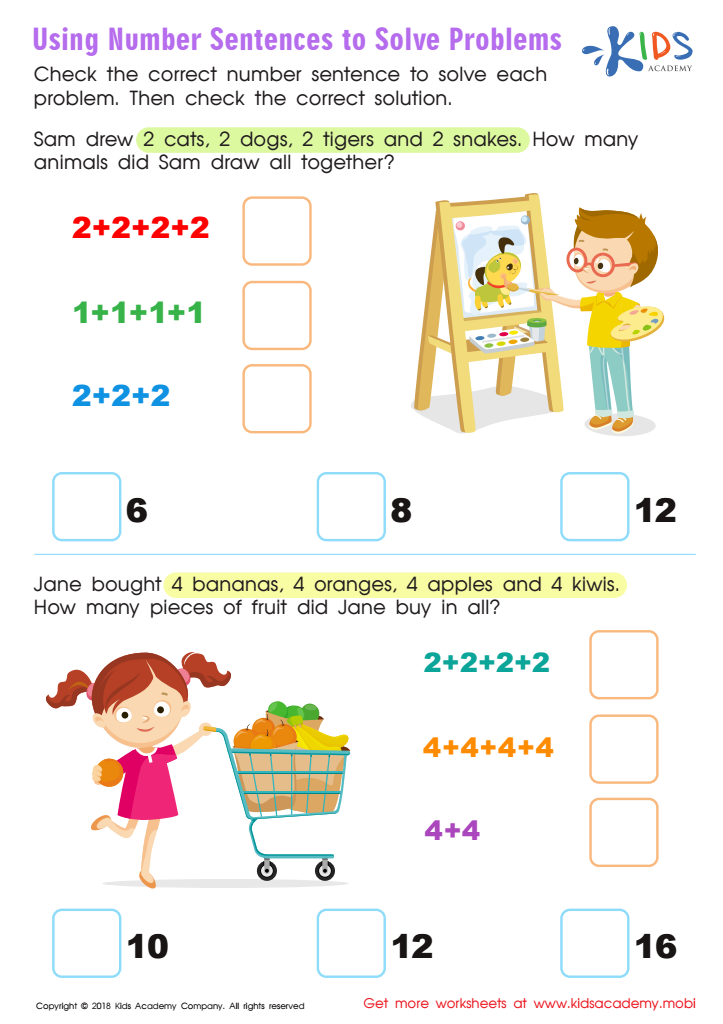
Using Number Sentences to Solve Problems Worksheet
 Assign to My Students
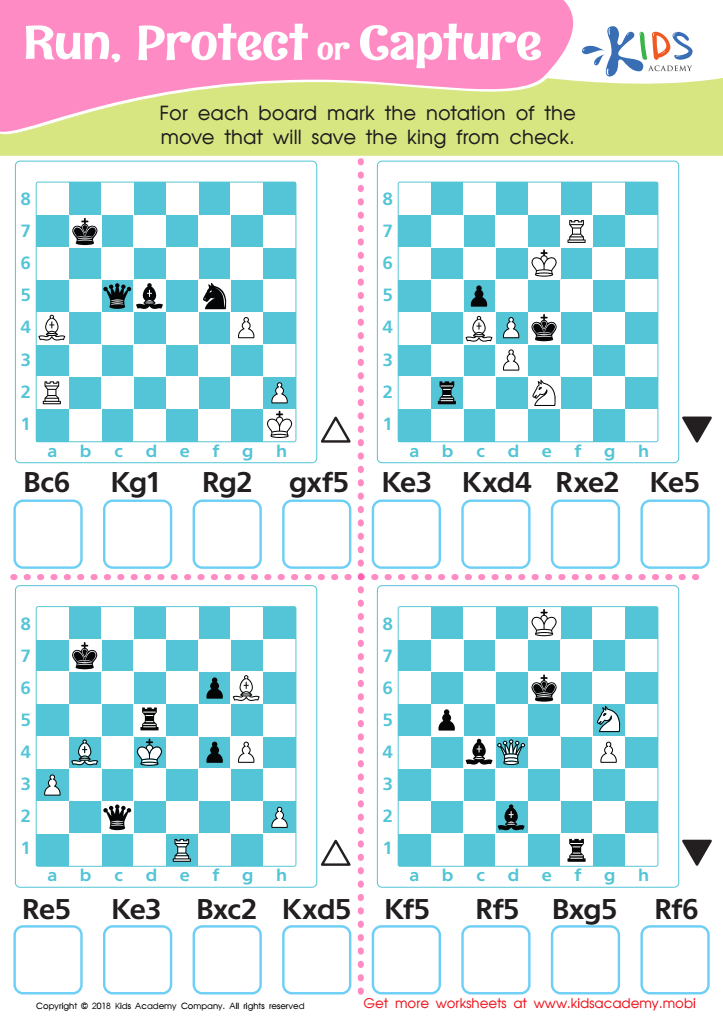
Run, Protect or Capture Worksheet
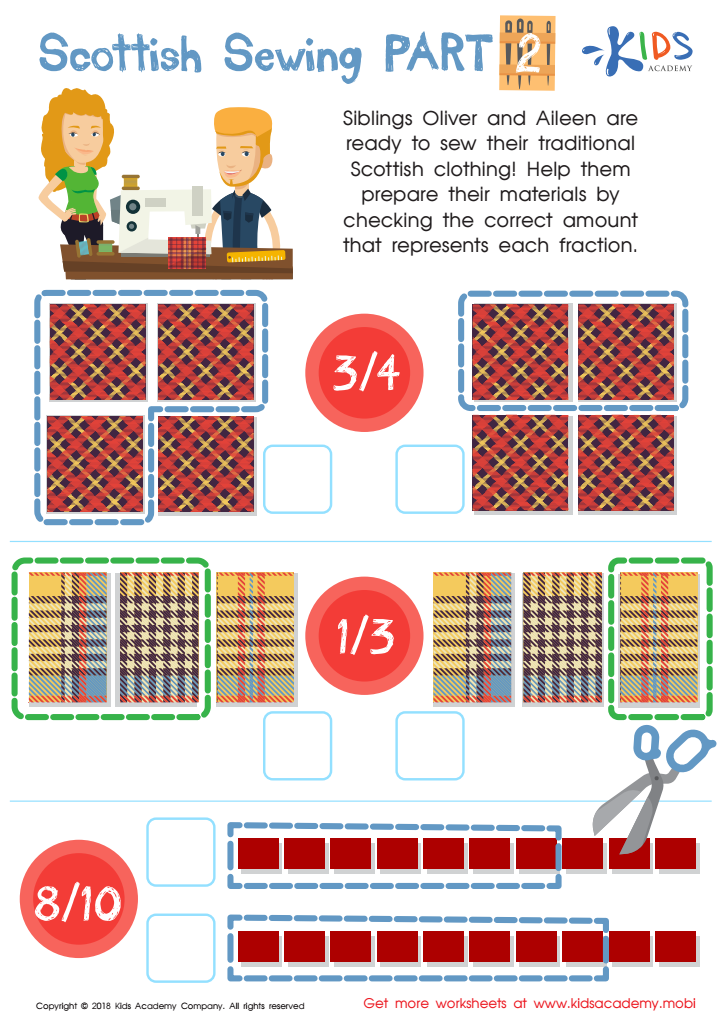
Scottish Sewing Part 2 Worksheet


.jpg)





Pattern recognition is a foundational skill vital for a child's cognitive development, particularly around the age of 9. Parents and teachers should prioritize fostering this skill because it plays a crucial role in a wide range of learning areas.
Firstly, pattern recognition is integral to mathematical thinking. Recognizing numerical patterns helps children understand mathematical concepts like sequences, multiplication, and problem-solving strategies. This understanding forms the basis for advanced mathematical reasoning in later years.
In literacy, pattern recognition assists in understanding phonic patterns, word formation, and grammar, making reading and writing more intuitive. Children begin to see connections between letters and sounds, improving their ability to decode new words and comprehend texts.
Moreover, pattern recognition promotes critical thinking and problem-solving skills. By identifying and understanding patterns, children learn to make predictions, detect errors, and solve complex problems efficiently. This enhances their strategic thinking and reasoning capabilities.
Emotionally and socially, recognizing patterns in behavior or social interactions helps children predict outcomes and react aptly in various situations, fostering better interpersonal skills.
Engagement in activities that encourage pattern recognition also stimulates brain development and enhances memory and attention to detail. By investing in pattern recognition, parents and teachers provide children with the tools they need for academic success and everyday problem-solving skills.








