
Spatial awareness Worksheets for 9-Year-Olds
11 filtered results
Difficulty Level
Grade
Age
-
From - To
Subject
Activity
Standards
Enhance your child's spatial skills with our engaging Spatial Awareness Worksheets designed for 9-year-olds! These worksheets, available on Kids Academy, help children understand shape perceptions, object positions, and their relations to one another. Our expertly crafted activities cater to diverse learning styles, boosting problem-solving capabilities and critical thinking. Through fun and interactive tasks, kids can develop essential skills that support their everyday activities and academic success in subjects like math and geography. Start your child's journey to mastering spatial awareness by exploring our wide range of printable worksheets tailored specifically for their age group!
Favorites
With answer key
Interactive
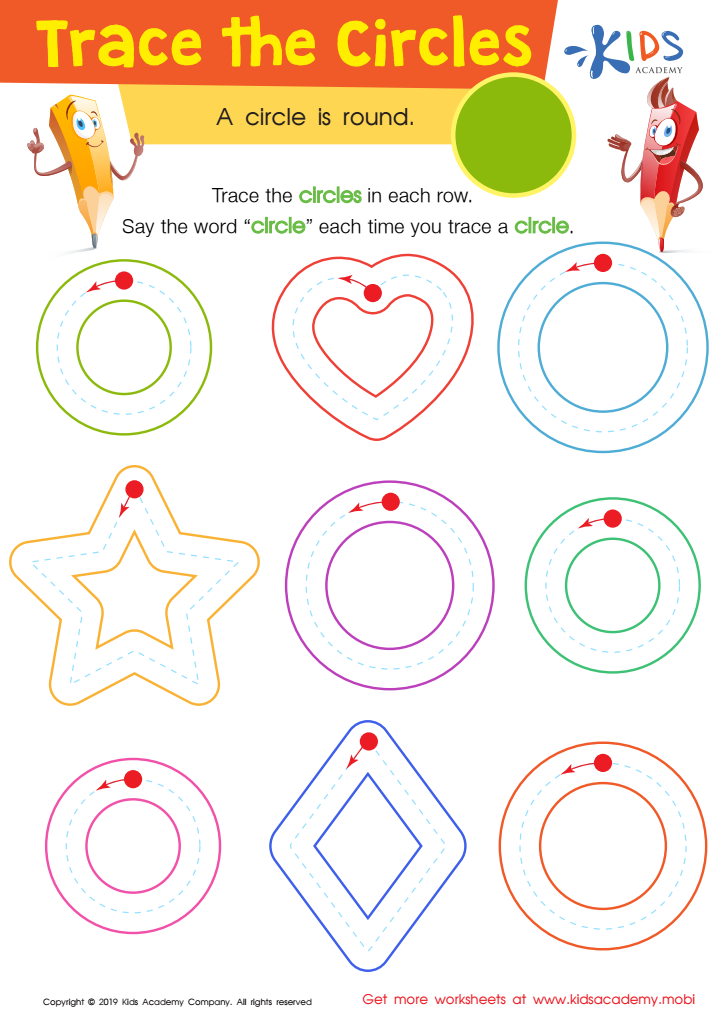
Trace The Circles Worksheet
Preschoolers and kindergarteners love learning shapes! This worksheet provides practice in naming and tracing circles. Students say "circle" each time they trace one. It's a fun way to help kids learn math vocabulary and develop fine motor skills. Enjoy this printable and get ready to master circles!
 Assign to My Students
Trace The Circles Worksheet
Worksheet
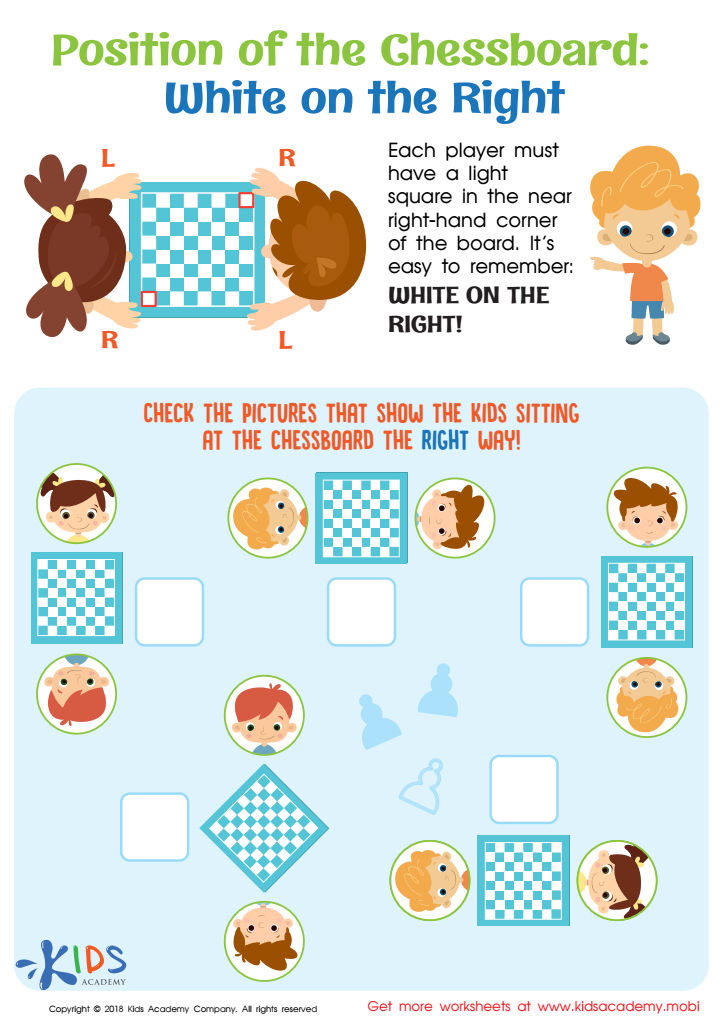
Position of the Chessboard: White on the Right Worksheet
Proper positioning of the chessboard and players is key. Before the game, make sure the white square is in the right-hand corner. A simple rhyme can help: "White on the right". Check pictures of kids at the chessboard to ensure correct positioning.
Position of the Chessboard: White on the Right Worksheet
Worksheet
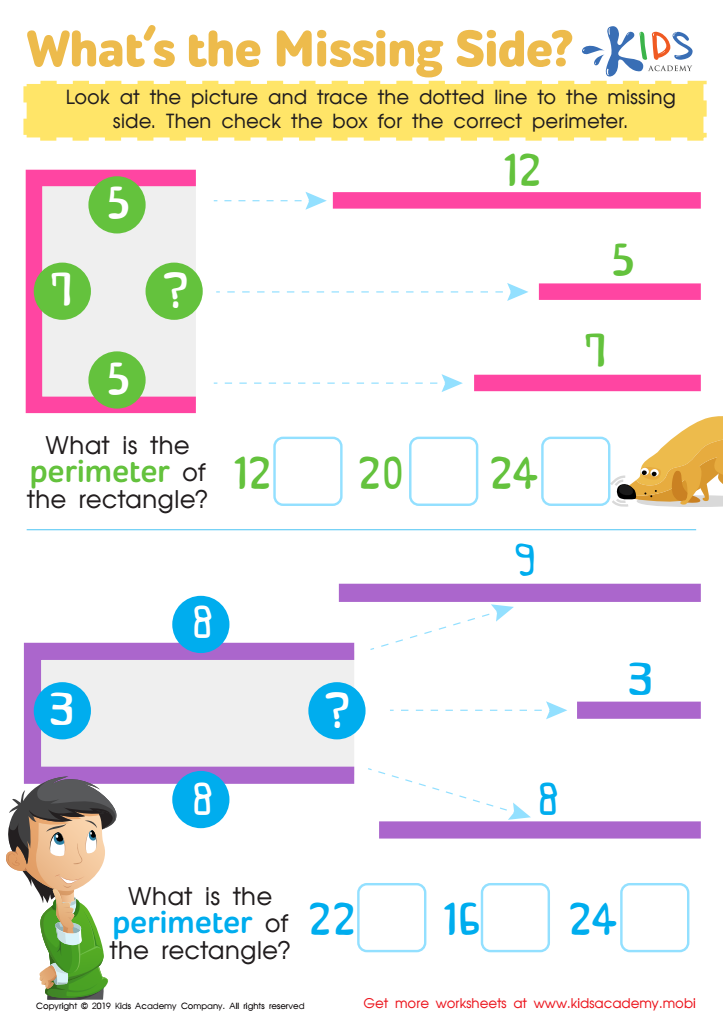
What's the Missing Side Worksheet
Assist your pupils in improving math skills with fun exercises like the tracing sheet. Show them the picture and guide them to trace the missing side. Ask them to check the box of the right perimeter afterwards. Doing this regularly can help them to enjoy and appreciate the subject more.
What's the Missing Side Worksheet
Worksheet
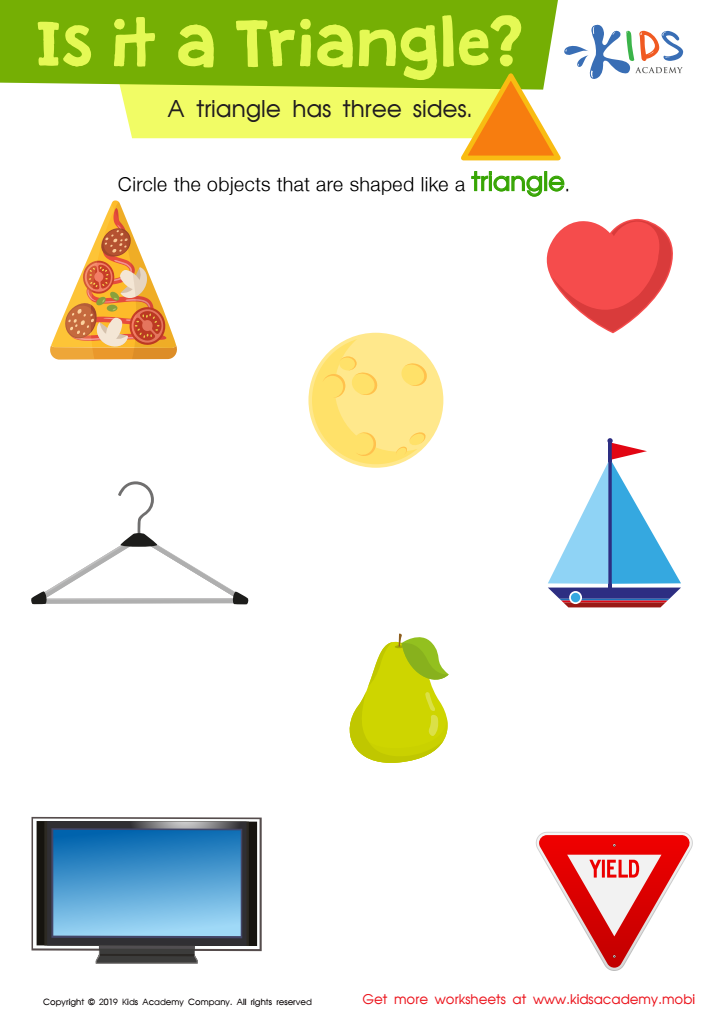
Is It a Triangle? Worksheet
Young kids need to learn to identify basic shapes for math. Show them what a triangle looks like with this fun worksheet. They can look around their environment for everyday objects shaped like a triangle and circle them on the sheet. Download now and start learning what a triangle is!
Is It a Triangle? Worksheet
Worksheet
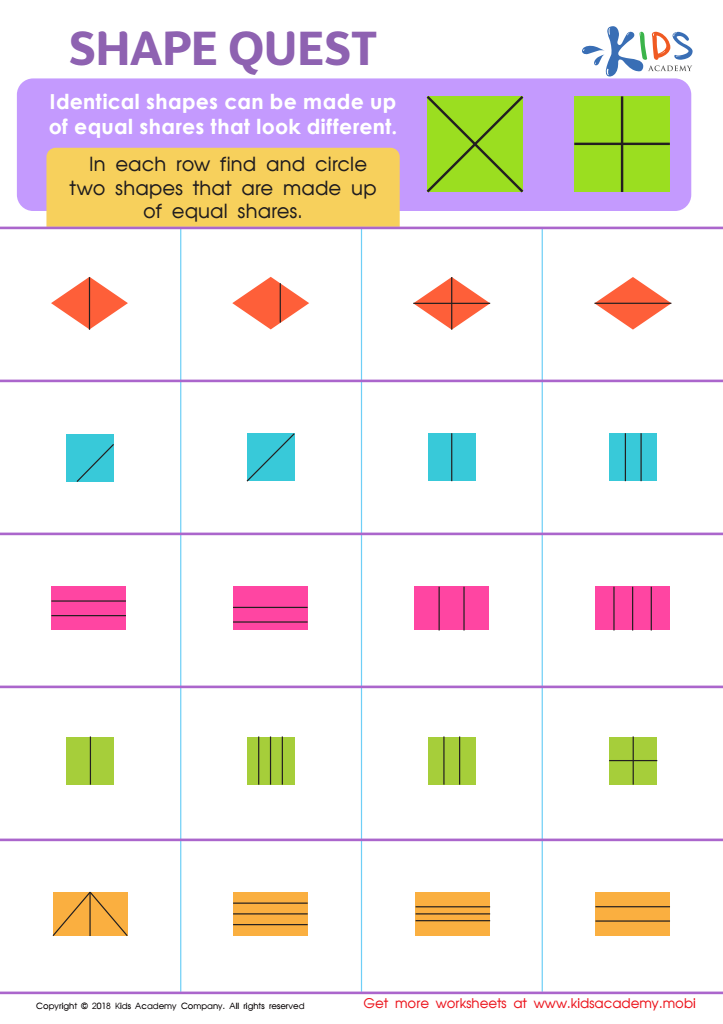
Shape Quest Worksheet
Help your child identify shapes by having them find shapes made up of equal parts. This colorful worksheet challenges them to look through each row and circle two matching shapes. It's a great way to teach them the unique features of each shape, while also helping them understand that identical shapes can look different.
Shape Quest Worksheet
Worksheet
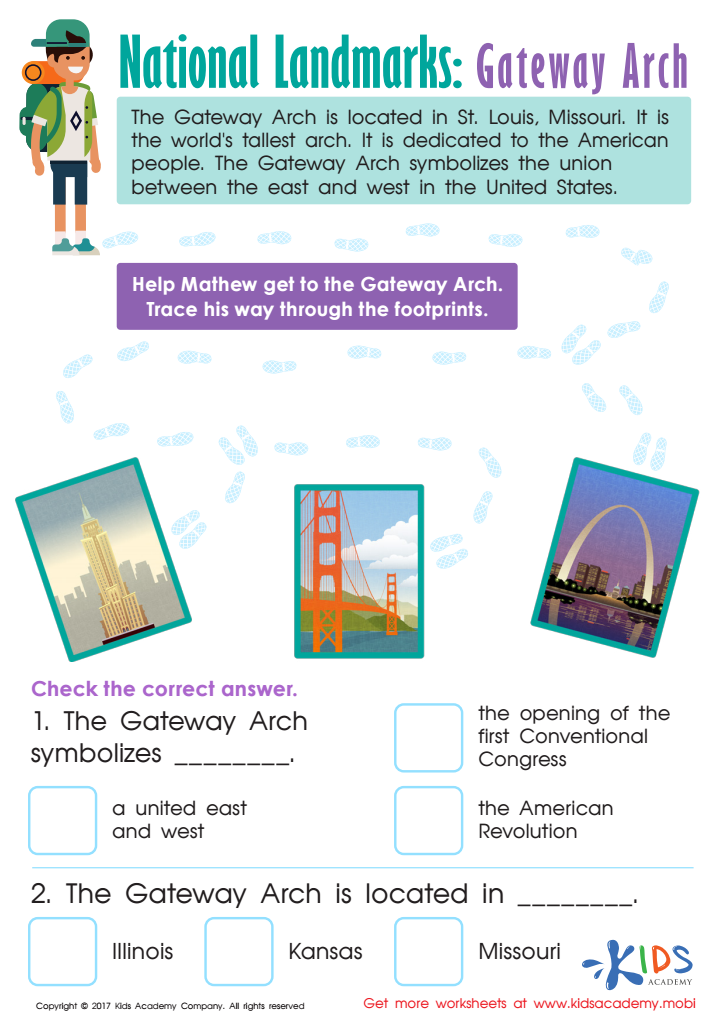
Gateway Arch Printable Worksheet
Explore America with your child! This printable worksheet takes them to St. Louis, Missouri's iconic Gateway Arch. As they learn about its history, they'll be quizzed with fun-filled facts. A great way to discover and appreciate this amazing national landmark! (80 words)
Gateway Arch Printable Worksheet
Worksheet
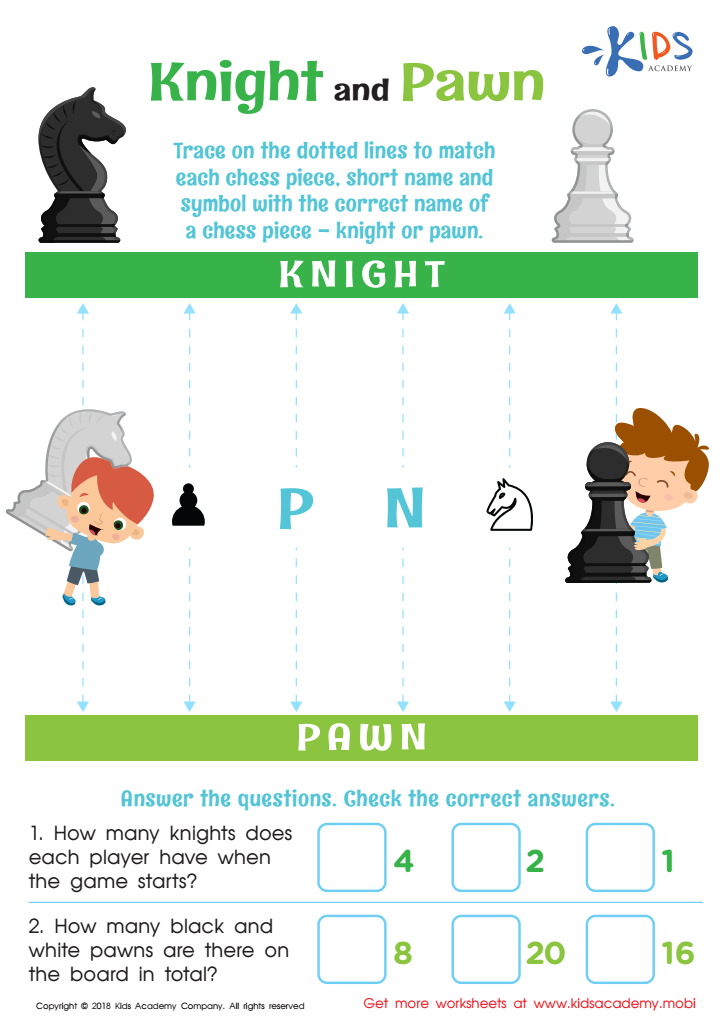
Knight and Pawn Worksheet
This tracing worksheet teaches kids about chess. They trace the dotted lines to match pieces, names and symbols to the correct chess piece. Questions at the bottom test their understanding. It's a simple exercise for a fun way to learn.
Knight and Pawn Worksheet
Worksheet
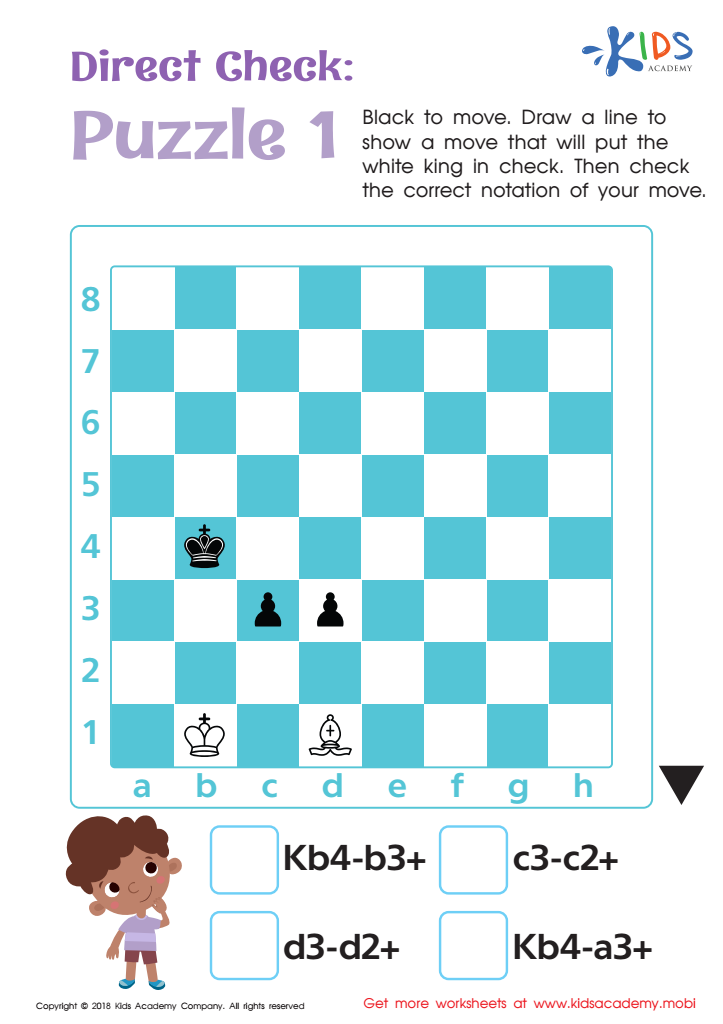
Direct Check: Puzzle 1 Worksheet
Your child can test their chess knowledge with this worksheet. If they've been taking lessons or playing regularly, they'll enjoy connecting the dots to put the white king in checkmate, then checking the correct notation. Challenge their chess skills!
Direct Check: Puzzle 1 Worksheet
Worksheet
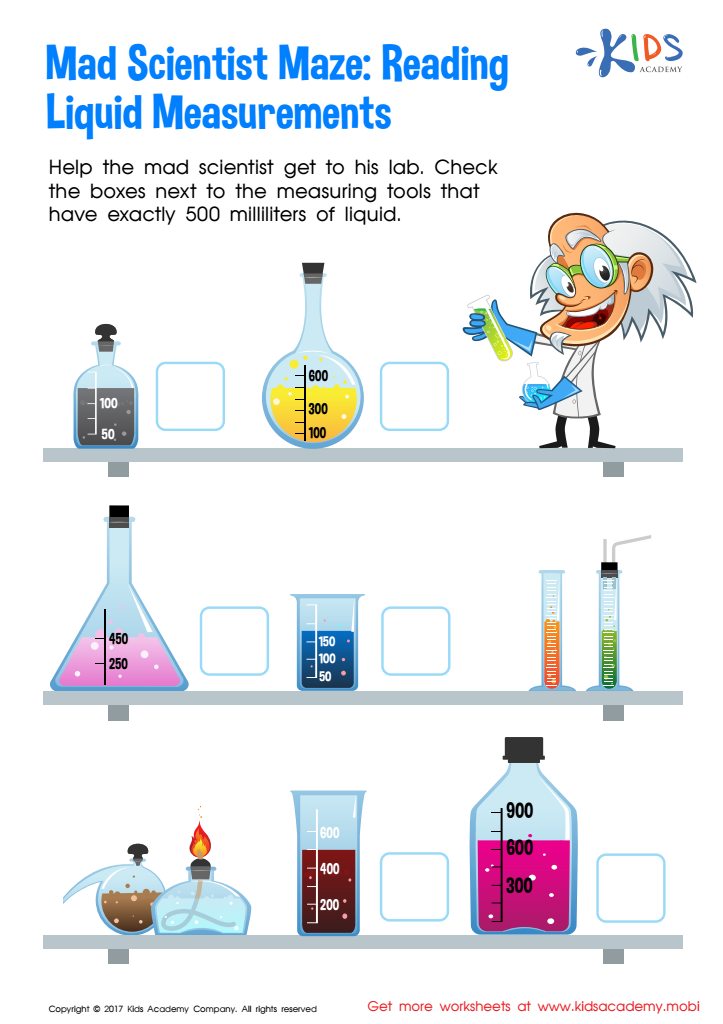
Reading Liquid Measurement Worksheet
Help a mad scientist return to his lab by having your child measure the liquid in each flask. Their results will determine his fate!
Help a mad scientist return to his lab! Kids can practice reading liquid measurements to the millimeter on this worksheet. Determine the amount of liquid in each flask and let your child's results decide the scientist's fate!
Reading Liquid Measurement Worksheet
Worksheet
Join Kids Academy for Free
Who is primarily going to use this learning content?


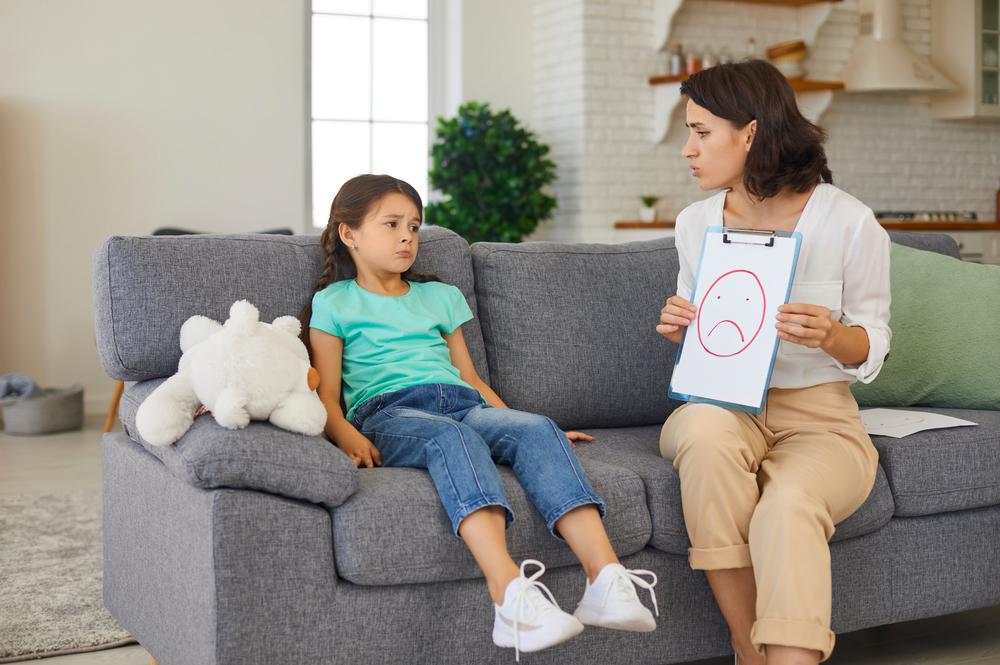



Spatial awareness, or the understanding of where one's body is in space and how various objects relate to each other, is crucial for the development of 9-year-olds. Parents and teachers should place importance on this skill because it forms the foundation for problem-solving and critical thinking. For example, in mathematics, a strong grasp of spatial concepts aids in understanding geometry, visualizing patterns, and solving puzzles.
Moreover, spatial awareness also influences physical activities. Sports like basketball, soccer, or even simple playground games require children to judge distances, dexterity, and coordinate movements precisely. This skill set is essential not only for physical health but also for building teamwork and social interactions.
Additionally, spatial skills correlate significantly with STEM (Science, Technology, Engineering, Math) achievement. Studies have shown that children with strong spatial skills are better at visualizing objects in 3D, which helps them grasp complex scientific concepts and excel in technological fields.
Good spatial awareness also aids in life skills like map-reading, packing, or even navigating through a crowded space, hence bolstering a child's independence and confidence. By prioritizing spatial skills, parents and teachers are laying down pillars that support academic success and holistic development, equipping children with tools essential for future learning and everyday life.








