Understanding context Worksheets for 9-Year-Olds
4 filtered results
-
From - To
Unlock reading comprehension skills with our tailored "Understanding Context Worksheets for 9-Year-Olds" at Kids Academy. Designed to enhance young readers' abilities to infer and interpret written passages, these worksheets focus on context clues and nuanced narratives. Each activity encourages critical thinking and engagement through age-appropriate texts and questions. Perfect for classroom settings or additional home practice, these exercises empower children to become more confident and proficient readers. Explore our printable worksheets to help your 9-year-old master the art of understanding context, laying a strong foundation for future academic success.
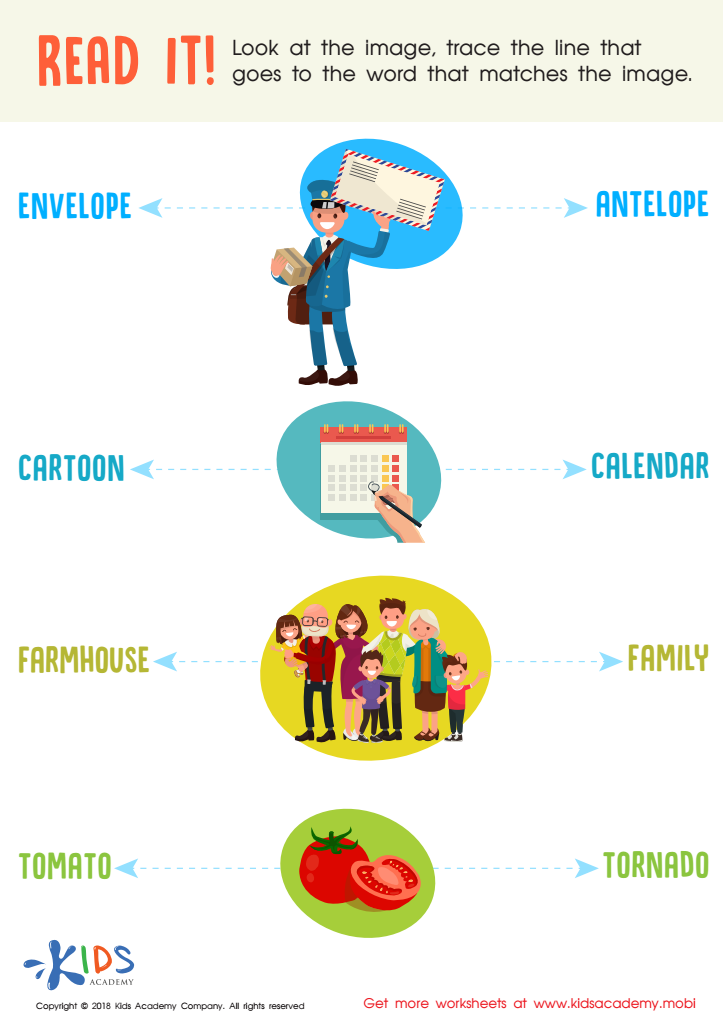
Read It! Worksheet
 Assign to My Students
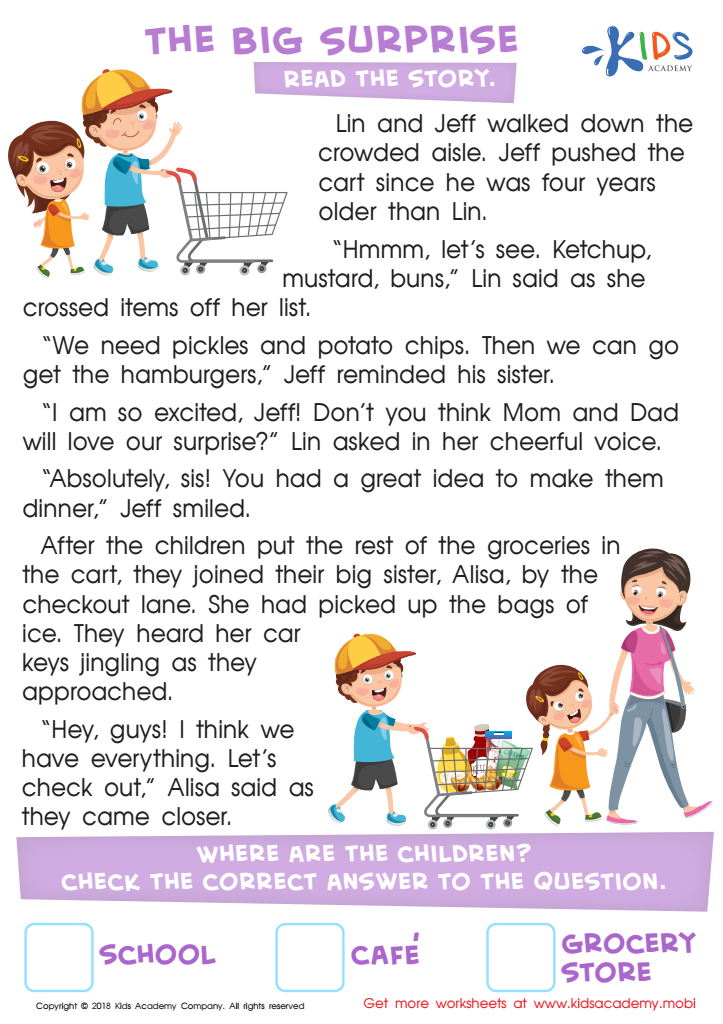
The Big Surprise Worksheet








Understanding context is crucial for 9-year-olds as it forms the bedrock of effective communication and learning. At this developmental stage, children are not only expanding their vocabulary but are also beginning to grasp the complexities of social interactions and academic concepts. Parents and teachers who emphasize the importance of context help children learn to interpret language and situations more accurately, leading to improved comprehension and critical thinking skills.
For instance, in reading, contextual understanding allows children to infer the meaning of new words and phrases based on the surrounding text, enhancing their literacy skills. Similarly, in social situations, grasping context helps children navigate relationships more adeptly, fostering empathy and cooperation. Without understanding context, children may misinterpret information or social cues, leading to confusion and potentially hindering their social and academic progress.
Moreover, teaching context awareness encourages cognitive flexibility and adaptability. Children learn to adjust their behavior and language depending on the setting and the audience, which is a vital life skill. By prioritizing context comprehension, parents and teachers provide tools that enhance a child’s ability to make informed decisions, solve problems, and interact positively with others, thereby laying a strong foundation for future learning and personal development.








