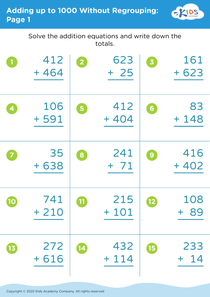
Addition Practice Adding up to 1000 Misc Worksheets for 9-Year-Olds
5 filtered results
-
From - To
Welcome to our comprehensive Addition Practice worksheets, designed specifically for 9-year-olds! These engaging and interactive resources focus on adding numbers up to 1000, helping young learners enhance their addition skills in a fun and effective way. Our diverse collection includes various formats such as exercises, games, and real-life scenarios, ensuring that practice feels exciting. By utilizing these worksheets, children will build strong foundational math skills, improve their confidence, and develop problem-solving abilities. Ideal for classrooms or at-home learning, these miscellaneous worksheets cater to different learning styles, making math enjoyable while fostering a love for numbers. Start adding today!
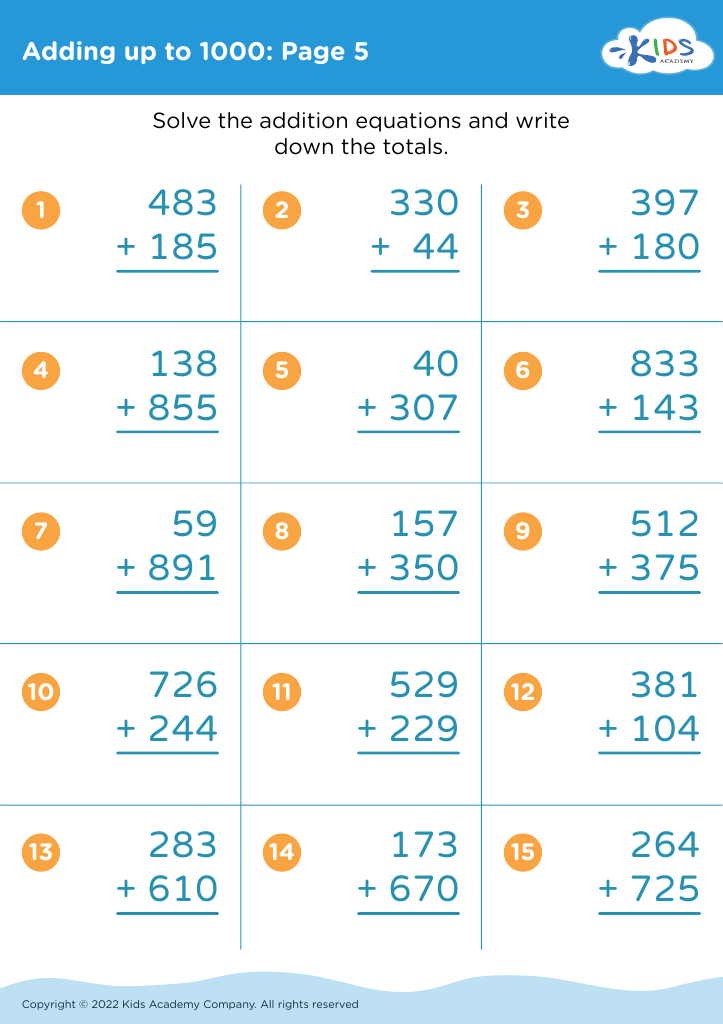
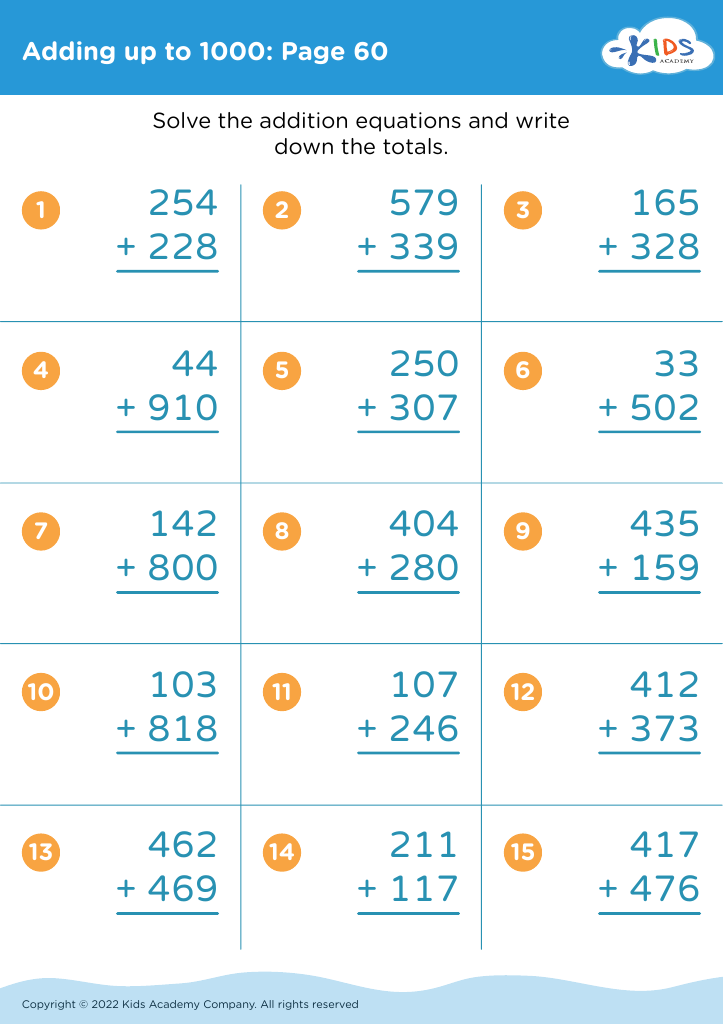
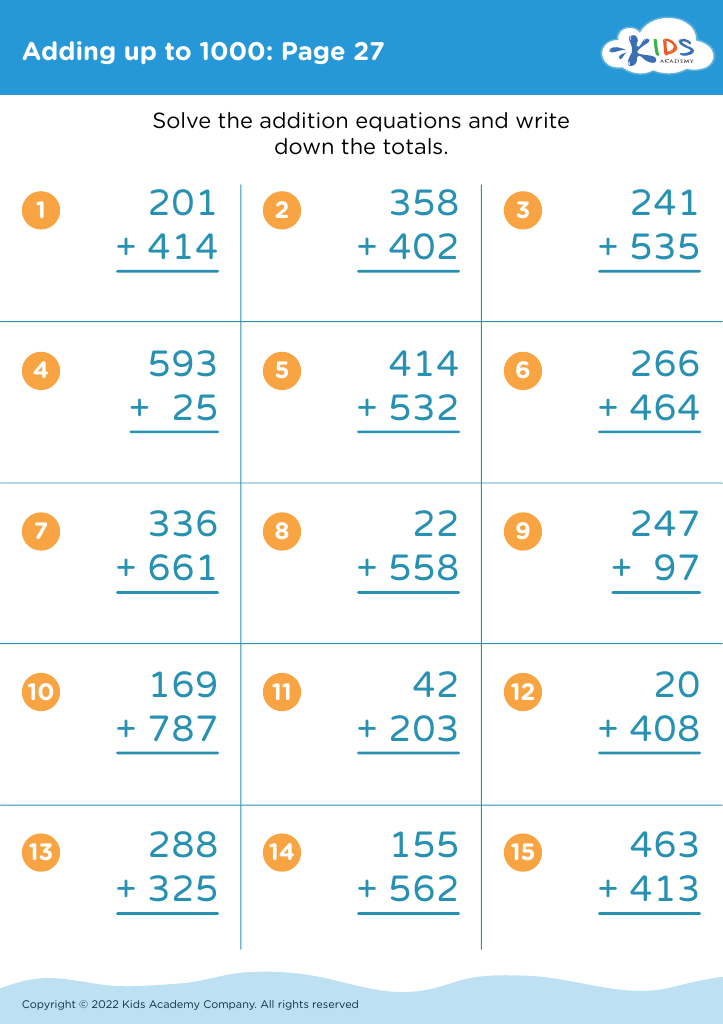
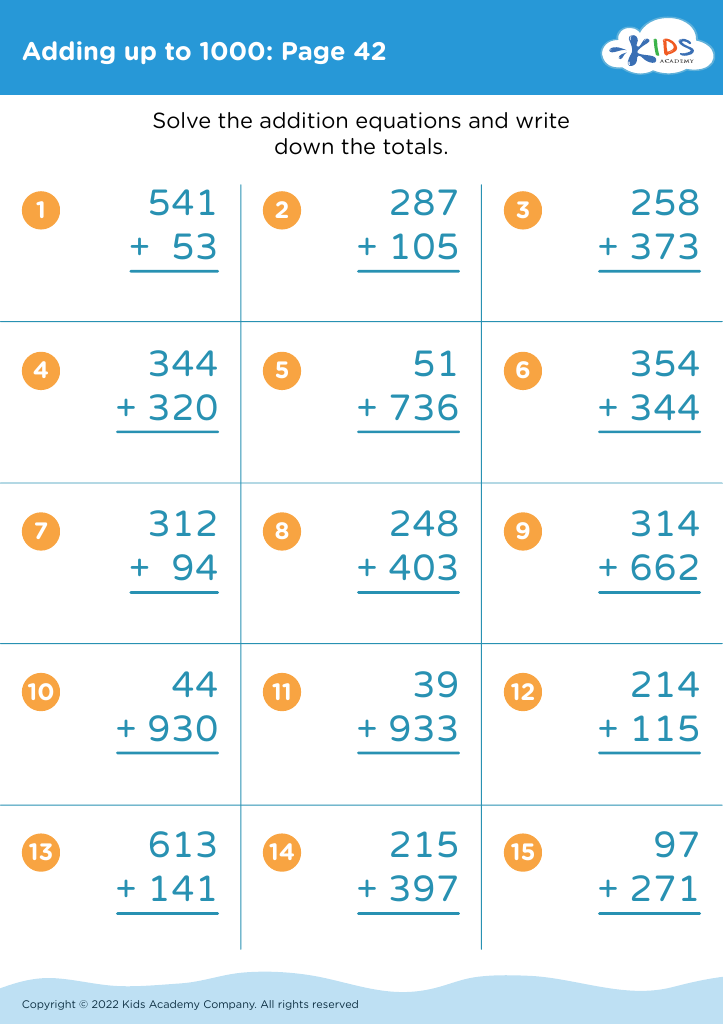
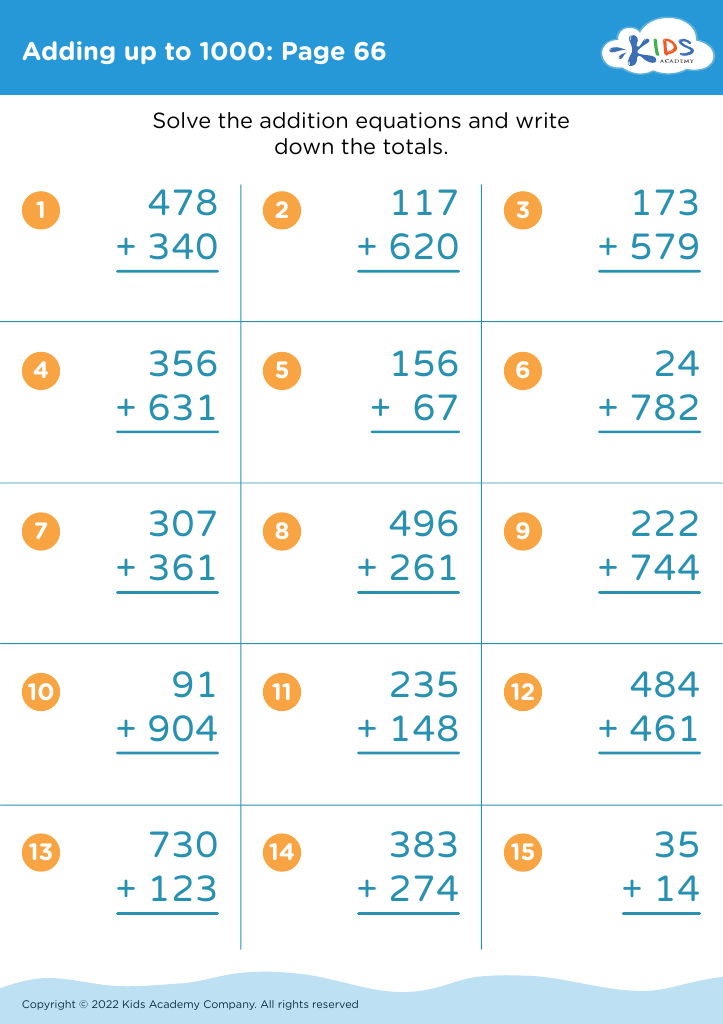


Addition practice involving numbers up to 1000 is crucial for 9-year-olds as it lays a strong foundation for more complex math skills. At this age, children are transitioning into higher levels of mathematical understanding. Proficiency in addition enhances their problem-solving abilities, enabling them to tackle math in real-world situations, such as budgeting or measuring.
Practicing addition to 1000 improves children’s numerical fluency, allowing them to perform operations quickly and accurately. This skill is essential not just in math but across all subjects, as numerical literacy is heavily incorporated into science, technology, engineering, and even social studies.
Additionally, consistent practice builds a child's confidence in their mathematical abilities. When children are confident in their skills, they are more likely to participate in classroom discussions, ask questions, and tackle challenging problems. This proactive learning fosters a positive attitude toward math, encouraging lifelong learning.
Furthermore, when parents and teachers emphasize the importance of addition practice, they also support a child's cognitive development. This foundational skill develops critical thinking and enhances focus, dedication, and discipline—values that are important both academically and personally. Thus, investing time in addition practice is a vital step in nurturing well-rounded learners.