Problem-Solving Skills Adding up to 1000 Without Regrouping Worksheets for 9-Year-Olds
6 filtered results
-
From - To
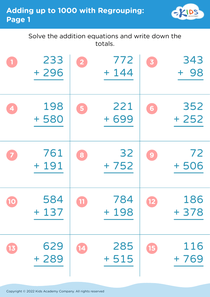
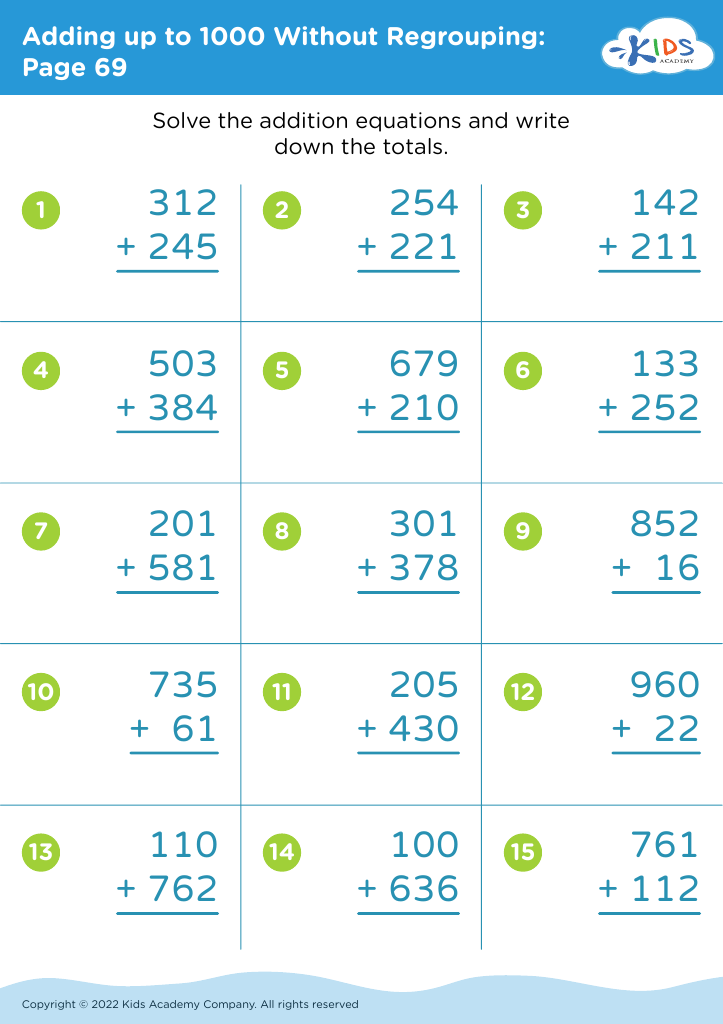
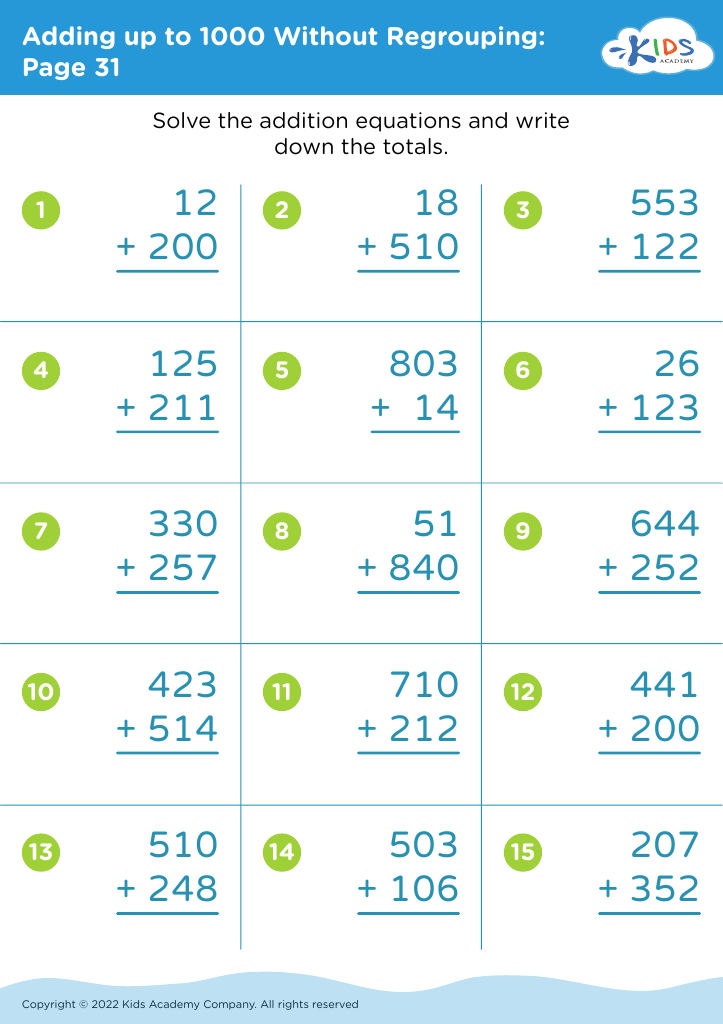
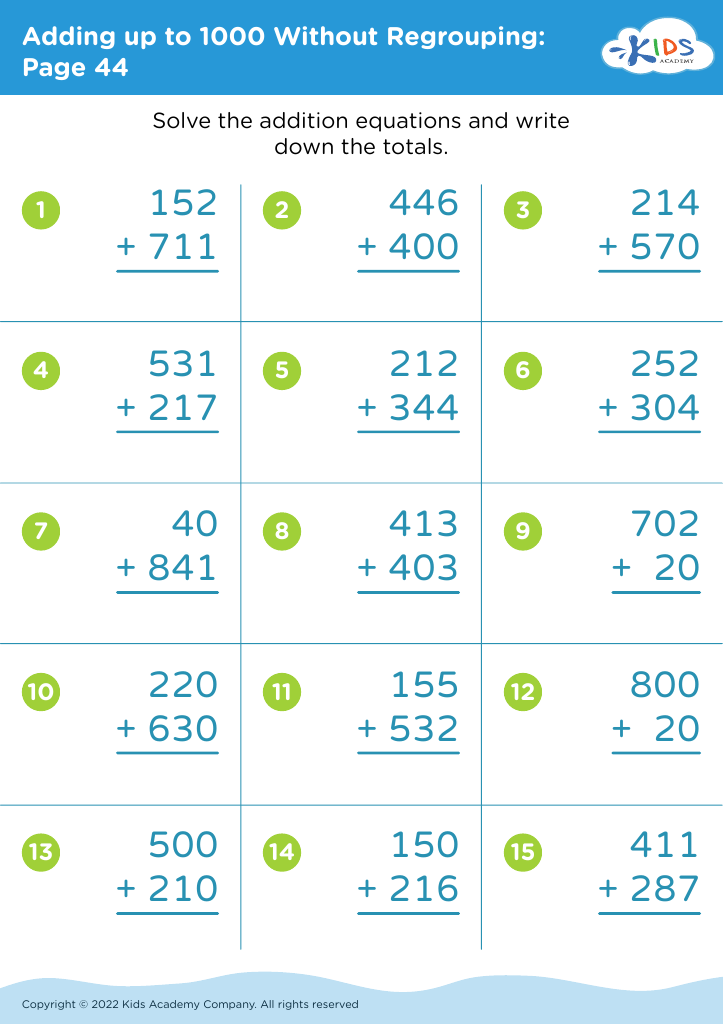
Enhance your 9-year-old's mathematical abilities with our comprehensive "Problem-Solving Skills: Adding up to 1000 Without Regrouping" worksheets. Designed to make learning engaging and effective, these worksheets focus on developing critical thinking and problem-solving skills as students tackle various addition challenges without regrouping. Each worksheet encourages practice through step-by-step instructions, fun scenarios, and real-world applications, aiding children in mastering addition up to 1000 confidently. Perfect for classroom use or at-home learning, these resources foster a deep understanding of math concepts while making the process enjoyable. Get ready to watch your child grow in both skill and confidence in math!
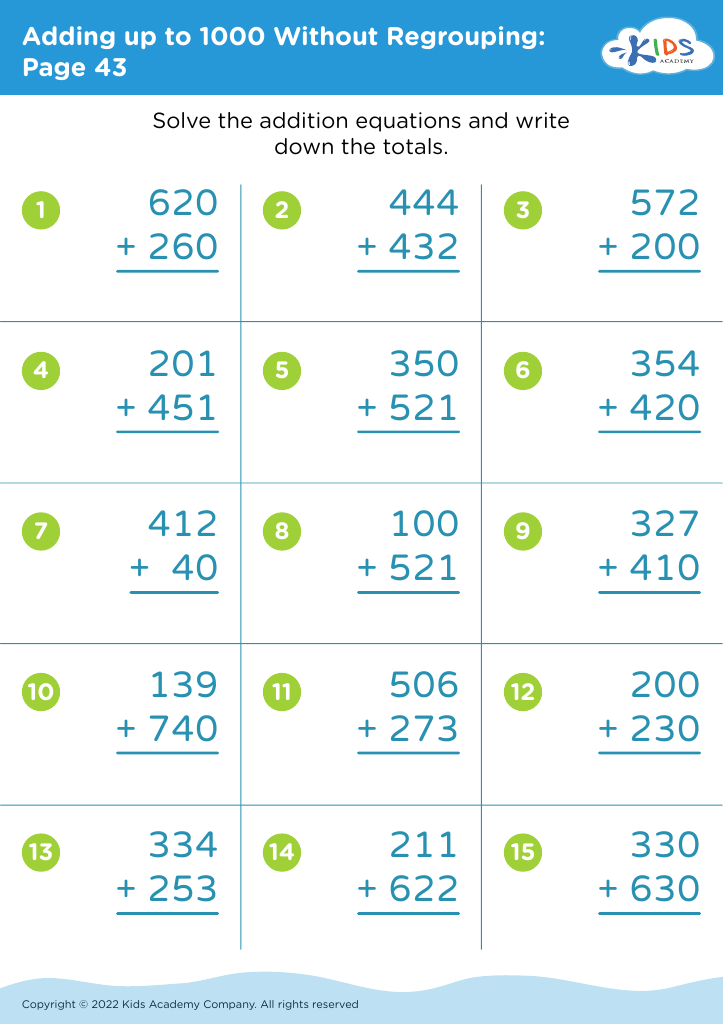
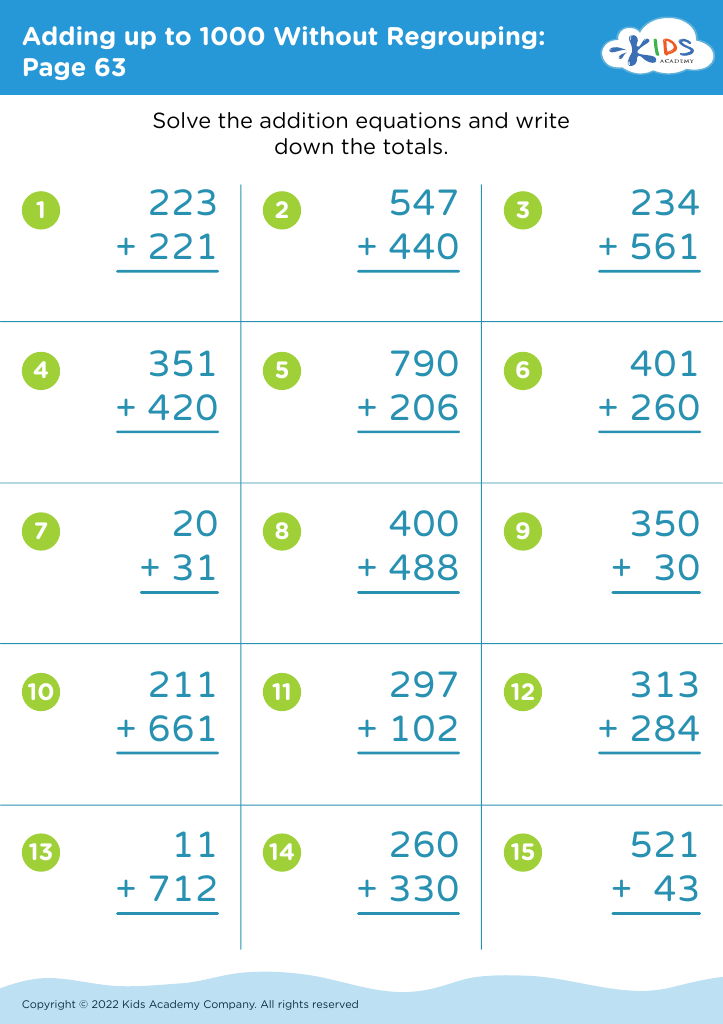
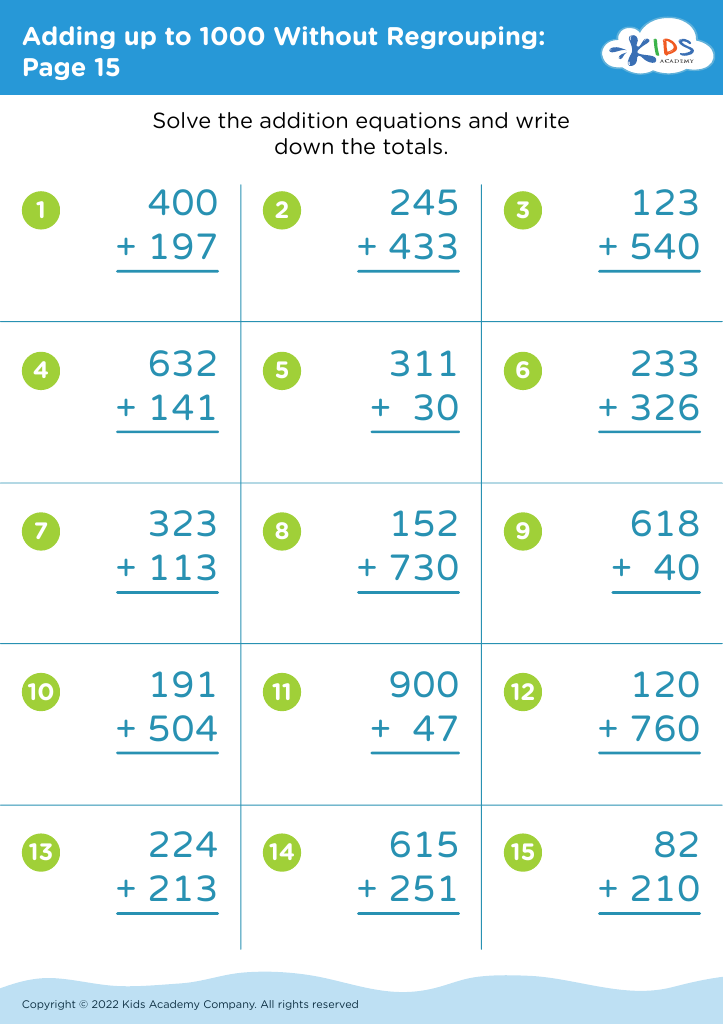


Problem-solving skills, particularly in mathematics, are crucial for 9-year-olds and extend far beyond basic arithmetic. When children master the skill of adding numbers to 1000 without regrouping, they develop foundational mathematical understanding that supports future learning. This skill enhances their ability to think critically, analyze problems, and approach challenges systematically, all of which are essential life skills.
Not only does mastering this concept boost mathematical proficiency, but it also builds confidence in young learners. When students are capable of dealing with numbers effectively, their self-esteem grows, encouraging them to engage with more complex mathematical problems in the future. Furthermore, these skills can directly impact their academic performance, giving them a strong base for advanced topics they will encounter in middle school and beyond.
Parents and teachers play key roles in fostering these skills. By emphasizing cooperative learning and encouraging children to explore various strategies for solving problems, adults can create a supportive environment that nurtures inquisitiveness and resilience in learning.
In essence, prioritizing problem-solving skills at this age empowers children to not only excel in mathematics but also instills a lifelong love for learning and an adaptive mindset for tackling the challenges life presents.