Simplifying Fractions Adding up to 1000 Without Regrouping Worksheets for 9-Year-Olds
3 filtered results
-
From - To
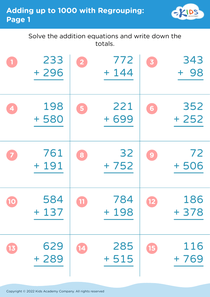
Introducing our "Simplifying Fractions Adding up to 1000 Without Regrouping Worksheets for 9-Year-Olds"! These engaging worksheets are designed to help young learners master the art of simplifying fractions with addition problems, perfect for 9-year-olds. Each activity focuses on building foundational math skills without the complexity of regrouping. With a variety of fun and challenging exercises, kids will enhance their understanding of fractions within the reliable structure of addition up to 1000. Great for classroom or home practice, these worksheets will boost confidence and bring out the joy in learning math!
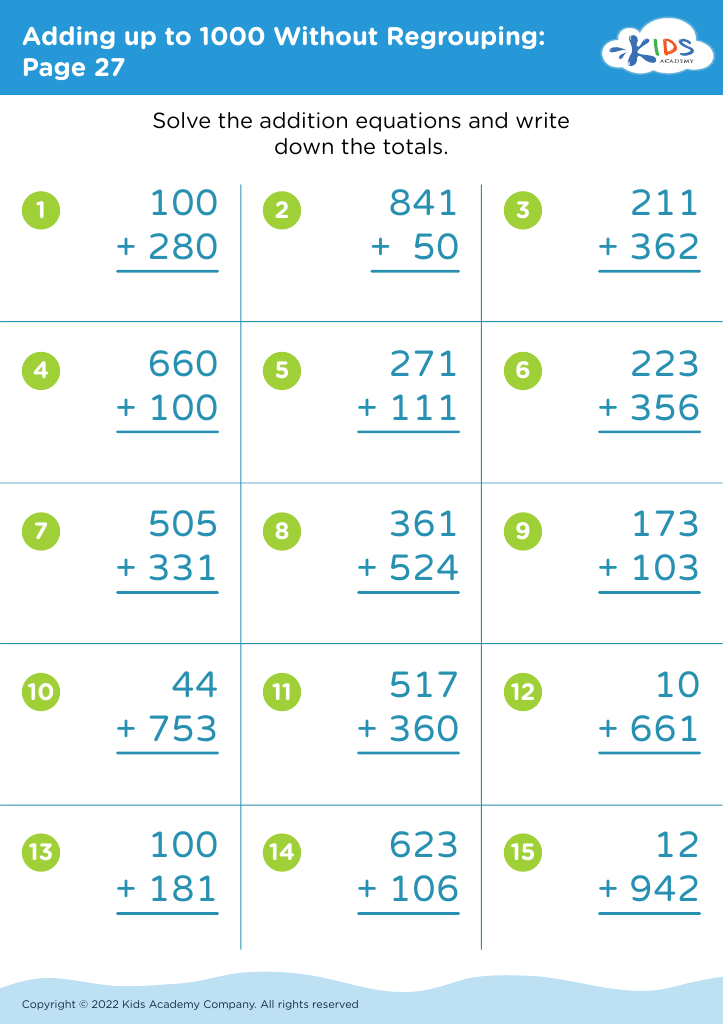
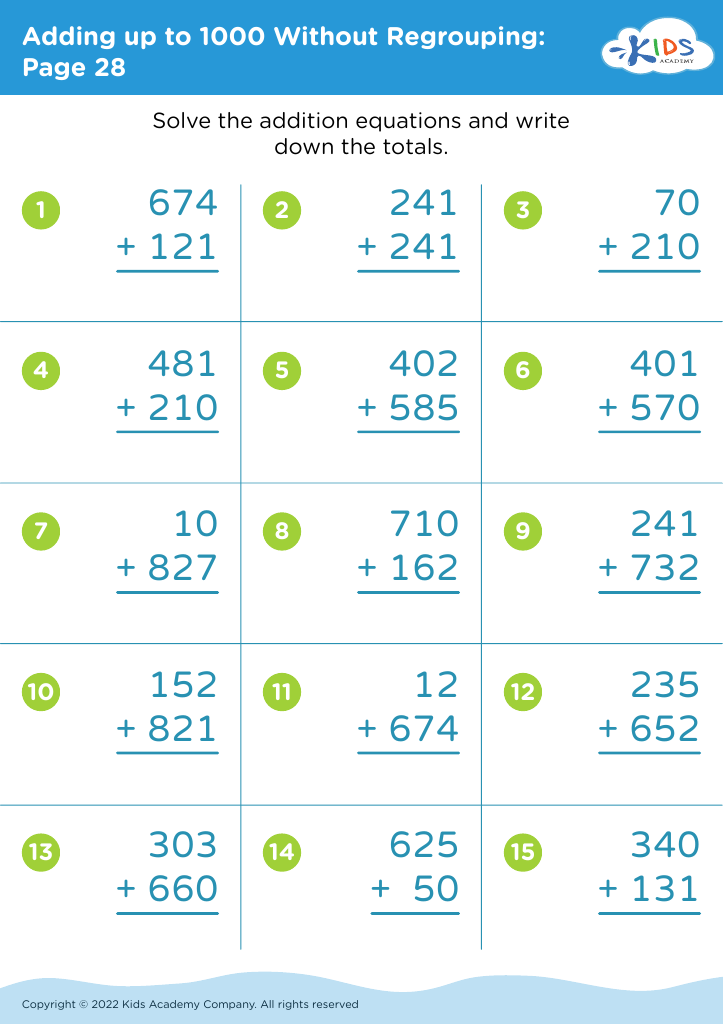
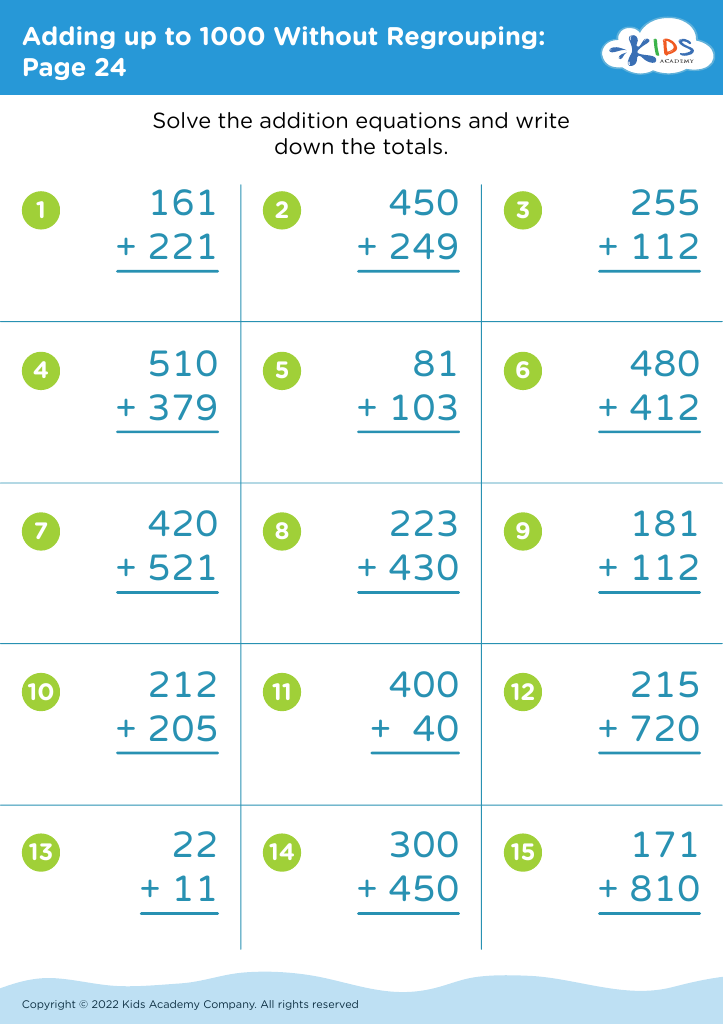


Understanding how to simplify fractions and perform basic addition is foundational for young learners, and ensuring they can add up to 1000 without regrouping by the age of 9 is crucial for several reasons.
First, mastering these skills enhances numerical literacy. When students simplify fractions, they learn how to deconstruct and reconstruct numbers, which is a critical thinking exercise that strengthens their overall mathematical understanding. Simplifying fractions also helps them recognize patterns and relationships between numbers, making future algebra concepts more approachable.
Second, attempting to add numbers up to 1000 without regrouping teaches them place value comprehensively. This knowledge is vital as it forms the cornerstone for higher-level arithmetic operations and more complex problem-solving tasks. Solidifying these skills at a young age builds confidence, making students feel capable and prepared to tackle more challenging coursework in the later grades.
Lastly, these skills foster patience and concentration. Simplification and non-regrouping addition require precision and careful attention to detail, significantly improving a child's focus and discipline. As such, encouraging 9-year-olds to develop these competencies will not only benefit their mathematical journey but also equip them with crucial life skills in persistence and meticulousness. Teachers and parents should care because these skills set the stage for academic success and practical daily functions.