Fraction comparison Adding up to 1000 Worksheets for 9-Year-Olds
13 filtered results
-
From - To
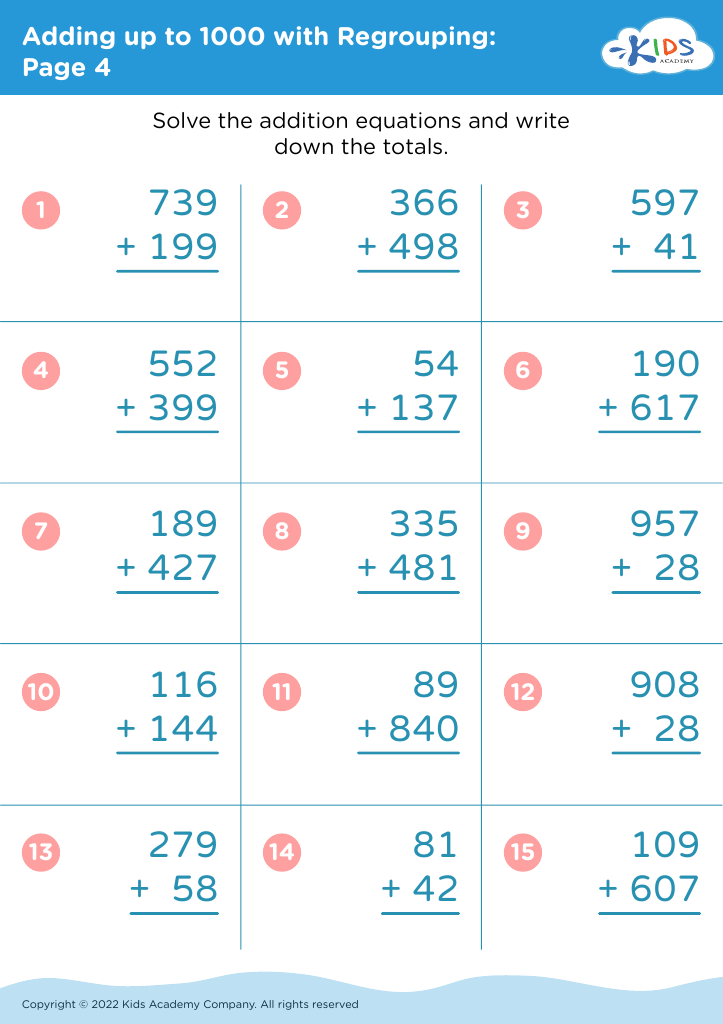
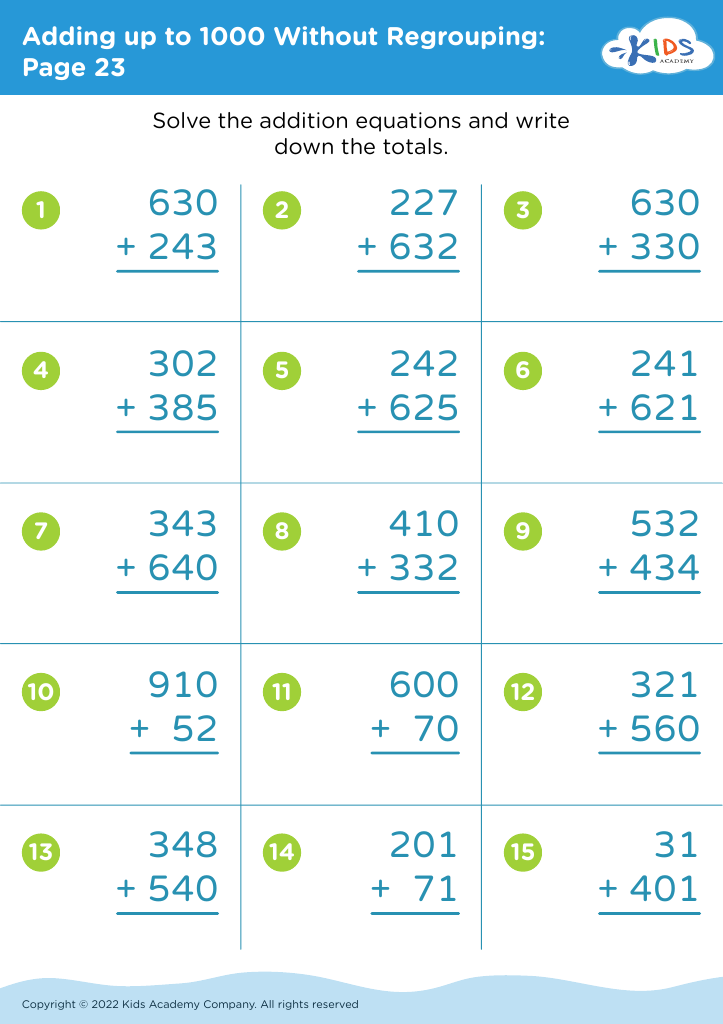
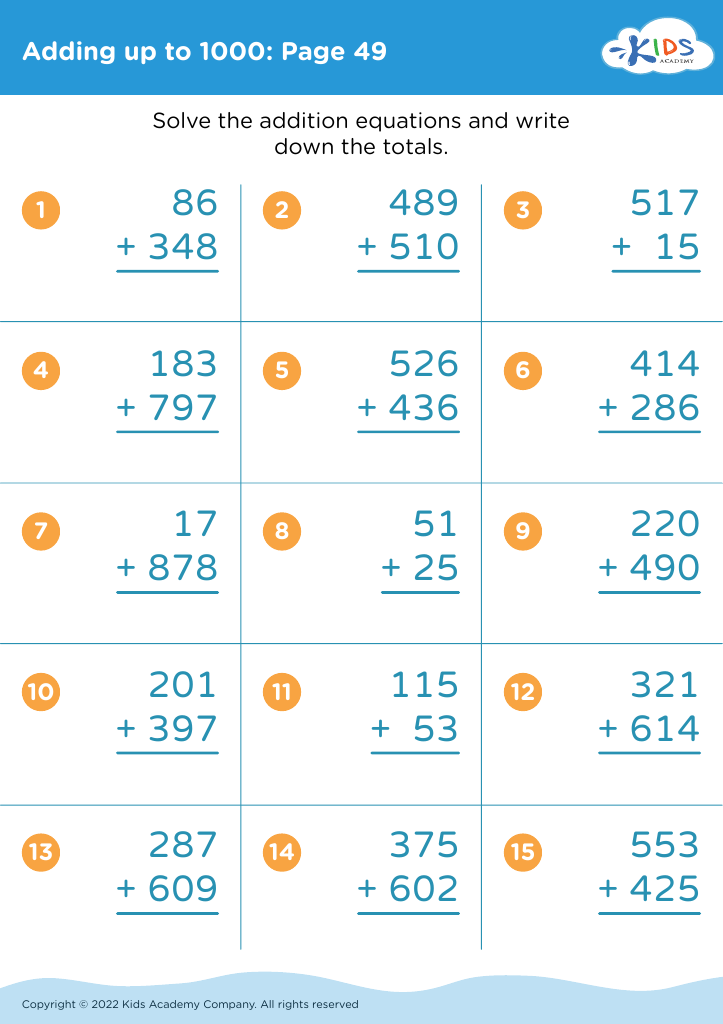
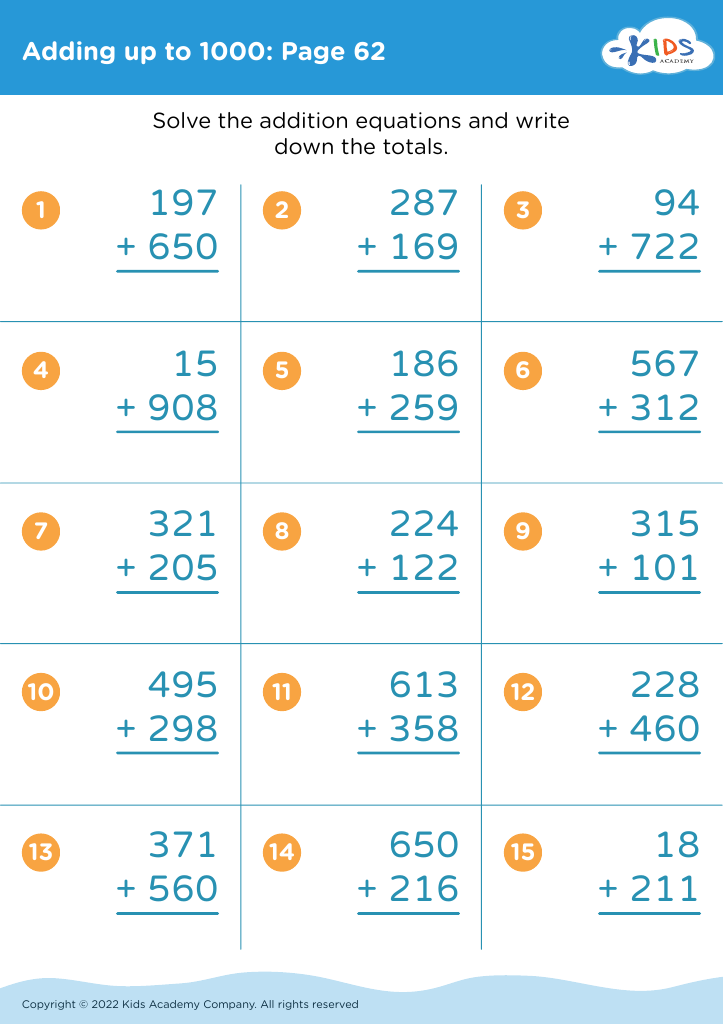
Enhance your 9-year-old's math skills with our engaging "Fraction Comparison Adding up to 1000 Worksheets." Designed specifically for young learners, these worksheets provide a fun and interactive way to master fraction comparisons alongside addition exercises that total up to 1000. With a variety of problems that encourage critical thinking and problem-solving, your child will develop a solid understanding of fractions and their relationship to whole numbers. The user-friendly layout and eye-catching designs make learning enjoyable, ensuring students remain motivated and excited about math. Perfect for home practice or classroom use, our worksheets are a valuable resource for reinforcing essential skills.
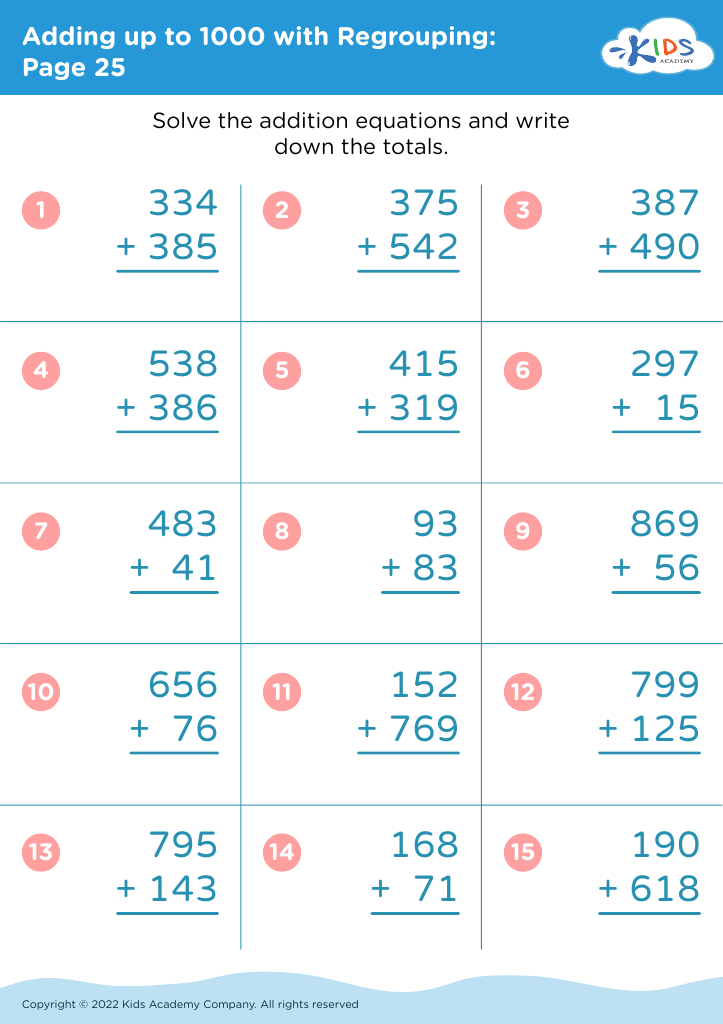



Understanding fraction comparison is crucial for 9-year-olds, as it lays the foundation for core mathematical skills they will encounter in higher grades. At this age, children begin to develop critical thinking skills, and mastering fractions helps them gain confidence in problem-solving. By learning to compare fractions, children can apply this knowledge to real-world situations, like cooking or sharing, where they must gauge portions and quantities effectively.
Additionally, fraction comparison aids in comprehending more complex concepts in mathematics, such as decimals and ratios. It directly relates to adding fractions, which can be especially challenging without a solid grasp of how different fractions relate to each other. When children learn to compare fractions, they can better align themselves when attempting to add or subtract them.
For teachers and parents, guiding children through this learning process fosters various skills, including analytical thinking, patience, and persistence. It also encourages an appreciation for math as a tool that can be both useful and engaging. Moreover, laying a strong mathematical foundation at this age helps mitigate potential struggles in later grades, ensuring that students are well-prepared for more advanced topics in math and beyond. Thus, fostering a reliable understanding of fractions is essential to their academic success.








