Identifying shapes Adding up to 1000 Worksheets for 9-Year-Olds
3 filtered results
-
From - To
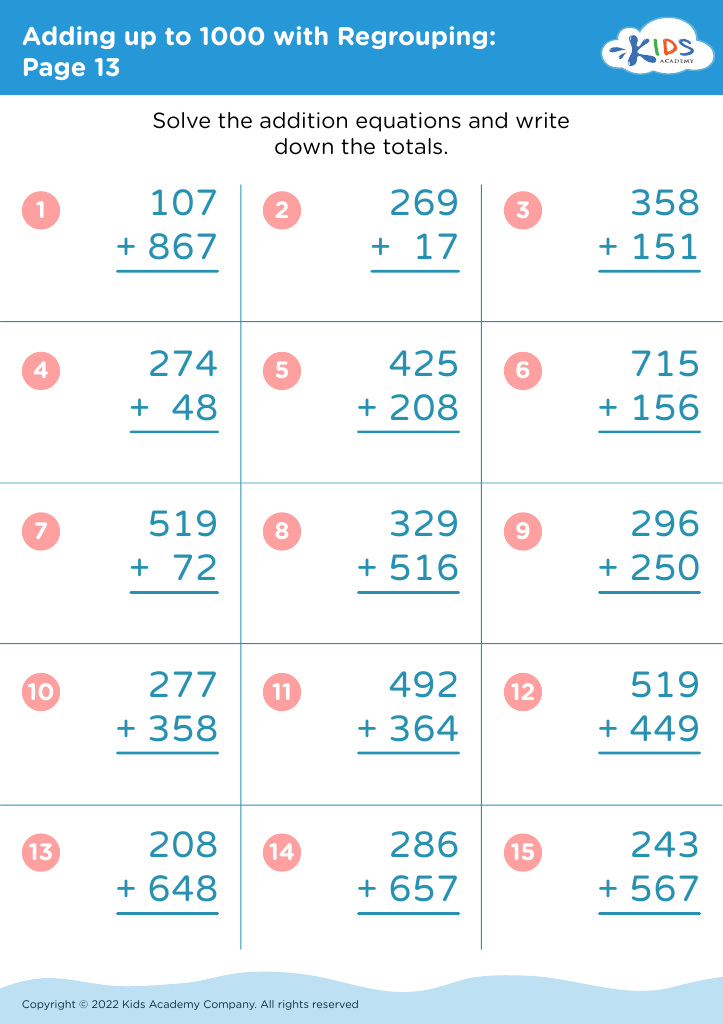
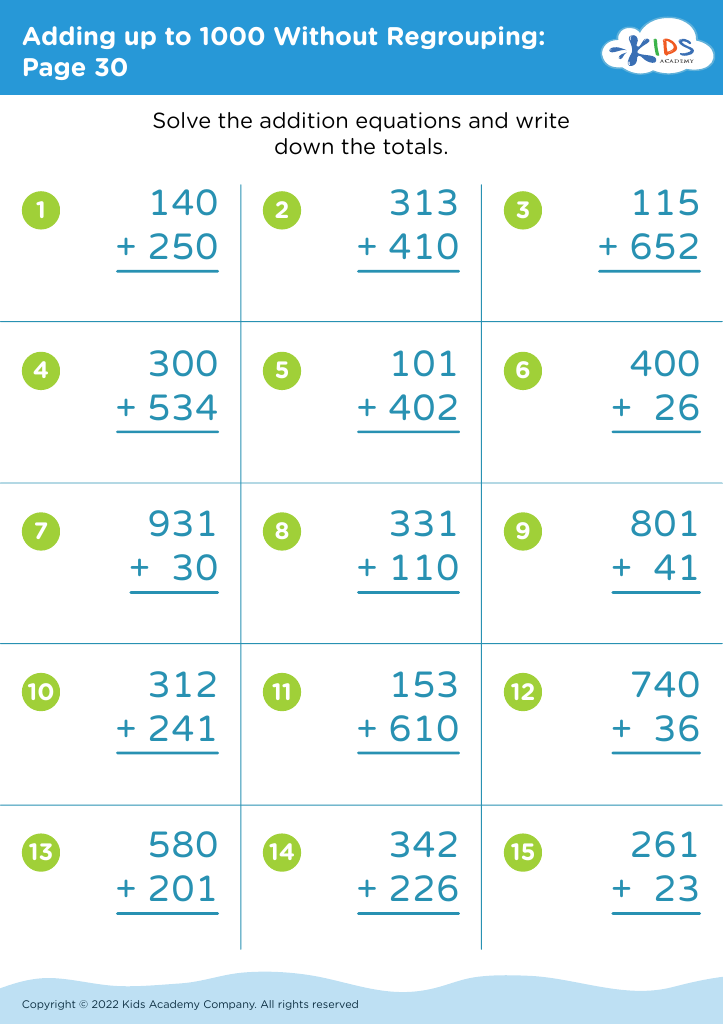
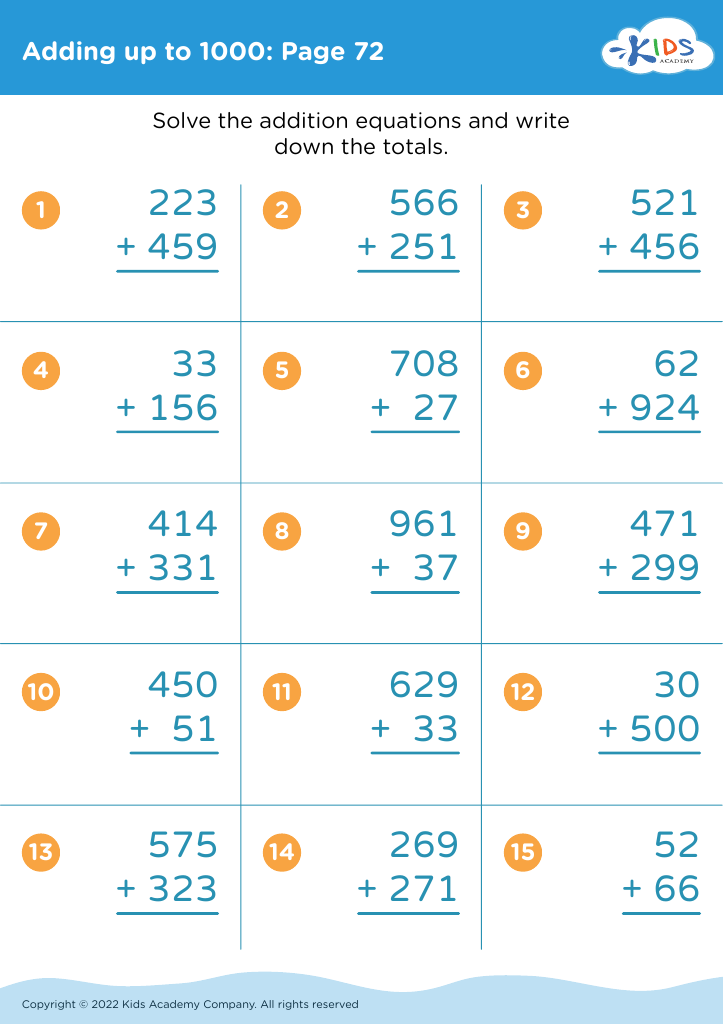
Enhance your 9-year-old's math skills with our "Identifying Shapes Adding Up to 1000" worksheets! This engaging resource combines geometric shape recognition with addition, helping children broaden their understanding of both subjects. Your child will explore various shapes while solving addition problems that total up to 1000, reinforcing their math accuracy and shape identification. Perfect for both classroom use and at-home practice, these worksheets are designed to make learning fun and interactive. Foster a solid mathematical foundation and shape awareness in your child with our thoughtfully crafted worksheets. Get started today and watch their confidence and skills grow!



Identifying shapes and adding up to 1000 are fundamental skills that significantly influence a 9-year-old's cognitive development. Recognizing shapes enhances spatial awareness, which is crucial for activities ranging from art to architecture. This skill fosters critical thinking and problem-solving as children learn to categorize and analyze their surroundings, laying the groundwork for future learning in geometry and science.
Adding up to 1000 develops essential numerical fluency. By mastering this skill, children build a solid foundation in mathematics, which is vital in our increasingly data-driven world. It promotes confidence in using numbers and performs essential operations, ultimately preparing them for more advanced concepts, such as multiplication, division, and fractions.
Moreover, nurturing these skills encourages logical reasoning and systematic thinking. Engaging activities centred around shapes and numbers boost a child's ability to concentrate and focus, paving the way for successful learning across all subjects. Parents and teachers play a crucial role in nurturing these skills, not only to enhance academic performance but also to foster a sense of achievement and self-worth. These competencies set the stage for lifelong learning and critical skills required for future success in academics and everyday life.








