Recognizing shapes Adding up to 1000 Worksheets for 9-Year-Olds
8 filtered results
-
From - To
Boost your child's math skills with our specially designed "Recognizing Shapes and Adding up to 1000 Worksheets" for 9-year-olds! These engaging worksheets blend math fundamentals and geometry, helping kids to confidently add numbers up to 1000 and master shape recognition. Our thoughtfully crafted activities focus on reinforcing core math concepts and visual-spatial reasoning. Perfect for classroom use or home practice, these worksheets make learning fun and interactive. Empower your child to excel in their math journey with practice that stimulates their mind and sharpens their skills. Explore our collection today to transform learning into an enjoyable adventure!
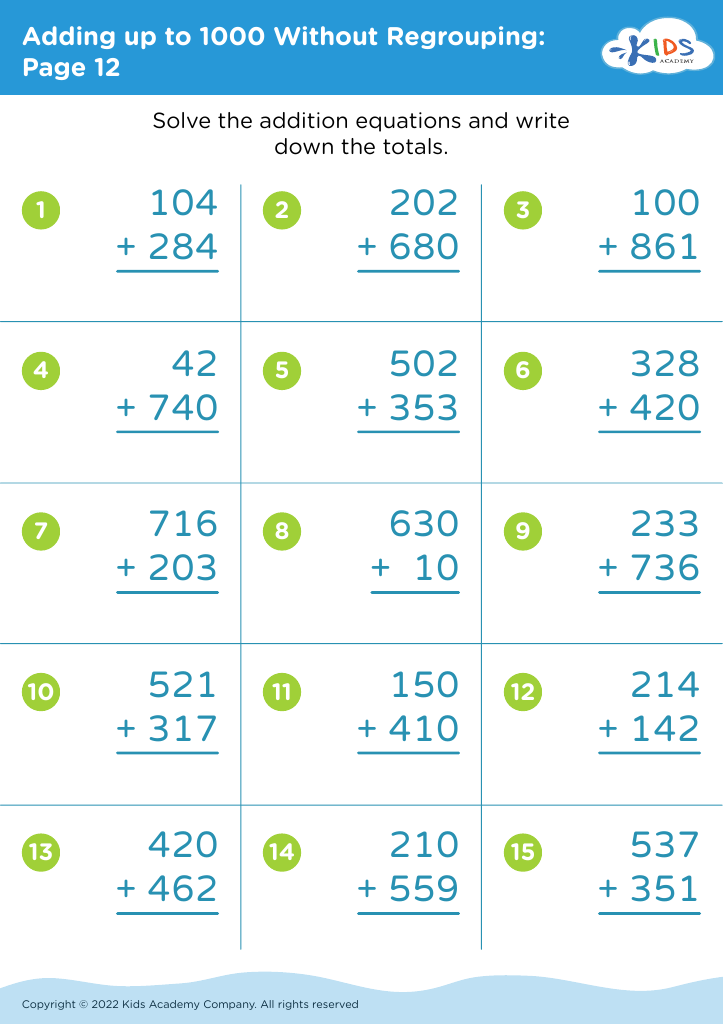
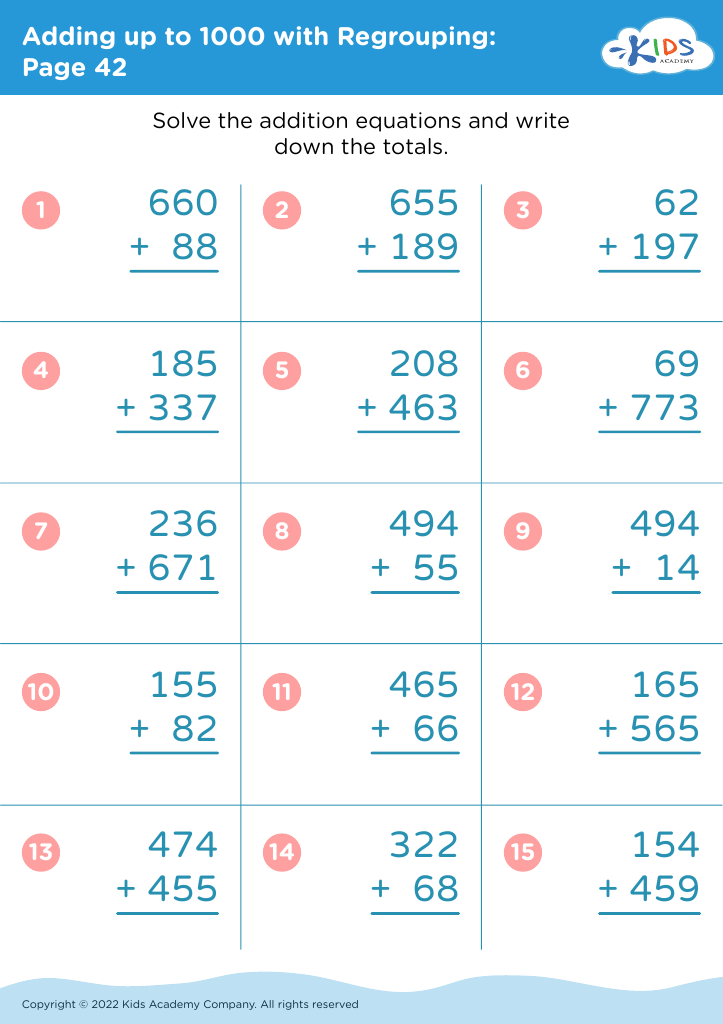
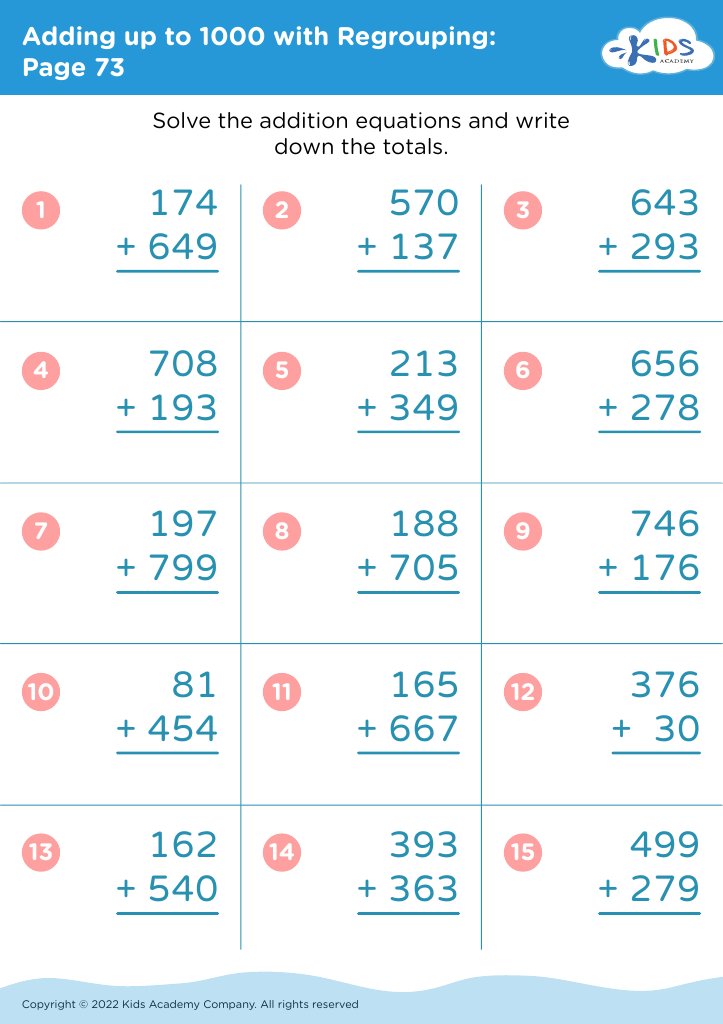
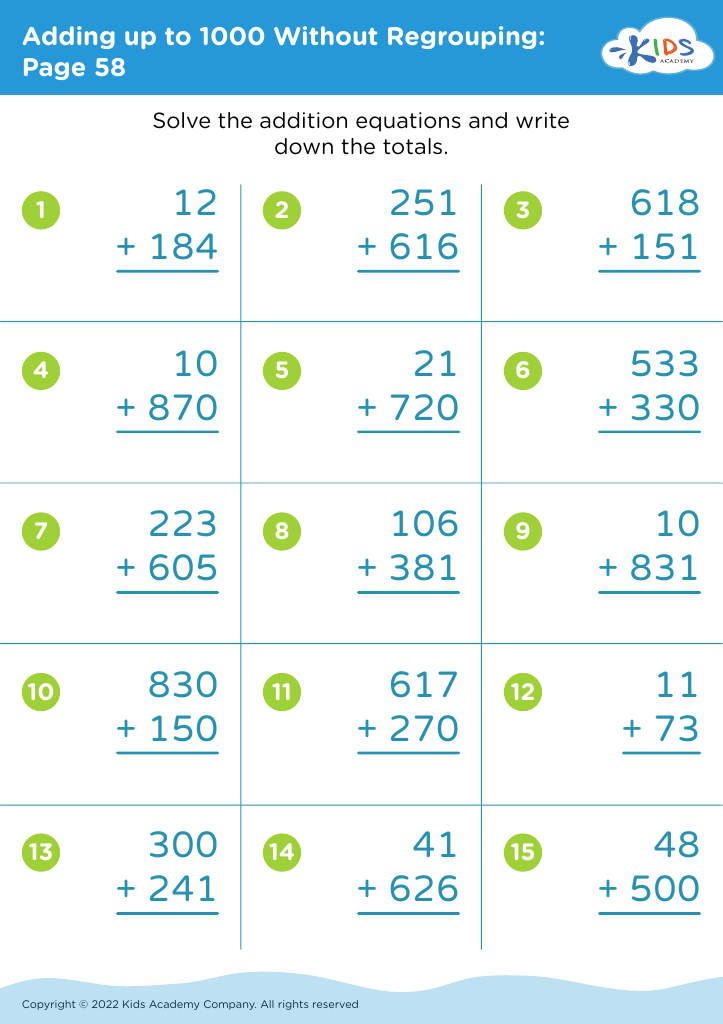
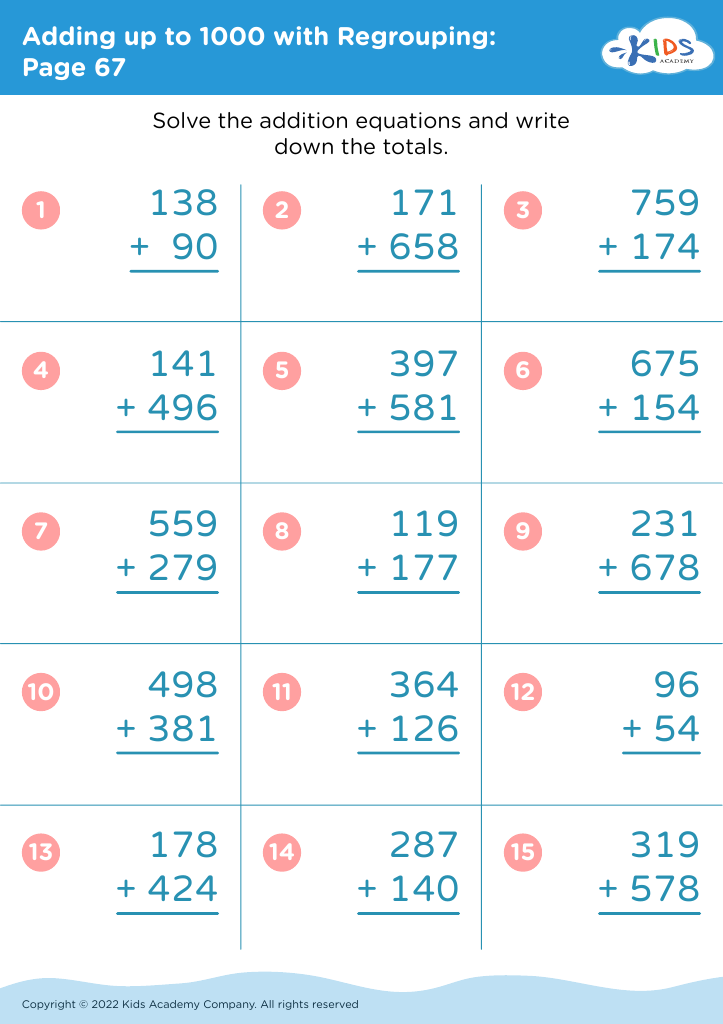
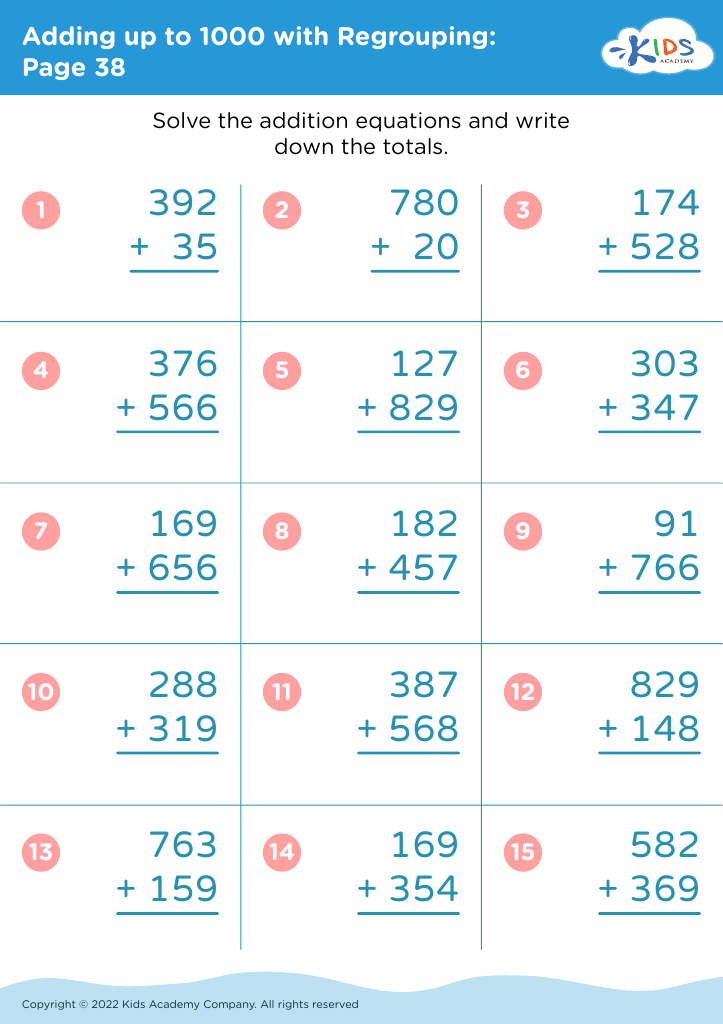
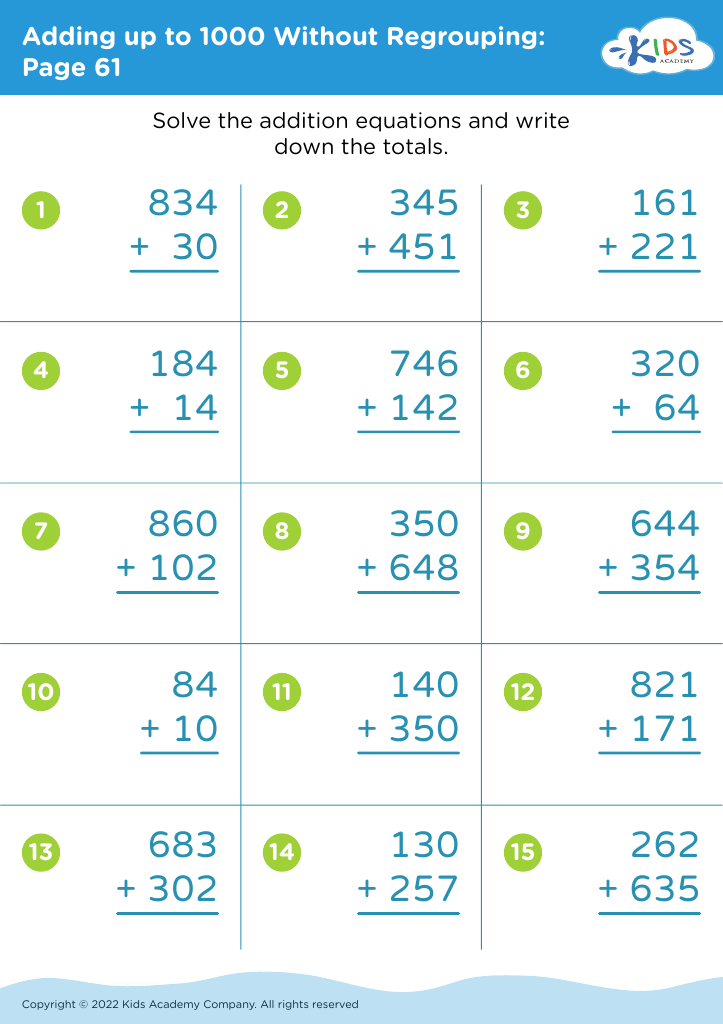
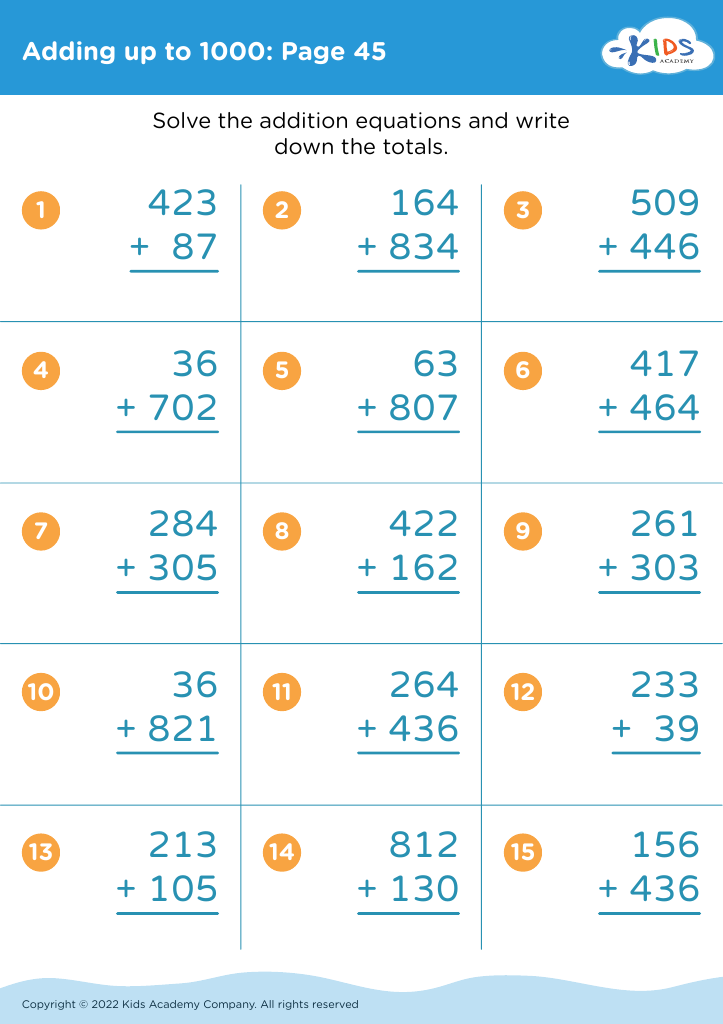



Recognizing shapes and adding up to 1000 are essential skills for 9-year-olds, helping to lay a strong mathematical foundation crucial for their academic and personal development.
Firstly, identifying shapes enhances spatial awareness, critical thinking, and problem-solving skills. Understanding geometric concepts paves the way for grasping more complex math topics in later grades, such as geometry, measurement, and even algebra. Moreover, shape recognition is not just confined to math class; it is a practical skill that aids in understanding the physical world, influences artistic creativity, and can be applied to everyday tasks like navigation and construction.
Secondly, being able to add up to 1000 reinforces fundamental arithmetic skills. Proficiency in basic addition is necessary before moving on to more advanced operations like multiplication, division, and understanding fractions. These skills are imperative for handling real-life situations such as budgeting, time management, and cooking measurements. Calculating with larger numbers also fosters logical thinking and attention to detail, contributing to overall cognitive development.
Together, these skills stimulate cognitive growth, encourage a positive attitude towards math, and are indispensable for real-world interactions. Teachers and parents should nurture these proficiencies to cultivate a well-rounded intellectual capacity and a lifelong appreciation of mathematics in children.








