Simplifying Fractions Adding up to 1000 Worksheets for 9-Year-Olds
6 filtered results
-
From - To
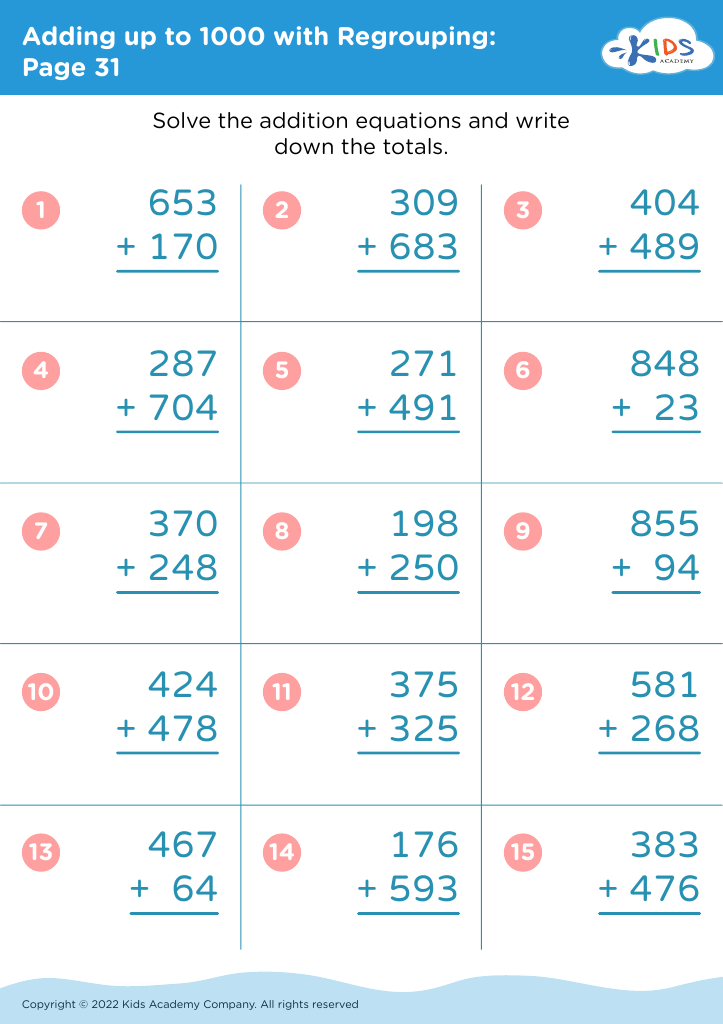
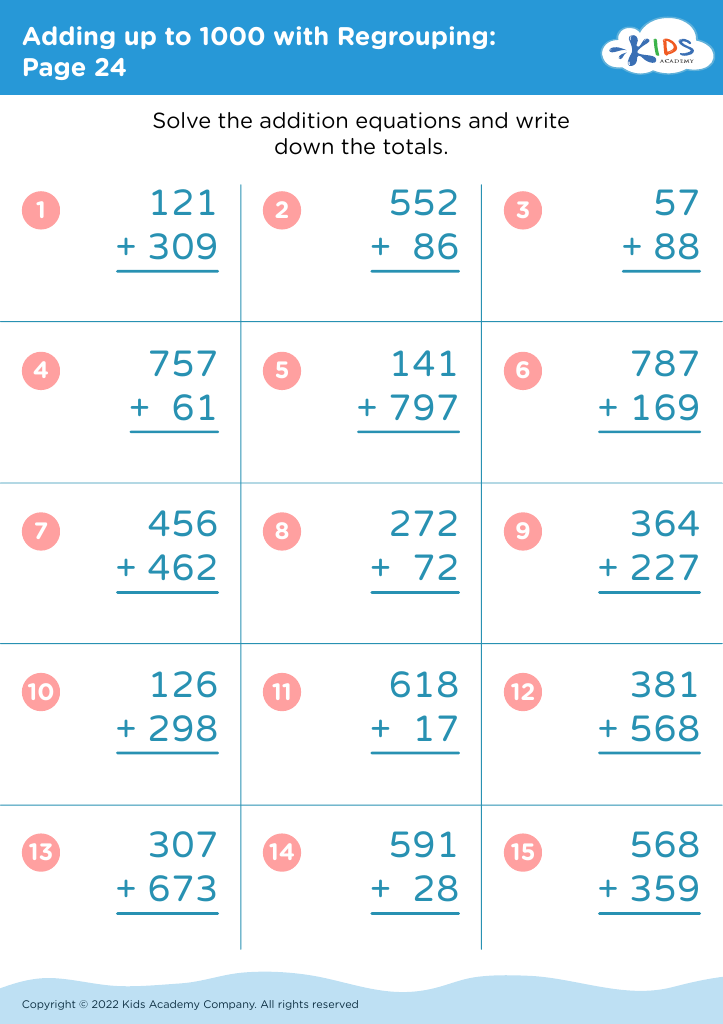
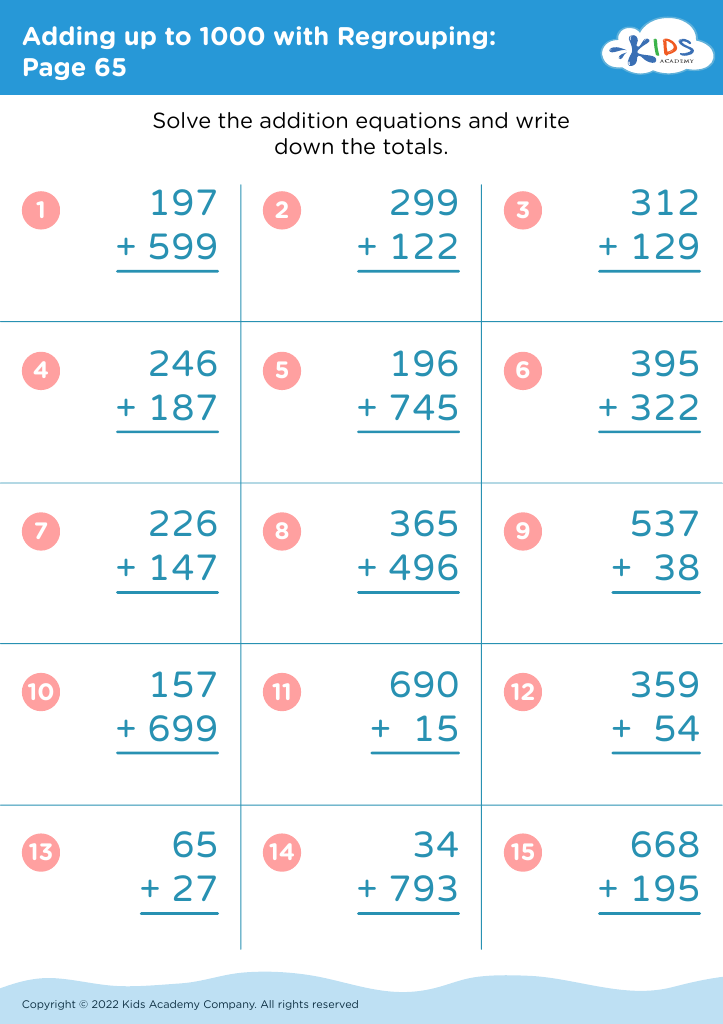
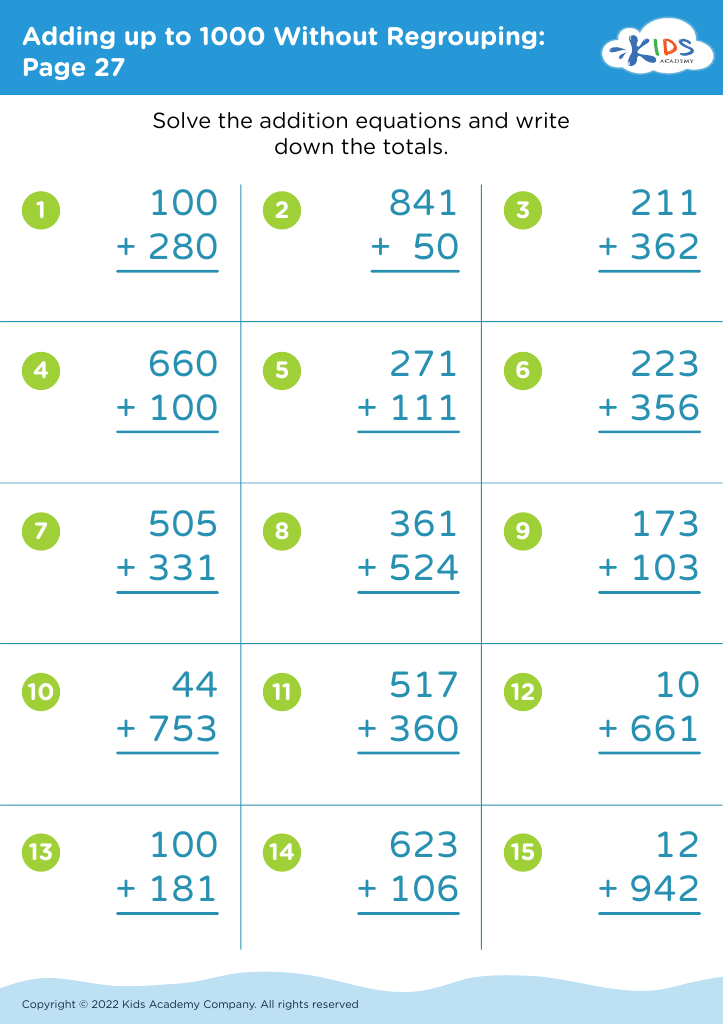
Discover our engaging "Simplifying Fractions Adding up to 1000 Worksheets" designed specifically for 9-year-olds! These worksheets make learning fun and interactive, helping young learners master the concept of simplifying fractions through hands-on practice. With a variety of problems that challenge students to simplify fractions in the context of adding up to 1000, these resources foster critical thinking and enhance problem-solving skills. Ideal for classroom settings or at-home study, our worksheets are perfect for reinforcing math skills in a lively and supportive way. Unlock the joy of learning fractions with our thoughtfully crafted activities today!
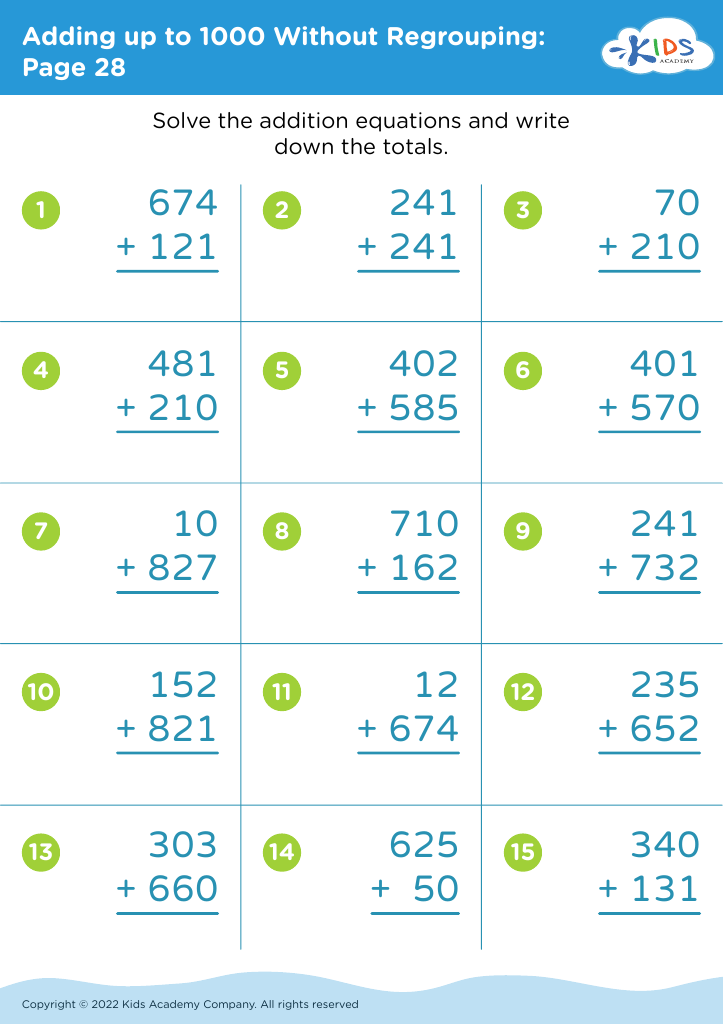
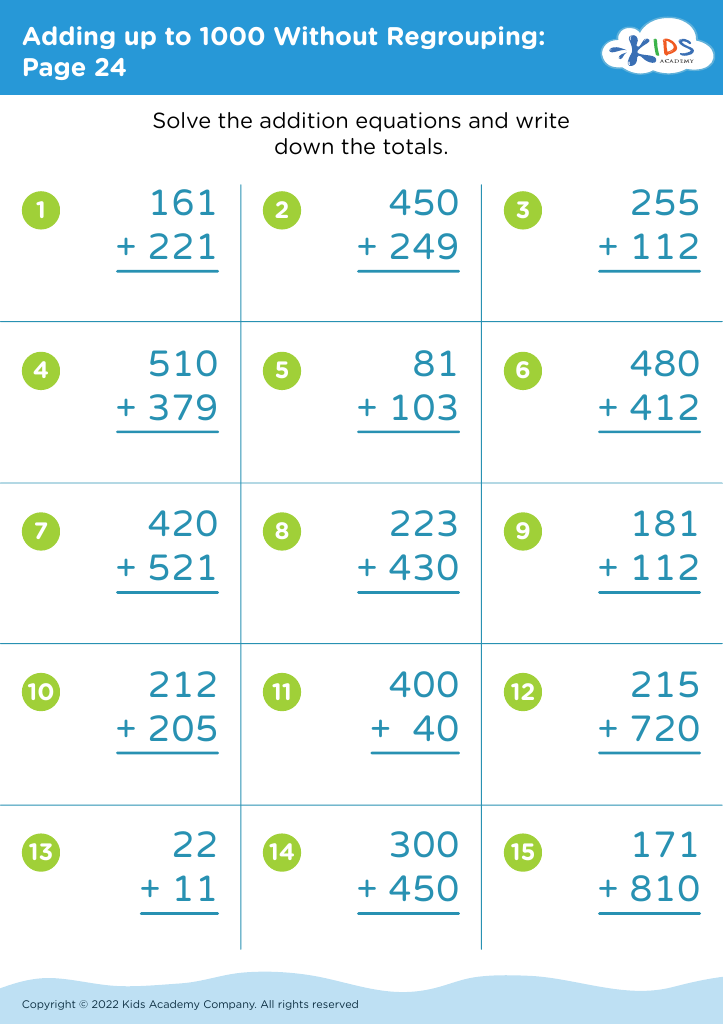



Simplifying fractions is an essential mathematical skill for 9-year-olds, and understanding it—especially when working with totals up to 1000—sets a solid foundation for future learning. Parents and teachers should care about this concept for several reasons.
Firstly, simplifying fractions helps children recognize and work with the relationships between numbers, boosting their problem-solving skills. It reinforces their understanding of equivalent fractions, allowing for greater fluency in math. When children are learning to simplify, they engage in critical thinking, which supports their cognitive development.
Additionally, applying this concept with sums reaching 1000 can introduce students to real-world applications. This understanding not only assists in academic situations but also improves their competency in practical life scenarios, like cooking and budgeting.
Moreover, mastering this topic enhances confidence in math, a subject that many students find challenging. A solid grasp of fractions can positively influence their overall attitude toward mathematics, encouraging a growth mindset.
By emphasizing the importance of simplifying fractions, parents and teachers cultivate resilience, a love for learning, and essential skills that will benefit students throughout their educational journey and beyond.








