Understand fractions Adding up to 1000 Worksheets for 9-Year-Olds
4 filtered results
-
From - To
Welcome to our "Understand Fractions Adding up to 1000 Worksheets" tailored specifically for 9-year-olds! This engaging collection of worksheets is designed to help young learners grasp the concept of fractions through practical exercises that relate to whole numbers. Each worksheet introduces age-appropriate challenges that enhance understanding and confidence in adding fractions, all while staying within the 1000 limit. Perfect for classroom use or homework practice, our resources promote foundational math skills in a fun and interactive way. Help your child excel in fractions today and watch their mathematical abilities grow! Explore our worksheets now and make learning a breeze!
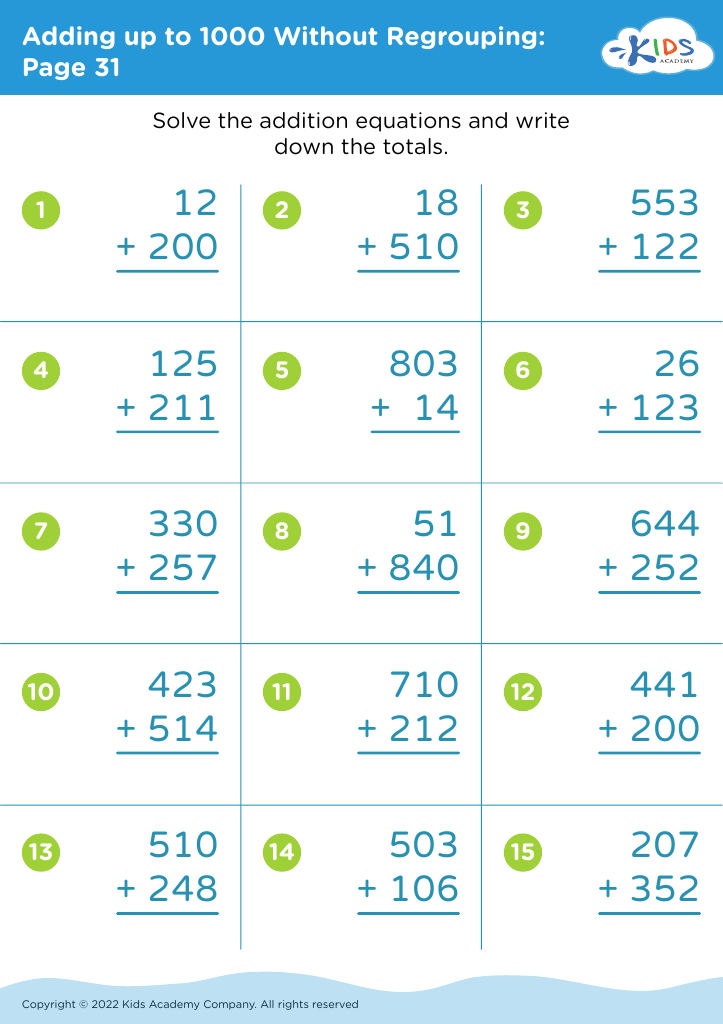
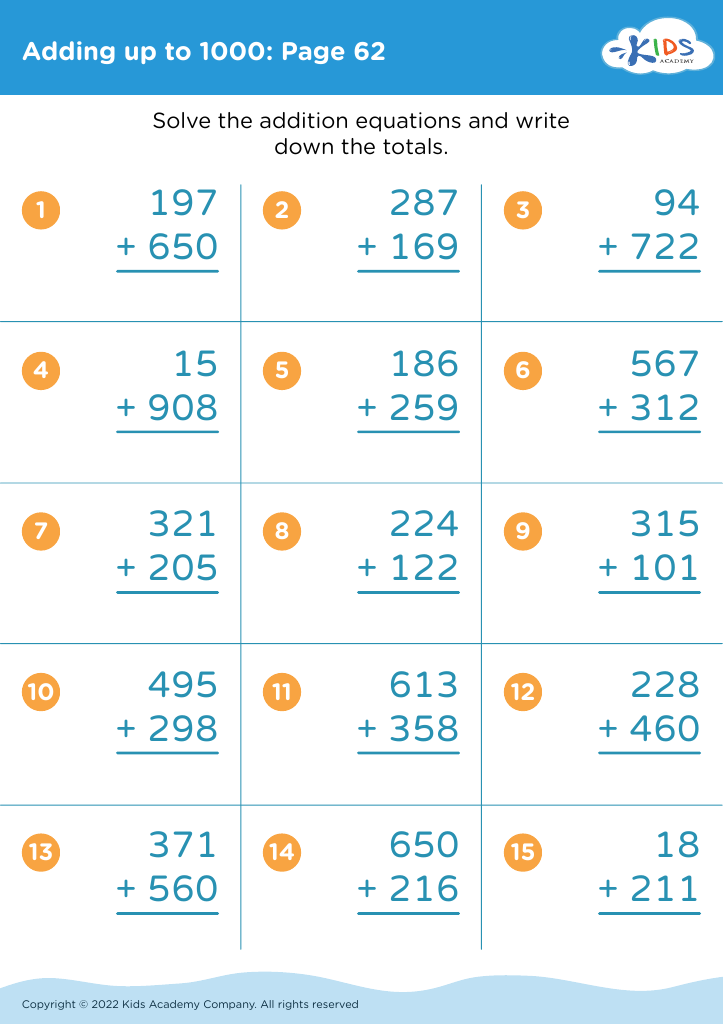
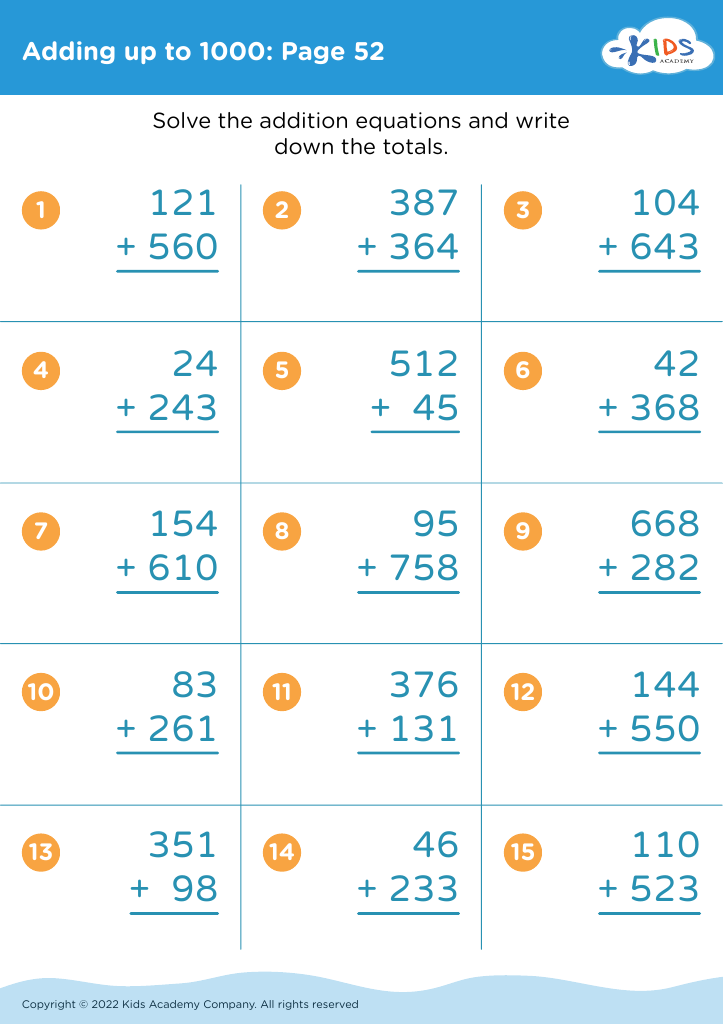
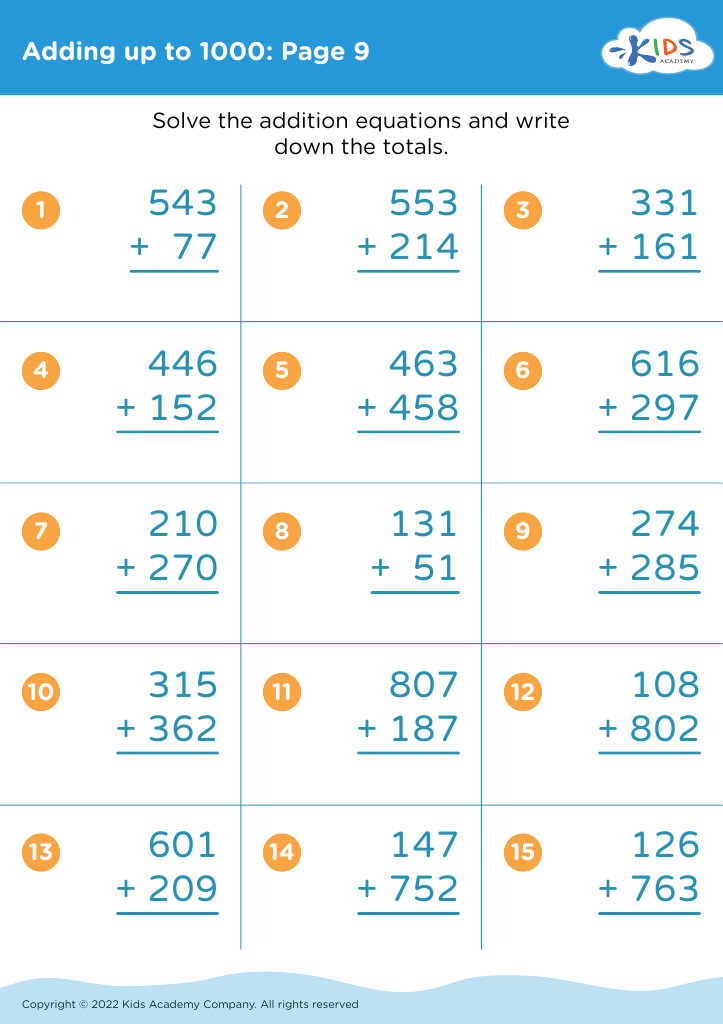



Understanding fractions is crucial for 9-year-olds as it lays the foundation for more complex mathematical concepts and real-world applications. As children learn to add fractions, they develop problem-solving skills and critical thinking abilities that are essential across all subjects. Mastering this skill helps them tackle not just schoolwork, but everyday situations, such as cooking or dividing resources.
Furthermore, working with fractions prepares children for future math topics—including ratios, percentages, and decimals. It fosters a deeper comprehension of numbers and their relationships, enhancing their number sense. When parents and teachers prioritize fractions, they are investing in a child's academic success and confidence.
Moreover, understanding fractions integrates teamwork and collaborative learning, as kids often work together to solve fraction-related problems. This cooperation builds social skills and fosters a positive classroom atmosphere. Encouraging this understanding at home through games, cooking, or hands-on activities further enhances learning and makes math enjoyable.
By prioritizing fractions at this developmental stage, parents and teachers ensure that children are equipped with the necessary skills not just for academic achievement, but for navigating the world around them with confidence.








