Filters

14 filtered results

Clear all filters
Favorites
With answer key
Interactive

14 filtered results

Difficulty Level

Grade


Enhance your 9-year-old's math and fine motor skills with our engaging addition and subtraction worksheets! Designed to make learning fun, these printable activities combine essential math practice with creative fine motor tasks. Your child will cut, trace, and color their way through addition and subtraction exercises, building confidence and dexterity. Perfect for home or classroom use, our worksheets cater to various skill levels, ensuring an enjoyable learning experience for every child. Download these versatile resources today and watch your young learner thrive as they master their math skills while developing hand-eye coordination! Explore the joy of learning with Kids Academy!
Check out this FREE Trial Lesson on Addition & Subtraction for age 9!

2 Step Addition Word Problems Using Drawings to Write Equations

Favorites
With answer key
Interactive
  • 9
  • Fine Motor Skills
  • Addition & Subtraction
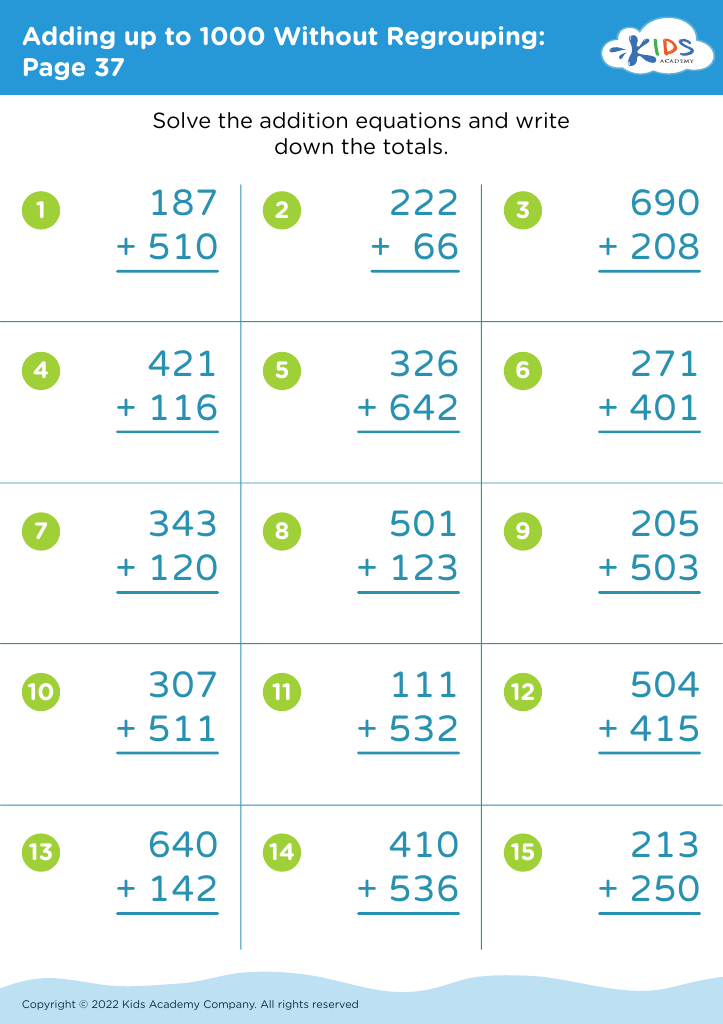
Adding up to 1000 Without Regrouping: Page 37
Worksheet
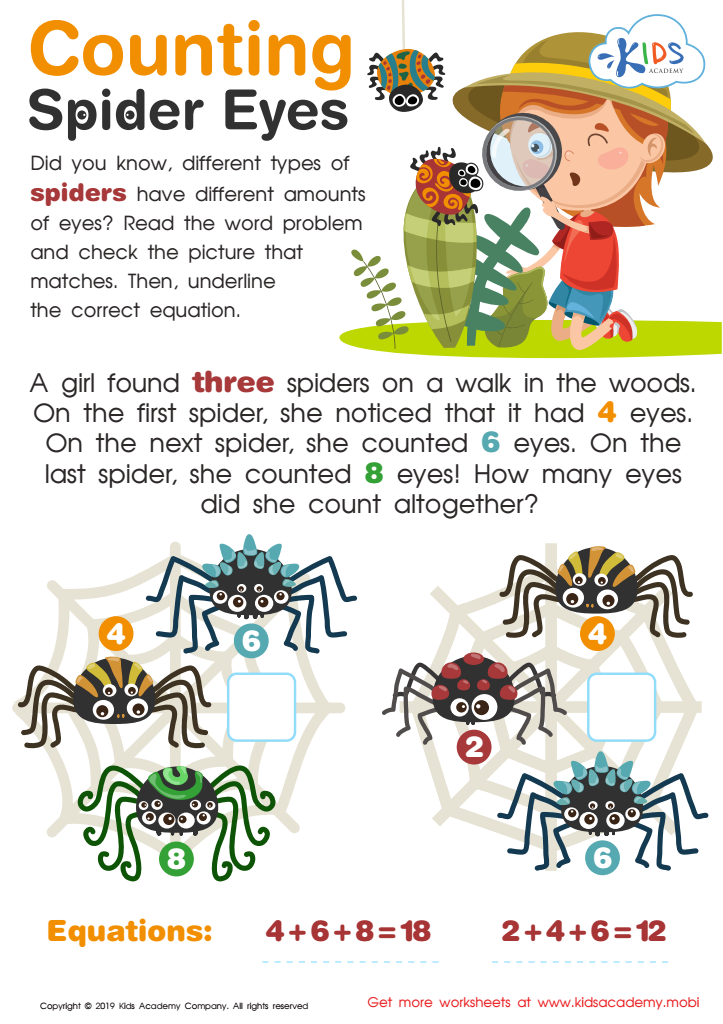
Counting Spider Eyes Worksheet

Counting Spider Eyes Worksheet

Did you know different spiders have different eye numbers? Kids will love learning this fact and solving the spider word problems on this free worksheet! Word problems promote a deeper understanding of the concept, plus they get to add up the spiders’ eyes while solving addition problems with more than one addend. Fun and math all in one!
Counting Spider Eyes Worksheet
Worksheet
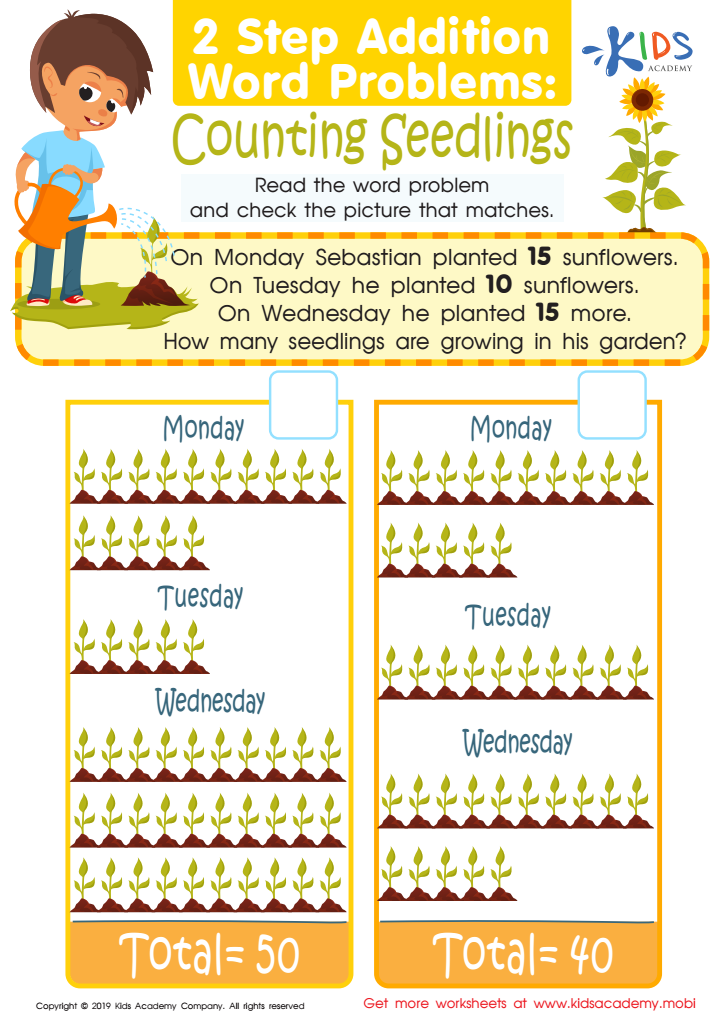
Counting Seedlings Worksheet
Counting Seedlings Worksheet

Understanding math word problems is key. Multiple steps can prove challenging - this free worksheet provides one-to-one picture representation to help kids solve multi-step addition word problems. Strengthen addition skills by choosing the matching picture to the answer.
Counting Seedlings Worksheet

Worksheet
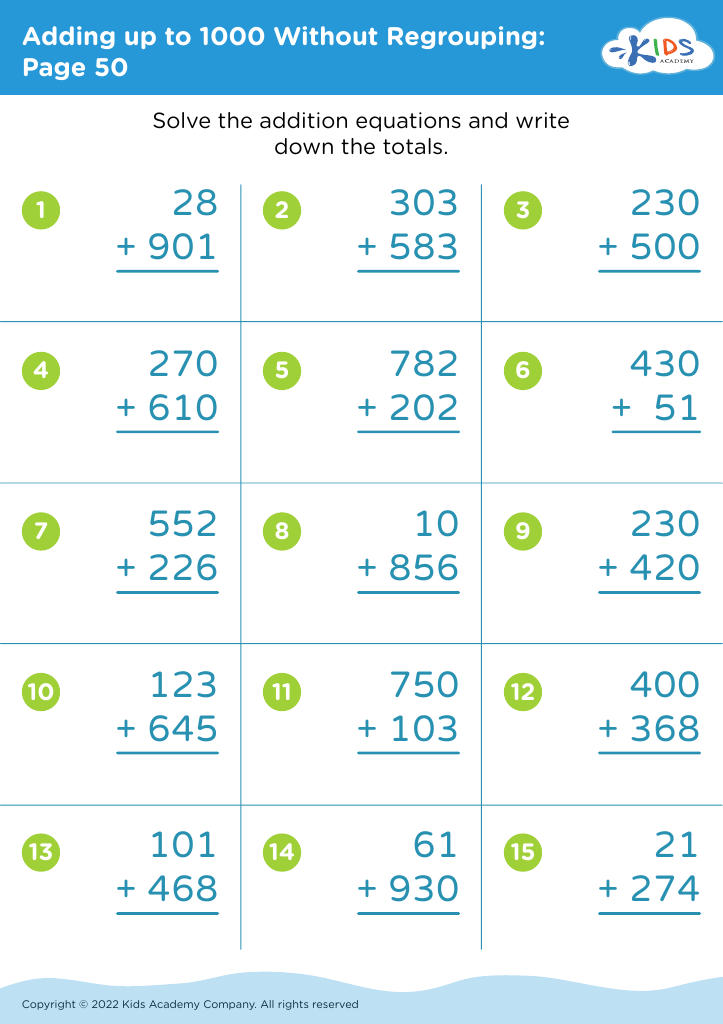
Adding up to 1000 Without Regrouping: Page 50
Worksheet
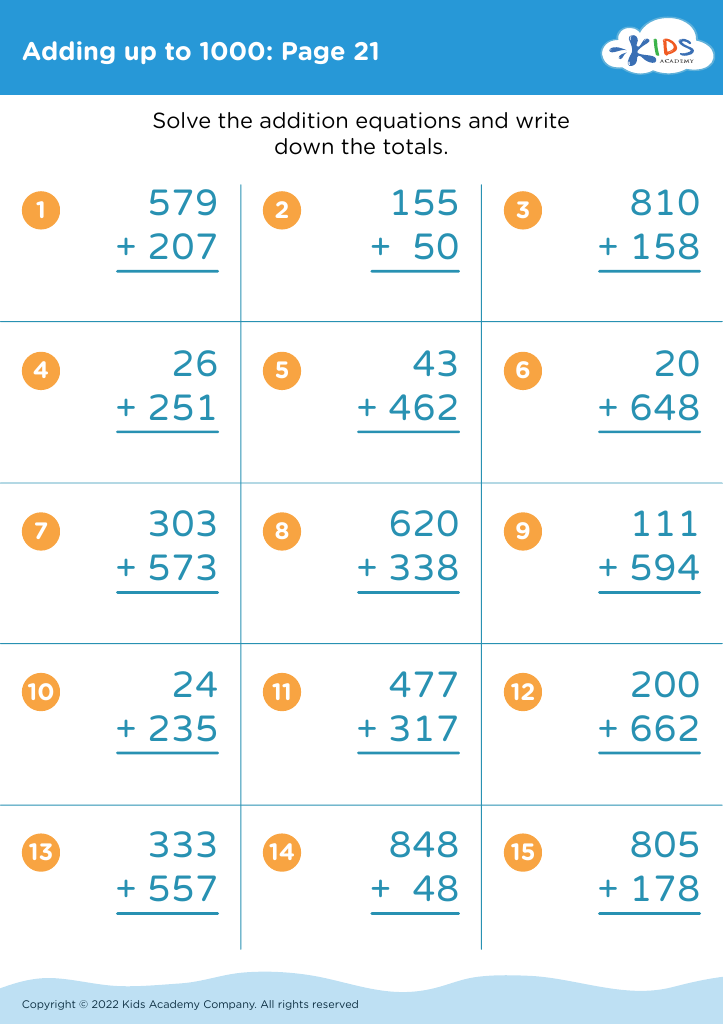
Adding up to 1000: Page 21

Adding up to 1000: Page 21

Adding up to 1000: Page 21
Worksheet
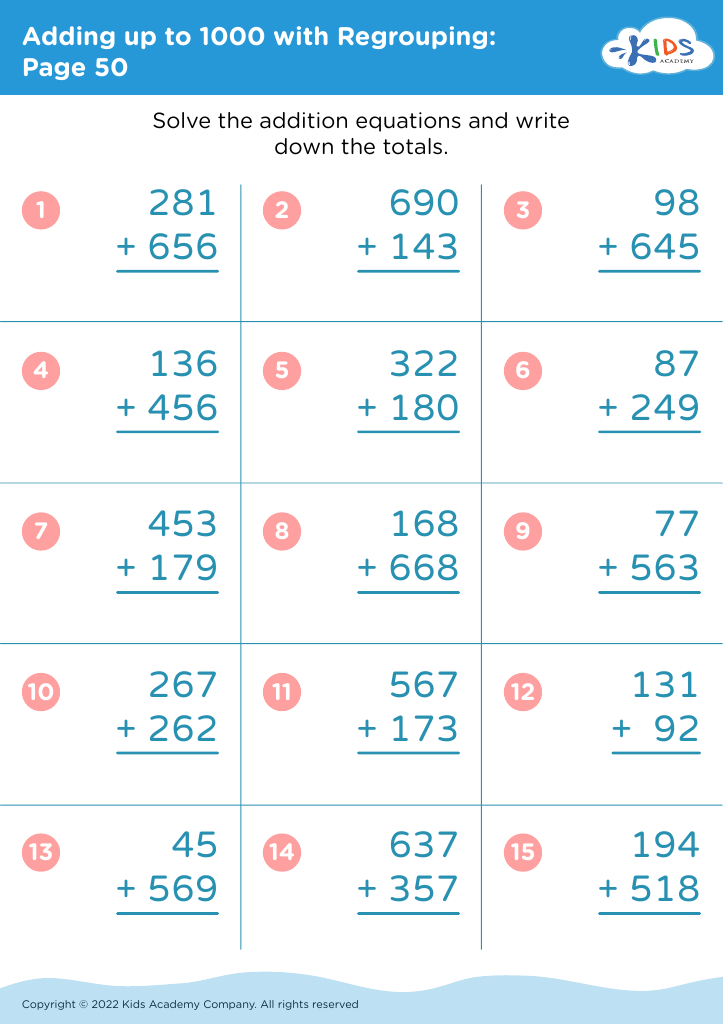
Adding up to 1000 with Regrouping: Page 50
Worksheet
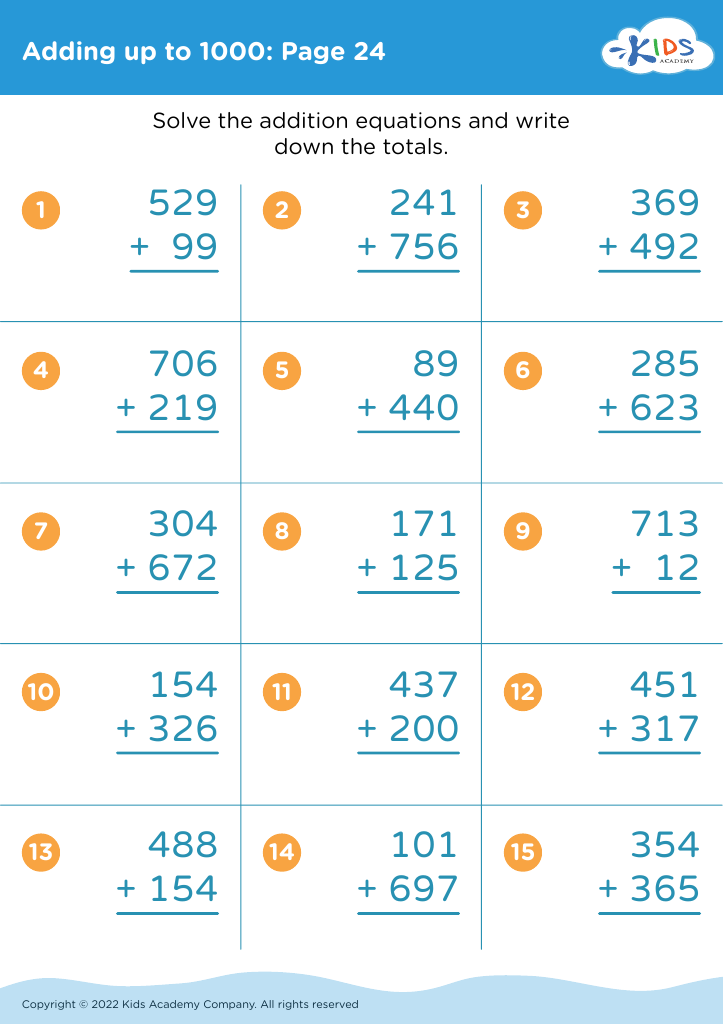
Adding up to 1000: Page 24

Adding up to 1000: Page 24

Adding up to 1000: Page 24
Worksheet
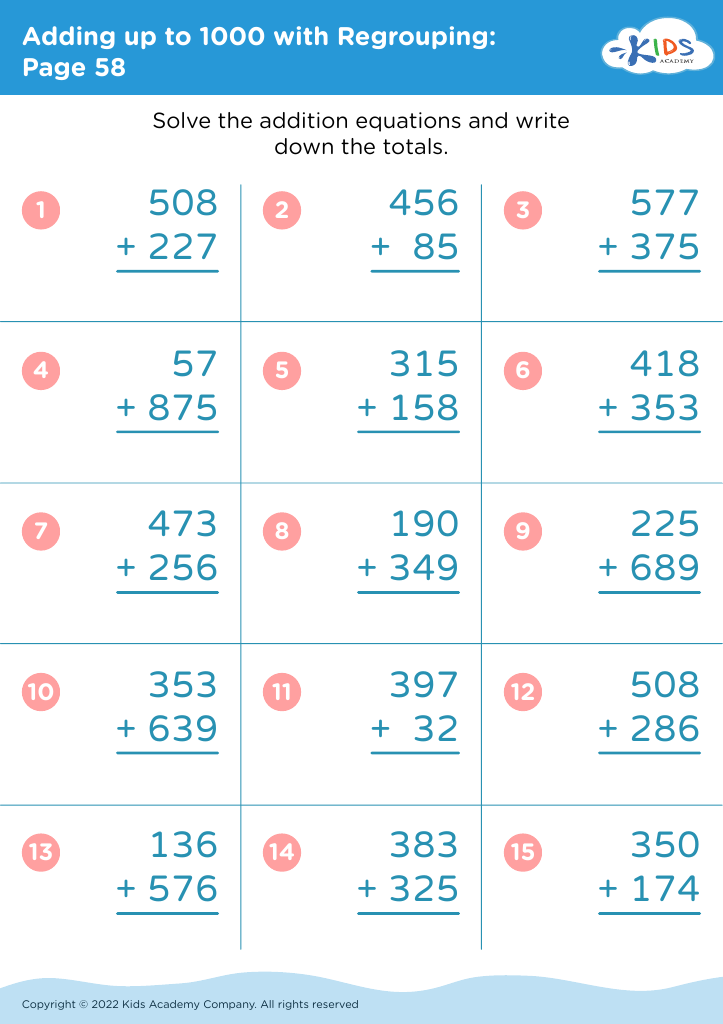
Adding up to 1000 with Regrouping: Page 58
Worksheet
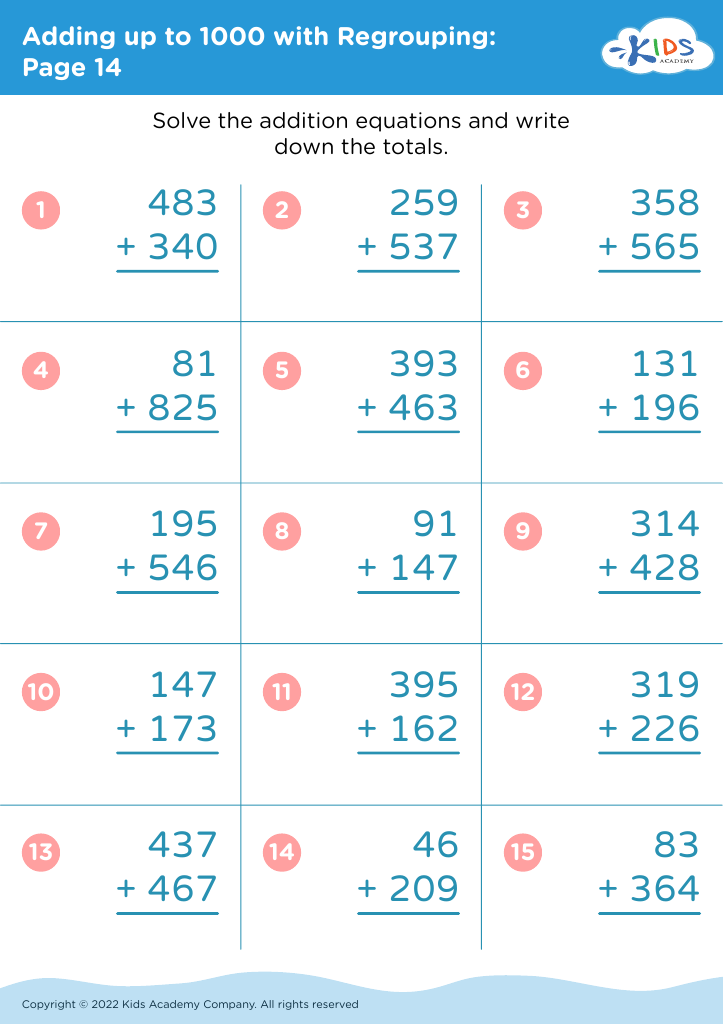
Adding up to 1000 with Regrouping: Page 14
Worksheet
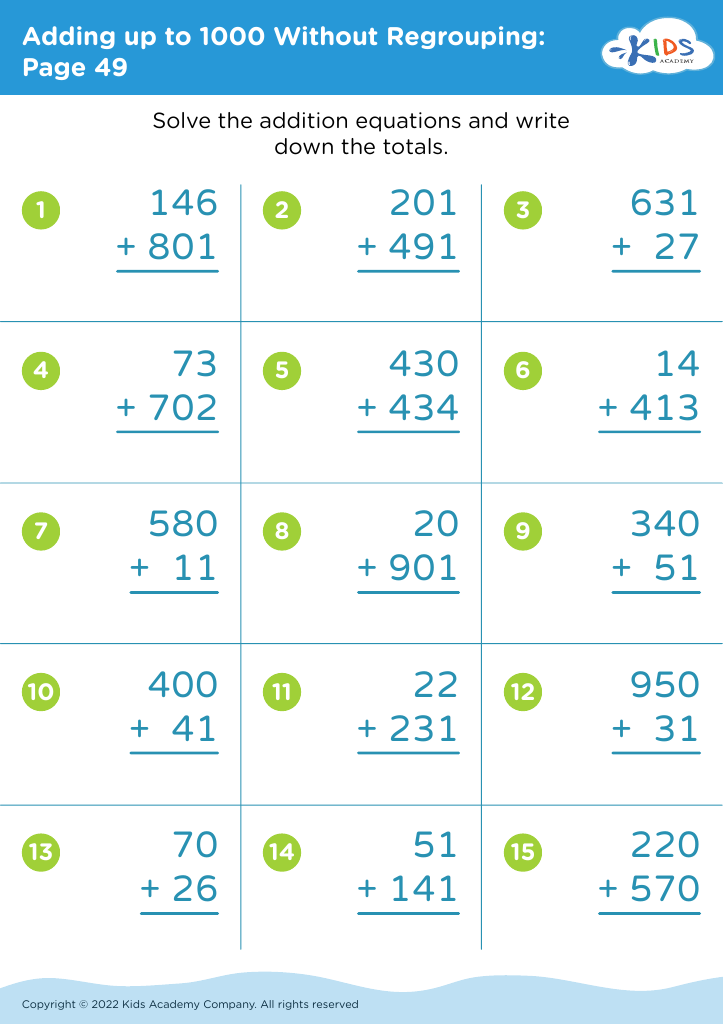
Adding up to 1000 Without Regrouping: Page 49
Worksheet
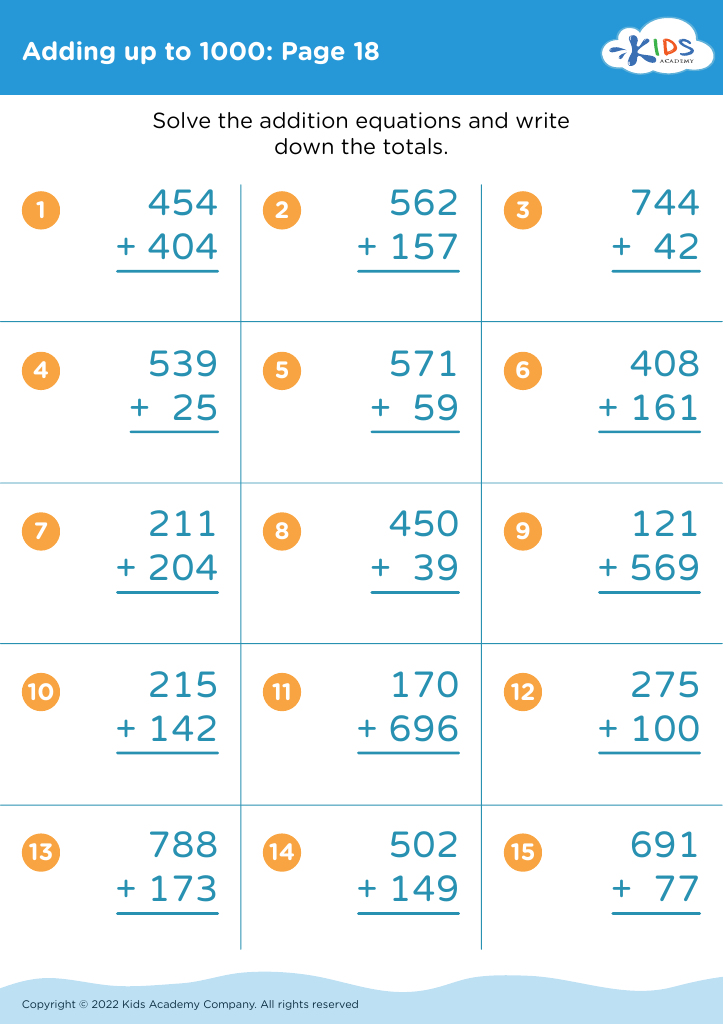
Adding up to 1000: Page 18

Adding up to 1000: Page 18

Adding up to 1000: Page 18
Worksheet
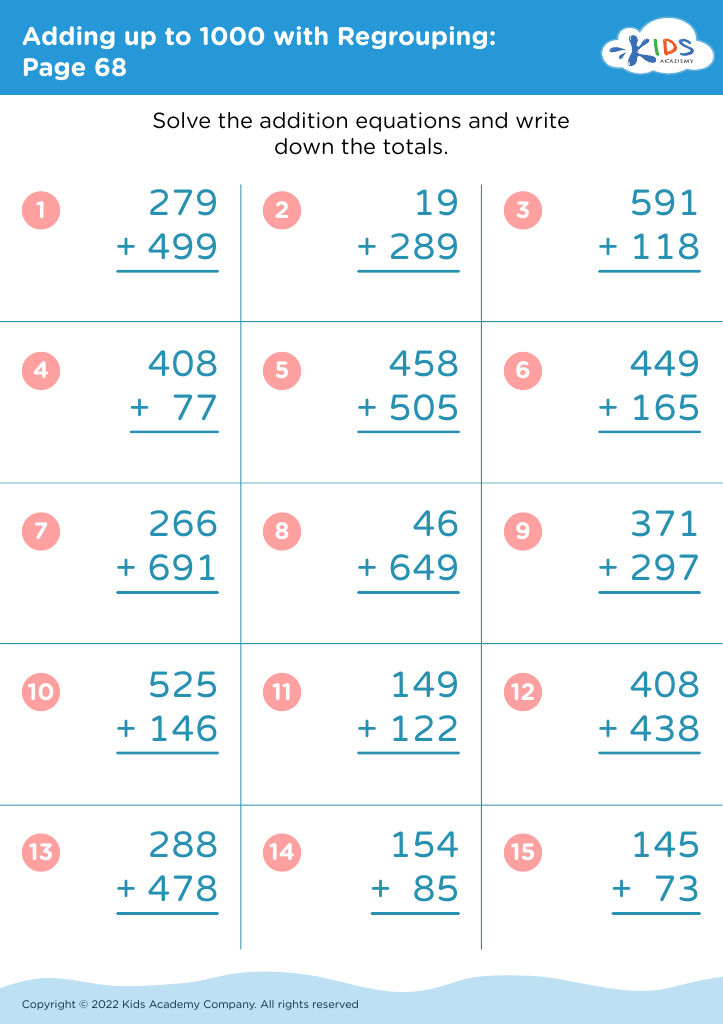
Adding up to 1000 with Regrouping: Page 68
Worksheet
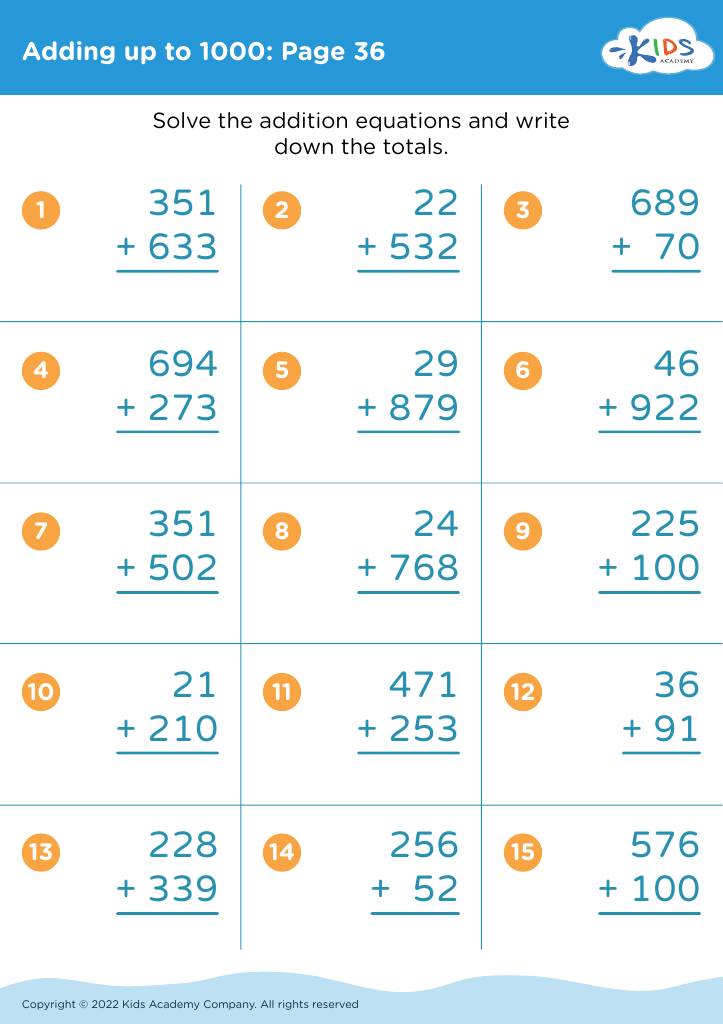
Adding up to 1000: Page 36

Adding up to 1000: Page 36

Adding up to 1000: Page 36
Worksheet
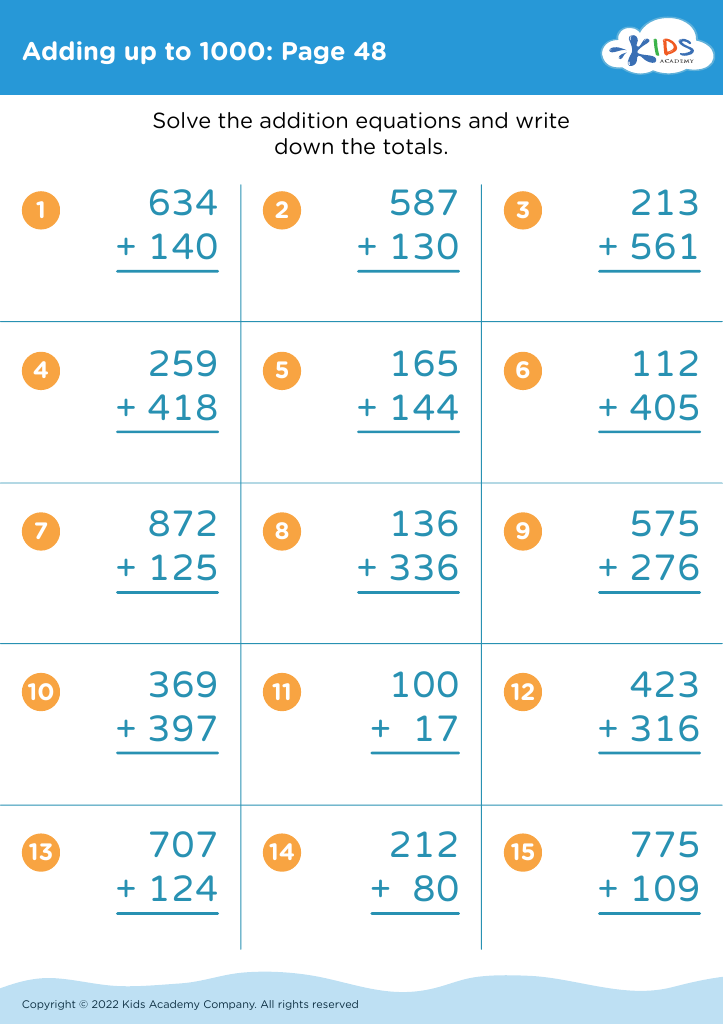
Adding up to 1000: Page 48

Adding up to 1000: Page 48

Adding up to 1000: Page 48
Worksheet


Fine motor skills are crucial for 9-year-olds as they form the foundation for many daily activities and academic tasks, including math. These skills, which involve the coordination of small muscles in the hands and fingers, enable children to manipulate objects with precision. Adding and subtracting using physical tools like manipulatives or number lines enhances their understanding of mathematical concepts. When children engage in hands-on activities, they learn to develop strategies, solve problems, and enjoy the process of learning.

Moreover, proficiency in fine motor skills ensures that children can manage writing numbers legibly and accurately, which is essential not only in math but in all areas of schoolwork. This ability boosts their confidence, reduces frustration during homework, and fosters a positive attitude towards learning.

Teachers and parents should be invested in nurturing these skills through engaging activities such as arts and crafts, puzzles, and cooking. By incorporating fine motor skill practices into math instruction, they can make learning more interactive and enjoyable. Ultimately, fostering fine motor skills in addition and subtraction helps children become more competent, independent learners, paving the way for success in their educational journey.