Learn new vocabulary Addition & Subtraction Worksheets for 9-Year-Olds
3 filtered results
-
From - To
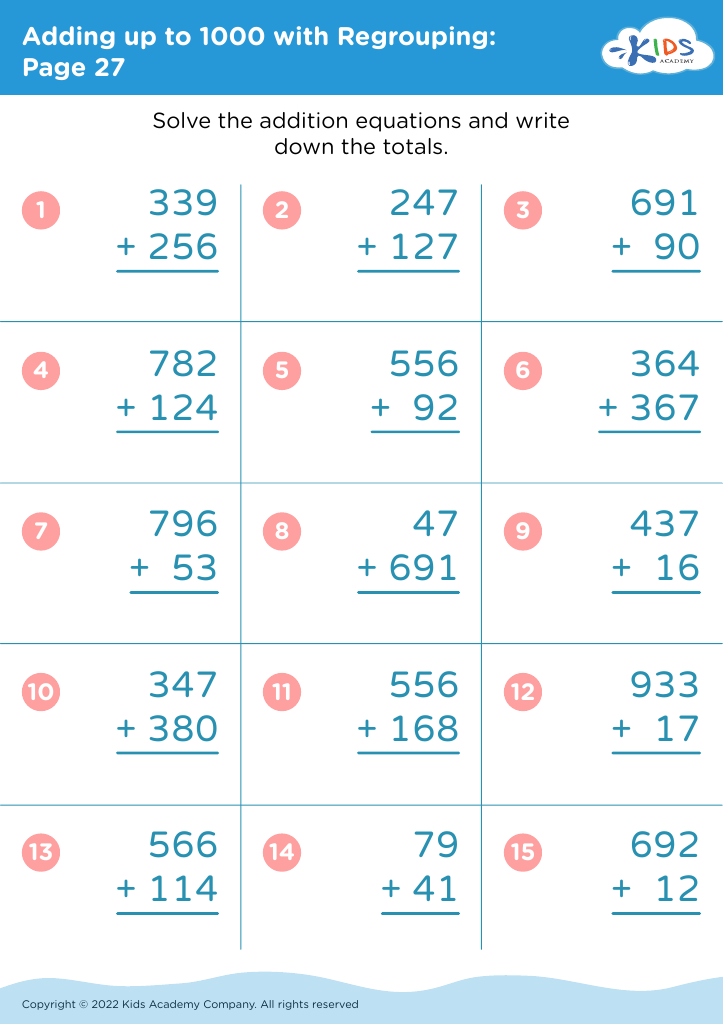
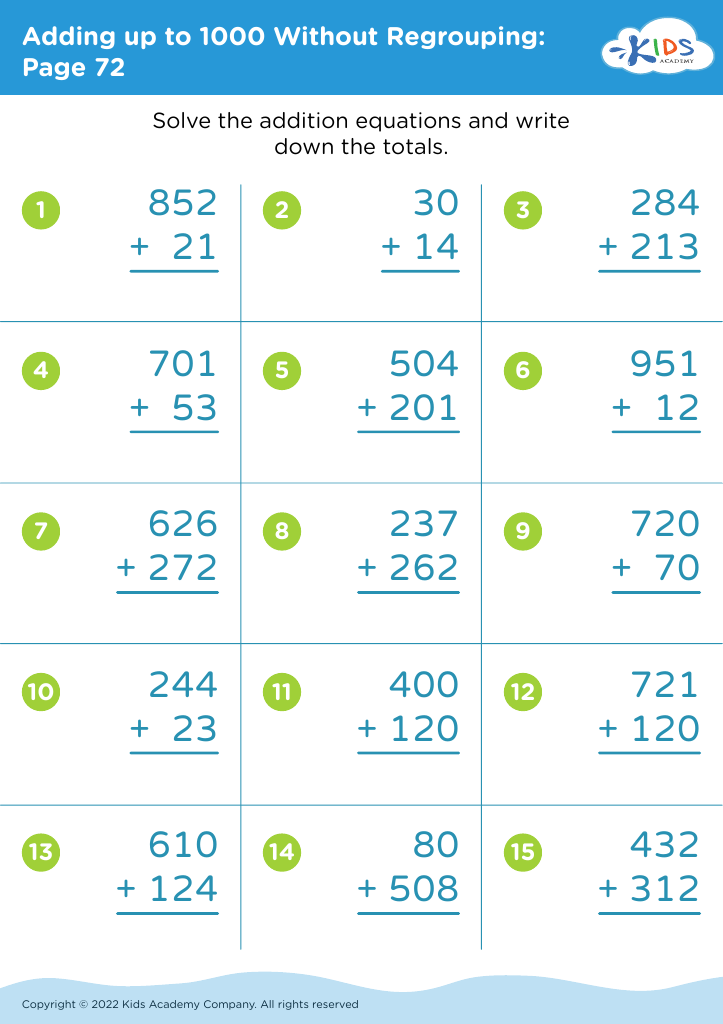
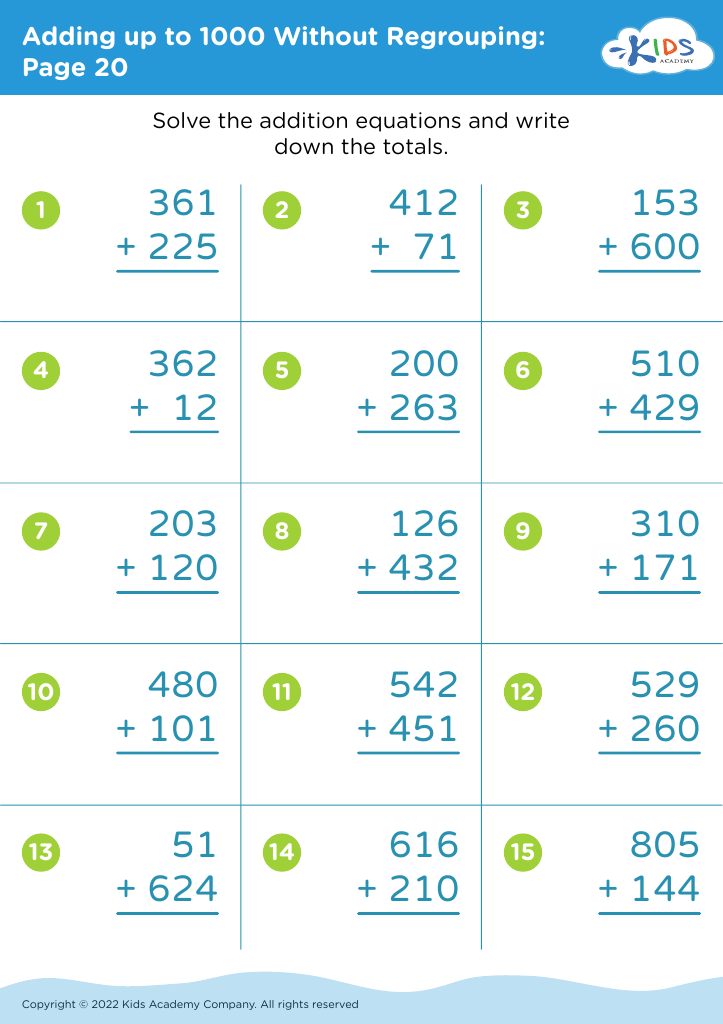
Unlock your child's mathematical potential with our "Learn New Vocabulary Addition & Subtraction Worksheets" designed specifically for 9-year-olds! These engaging worksheets focus on enhancing vocabulary skills alongside basic math concepts. Students will explore essential mathematical terms and deepen their understanding of addition and subtraction through fun activities and challenges. By integrating language learning with math practice, children can communicate their ideas more effectively and build a solid foundation for future learning. Perfect for classroom, homeschooling, or extra practice, these worksheets make learning enjoyable and interactive. Download now to provide your child with the tools they need for academic success!








Parents and teachers should prioritize the development of vocabulary in the context of mathematical concepts like addition and subtraction for 9-year-olds because it enhances comprehension and builds a strong foundation for future learning. At this age, children are moving from basic arithmetic to more complex problem-solving skills. A rich vocabulary allows children to articulate their thought processes, understand mathematical problems more deeply, and communicate their strategies clearly.
Moreover, new vocabulary associated with addition and subtraction—such as "sum," "difference," "calculate," and "equation"—empowers students to navigate diverse mathematical contexts confidently. This not only strengthens their fluency in math but also fosters critical thinking skills, enabling them to express and tackle challenges creatively.
Incorporating vocabulary into math lessons also supports reading and language skills, bridging literacy with numeracy. When parents and teachers emphasize the importance of vocabulary in math, students are more likely to engage with the subject matter, reducing anxiety and building a positive attitude towards learning. A holistic approach that values vocabulary in math reaps long-term benefits, equipping children with essential skills for academic success and real-world application. Thus, integrating new vocabulary into the learning process is vital for nurturing well-rounded, confident learners.








