Math problem-solving Addition & Subtraction Worksheets for 9-Year-Olds
4 filtered results
-
From - To
Welcome to our Math Problem-Solving Addition & Subtraction Worksheets for 9-Year-Olds! Tailored for young learners, these worksheets provide engaging activities designed to enhance problem-solving skills using addition and subtraction. Our comprehensive resources help children tackle various scenarios, fostering essential critical thinking and analytical skills while making math fun. With colorful illustrations and diverse real-life problems, students will enjoy practicing and mastering these fundamental concepts. These printable worksheets serve as an excellent supplement to classroom learning, encouraging independent practice at home. Discover a world of math challenges that inspire confidence and proficiency in young mathematicians!
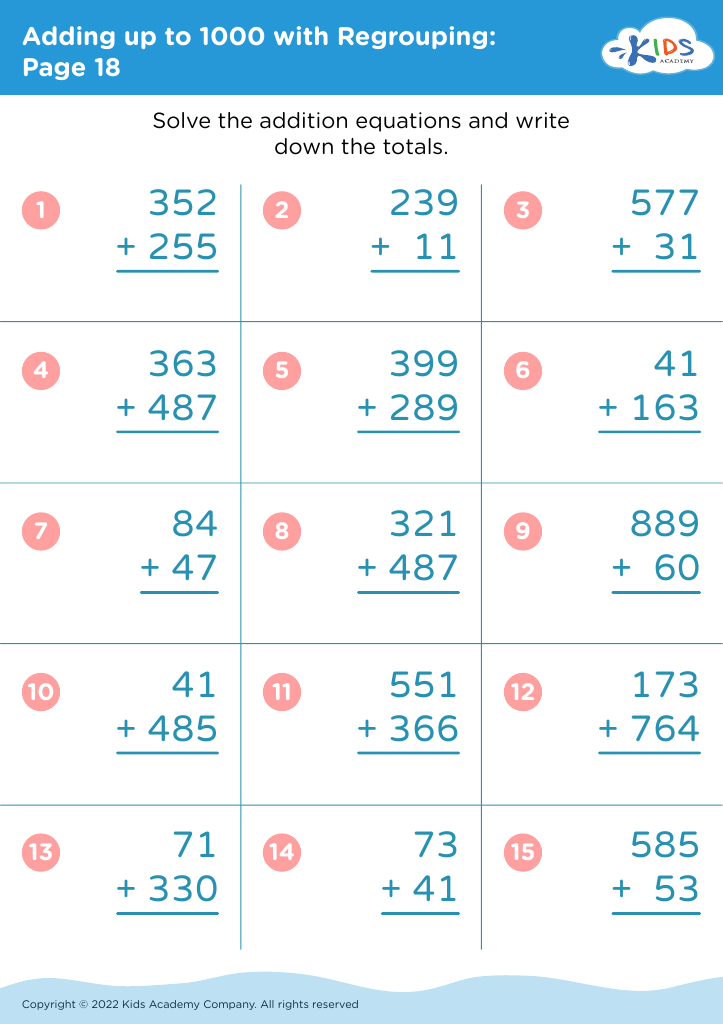
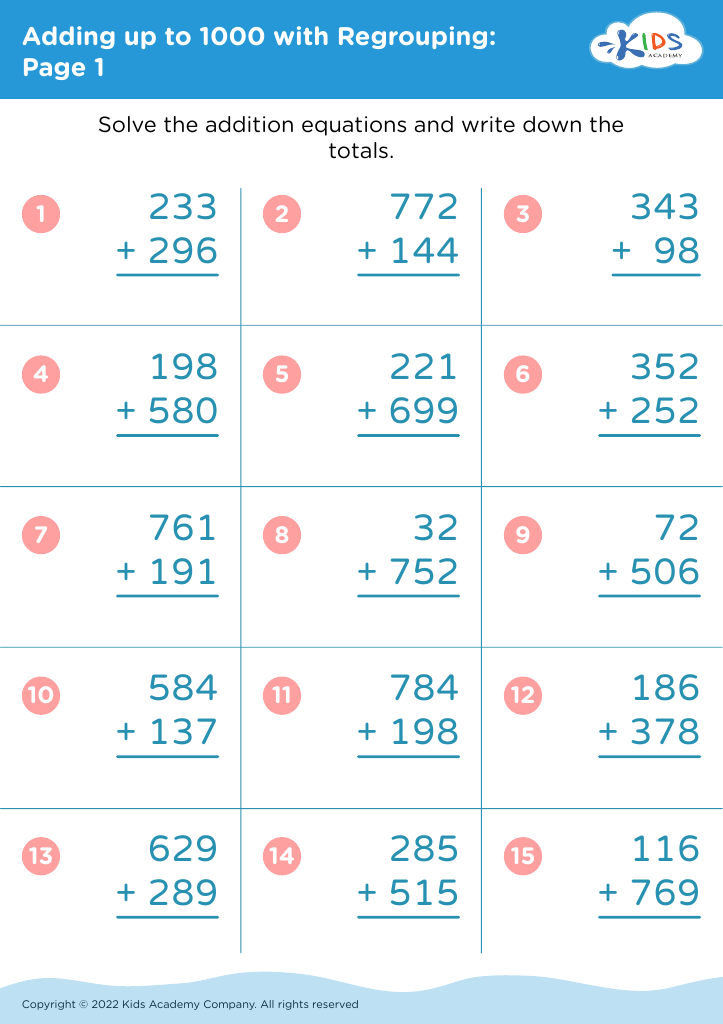
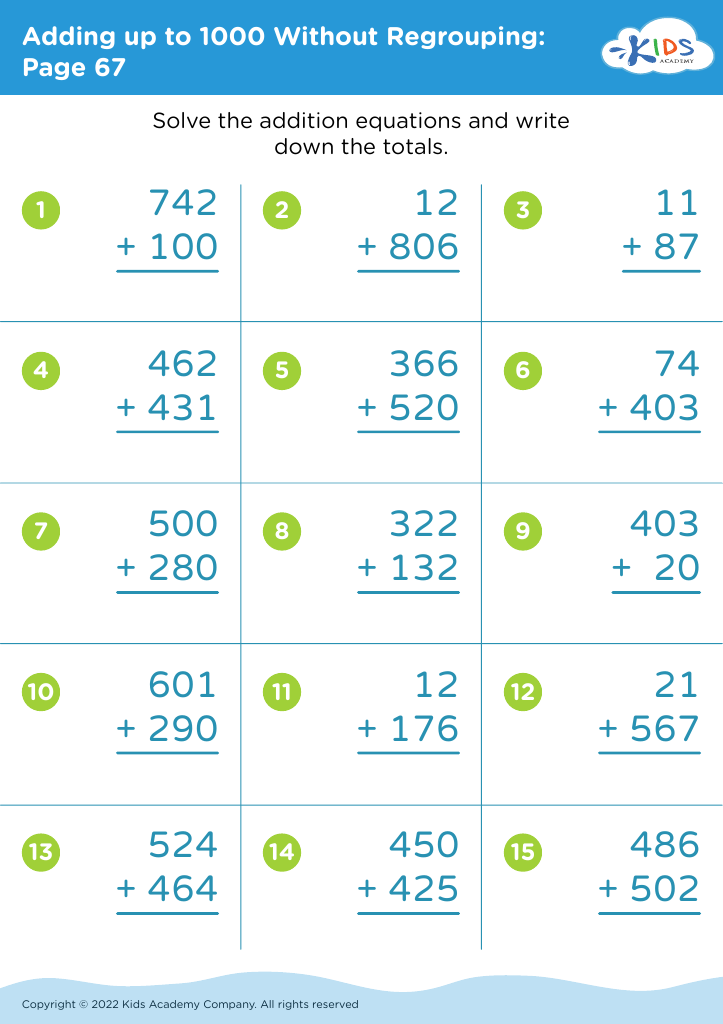
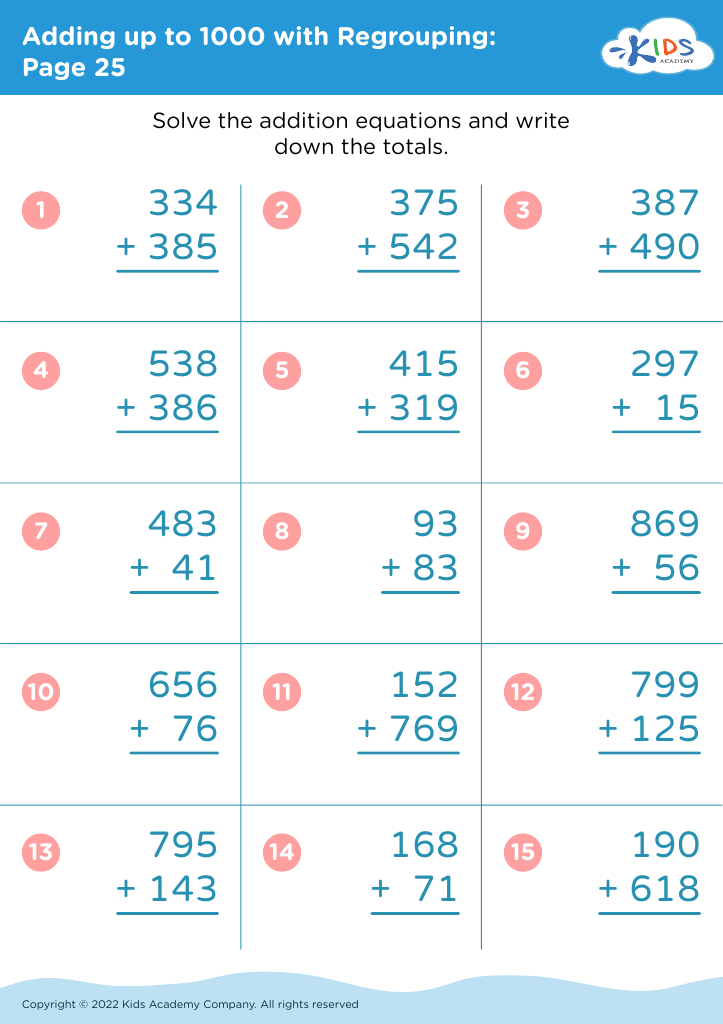








Math problem-solving in addition and subtraction for 9-year-olds is crucial as it lays the groundwork for a child’s mathematical understanding and critical thinking skills. At this age, children transition from simple arithmetic to more complex problems that require analytical reasoning and strategic thinking. Mastering these foundational skills not only enables students to perform calculations accurately but also allows them to apply math in real-life situations, enhancing their ability to make reasoned decisions.
Moreover, strong addition and subtraction skills boost confidence, positively affecting a child's overall attitude toward overcoming challenges in mathematics and other subjects. Engaging students in problem-solving helps develop persistence and resilience—qualities essential for success in school and beyond. Additionally, these skills are tied to various aspects of everyday life, such as budgeting, cooking, or even planning, showcasing the importance of math in practical contexts.
By fostering a supportive environment, parents and teachers encourage a love for learning and discovery in mathematics. This investment in a child's education not only prepares them for higher-level math concepts but also instills essential life skills that will serve them well throughout their academic journey and future endeavors.








