
Number identification Addition & Subtraction Worksheets for 9-Year-Olds
3 filtered results
Difficulty Level
Grade
Age
-
From - To
Subject
Activity
Standards
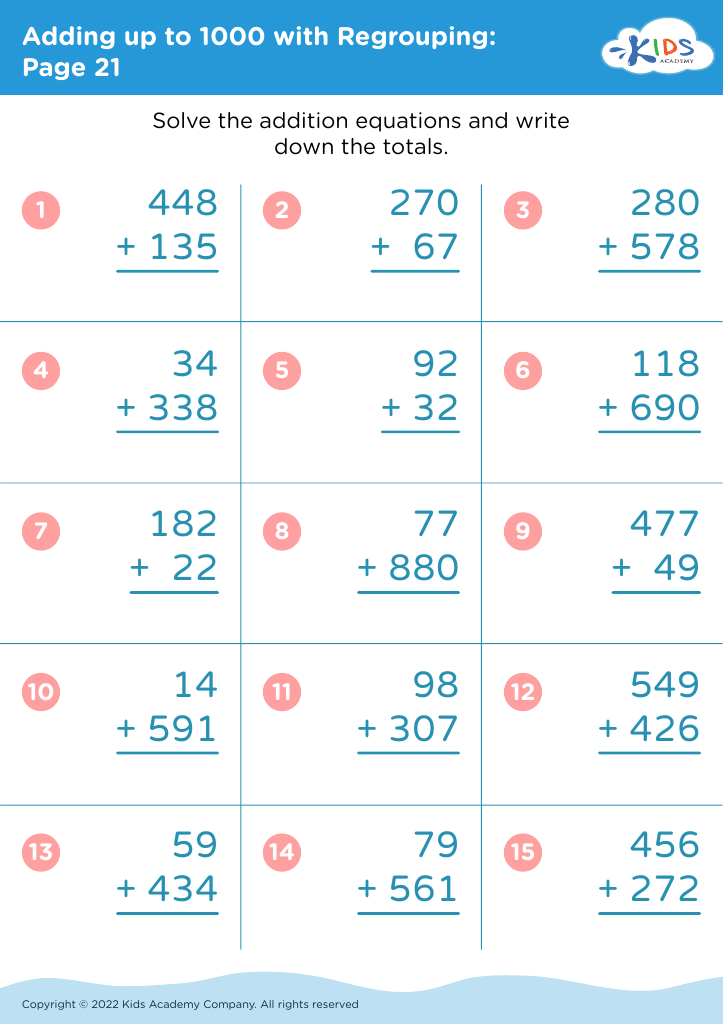
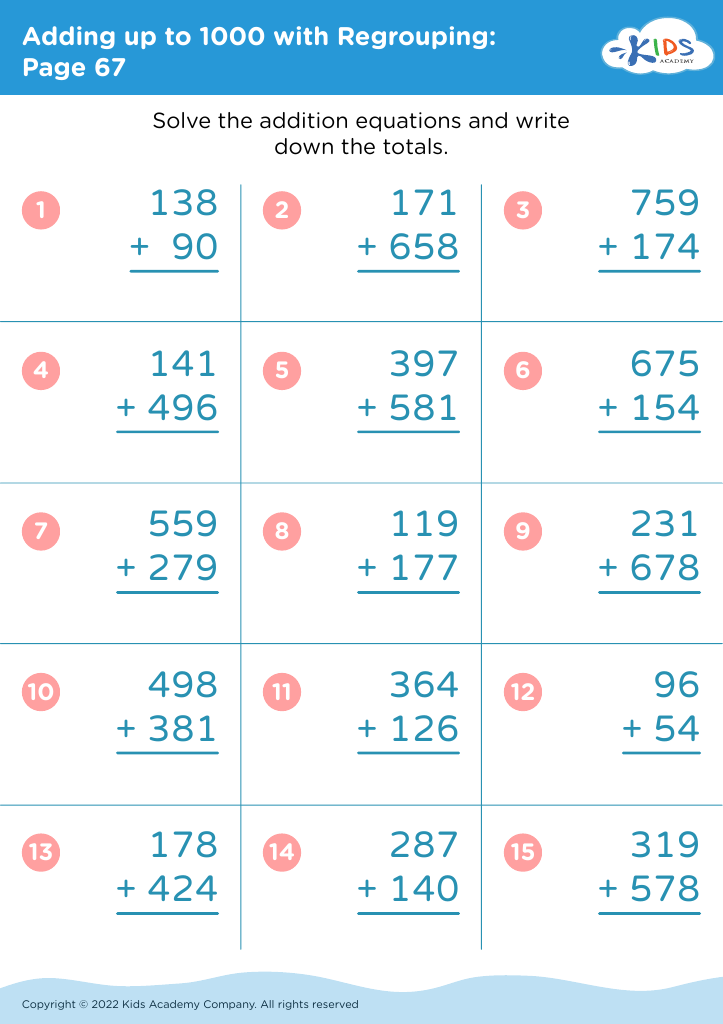
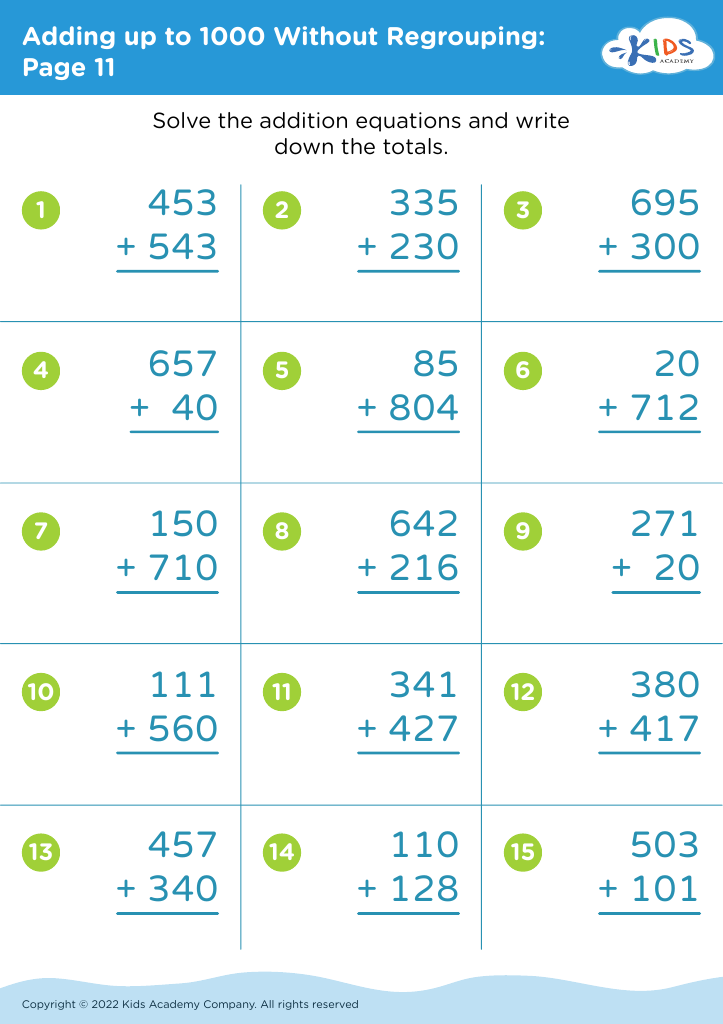
Our Number Identification Addition & Subtraction Worksheets are perfect for 9-year-olds to enhance their math skills in a fun and interactive way. Designed to boost confidence, each worksheet helps children recognize numbers efficiently and perform essential addition and subtraction operations. Through varied exercises, kids gain mastery in identifying numbers and solving problems, making math an exciting challenge. Explore our printable resources, packed with engaging activities that cater to different learning styles, ensuring your child builds a strong math foundation. Ideal for both classroom and home use, these worksheets support independent learning and math proficiency.
Favorites
With answer key
Interactive
Join Kids Academy for Free
Who is primarily going to use this learning content?








Understanding number identification, addition, and subtraction is pivotal for 9-year-olds as it forms the foundation of their arithmetic skills and overall cognitive development. At this age, children transition from simple counting to more complex arithmetic operations, crucial for academic success in mathematics and related subjects.
Firstly, number identification is essential as it allows children to recognize and comprehend different numbers, enabling them to participate actively in mathematical activities. A good grasp of this concept ensures they can effortlessly move on to more advanced topics like addition and subtraction.
Addition and subtraction are fundamental operations in everyday life, from calculating expenses to understanding time. Mastering these skills enhances logical reasoning and problem-solving abilities. For example, discerning the relationship between numbers through addition and subtraction helps in grasping more complex mathematical concepts like multiplication and division down the line.
Moreover, competency in these areas can boost a child’s confidence in their academic abilities, fostering a positive attitude towards learning. It facilitates smoother transitions into higher-grade mathematics, making future learning less daunting.
Teachers and parents play a crucial role by providing supportive, engaging practice opportunities, ensuring children understand and find relevance in what they learn. Consequently, focusing on these basics not only aids immediate academic needs but also instills skills beneficial for lifetime success.








