Understanding time Addition & Subtraction Worksheets for 9-Year-Olds
3 filtered results
-
From - To
Discover the "Understanding Time Addition & Subtraction Worksheets" designed specifically for 9-year-olds! These engaging worksheets help young learners master the concept of time while enhancing their addition and subtraction skills. Featuring a variety of fun exercises, children will solve problems that involve reading clocks, calculating time differences, and applying math in real-life scenarios. Our resources support the development of critical thinking and problem-solving skills, making math enjoyable and accessible. Ideal for both classroom and home use, these worksheets promote interactive learning and confidence in math. Start your child's journey to mastering time concepts with our comprehensive resources today!
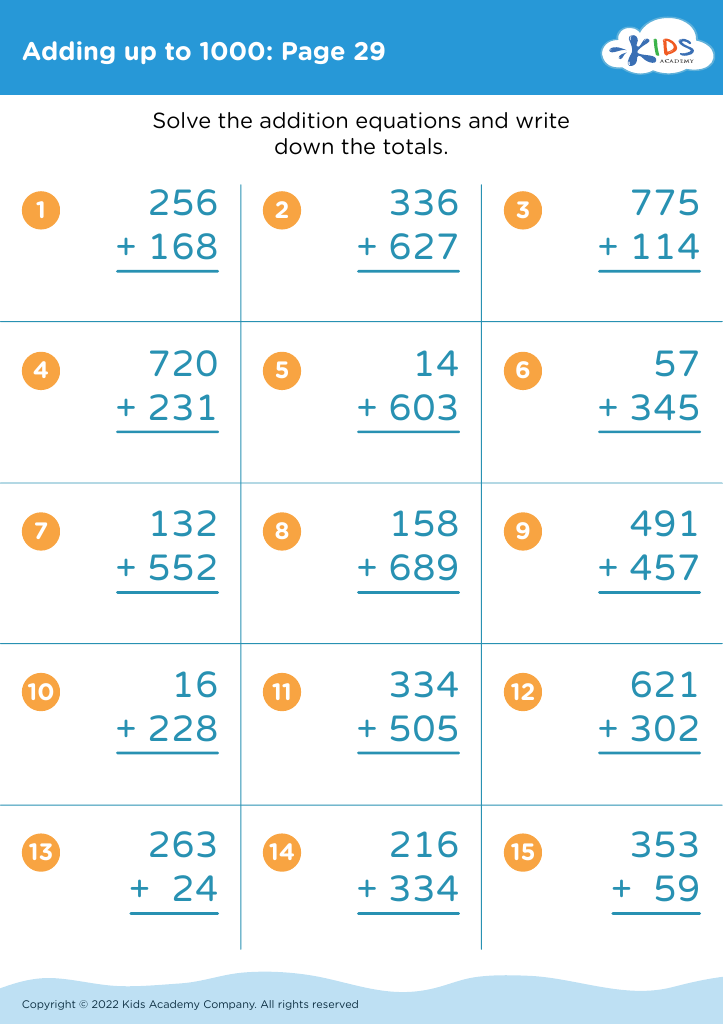
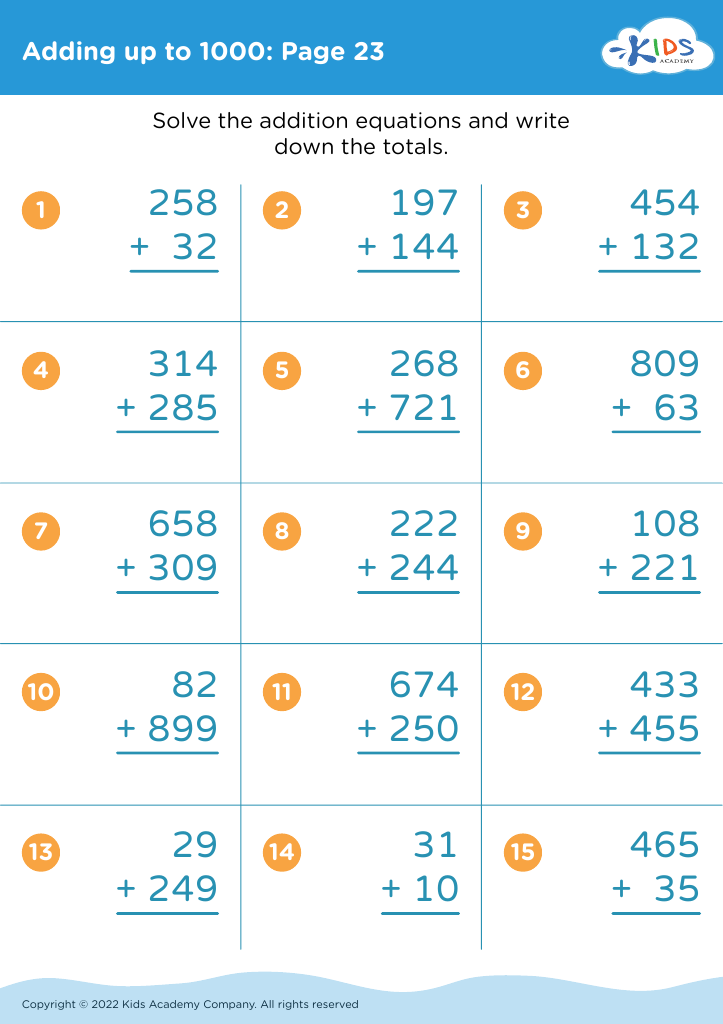
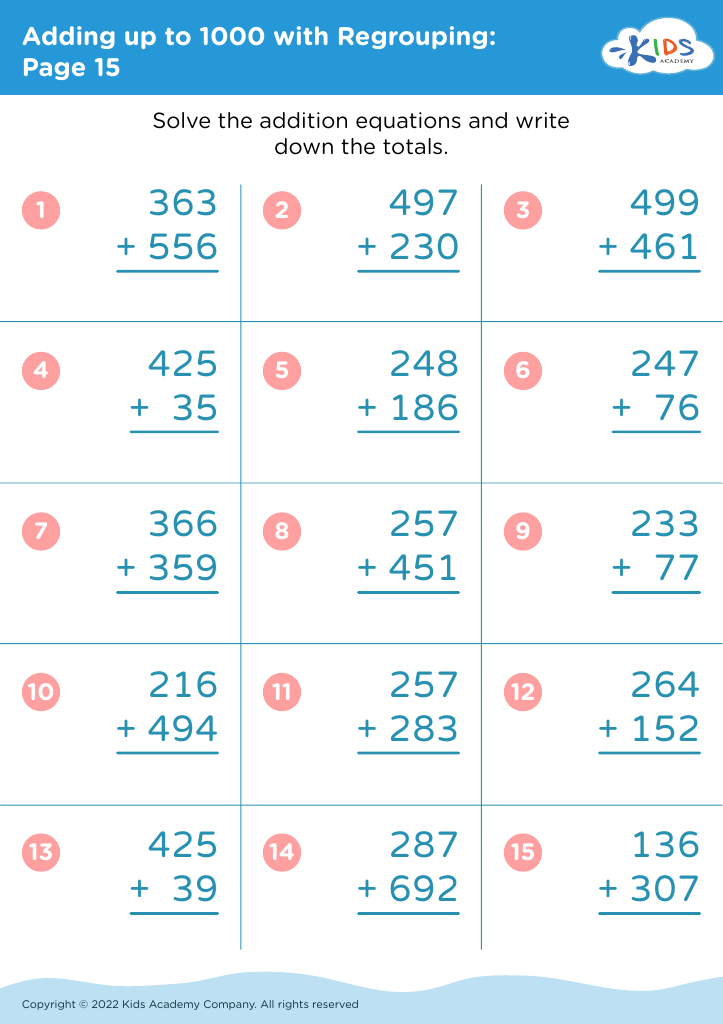








Understanding time-related addition and subtraction is crucial for 9-year-olds as it lays the foundation for effective mathematical reasoning and practical life skills. At this age, children are beginning to connect abstract concepts with real-world applications, and mastering time calculations is a perfect opportunity for this. Learning how to add or subtract time helps stimulate critical thinking and problem-solving abilities. For example, knowing how to calculate duration between events or understanding schedules enhances their ability to plan and manage their time efficiently.
Furthermore, strong skills in time addition and subtraction foster autonomy and responsibility in children, empowering them to navigate daily activities, such as managing homework, playdates, and screen time. This competence is essential as they transition into more complex time management tasks in the future.
Moreover, when parents and teachers focus on this skill, they can cultivate a supportive learning environment where children feel confident in their abilities. Incorporating real-life scenarios, such as planning a family trip or timing a game, can make the learning process engaging and relevant. Ultimately, equipping 9-year-olds with these skills is an investment in their overall academic journey and personal development.








