Vocabulary Building Addition & Subtraction Worksheets for 9-Year-Olds
3 filtered results
-
From - To
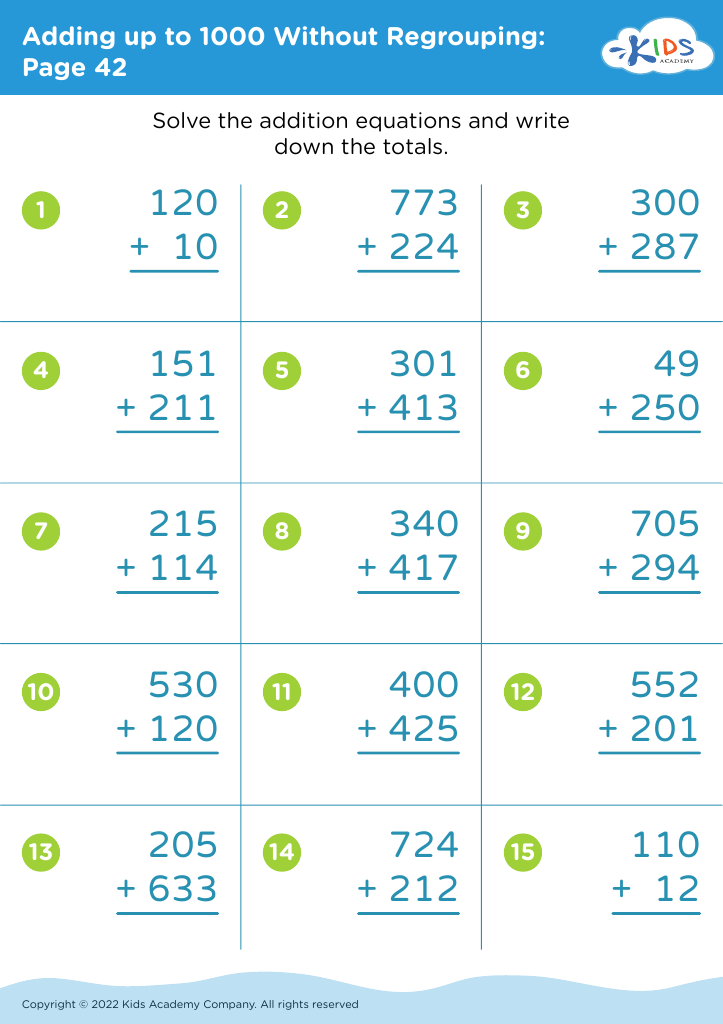
Enhance your young learner’s math skills with our engaging Vocabulary Building Addition & Subtraction Worksheets, designed specifically for 9-year-olds. These worksheets offer a unique blend of math practice and vocabulary development, helping children not only master addition and subtraction but also enrich their language skills. Each worksheet features exciting problems that encourage critical thinking and problem-solving using mathematical vocabulary. Our resources are perfect for both classroom and home use, making learning fun and interactive. Dive into our collection today and watch your child gain confidence in math while expanding their vocabulary in a meaningful way!
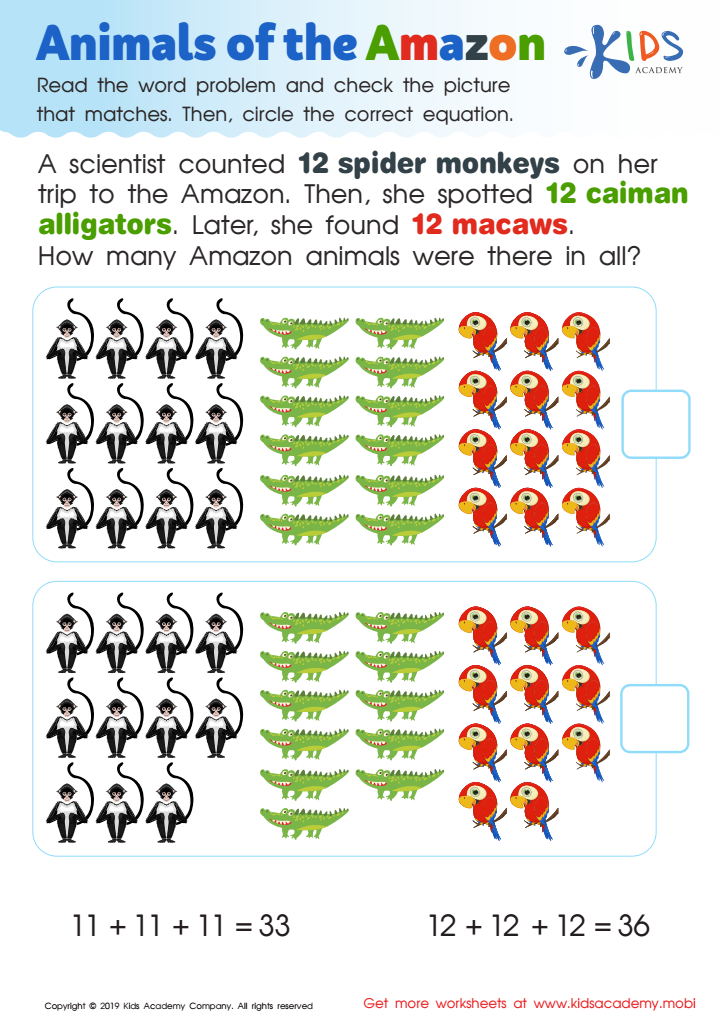
Animals of Amazon Worksheet
 Assign to My Students
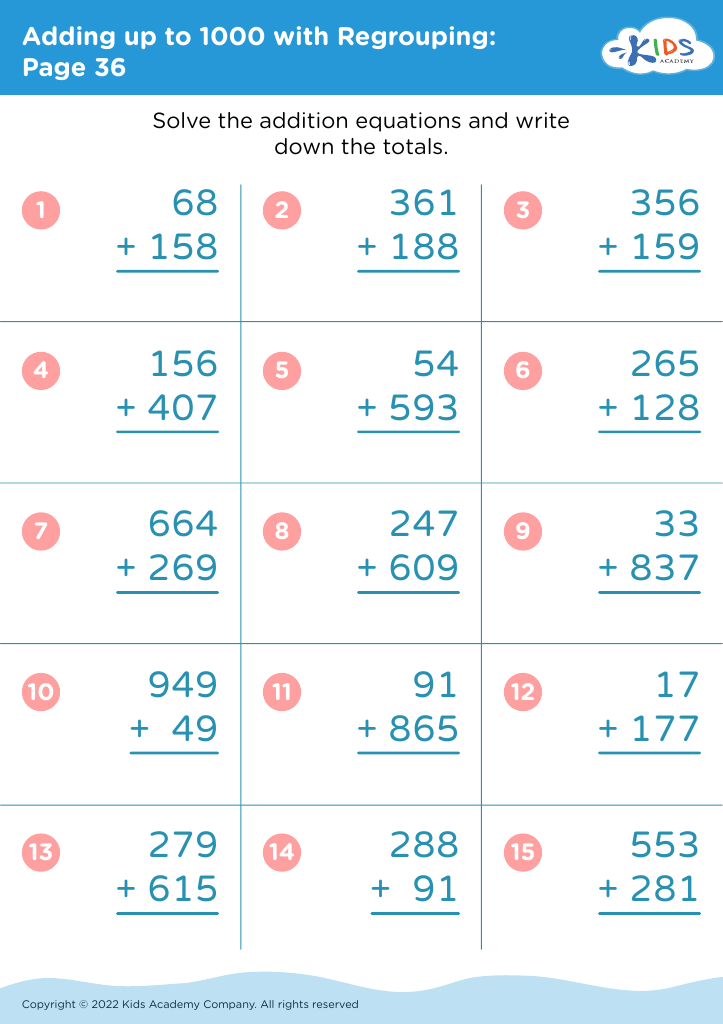








Vocabulary building in the context of addition and subtraction for 9-year-olds is essential for several reasons. Firstly, strong vocabulary knowledge allows children to comprehend mathematical problems better. As instructional language becomes more complex, understanding terms like "sum," "difference," "combined," and "how many more" is vital for decoding math problems accurately.
Moreover, a solid vocabulary fosters critical thinking skills. When students can articulate mathematical concepts effectively, they can solve problems more efficiently and creatively approach challenges. Enhancing vocabulary also supports mathematical discourse, which helps students express their thought processes and reasoning clearly, allowing for improved collaboration with peers.
Additionally, vocabulary building assists in developing a positive attitude toward mathematics. When students feel confident in their understanding of mathematical language, they are more likely to engage actively, reducing math-related anxiety. It equips them with the words they need to voice questions and seek help when needed, promoting a growth mindset.
Ultimately, investing time in vocabulary development within math contexts not only aids in immediate academic achievement but also lays a foundation for future learning and success across various subjects. Therefore, parents and teachers play a crucial role in encouraging this essential aspect of skill development.








