
Comparison Skills Addition Worksheets for 9-Year-Olds
3 filtered results
Difficulty Level
Grade
Age
-
From - To
Subject
Activity
Standards
Boost your child's math prowess with our "Comparison Skills Addition Worksheets for 9-Year-Olds." These engaging and educational worksheets are designed to help third-graders master addition through fun comparison activities. Kids will learn to compare sums, understand greater than, less than, and equal to concepts, and enhance their problem-solving skills. Each worksheet offers a variety of thoughtfully crafted exercises that make learning enjoyable and effective. With our expertly designed resources, watch your child’s confidence soar as they develop crucial math skills. Perfect for classroom or at-home practice, these worksheets provide a solid foundation for future math success.
Favorites
With answer key
Interactive
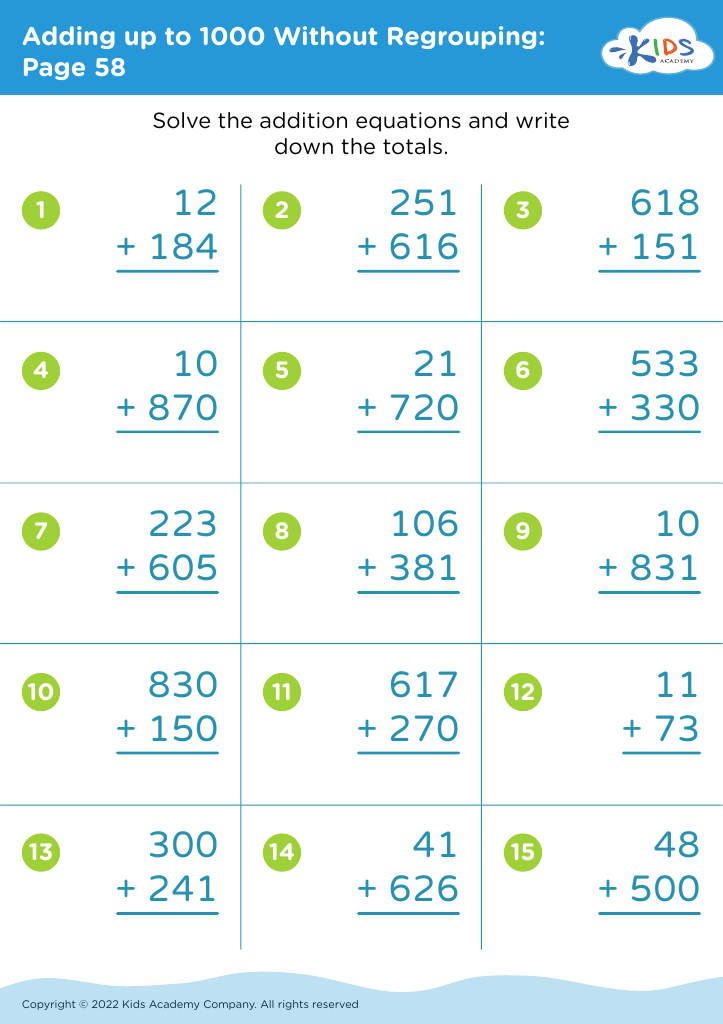
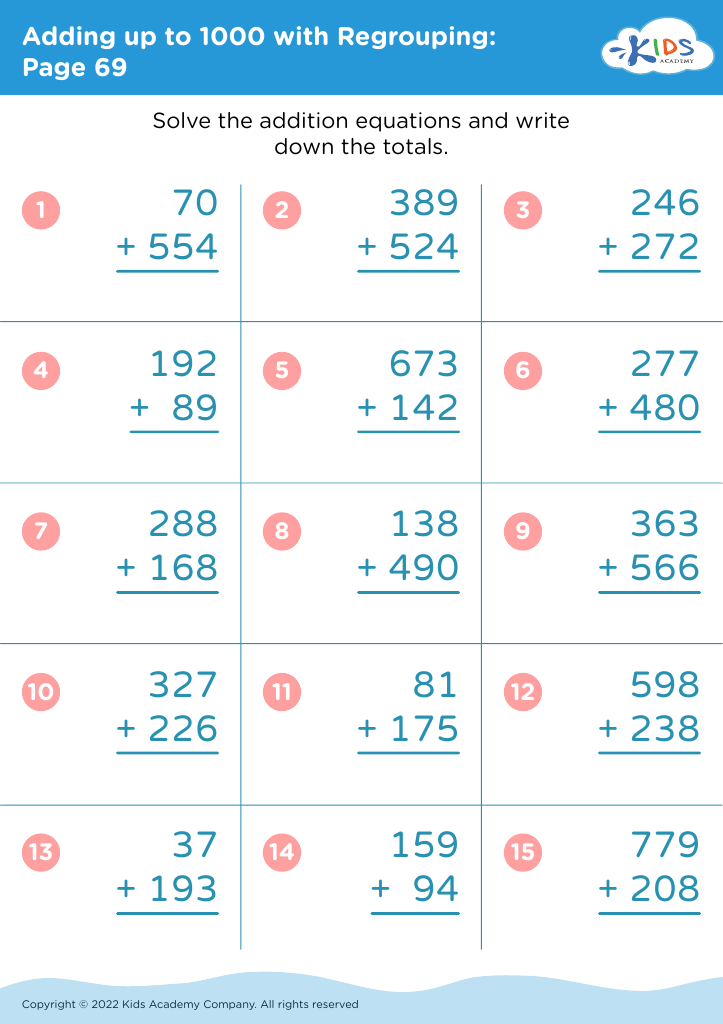
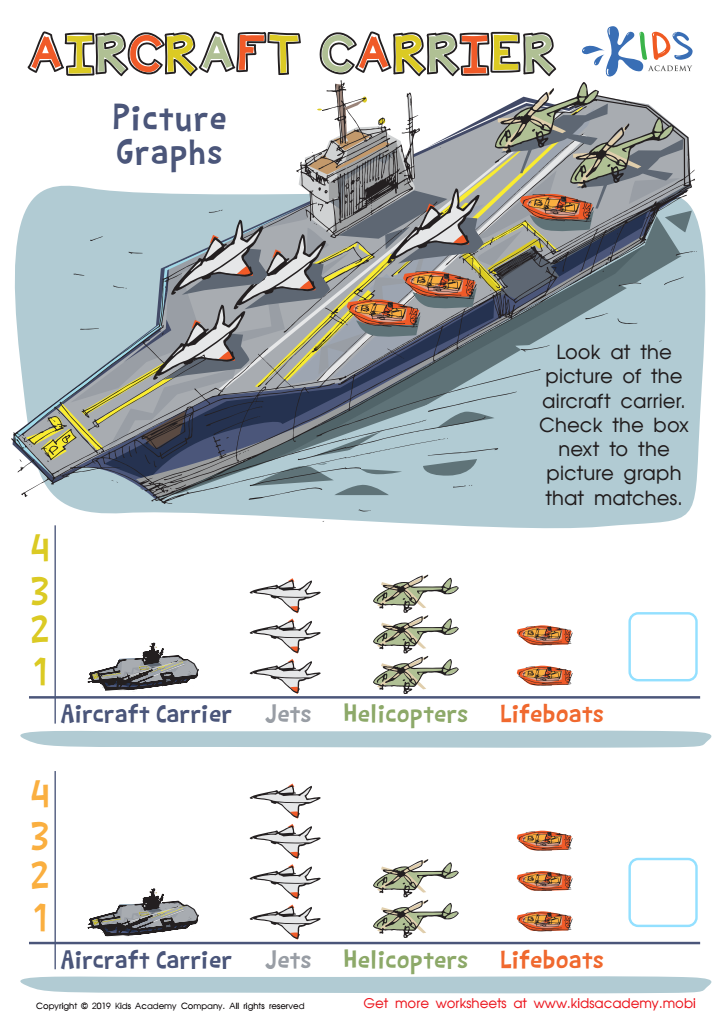
Aircraft Carrier Picture Graphs Worksheet
Kids love learning about jets and boats with this awesome worksheet! It's a great way to engage them as they work on picture graphs. Representing numerical values with pictures, this free PDF requires them to choose which picture graph and representation best match the carrier in the picture. It's also great practice for visual discrimination!
 Assign to My Students
Aircraft Carrier Picture Graphs Worksheet
Worksheet
Join Kids Academy for Free
Who is primarily going to use this learning content?








Comparison skills addition is an important mathematical concept that helps children understand the relationships between numbers and their values. For 9-year-olds, focusing on these skills encourages critical thinking and problem-solving abilities. Parents and teachers should prioritize these skills for several reasons:
Firstly, comparison skills foster a deeper comprehension of mathematical concepts, moving beyond rote memorization to a genuine understanding of how numbers work together. This foundation is critical for tackling more complex subjects as they progress through higher grades.
Secondly, by mastering comparison skills, children develop the ability to think logically and analyze different scenarios. They learn how to assess which quantities are greater, lesser, or equal, which is essential not just for math but for everyday decision-making and reasoning abilities.
Thirdly, these skills contribute to a child's confidence in their mathematical abilities. When children feel competent in their comparison skills, they are more likely to tackle challenging problems, participate in class discussions, and maintain a positive attitude toward learning.
Lastly, proficiency in comparison not only enhances current academic performance but also sets the stage for future success in subjects such as algebra and science. Thus, nurturing these skills early on provides a long-term benefit to a child's educational journey, promoting a lifelong love of learning and intellectual curiosity.








