Filters

19 filtered results

Clear all filters
Favorites
With answer key
Interactive

19 filtered results

Difficulty Level

Grade


Enhance your 9-year-old’s math skills with our engaging Counting Practice Addition Worksheets. Perfectly tailored for young learners, these worksheets offer a fun and interactive way to master addition. From simple sums to more challenging problems, each sheet encourages practice and builds confidence in mathematical abilities. These printable resources are designed to make learning enjoyable, providing children with the tools they need to succeed in school and beyond. Help your child excel in math with our expertly crafted Counting Practice Addition Worksheets. Suitable for home or classroom use, they promise impressive progress through consistent practice.
Check out this FREE Trial Lesson on Addition for age 9!

D

Favorites
With answer key
Interactive
  • 9
  • Counting practice
  • Addition
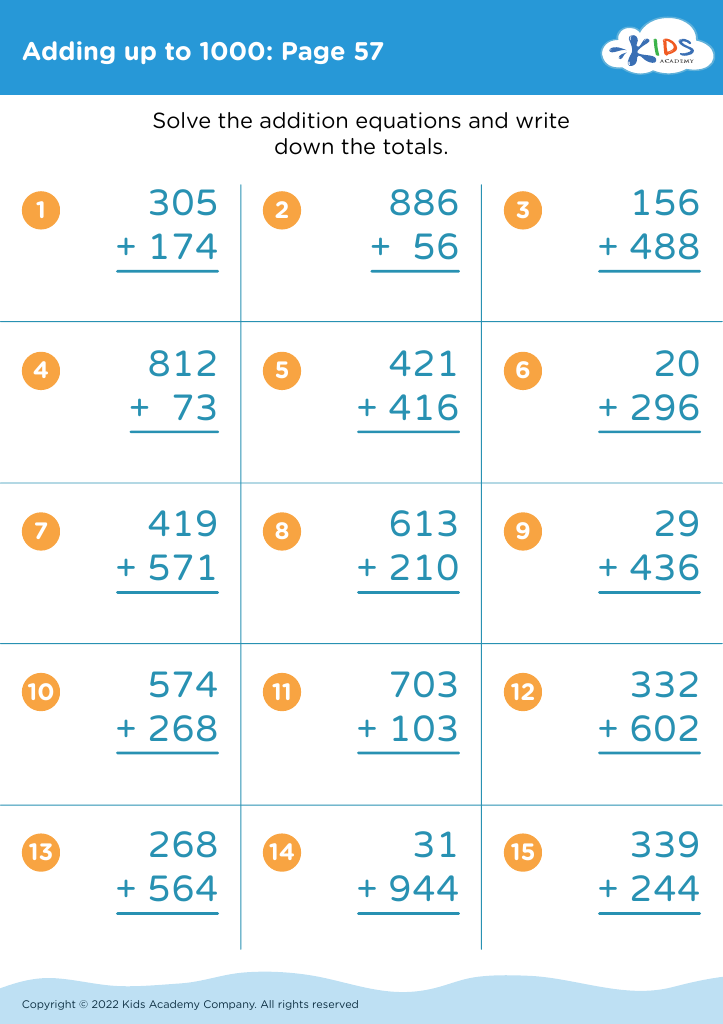
Adding up to 1000: Page 57

Adding up to 1000: Page 57

Adding up to 1000: Page 57
Worksheet
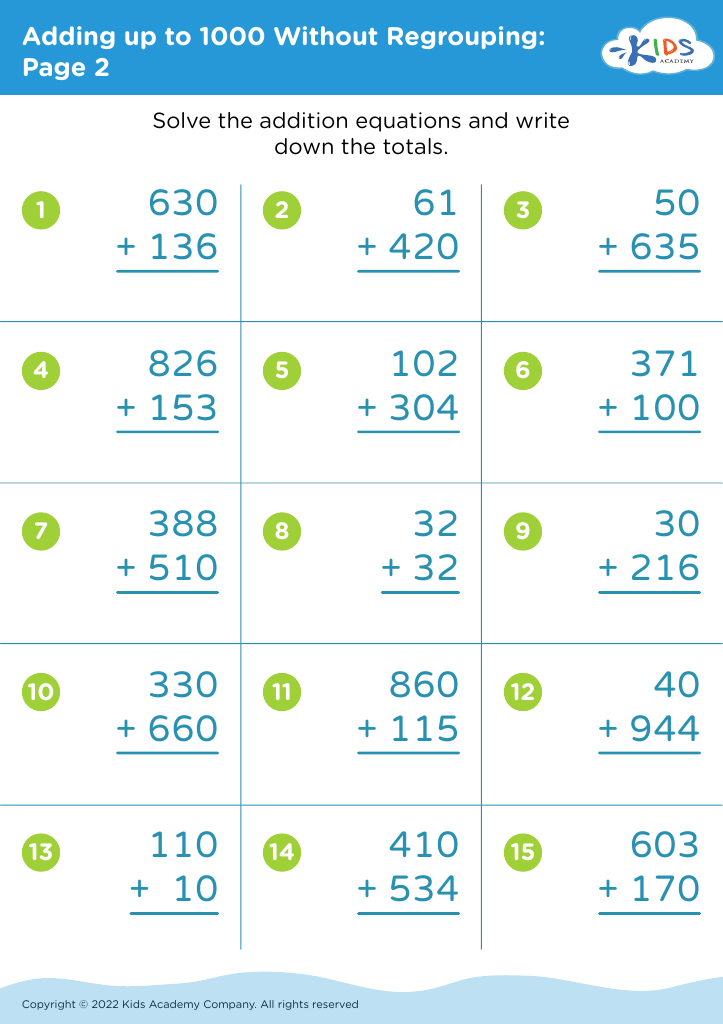
Adding up to 1000 Without Regrouping: Page 2
Worksheet
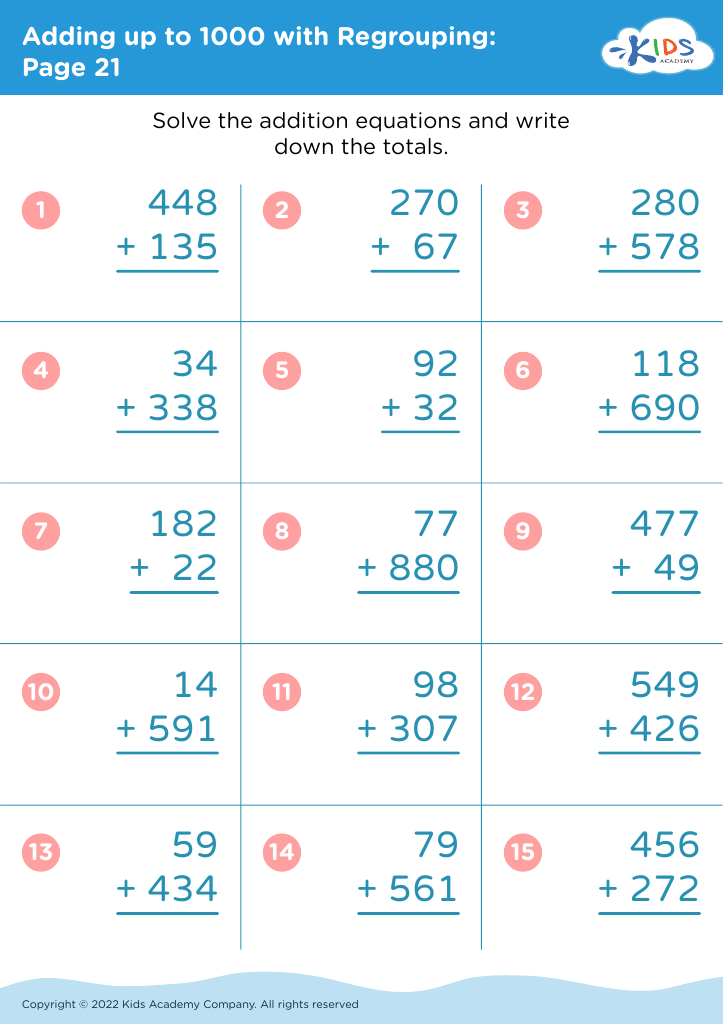
Adding up to 1000 with Regrouping: Page 21
Worksheet
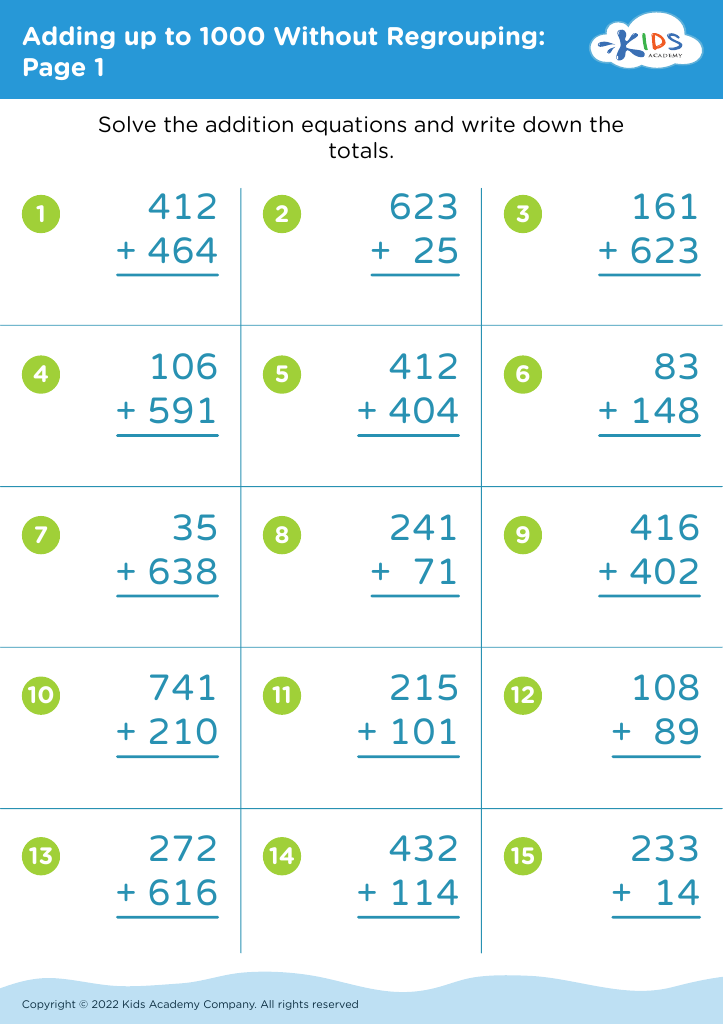
Adding up to 1000 Without Regrouping: Page 1
Worksheet
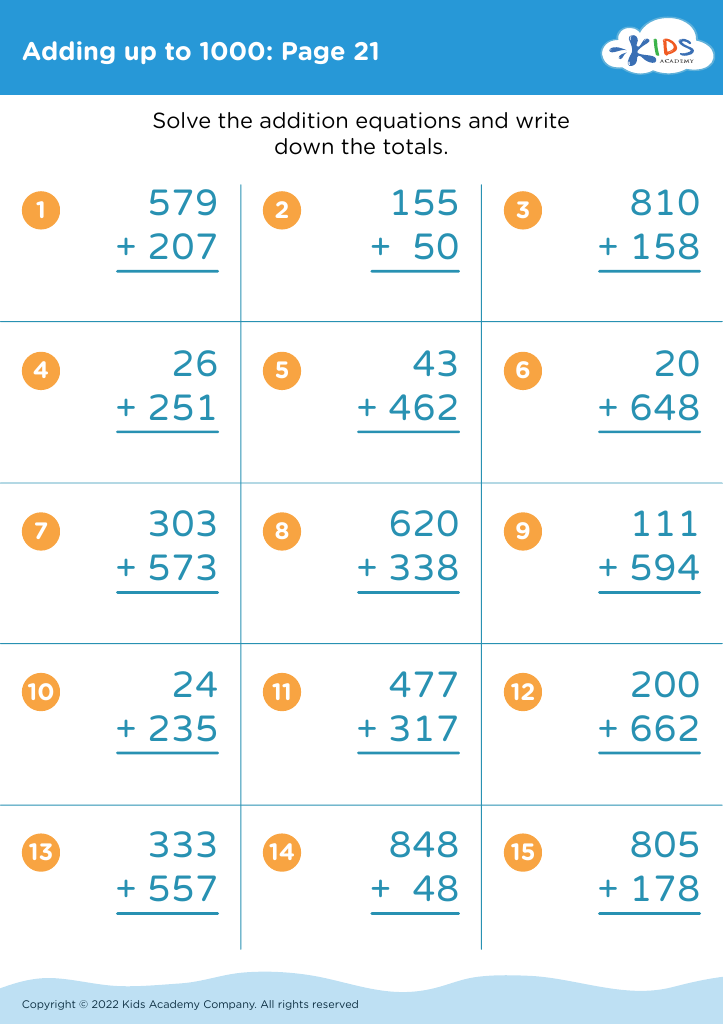
Adding up to 1000: Page 21

Adding up to 1000: Page 21

Adding up to 1000: Page 21
Worksheet
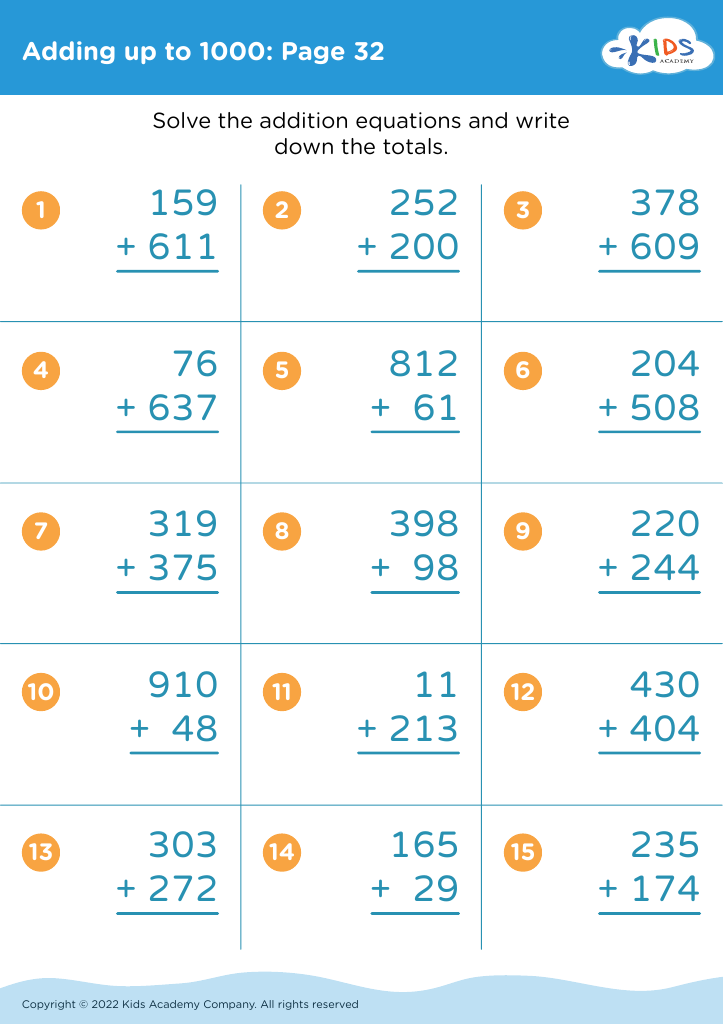
Adding up to 1000: Page 32

Adding up to 1000: Page 32

Adding up to 1000: Page 32
Worksheet
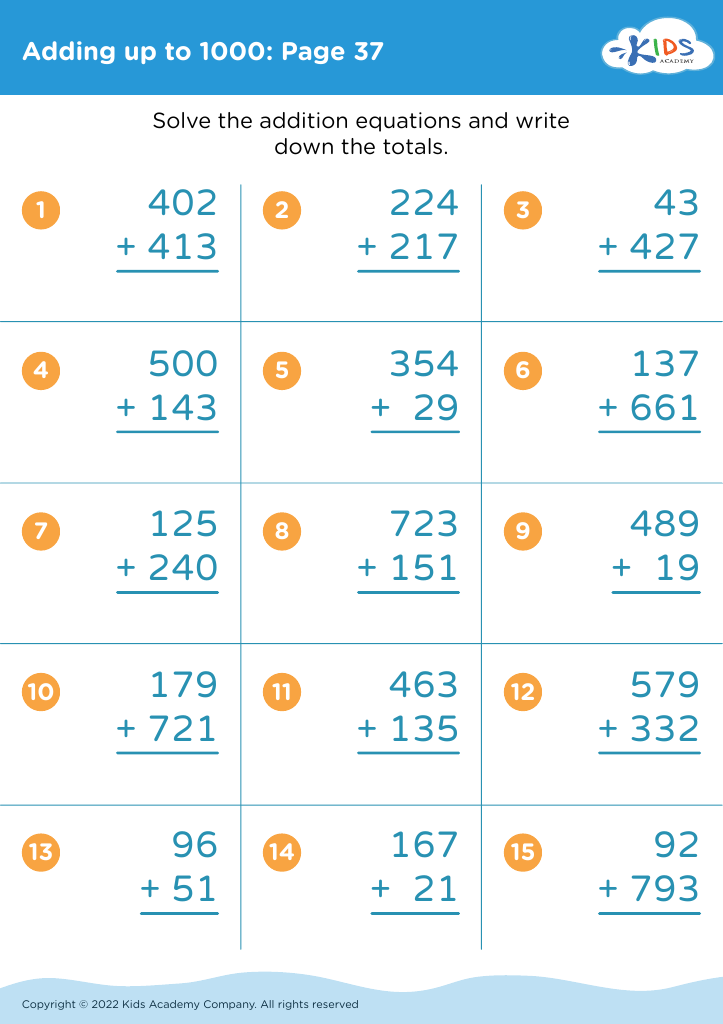
Adding up to 1000: Page 37

Adding up to 1000: Page 37

Adding up to 1000: Page 37
Worksheet
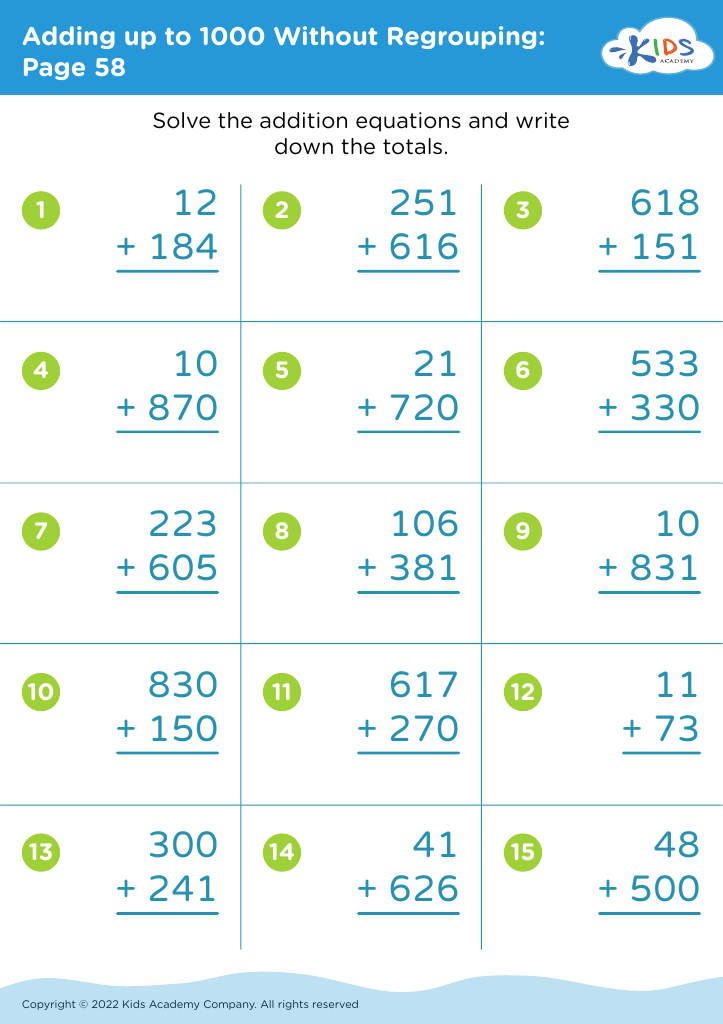
Adding up to 1000 Without Regrouping: Page 58
Worksheet
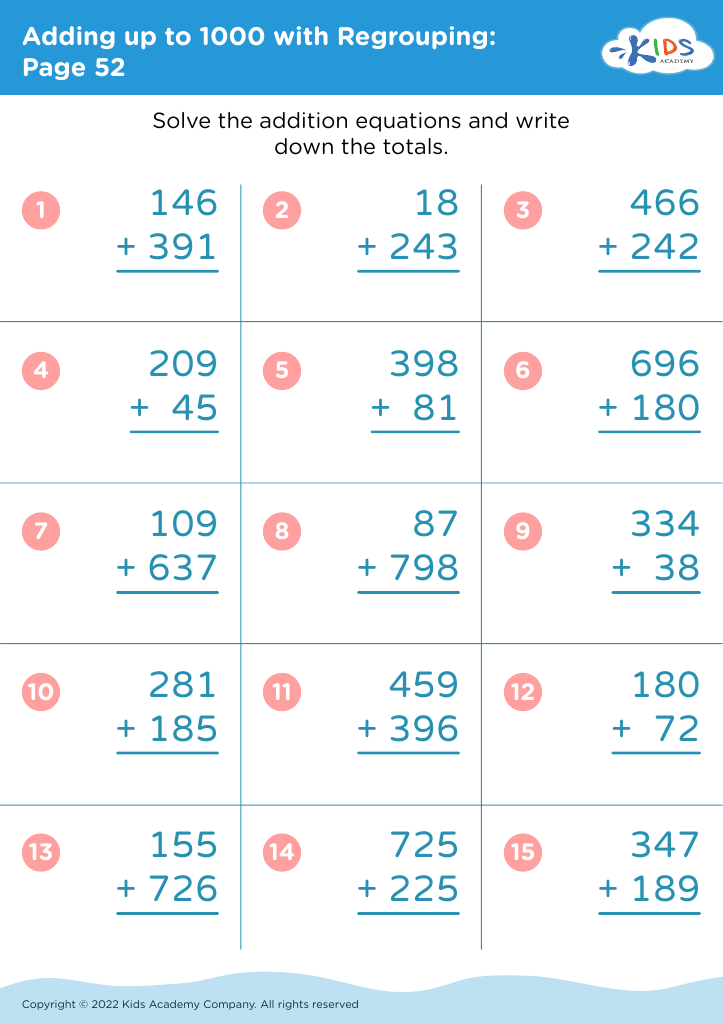
Adding up to 1000 with Regrouping: Page 52
Worksheet
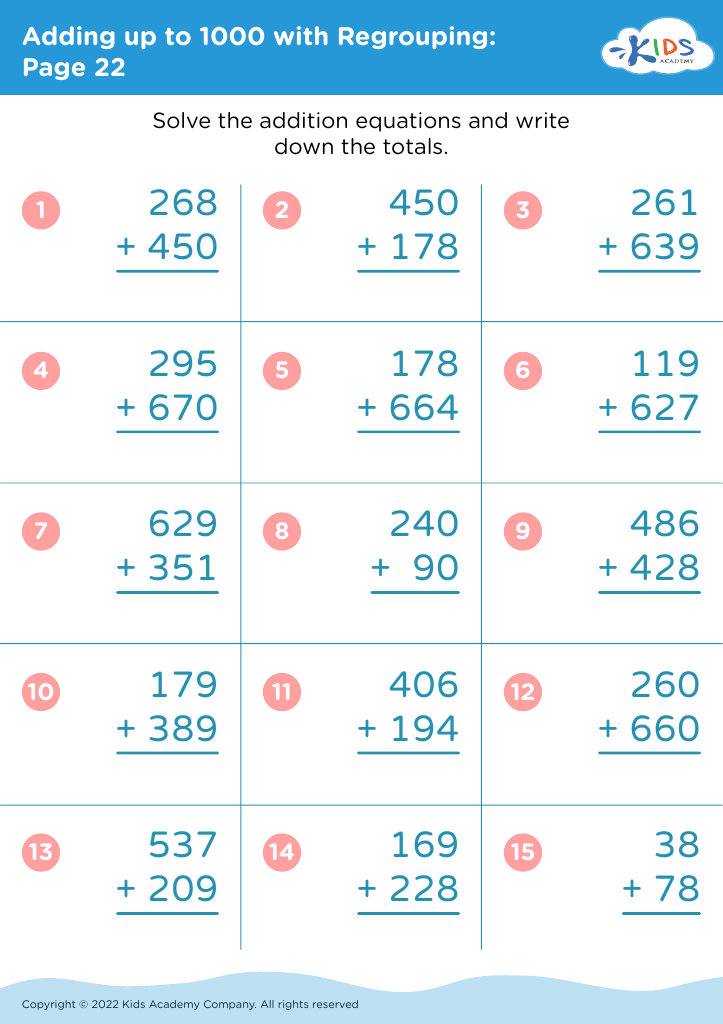
Adding up to 1000 with Regrouping: Page 22
Worksheet
Adding up to 1000: Page 50

Adding up to 1000: Page 50

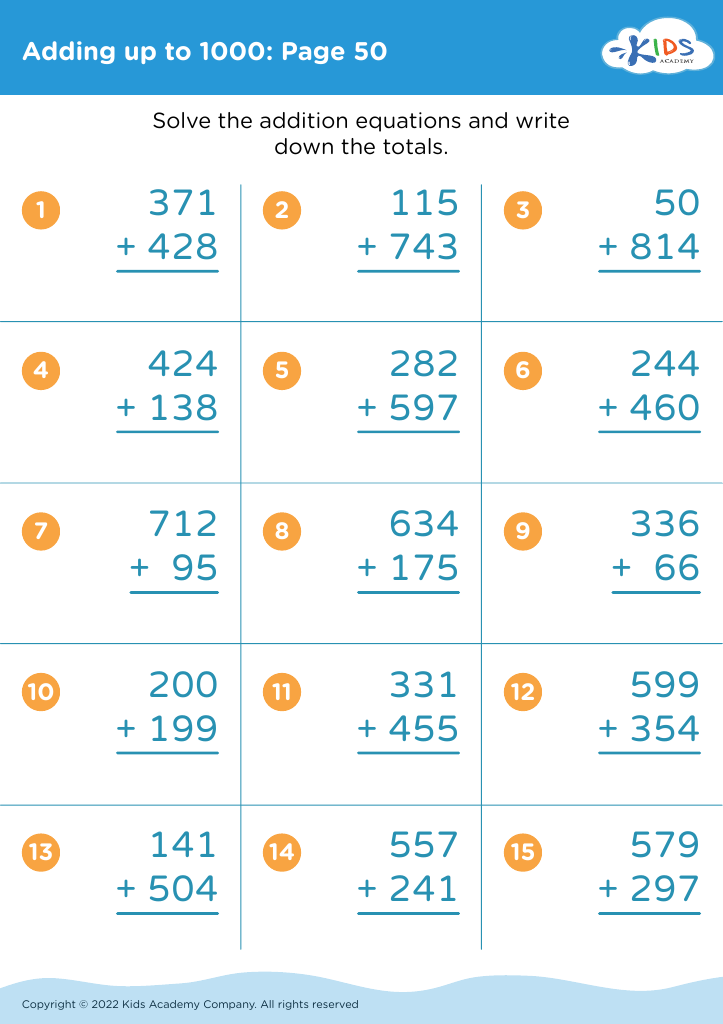
Adding up to 1000: Page 50
Worksheet
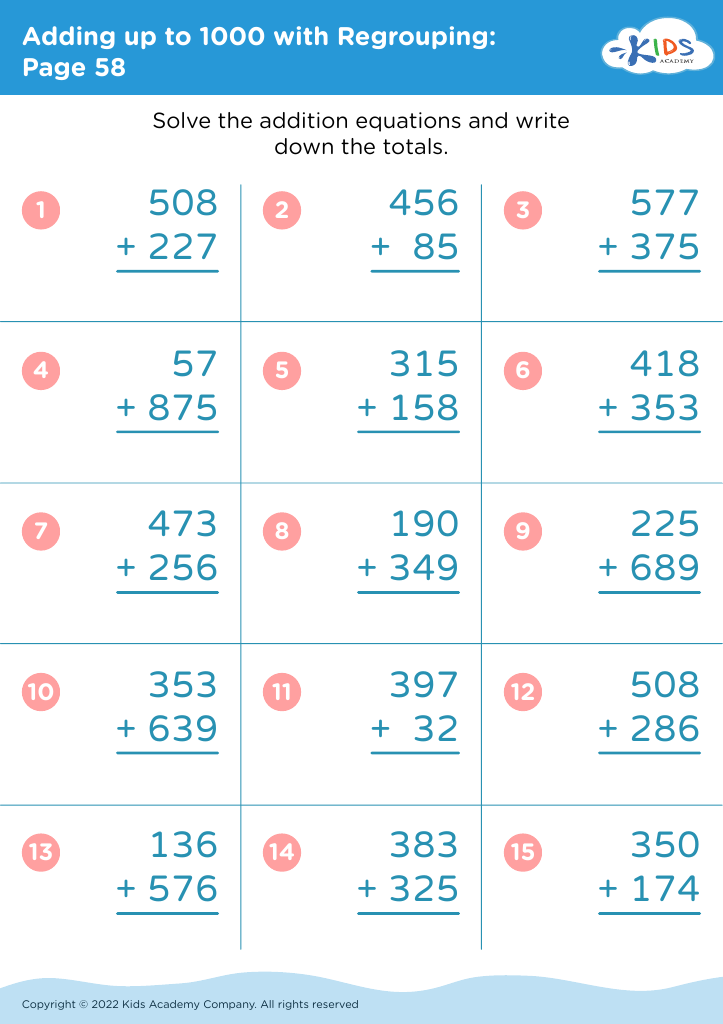
Adding up to 1000 with Regrouping: Page 58
Worksheet
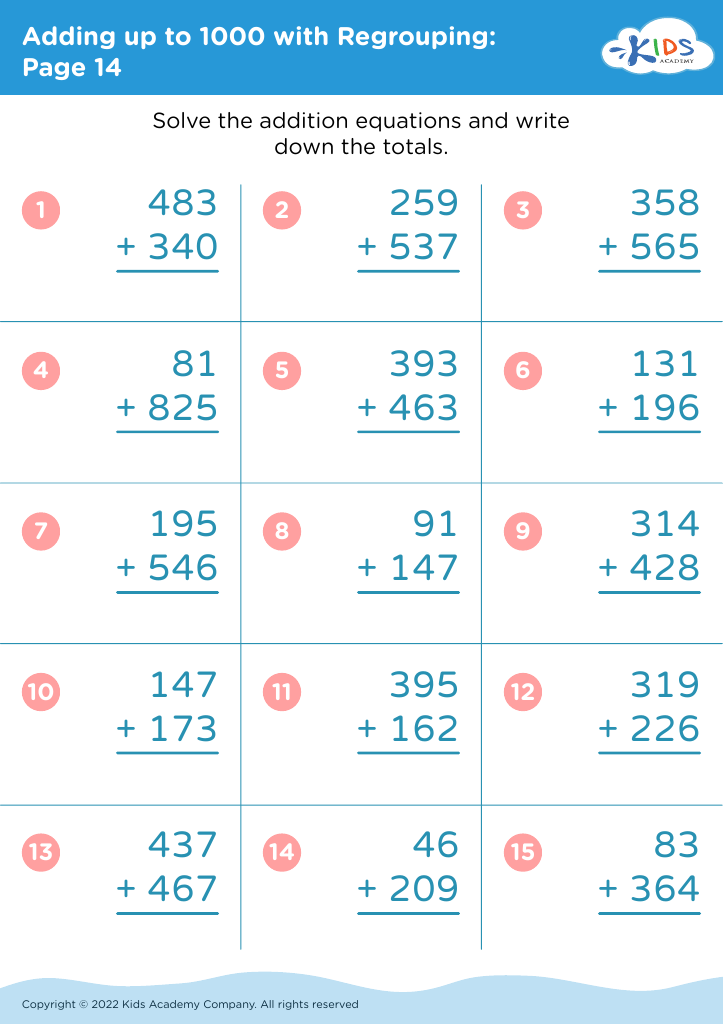
Adding up to 1000 with Regrouping: Page 14
Worksheet
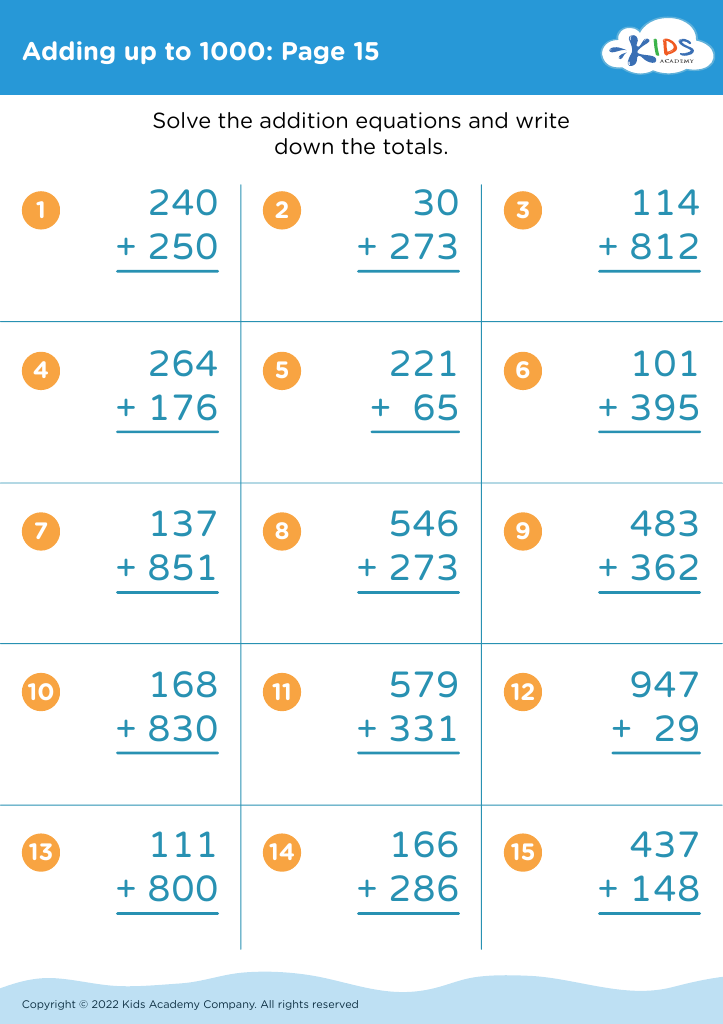
Adding up to 1000: Page 15

Adding up to 1000: Page 15

Adding up to 1000: Page 15
Worksheet
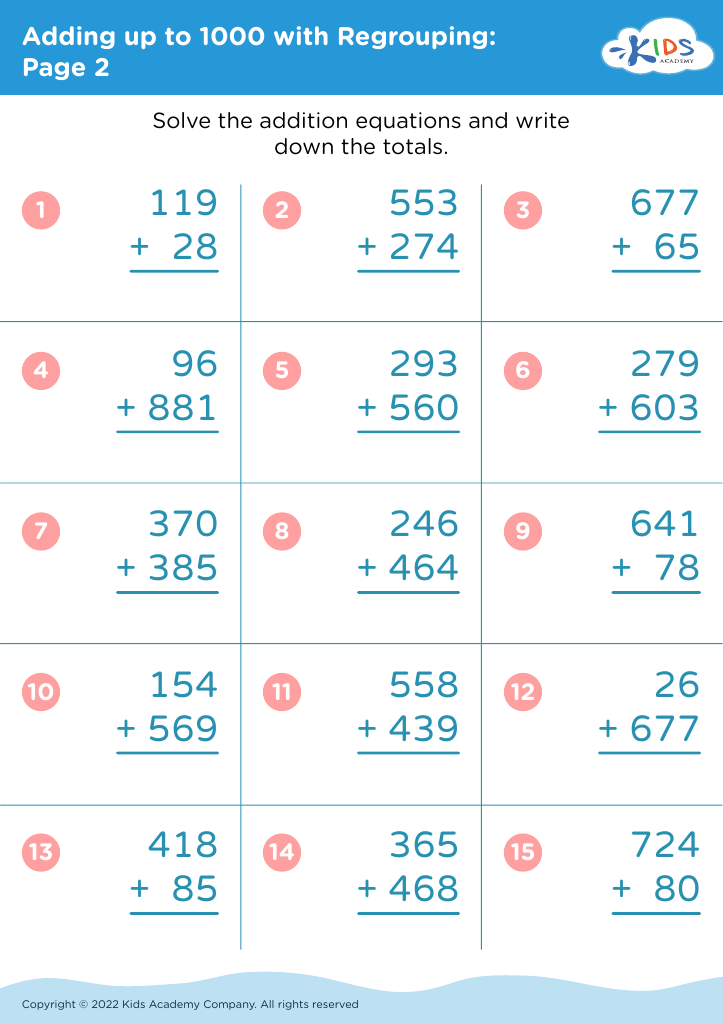
Adding up to 1000 with Regrouping: Page 2
Worksheet
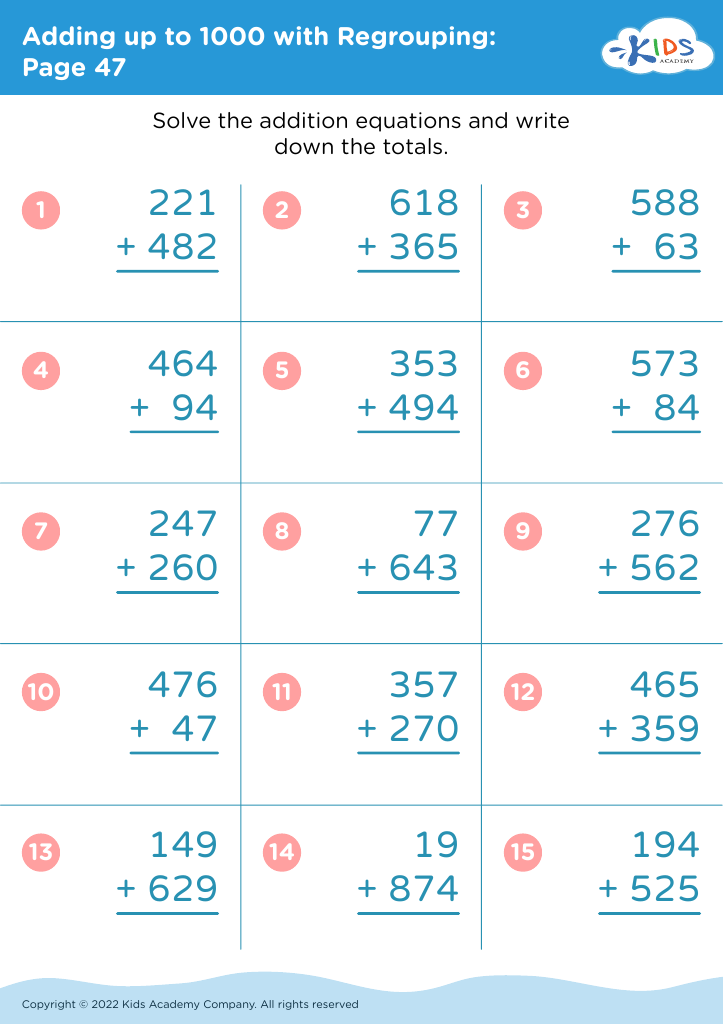
Adding up to 1000 with Regrouping: Page 47
Worksheet
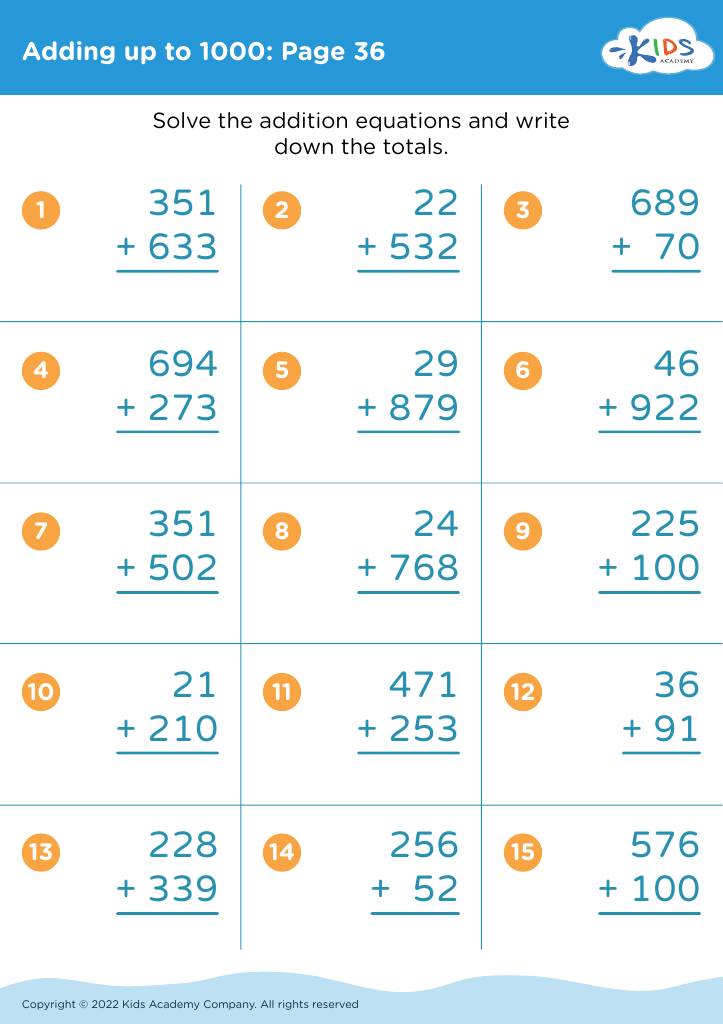
Adding up to 1000: Page 36

Adding up to 1000: Page 36

Adding up to 1000: Page 36
Worksheet
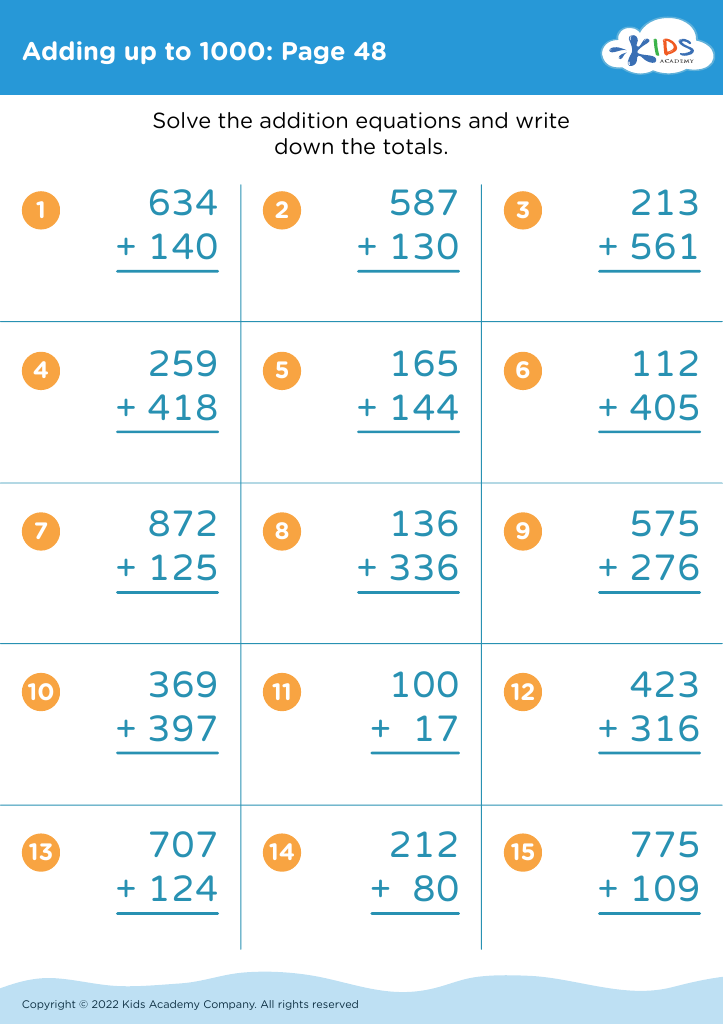
Adding up to 1000: Page 48

Adding up to 1000: Page 48

Adding up to 1000: Page 48
Worksheet
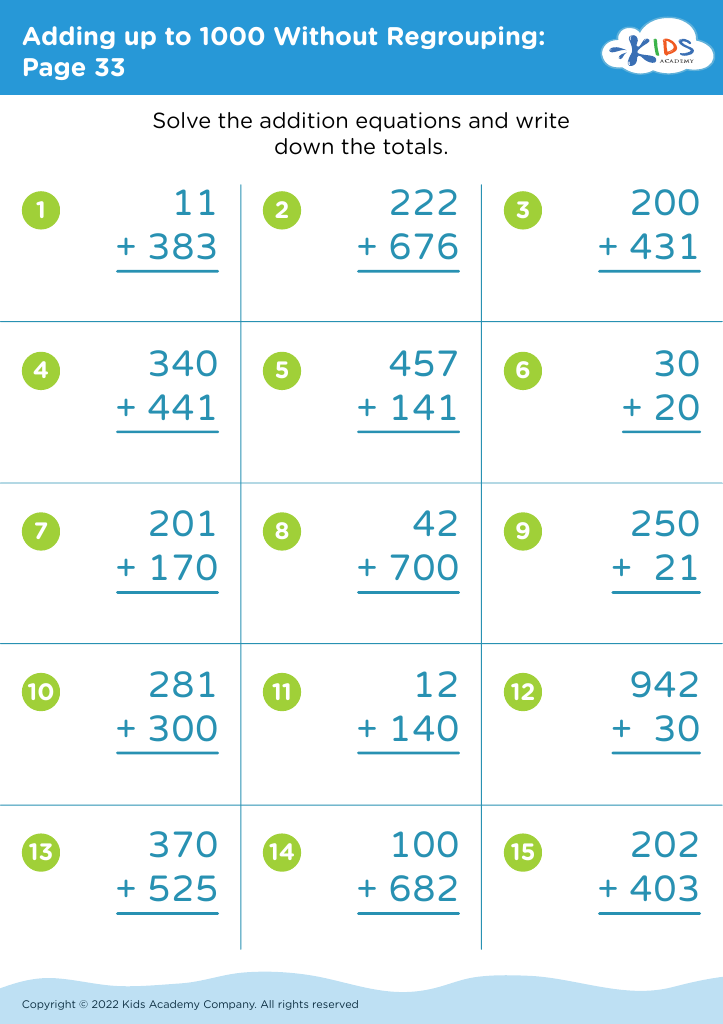
Adding up to 1000 Without Regrouping: Page 33
Worksheet


Counting practice and addition for 9-year-olds are fundamental for several reasons. First, they form the foundation for more complex mathematical concepts. Without a solid grasp of basic addition, children can struggle with multiplication, division, fractions, and problem-solving tasks that they'll encounter in advanced grades. Counting and addition improve number sense, helping kids understand quantities, value, and the relationships between numbers.

Moreover, proficiency in addition boosts confidence. When children can successfully complete tasks, it fosters a positive attitude toward math. This confidence often spills over into other subjects, enhancing their overall academic enthusiasm and resilience.

From a cognitive development perspective, practicing addition enhances children’s memory, attention to detail, and logical thinking. These skills are crucial not just in math, but across various real-life situations, such as managing money or planning time.

Lastly, early mastery of counting and addition supports everyday life skills. Whether it's dividing snacks among friends, measuring ingredients for a recipe, or calculating change at a store, these skills are used daily. Parents and teachers play a critical role in providing engaging opportunities and resources, fostering a deep, intuitive understanding of math that benefits children both academically and in their everyday lives.