Fine Motor Skills Addition Worksheets for 9-Year-Olds
13 filtered results
-
From - To
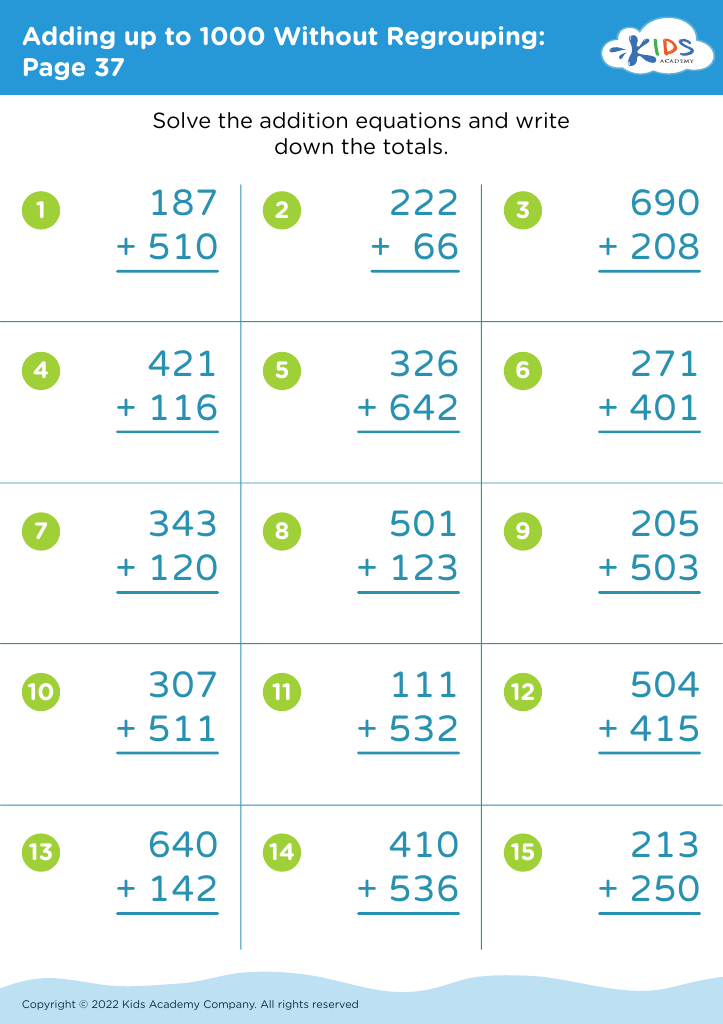
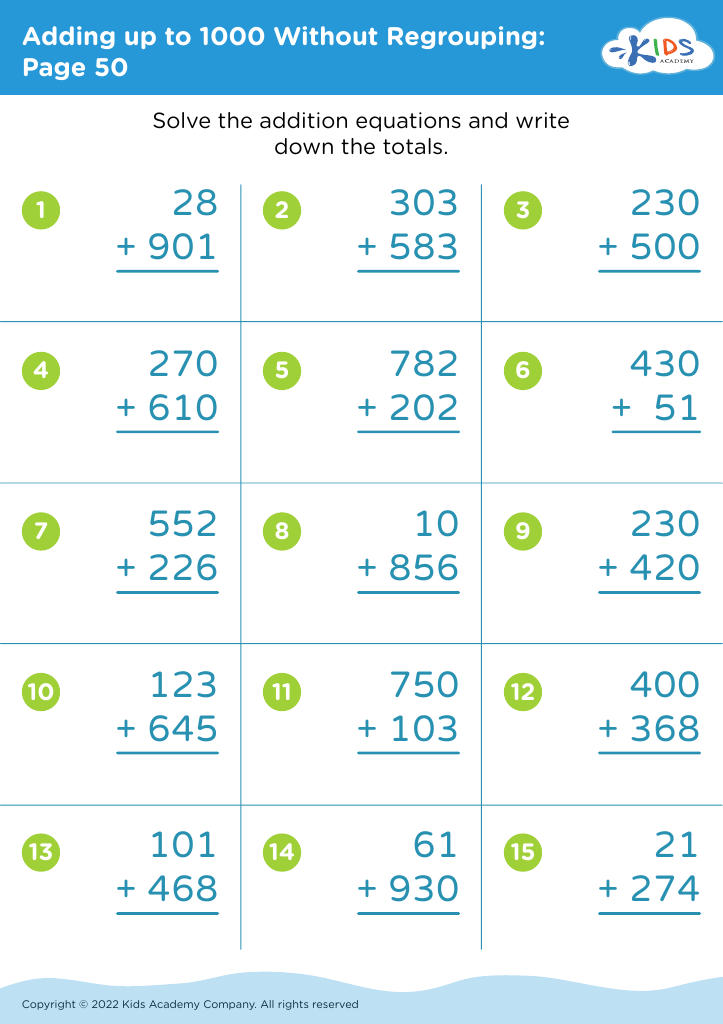
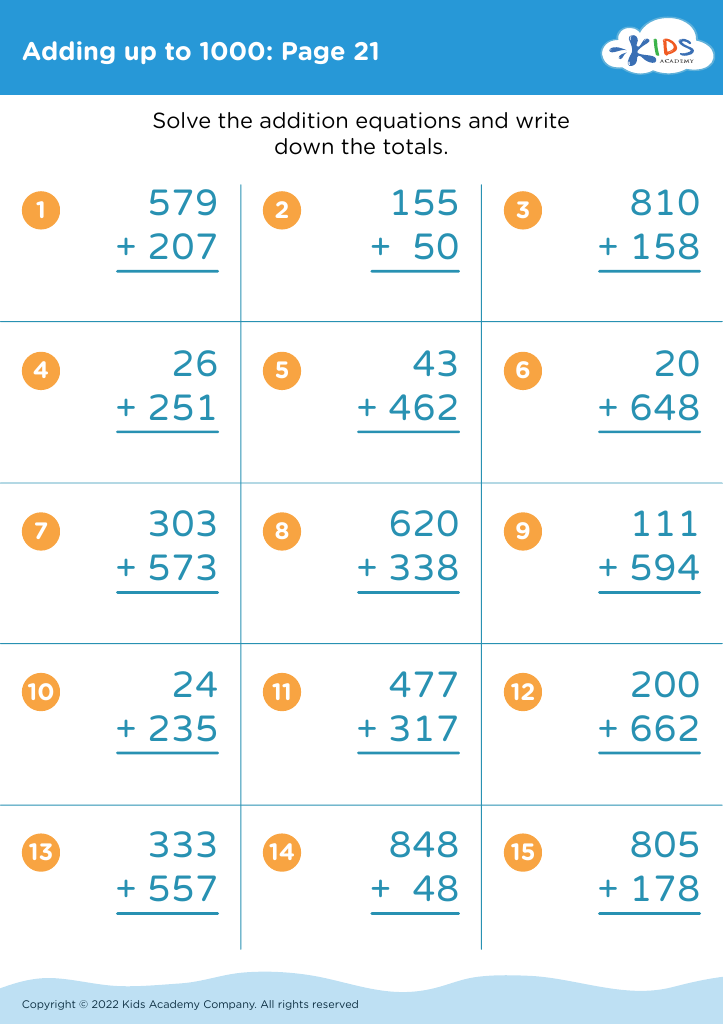
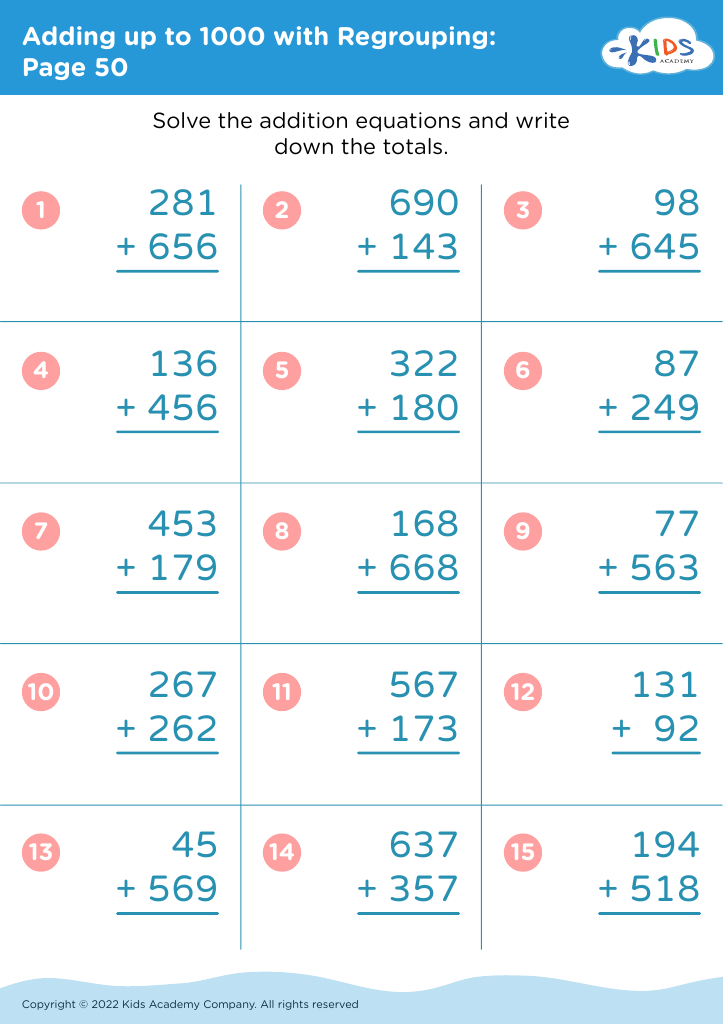
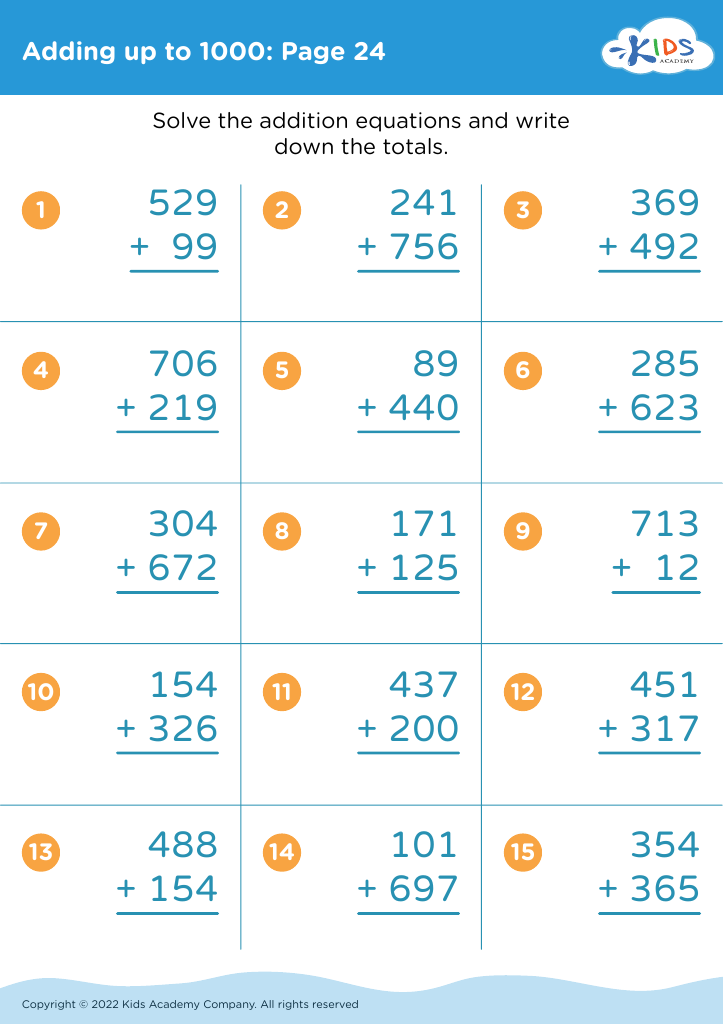
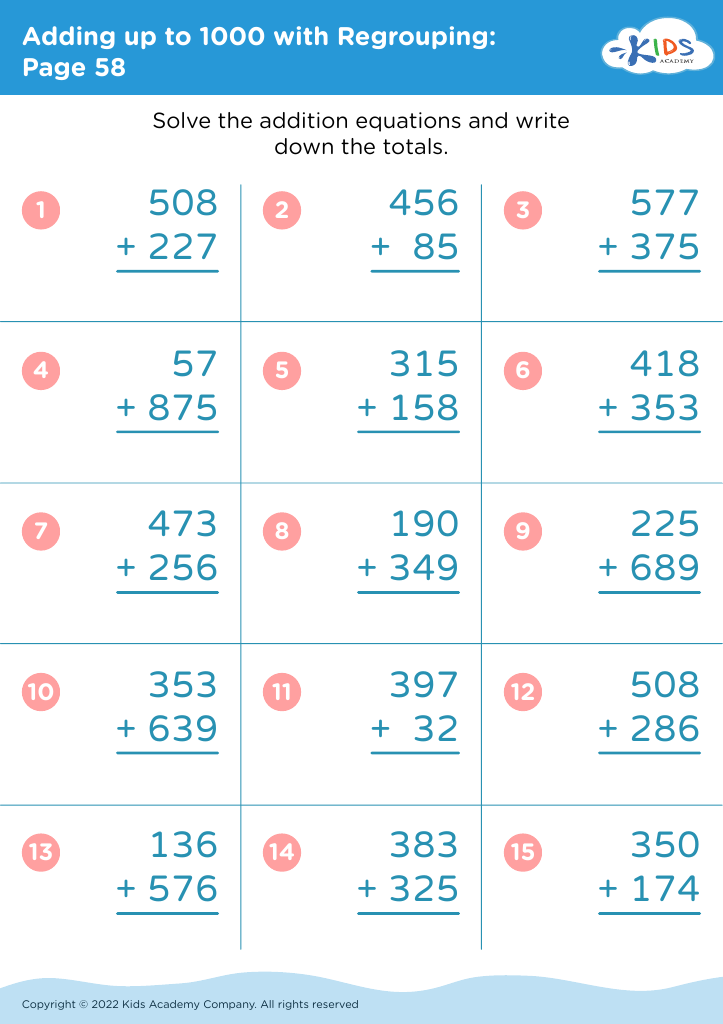
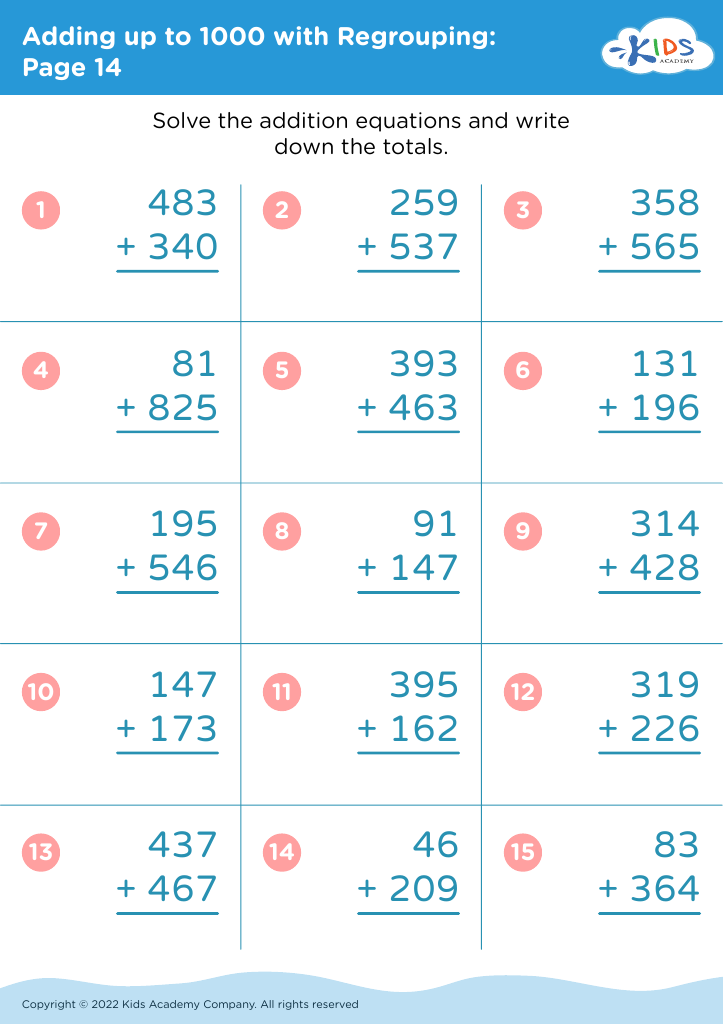
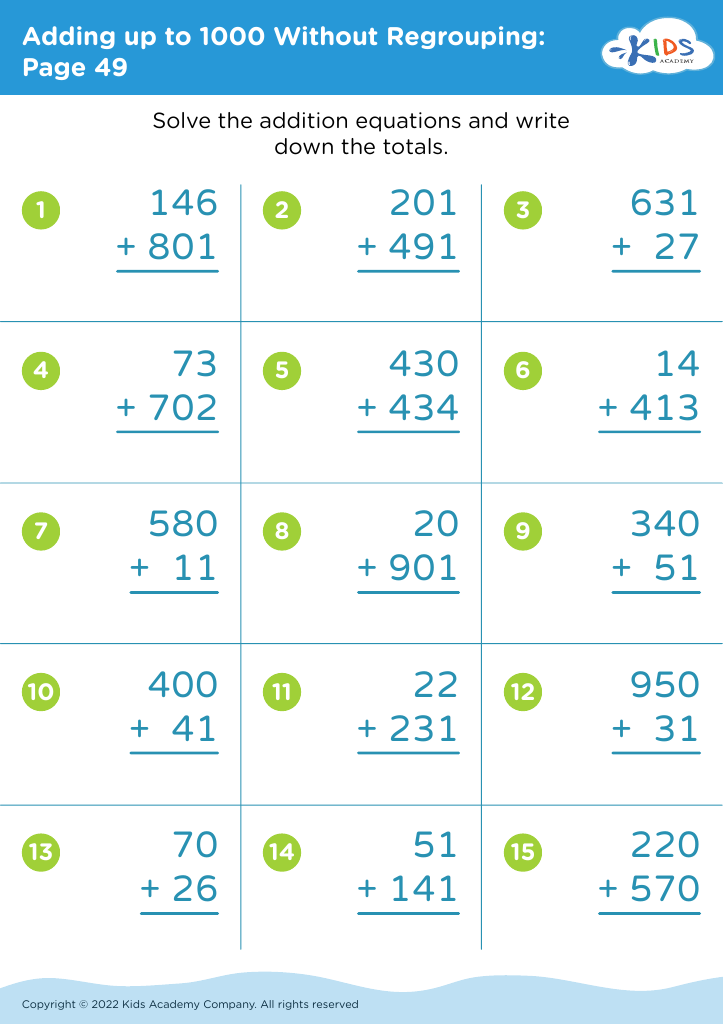
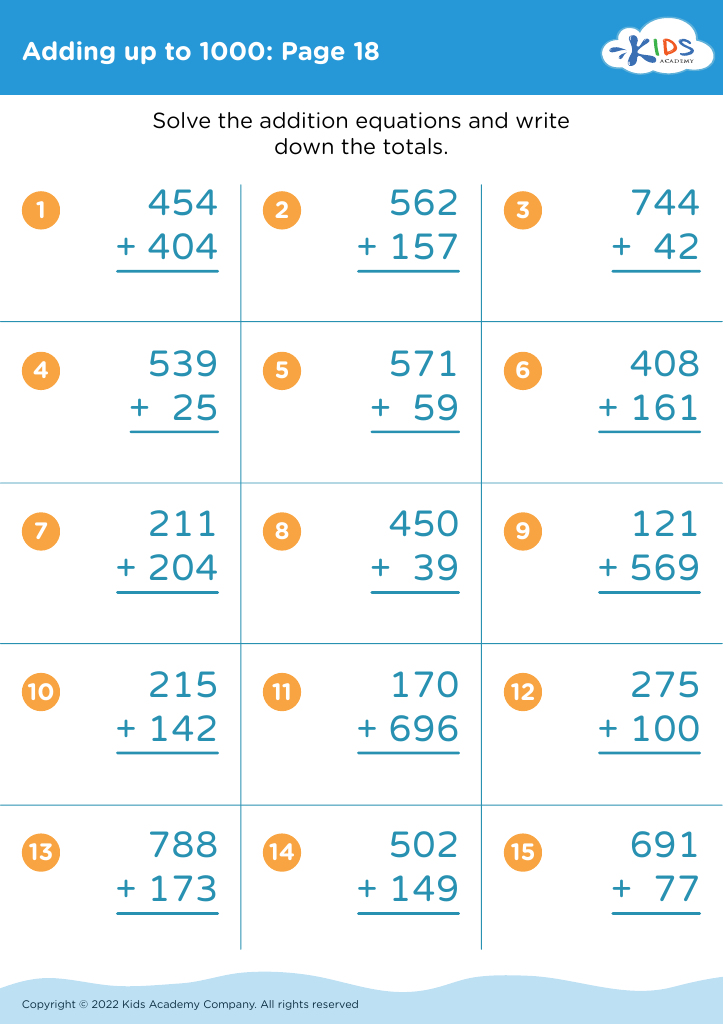
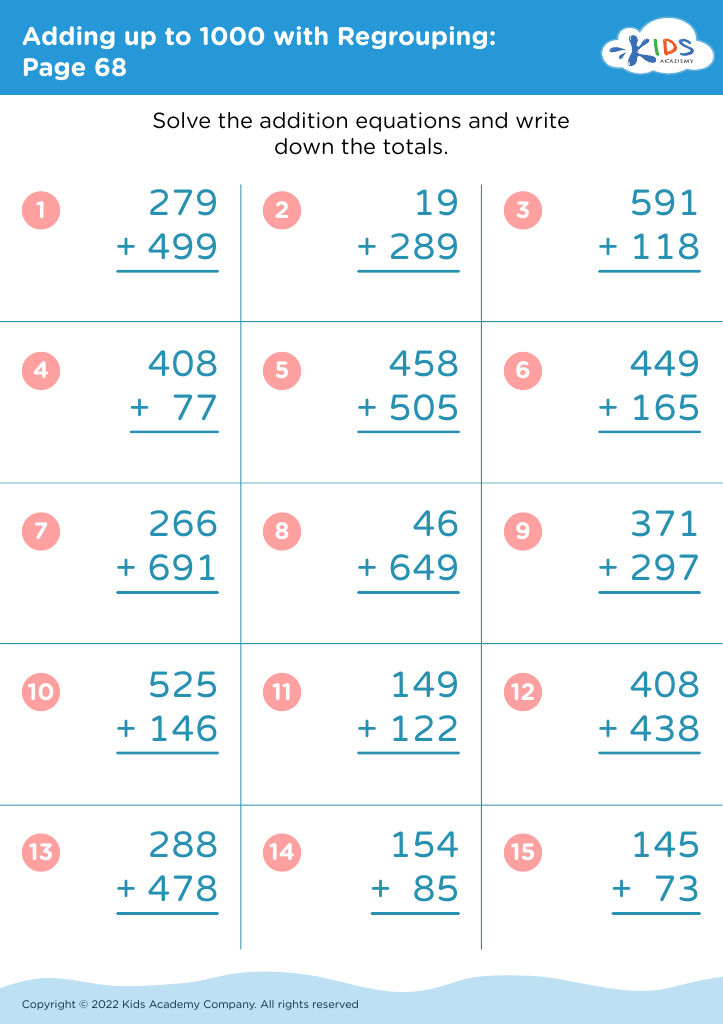
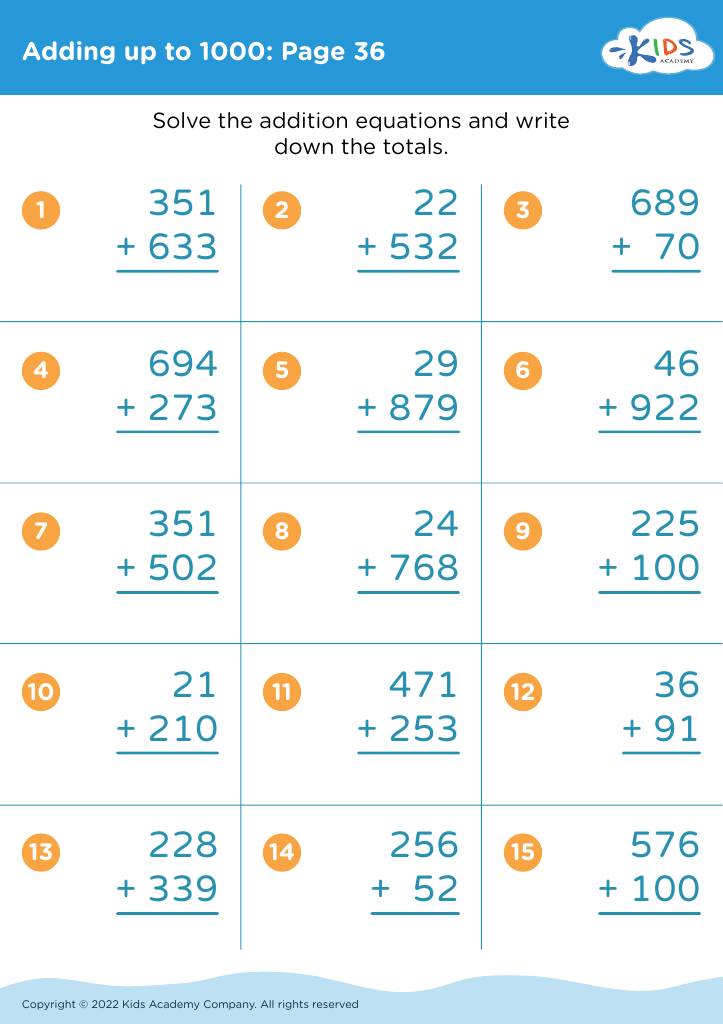
Unlock the potential of your 9-year-old with our Fine Motor Skills Addition Worksheets! Specifically designed to combine math practice with fine motor skill development, these worksheets provide engaging addition exercises that also boost hand-eye coordination and pencil control. Filled with fun, interactive tasks, children will master addition while strengthening skills critical for writing and daily activities. Ideal for both classroom and home use, these worksheets ensure a holistic educational experience, blending cognitive growth with physical development. Empower your child’s learning journey with our expertly crafted worksheets and watch them thrive!
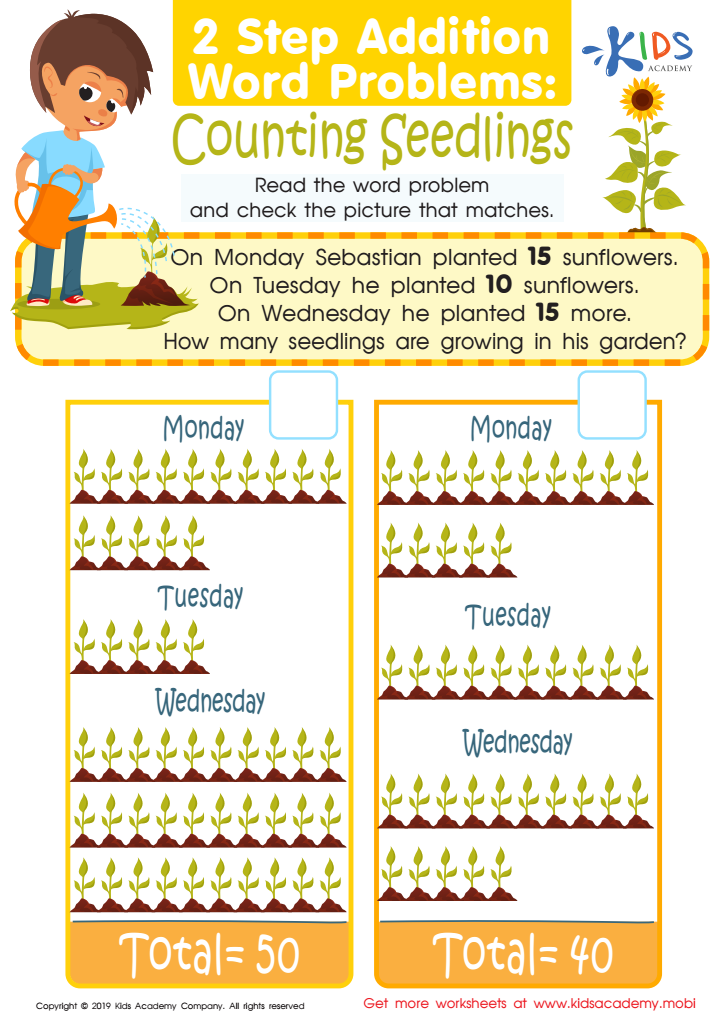
Counting Seedlings Worksheet
 Assign to My Students
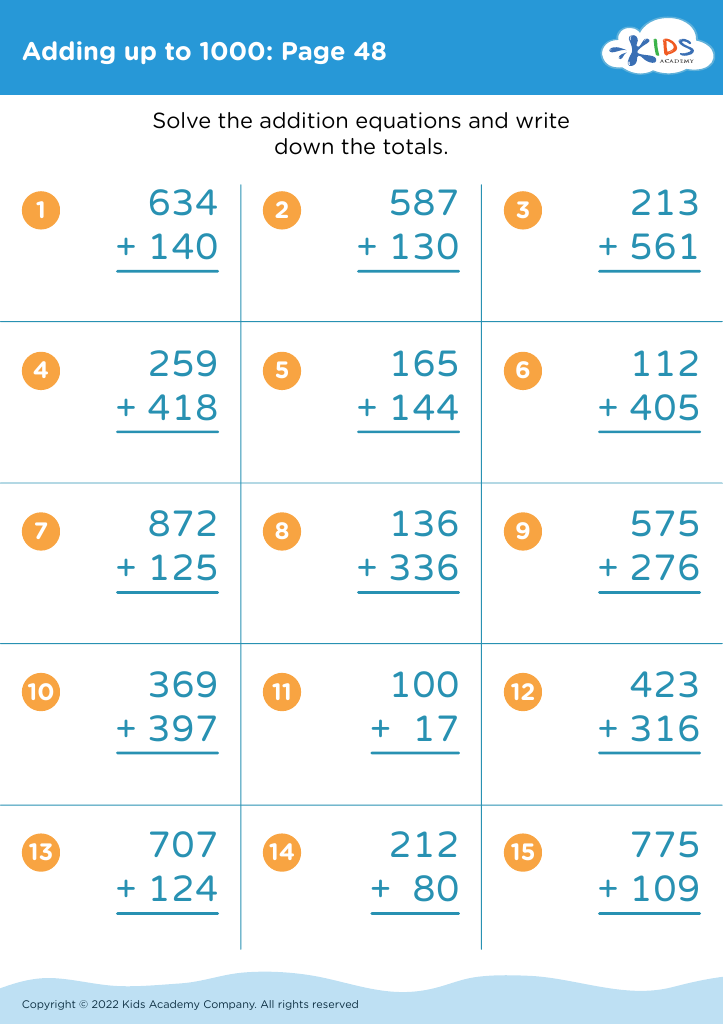








Fine motor skills, which involve the coordination of small muscles in movements—typically in the hands and fingers—are essential for a child's overall development, particularly around the age of 9. Parents and teachers should prioritize fine motor skill development for several key reasons.
Firstly, fine motor skills are crucial for academic success. At this age, children are expected to engage in activities such as writing, drawing, and using scissors, which all require precise hand control. Improving these skills can lead to better handwriting, which is integral for effective communication in the classroom.
Secondly, fine motor skills are linked to cognitive development. Manipulating objects and engaging in detailed tasks can enhance a child's ability to focus, follow instructions, and solve problems. These cognitive benefits extend to other areas, such as math and reading, by improving a child's capacity to manage and understand space and sequences.
Additionally, strong fine motor skills boost a child's independence and self-esteem. Tasks like tying shoelaces, buttoning clothes, and taking care of personal hygiene become easier, fostering a sense of autonomy and confidence.
Lastly, developing fine motor skills through playful and enjoyable activities like arts and crafts, puzzles, and specific exercises can make learning feel like a fun and engaging process rather than a chore. This holistic approach leads to a more positive attitude toward school and lifelong learning. Hence, focusing on fine motor skill addition for 9-year-olds offers a multi-faceted approach to enhancing their academic, cognitive, and personal growth.








