Number Sequencing Addition Worksheets for 9-Year-Olds
5 filtered results
-
From - To
Enhance your 9-year-old’s math skills with our engaging Number Sequencing Addition Worksheets! Designed to foster a solid understanding of number sequences and addition, these worksheets provide fun and challenging exercises. Kids will learn to recognize patterns, improve their mathematical reasoning, and boost their problem-solving abilities. With a variety of activities that cater to different learning styles, our worksheets will keep young learners motivated and excited about math. Perfect for at-home practice or classroom use, these resources will support your child's mathematical journey while instilling confidence and competence in their addition skills. Download now and watch mathematical mastery unfold!
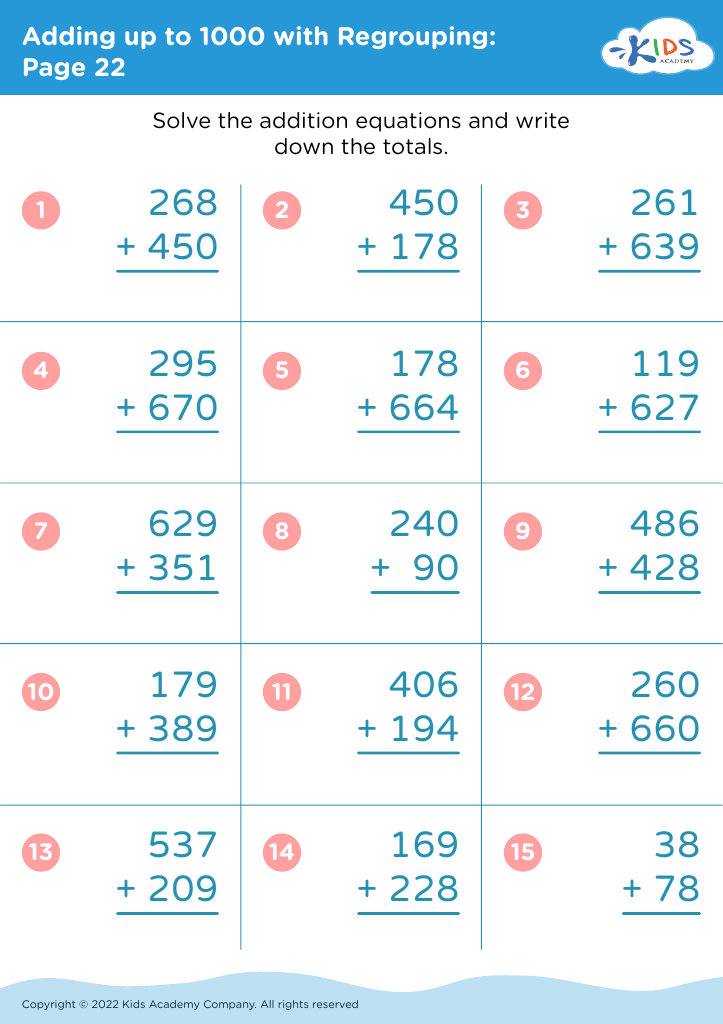
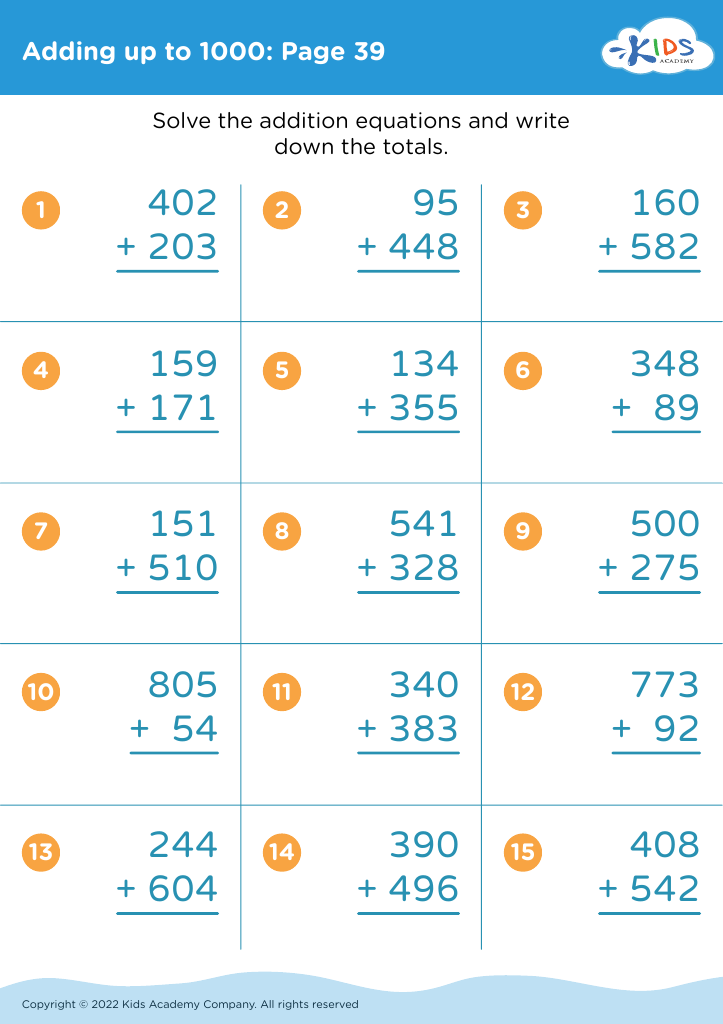
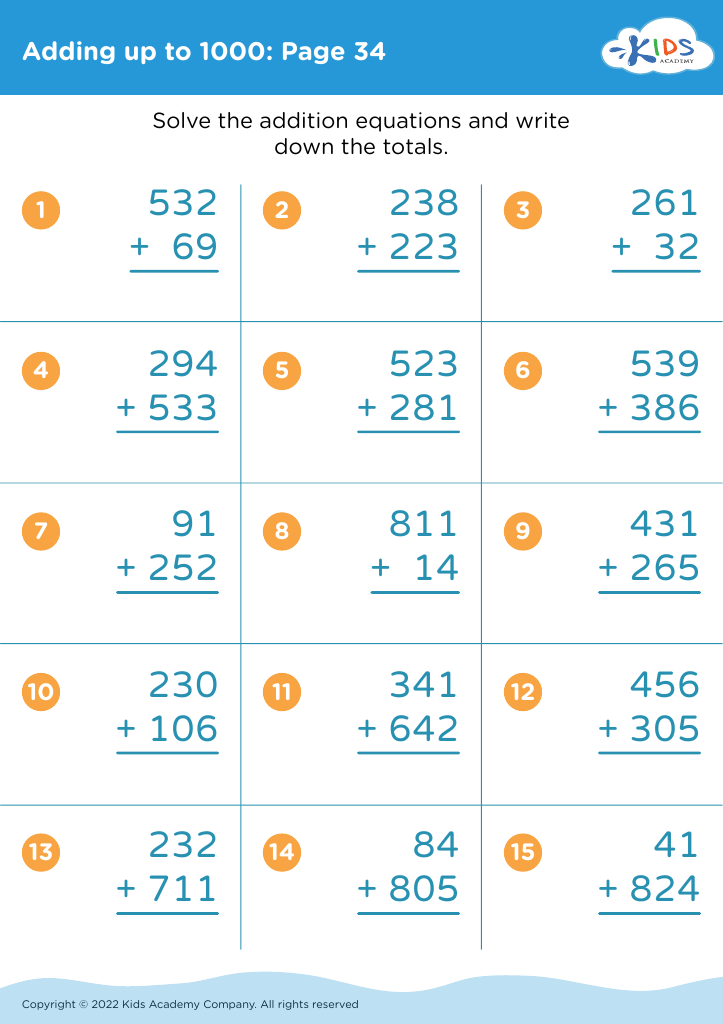
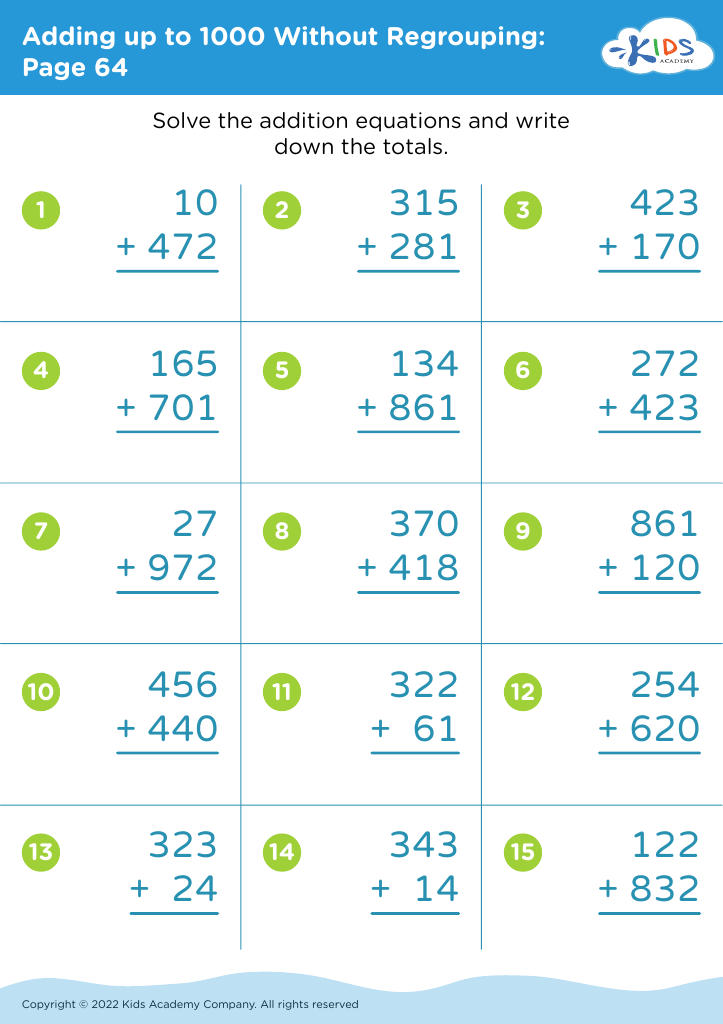
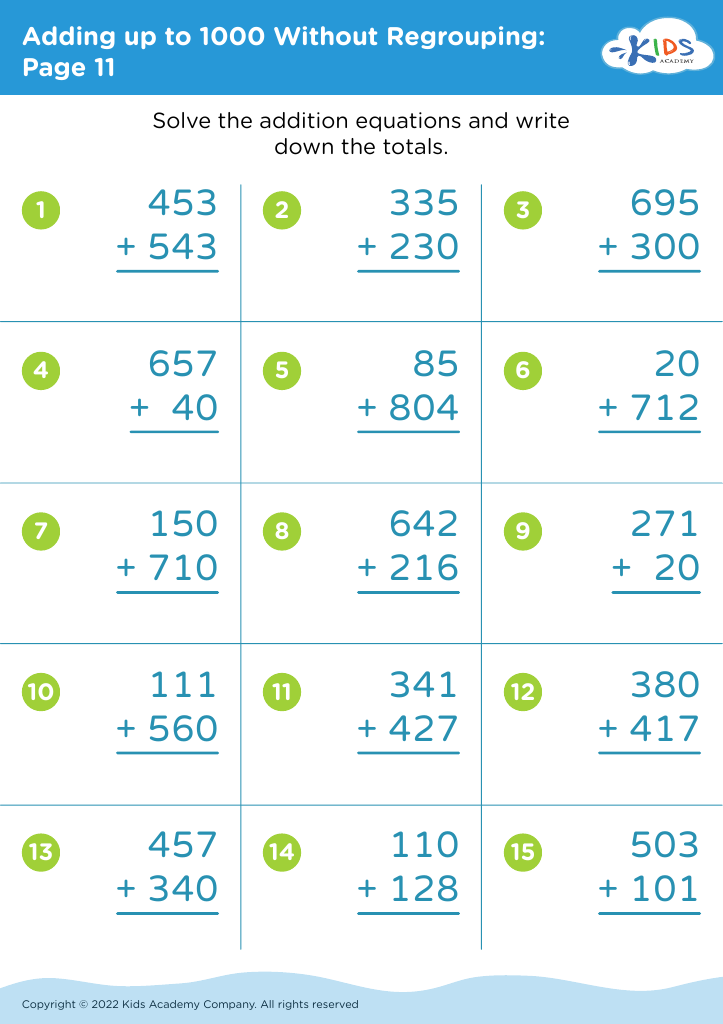








Number Sequencing Addition is crucial for 9-year-olds as it lays the groundwork for advanced mathematical concepts. At this age, children are transitioning from basic arithmetic to more complex problem-solving skills. Understanding number sequences, particularly in addition, helps enhance their cognitive abilities and promotes logical thinking.
Parents and teachers should care because mastering this skill aids in improving children's overall mathematical fluency, paving the way for success in future grades. It allows students to recognize patterns, which is essential not only in mathematics but in other subjects like science and even reading comprehension. Sequential thinking fosters an ability to make predictions based on prior knowledge—an essential life skill.
Moreover, children who grasp sequencing are better equipped to tackle word problems and real-life scenarios involving addition, such as budgeting or planning events. This promotes confidence in their math abilities and reduces math anxiety.
Finally, engaging children in number sequencing can be a fun and interactive way to strengthen family bonds or classroom dynamics. By combining learning with enjoyable activities, parents and teachers create a supportive environment that nurtures a lifelong appreciation for mathematics. Thus, focusing on Number Sequencing Addition is beneficial for intellectual development and emotional well-being.








