Practice subtraction Addition Worksheets for 9-Year-Olds
3 filtered results
-
From - To
Welcome to our Practice Subtraction Addition Worksheets for 9-Year-Olds! Designed to enhance math skills, these worksheets offer engaging and effective practices for mastering addition and subtraction. Kids can explore various fun and interactive activities that challenge their abilities and strengthen their understanding of fundamental math concepts. Our age-appropriate exercises encourage critical thinking and problem-solving, ensuring that learning remains enjoyable. With clear instructions and diverse formats, these worksheets provide an excellent resource for teachers and parents alike. Help your child build confidence in their math skills while making learning a delightful experience with our comprehensive collection of subtraction and addition worksheets!
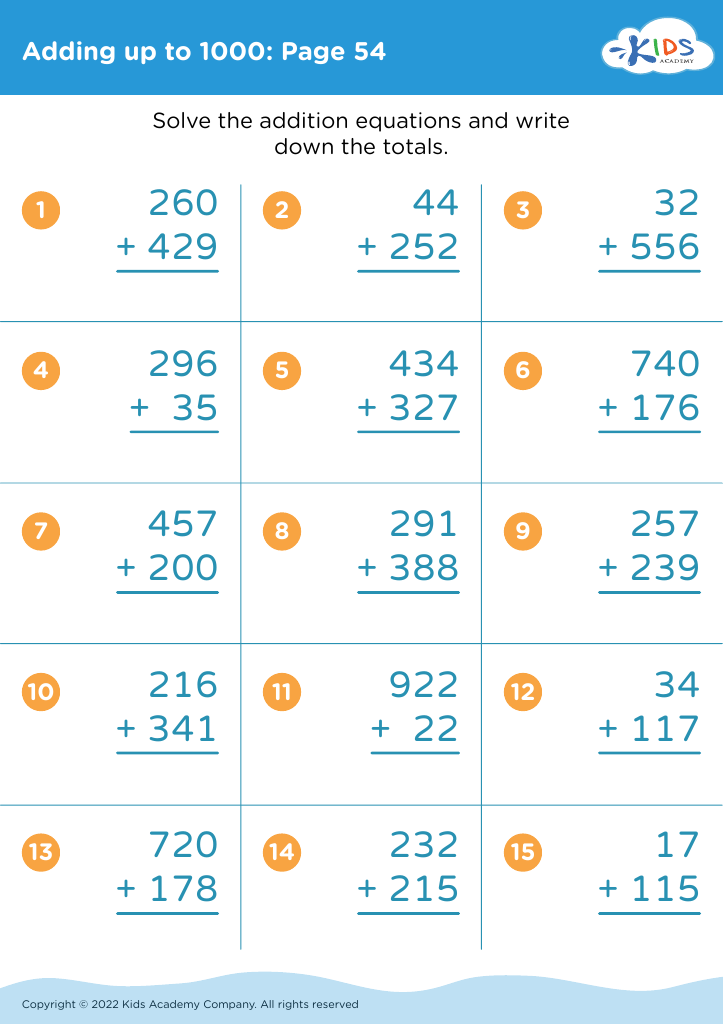
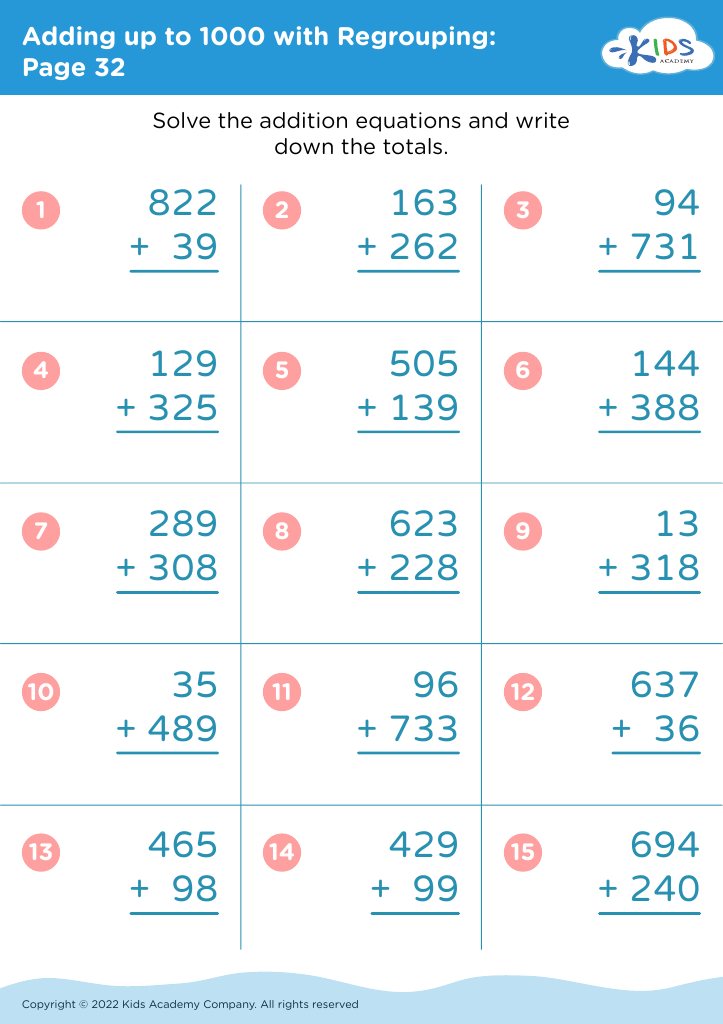
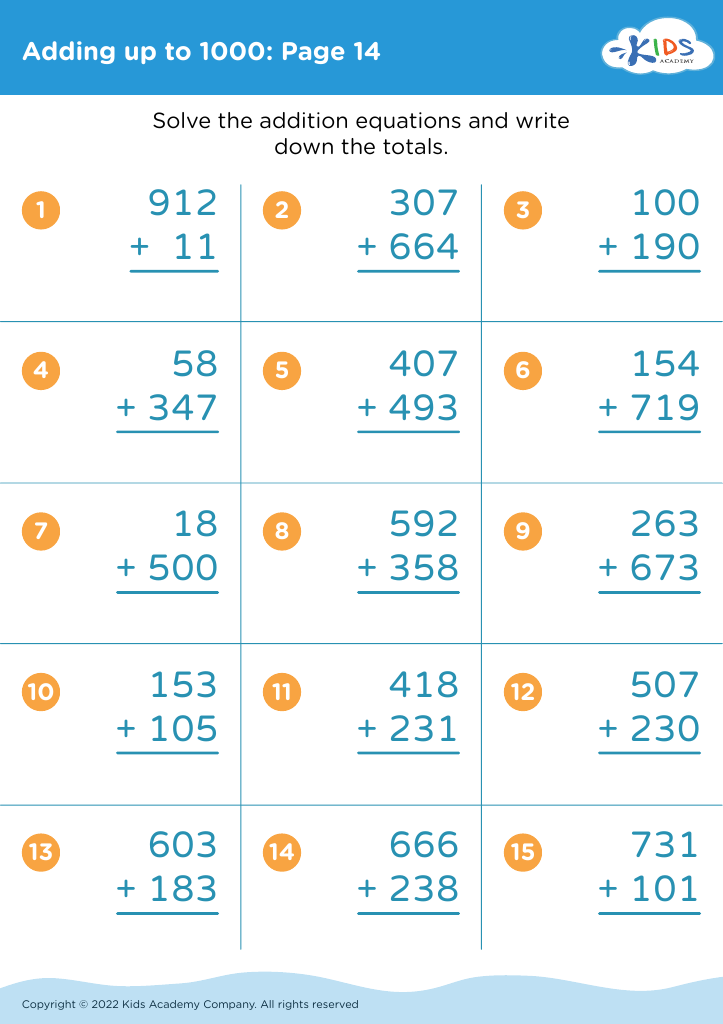








Practicing subtraction and addition for 9-year-olds is crucial for several reasons. At this stage, children are building essential math skills that provide a foundation for more complex concepts in later years, such as multiplication and division. Mastery in addition and subtraction not only enhances their computational skills but also boosts their problem-solving abilities. It helps them develop logical thinking and reasoning, skills that are beneficial in everyday life, such as budgeting or planning.
Additionally, having a strong grasp of these fundamental operations can improve children's confidence in their math abilities, as they realize they can navigate numerical challenges more easily. Consistent practice also enables quicker mental calculations, which can be particularly advantageous during timed tests and assessments in school.
Furthermore, engaging children in fun and interactive ways to practice these skills can strengthen the bond between parents, teachers, and students. It makes learning enjoyable and allows children to explore math creatively. Overall, prioritizing practice in addition and subtraction can set the stage for academic success and foster a lifelong positive attitude towards mathematics.








